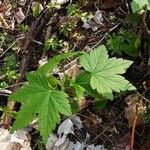
Ribes glandulosum
Fetid currant · Skunk currant
Description
Source: leafsnapRibes glandulosum, the skunk currant, is a North American species of flowering plant in the currant family. It is widespread in Canada (all 10 provinces and all 3 territories) and is also found in parts of the United States (Alaska, the Great Lakes region, the Appalachian Mountains, and the Northeast).Ribes glandulosum is a deciduous shrub growing to 0.5 m (2 ft) tall and wide. It has palmately lobed leaves with 5 or 7 deeply cut segments. Flowers are in elongated clusters of 6–15 pink flowers. Fruits are red and egg-shaped, sometimes palatable but sometimes not.
Care Guide
💧 Water
Skunk currant thrives in consistently moist environments, favoring moderate humidity and evenly damp soil. It needs to be watered once every three weeks. During the cooler months, it enters a dormant phase, which significantly reduces its water requirements as its growth slows.
☀️ Light Full sun
Skunk currant grows best in locations with full sun but can tolerate areas with somewhat less light. This reflects its native habitat, where abundant light is typical. However, too little or too much sunlight can impede its growth and health, affecting its vigor and productivity.
What are the sunlight requirements for Skunk currant?
Skunk currant requires full sunlight to thrive, ideally above 6 hours of sunlight per day, but it can also tolerate partial sun, about 3-6 hours of sunlight daily. It's important to observe how sunlight moves through your garden to find the perfect spot that offers a balance of light and shade, ensuring the plant's health and happiness.
What are the essential considerations for growing Skunk currant in terms of sunlight?
Skunk currant thrives best in areas that receive full daylight exposure, reflecting its natural habitat where ample light is prevalent. However, it can still grow in spaces with less light. Inadequate or excessive sun exposure may negatively affect the plant’s growth and health, influencing its vigor and productivity. For indoor plants, when natural sunlight is insufficient, especially during winter or in less sunny spaces, artificial lighting becomes crucial for optimal growth. LED lights are recommended because they can be customized to provide specific wavelengths of light needed by the plant. The general guideline is that full sun plants need 30-50W/sq ft of artificial light, partial sun plants need 20-30W/sq ft, and full shade plants require 10-20W/sq ft. Position the light source 12-36 inches above the plant and mimic natural daylight hours, typically 8-12 hours per day.
What are the symptoms of incorrect lighting for Skunk currant?
Skunk currant shows several symptoms when exposed to incorrect lighting conditions. These include small and fewer leaves indicating a light deficiency, leggy or sparse growth where the spaces between leaves or stems extend, making the plant look weak, faster leaf drop as the plant sheds older leaves to conserve resources, slower or halted growth, and lighter-colored new leaves signaling insufficient sunlight. On the flip side, symptoms of excessive sunlight exposure include chlorosis (leaves turning yellow), sunscald characterized by pale or necrotic areas on plant tissue, leaf curling or twisting to minimize water loss and damage, wilting from increased water loss, and leaf scorching seen as brown, dry edges on leaves.
How can you address lighting issues for Skunk currant?
To address lighting issues for Skunk currant, gradually move the plant to a sunnier location, ensuring it receives at least 6 hours of direct sunlight daily. For indoor plants not easily moved, consider using a south-facing window for natural light or artificial grow lights, keeping them on for at least 8 hours daily. For outdoor plants, avoid sudden changes in light intensity to prevent sunburn. Additionally, if trees or other structures are blocking sunlight, consider pruning to improve light access or transplant the plant during its dormant period to a location with better sunlight and drainage. While parts of the plant that suffered from previous insufficient sunlight might not recover, new growth should be healthy with improved light conditions.
🌡️ Temperature 0–32.2°C
Skunk currant originates from cool climates and does well within a temperature range of 32 to 89.6 °F (0 to 32 ℃). It usually prefers cooler conditions, especially during the growing season. In hotter months, it is advisable to relocate skunk currant to a shadier spot to help regulate the temperature.
What is the native climate for Skunk currant?
Skunk currant, scientifically known as Ribes glandulosum, is native to cool climates and thrives in a temperature range of 32 to 89.6 °F (0 to 32 °C). It generally prefers cooler temperatures, particularly during the growing season. In hotter months, to regulate the temperature, it is suggested to move skunk currant to a shadier location.
How does Skunk currant handle cold weather and frost?
Skunk currant is highly cold-tolerant and does not require additional frost protection measures during the winter. However, before the first freeze in autumn, it's recommended to water the plant generously. This ensures the soil remains moist and enters a frozen state, which helps prevent drought and water scarcity for the plant during winter and early spring.
What should be done if Skunk currant experiences temperatures below -35°C?
Although Skunk currant is extremely cold-tolerant, if the temperature drops below -35°C, it may not show immediate damage during winter; however, the branches could become brittle and dry come spring, with no new shoots emerging. To address this, prune away any dead branches in spring that have failed to produce new leaves.
How does Skunk currant react to high temperatures, and what are the solutions?
Skunk currant is not tolerant to high temperatures. When temperatures exceed 32°C, the plant may suffer significant leaf drop, and in severe cases, the entire plant may wither and die. To counteract this, trim away the sunburned and dried-up parts of the plant. Also, move the plant to a location that provides shade during the midday and afternoon sun, or utilize a shade cloth. Ensuring the soil remains moist by watering in the morning and evening is also beneficial.
💨 Humidity
🪴 Soil 5-6
🌱 Fertilizer
To encourage healthy growth, fertilize your Skunk currant in early spring. Regular feeding improves overall health, producing vigorous growth, increased tolerance to harsh conditions, and enhanced resistance to pests and diseases. Keep to a specific fertilization schedule for your Skunk currant to maintain vibrant, deeply colored, and lush foliage.
🪴 Pot & Repot
✂️ Pruning
The skunk currant has aromatic leaves and produces clusters of berries. To keep the plant healthy, prune it in early spring. This will help remove dead branches, improve air circulation, and encourage new growth. Pruning in this way promotes overall plant health, helps prevent disease, and maintains an attractive shape. Be sure to use clean, sharp tools to minimize damage to the plant.
🌿 Propagating
🐛 Diseases & pets
☠️ Toxicity
Characteristics
- Plant Type
- Shrub
- Life Cycle
- Perennial
- Genus
- Ribes
- Family
- Grossulariaceae
- Hardiness Zone
- 3-7
- Mature Height
- 30 cm to 91 cm
- Mature Spread
- 30 cm to 61 cm
- Leaf Color
- Green, Dark Green
- Leaf Type
- Deciduous
- Flower Color
- Pink, White
- Flower Size
- 2.54 cm
- Bloom Time
- Early spring, Mid spring
- Planting Time
- Spring, Summer, Autumn
- Harvest Time
- Mid summer, Late summer, Early fall