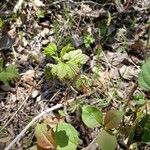
Ribes triste
Swamp red currant · Wild red currant · American red currant · Bitter currant · Red currant
Description
Source: leafsnapRibes triste, known as the northern redcurrant, swamp redcurrant, or wild redcurrant, is an Asian and North American shrub in the gooseberry family. It is widespread across Canada and the northern United States, as well as in eastern Asia (Russia, China, Korea, Japan).Ribes triste grows in wet rocky woods, swamps, and cliffs. It grows to 50 cm (20 in) tall, with a lax, often creeping branches. The leaves are alternate, palmately lobed with five lobes, 6–10 cm (2+1⁄4–4 in) in diameter. The flowers are in pendulous racemes, 4–7 cm (1+1⁄2–2+3⁄4 in) long. The axis of the raceme is glandular. Each raceme bears 6-13 small, purplish flowers that appear in June and July. The fruit is a bright red berry, without the hairs that some currants have. The fruit is edible but rather sour.
Care Guide
💧 Water
Red currants thrive in soil that is consistently moist but well-drained, avoiding both dryness and waterlogging. While they can tolerate some drought, they should be watered approximately every three weeks. When grown outdoors in temperate regions, red currants adapt well to the natural rainfall patterns, benefiting from the seasonal rain cycles in garden environments.
☀️ Light Full sun
The red currant grows best when exposed to plenty of sunlight, yet is sturdy enough to tolerate locations where sun exposure is intermittent. Too little or too much sunlight can harm its health and impede growth. Originating from sun-rich habitats, its light requirement stays largely the same throughout the different stages of development.
What are the sun requirements for Red currant plants?
Red currant plants thrive best in conditions where they can receive generous amounts of sunlight. Full sun, defined as above 6 hours of sunlight a day, is ideal for their growth, but they can also manage with partial sun, which amounts to about 3-6 hours of sunlight daily. Observing your garden's sunlight patterns and choosing spots that provide the right balance of light and shade is crucial for the happiness and health of your Red currants. Too little or too much sunlight can compromise their health and affect their growth, as these plants are accustomed to environments with ample sun exposure.
How can artificial lighting benefit Red currant plants indoors?
Indoor Red currant plants require adequate lighting for optimal growth. In cases where natural sunlight is insufficient, especially during winter or in less sunny spaces, artificial lights become vital. They help in promoting faster, healthier growth. LED lights are recommended due to their ability to be customized to provide specific wavelengths needed by plants. For optimal growth under artificial light, full sun plants need 30-50W/sq ft, partial sun plants require 20-30W/sq ft, and full shade plants need 10-20W/sq ft of light. The artificial light source should be placed 12-36 inches above the plant, simulating natural sunlight conditions, and it's important to adjust the duration of lighting to mimic the plant species' natural daylight needs, which is usually between 8-12 hours per day.
What symptoms indicate light deficiency in Red currant plants?
Red currant plants, used to thriving in full sunlight, can exhibit several symptoms when subjected to suboptimal lighting conditions. These symptoms include the development of smaller leaves, leggy or sparse growth, premature leaf drop, stalled growth, lighter-colored new leaves, and conditions like chlorosis, sunscald, leaf curling, wilting, and leaf scorching. These indicators point out the plant's struggle with inadequate light exposure, manifesting in physical alterations and health issues that can impact its overall growth and vitality.
What solutions can help Red currant plants with insufficient sun exposure?
For Red currant plants experiencing insufficient sunlight, several solutions can be implemented. Indoors, gradually moving your plants to sunnier locations to ensure at least 6 hours of direct sunlight daily is recommended. Using a south-facing window and keeping curtains open during the day maximizes sunlight exposure. If moving the plant isn't feasible, consider providing additional light using desk, ceiling, or professional plant grow lights for at least 8 hours daily. Outdoors, slowly transition your plants to brighter areas by relocating them weekly to avoid shock and potential sunburn. As for ground-planted specimens, reduce sunlight obstructions by pruning or relocating the plant during its dormant period to a space with better light access and drainage. These steps encourage healthy new growth despite previous light deficiencies.
🌡️ Temperature 0–32.2°C
Red currant originates from areas with cold to temperate climates, reflecting its hardy character. It does best at temperatures of 32 to 70 °F (0 to 21 ℃). During severe seasons, steps like providing shade or giving plenty of water can be used to simulate those temperatures.
What is the origin and preferred climate for red currant?
Red currant, botanically known as Ribes triste, originates from regions characterized by cold to temperate climates, showcasing its resilience and hardy nature. These plants thrive in temperatures that range between 32 to 70 °F (0 to 21 °C). To ensure optimal growth, especially in areas with harsh seasonal conditions, measures such as shading or increased watering might be necessary to emulate their ideal climate.
How does red currant handle cold weather and what measures should be taken before winter?
Red currant is exceptionally tolerant of cold weather and does not necessitate additional frost protection. However, to prepare for winter, it is advisable to water the plant generously before the first freeze of autumn. Adequate watering ensures the soil remains moist as it enters a frozen state, aiding the plant in preventing drought and water scarcity throughout the winter and into early spring.
What happens if red currant is exposed to temperatures below -35°C?
Though red currant can withstand extreme cold, temperatures falling below -35°C can have detrimental effects. While the plant may not exhibit noticeable issues during winter, such low temperatures can cause the branches to become dry and brittle. Come spring, these affected branches may fail to produce new shoots. It is recommended to prune any dead branches that do not sprout new leaves in spring as a remedial measure.
How does red currant react to high temperatures and what are the solutions?
Red currant shows a low tolerance for high temperatures; when the thermometer climbs above 21°C (69.8°F), the plant may suffer from significant leaf drop. In extreme cases, the plant might wither and die. To mitigate heat stress, pruning the sunburned and dried parts of the plant can be beneficial. It is also advisable to move the plant to a shaded location or use a shade cloth to protect it from midday and afternoon sun. Additionally, watering the plant in the morning and evening can help keep the soil adequately moist, ensuring the plant's survival and health.
💨 Humidity
🪴 Soil 5-7
🌱 Fertilizer
The red currant plant needs adequate nutrients to achieve optimal fruit production. Fertilize in early spring to encourage new growth and bloom development. Regular fertilization helps the plant stay healthy, produce more flavorful fruit, and prevents nutrient deficiency issues like yellow leaves and poor fruit production.
🪴 Pot & Repot
✂️ Pruning
The red currant is a deciduous shrub prized for its tart berries. To care for it, prune in early spring by cutting away dead branches and trimming one-third of the older stems. This encourages new growth. Additionally, maintaining an open center improves air circulation, leading to healthier plants and better fruit production.
🌿 Propagating
🐛 Diseases & pets
☠️ Toxicity
Characteristics
- Plant Type
- Shrub
- Life Cycle
- Perennial
- Genus
- Ribes
- Family
- Grossulariaceae
- Hardiness Zone
- 2
- Mature Height
- 30 cm to 91 cm
- Mature Spread
- 91 cm
- Leaf Color
- Green, Dark Green
- Leaf Type
- Deciduous
- Flower Color
- Pink
- Flower Size
- 4.06 cm to 6.35 cm
- Bloom Time
- Early spring, Mid spring
- Planting Time
- Spring, Autumn
- Harvest Time
- Summer
- Native Area
- Russia, Koppen, Japan, China