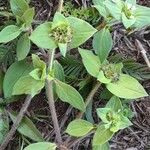
Richardia brasiliensis
Brazilian calla-lily · Tropical Mexican-clover · White-eye · Mexican-clover · Mexican richardia
Description
Source: leafsnapRichardia brasiliensis, commonly known as Brazilian pusley or tropical chickweed, is a small herbaceous plant belonging to the Rubiaceae family. Originally native to South America, it has been introduced and naturalized in many parts of the world. The plant exhibits a prostrate growth habit and can grow up to 30 cm in height. Its small, oval-shaped leaves are arranged oppositely on the stem. Richardia brasiliensis features white or pinkish-white flowers with five petals fused at their base. These flowers bloom throughout the year, with peak blooming occurring during the summer months. The fruit is a capsule containing numerous tiny seeds. This plant thrives in moist soils with good drainage but can also tolerate dry conditions. It grows well in both full sun and partial shade, and can often be found along roadsides, in lawns, gardens, fields, and other disturbed areas. Traditionally, Richardia brasiliensis has been used for medicinal purposes to treat skin infections like eczema and psoriasis, attributed to its anti-inflammatory properties. Additionally, it contains antioxidants that help protect against free radicals, which cause cell damage. Overall, Richardia brasiliensis is an attractive ground cover with beneficial medicinal properties, making it a valuable addition to any garden or landscape design for those who appreciate its unique qualities.
Care Guide
💧 Water Every 7 days
Tropical Mexican clover, originally from humid tropical regions, prefers consistent moisture and should be watered weekly. While it can tolerate short periods of dryness, it thrives best outdoors where it can benefit from natural rainfall. This reduces the need for manual watering during the growing season.
How should I water my Tropical Mexican clover?
To properly water the Tropical Mexican clover, it is advised to use filtered water at room temperature or slightly warmer. Tap water may contain harmful particles, so filtered water is preferred. This plant is accustomed to warm environments, so cold water can be detrimental. It is also recommended to avoid overhead watering, as it can cause issues with the foliage. Instead, focus on thoroughly soaking the soil with filtered, room temperature water. This helps to moisten the roots and promote their spread through the soil, allowing for better nutrient absorption.
What should I do if I give my Tropical Mexican clover too much or too little water?
Overwatering is a more common issue for Tropical Mexican clover than underwatering. When Tropical Mexican clover gets too much water, its stems and leaves may wilt and turn yellow. Overwatering for a long time can also cause diseases like root rot, mold, and mildew, which can be fatal for the plant. Underwatering is less likely for this plant because it can tolerate drought. However, if it does happen, the leaves may become brittle and brown. It's important to recognize the signs of overwatering early. Some diseases caused by overwatering, like root rot, can't be reversed if not addressed promptly. If you see signs of overwatering, reduce watering immediately and check the soil's drainage. If the soil drains poorly, replace it with a loose, well-draining potting mix. On the other hand, if you notice signs of underwatering, simply water more regularly until the signs disappear.
How frequently should I water my Tropical Mexican clover?
To determine if your Tropical Mexican clover plant needs water, follow these guidelines: If your plant is in a pot, stick your finger into the soil and water it if the top two to three inches are dry. If your plant is in the ground, use the same method and water it when the first few inches of soil are dry. Typically, watering once a week during spring and early fall will suffice, but in extremely hot weather, you may need to water it twice or more per week. It's worth noting that mature Tropical Mexican clover plants can withstand drought well.
How much water does my Tropical Mexican clover require?
When watering your Tropical Mexican clover, make sure to give it a generous amount of water. Check if the top two to three inches of soil are dry, and if they are, it's time to water. Water the plant thoroughly until the soil is completely soaked. To ensure proper drainage, make sure that excess water flows out of the pot's drainage holes. If you don't see water draining out, you may not have given enough water. However, be cautious of excessive water accumulation in the soil, as it can harm the plant. If you notice that water is not draining well, it might be due to poorly draining soil, which is not good for the plant's health. If the plant is outside, 1 inch of rain per week should be enough.
How do I water my Tropical Mexican clover as it grows?
The water needs of the Tropical Mexican clover vary depending on its growth stages. In the first few years and after transplanting, it requires more water. During this time, the plant focuses on developing new roots, which need extra moisture to support future growth. As the plant matures, it will need less water. Additionally, during the bloom period, the plant utilizes more moisture due to flower development, so it may require additional watering at this stage.
☀️ Light Full sun
Tropical Mexican clover thrives predominantly in places amply drenched in sunlight, tracing back to its original habitat that is rich in sunshine. Nonetheless, it can withstand locations where there is a slight reduction in light, maintaining robust growth. While an insufficiency or surplus of sunlight doesn't significantly affect tropical Mexican clover, the ideal amount of light exposure aids in strong growth.
What are the sunlight requirements for Tropical Mexican Clover?
Tropical Mexican Clover (Richardia brasiliensis) thrives best in conditions that mimic its native habitat, which involves generous exposure to sunlight. It requires full sun, defined as more than 6 hours of direct sunlight per day, to ensure vigorous growth. However, it can also survive in partial sun, with about 3-6 hours of sunlight. It's important to observe how sunlight moves through your garden to find spots that offer the right balance of light and shade, promoting the plant's health and happiness.
How does artificial lighting support the growth of Tropical Mexican Clover?
When natural sunlight is insufficient, especially during winter or in spaces with less exposure to sunlight, artificial lighting becomes crucial for the growth of Tropical Mexican Clover. Indoor plants benefit from adequate artificial lighting, which can stimulate faster and healthier growth. The right type of artificial light, such as LED lights, can be tailored to provide specific wavelengths needed by the plants. Full sun plants require 30-50W/sq ft of artificial light, partial sun plants need 20-30W/sq ft, and full shade plants need 10-20W/sq ft. The artificial light source should be placed 12-36 inches above the plant to mimic natural sunlight, and most plants need 8-12 hours of light per day.
What are common symptoms of light deficiency in Tropical Mexican Clover?
Tropical Mexican Clover shows several symptoms when exposed to inadequate lighting, including smaller new leaves compared to mature ones, leggy or sparse growth, accelerated leaf drop, and halted or no new growth. Inadequate sunlight leads to a lack of chlorophyll and essential nutrients, manifesting in lighter-colored new leaves or chlorosis, which is characterized by the leaves losing their green color and turning yellow. Sunscald, leaf curling, wilting, and leaf scorching are additional symptoms that can occur due to extreme sunlight conditions or light deficiency, affecting the plant's overall health and ability to photosynthesize effectively.
What solutions can improve light exposure for Tropical Mexican Clover?
Improving light exposure for Tropical Mexican Clover involves gradual adaptation to increased sunlight for both indoor and outdoor plants. Indoors, it's recommended to move plants to a sunnier location incrementally each week, aiming for at least 6 hours of direct sunlight daily. Utilizing a south-facing window and keeping curtains open maximizes sunlight exposure. If moving the plant isn't feasible, consider using artificial light, keeping a lamp on for at least 8 hours daily, or investing in grow lights. Outdoors, adjust plant positioning gradually to avoid sunburn. For ground plants, reduce obstructions by pruning trees or transplanting to sunnier locations, ensuring this is done during the plant's dormant period for minimal stress.
🌡️ Temperature 20–37.8°C
Native to temperate climates, tropical Mexican clover thrives best at temperatures between 68 and 100.4 degrees Fahrenheit (20 to 38 degrees Celsius). If you want to provide optimum growth conditions in other areas, especially during seasons change, adapting the temperature to fit within this range is advisable.
What are the essential care requirements for Tropical Mexican Clover?
Tropical Mexican clover (Richardia brasiliensis) thrives in temperate climates, preferring temperatures between 68 to 100.4 °F (20 to 38 °C). To ensure its growth in varying regions, it's crucial to adjust the surrounding temperature to fall within this range, especially during seasonal transitions. Recognized for its love of heat, the plant suffers in cold conditions. In the fall, it's advisable to move any outdoor Tropical Mexican clover indoors, placing it by a brightly lit window while keeping it away from direct heat sources. Throughout the winter, maintaining an ambient temperature above 20°C is vital for its continued growth, as temperatures nearing 0°C can cause significant harm to the plant.
How does low temperature affect Tropical Mexican Clover and what are the solutions?
Tropical Mexican clover has a low tolerance for cold temperatures, thriving best above 20°C and requiring conditions to stay above 0°C during winter. Exposure to temperatures below -5°C can lead to a discoloration of the leaves, turning them lighter before eventually becoming brown or black after frost damage. This is accompanied by signs of wilting and drooping. To mitigate the effects of cold exposure, it's recommended to trim off the frost-damaged parts of the plant and relocate it to a warmer indoor environment. Positioning the plant near a south-facing window ensures it receives enough sunlight, though placement near heaters or air conditioning vents should be avoided to prevent air dryness.
What steps should be taken if Tropical Mexican Clover experiences high temperatures?
During the hotter months, it's important to prevent the ambient temperature around Tropical Mexican clover from exceeding 38°C. Temperatures above 43°C can cause the leaves to lighten and increase the plant's susceptibility to sunburn. In such cases, it's advisable to trim any sunburned or dried parts and move the plant to a shaded area, especially away from the strong midday and afternoon sun. To keep the soil adequately moist, watering the plant during the morning and evening hours is beneficial.
💨 Humidity
🪴 Soil 5-7
🌱 Fertilizer
The Tropical Mexican clover needs the highest quantity of fertilizer during its main growth stage, mainly taking place in spring, summer, and the initial part of fall. It's crucial to fertilize to supply crucial nutrients that might not be present in the ground, supporting the healthy growth of roots and stems, along with appealing leaves, a significant characteristic of this specific plant.
🪴 Pot & Repot
✂️ Pruning
To maintain a healthy and attractive tropical Mexican clover, it's important to prune it annually in early to mid-spring. This encourages dense growth and gets rid of old stems. For best results, trim the plant to half its height, making sure to use clean cuts to reduce the risk of disease. Regular pruning controls the plant's spread and improves its appearance, making it an excellent choice for ornamental gardening.
🌿 Propagating
🐛 Diseases & pets
☠️ Toxicity
Characteristics
- Plant Type
- Herb
- Life Cycle
- Perennial, Annual
- Genus
- Richardia
- Family
- Rubiaceae
- Hardiness Zone
- 9-11
- Mature Height
- 40 cm
- Mature Spread
- 30 cm to 61 cm
- Leaf Color
- Green, Dark Green
- Leaf Type
- Semi-evergreen
- Flower Color
- White
- Flower Size
- 2.54 cm
- Bloom Time
- All year round
- Planting Time
- Spring, Summer
- Harvest Time
- All year round
- Native Area
- Mexico, Guatemala, Bolivia, Peru, Guyana, Ecuador