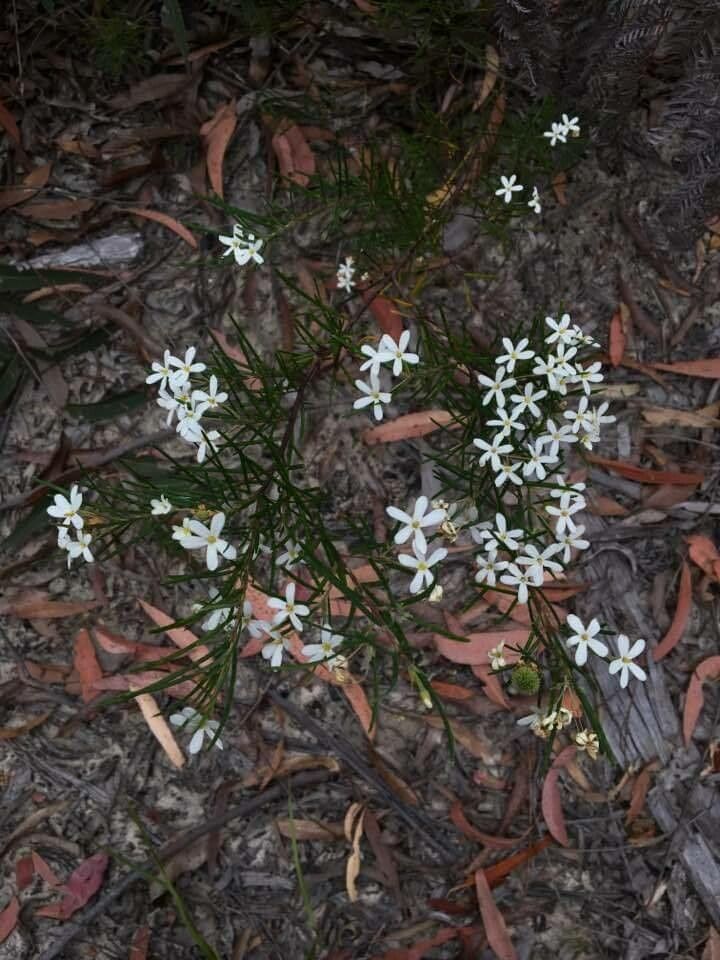
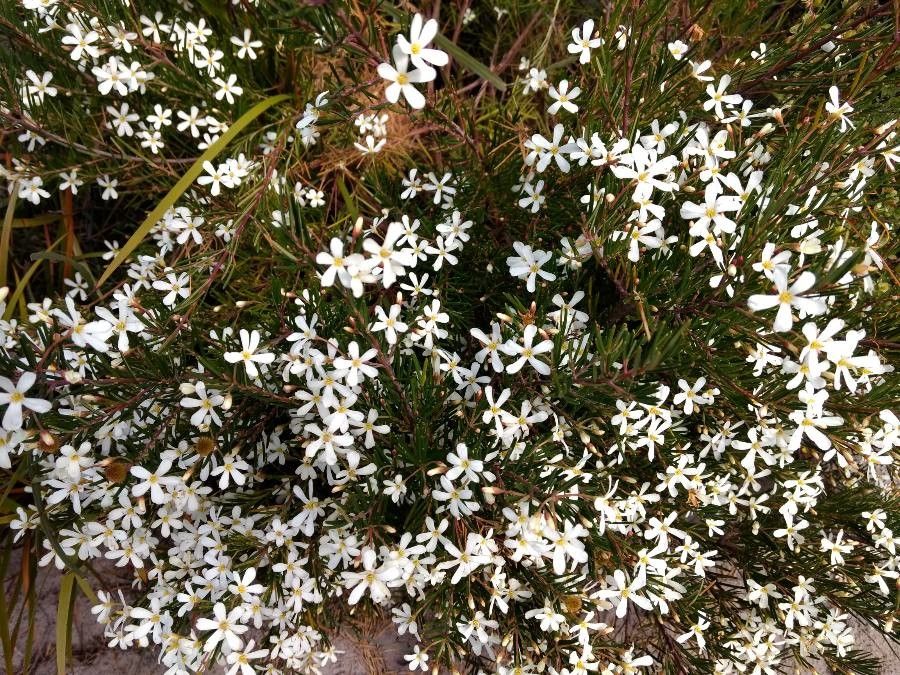
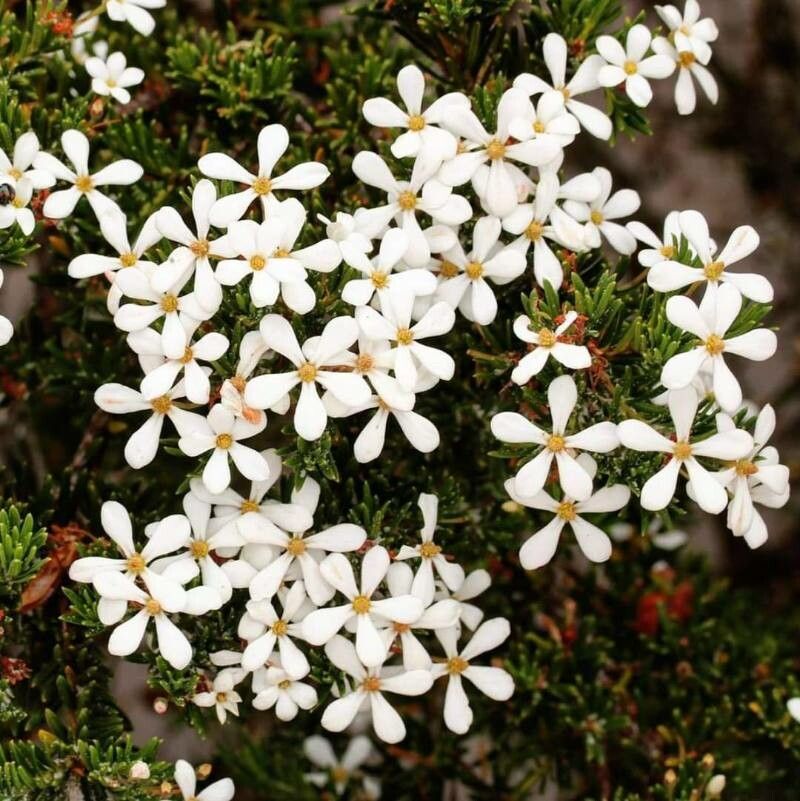
Ricinocarpos pinifolius, commonly known as wedding bush, is a shrub of the family Euphorbiaceae and is endemic to eastern Australia. It has fragrant daisy-like flowers in spring.
Wedding bush has strong disease resistance and is usually not prone to illnesses. In terms of care, the plant is fairly low-maintenance. When planted outdoors it needs little watering, and larger plants typically do not require pruning; however, smaller plants should be pruned after they have bloomed. Wedding bush is suitable for anyone with outdoor space, such as a garden or deck, and does not require much gardening experience.
How to keep Ricinocarpos Pinifolius.
Light
The wedding bush does best with a generous amount of daily sunlight to maintain healthy growth. While it can tolerate a degree of shade, it reaches its fullest development in brighter settings. It takes root in areas with plenty of natural light. Both too little and too much sun can restrict its growth.
Water
The Wedding Bush is incredibly drought-tolerant and thrives in dry environments. It requires minimal watering, ideally every 2 to 3 weeks, and benefits from well-draining soil that mimics its natural scrubland habitat.
Temperature
Wedding bush is fairly adaptable to temperature, tolerating heat and wide temperature swings. In hot weather, care should be taken to water properly and provide appropriate shade to avoid sunburn. On the other hand, Wedding bush has limited cold tolerance. While it can resist some cold, excessively low temperatures can cause frost damage.
Fertilizer
Proper timing is essential for fertilizing the Wedding bush. Begin fertilizing in early spring and continue once a month until early summer. Fertilizer promotes attractive blooms and supplies energy during both dormant and actively growing periods.
Pruning
For optimal growth, prune the wedding bush in late spring, right after it has finished flowering. Remove spent flowers and any congested branches to enhance airflow and light exposure. This practice not only boosts the plant's health and vigor but also helps prevent disease. Additionally, it maintains the bush's natural shape, ensuring abundant blooms in the following season.
Botanical profile.
- Plant Type
- Shrub
- Life Cycle
- Perennial
- Genus
- Ricinocarpos
- Family
- Euphorbiaceae
- Hardiness Zone
- 9-11
- Mature Height
- 13.72 m
- Mature Spread
- 0.49 m to 1.52 m
- Leaf Color
- Green, Blue
- Leaf Type
- Semi-evergreen
- Flower Color
- White
- Flower Size
- 2.54 cm
- Bloom Time
- Mid fall, Late fall, Early winter
- Planting Time
- Summer, Autumn
- Harvest Time
- Mid winter, Late winter, Early spring
Other names.