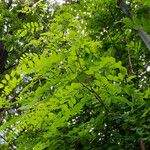
Robinia viscosa
Rose acacia · Clammy locust · Clammy-bark Locust
Description
Source: leafsnapRobinia viscosa, commonly known as the clammy locust or sticky locust, is a deciduous tree native to the southeastern United States. It typically reaches a height of 30 to 50 feet and spreads 20 to 30 feet wide. The tree has an upright growth habit, an irregular crown, and dark green leaves that turn yellow in the fall. The bark of Robinia viscosa is gray-brown and deeply furrowed, forming diamond-shaped patterns. In late spring or early summer, the tree produces fragrant white flowers that attract bees and other pollinators. One unique characteristic of Robinia viscosa is its sticky sap, which covers the branches, leaves, and flowers. While this sap can make handling the plant unpleasant, it also provides protection against herbivores. Robinia viscosa prefers full sun but can tolerate some shade. It thrives best in well-drained soils but can also grow in poor soils, provided they are not waterlogged. The wood of Robinia viscosa is strong and durable, making it useful for fence posts, furniture making, and other outdoor applications. Overall, Robinia viscosa is an attractive ornamental tree with unique characteristics, making it well-suited for specific landscaping applications.
Care Guide
💧 Water Every 7 days
Clammy locust is drought-resistant but can be susceptible to root rot if overwatered. After transplanting, water the plant daily at first. Gradually reduce the frequency to monthly. During flowering in late spring and summer, water as needed, and then water only once before winter. Adjust the watering schedule based on the weather, and ensure proper drainage during rainy seasons.
☀️ Light Full sun
Clammy locust is native to open habitats, such as sunny meadows and forest edges, which provide abundant light. It performs best in Full Sun but can also tolerate Partial Sun, adjusting well to a range of sunlight conditions.
🌡️ Temperature 5–32.2°C
Clammy locust is highly adaptable to a wide range of climates, from very hot summers to cold winters. Still, it has an optimal temperature range for healthy growth. If temperatures get too high, the plant is vulnerable to heat and humidity stress, which can kill it. In areas where temperatures near the lower limit of its cold tolerance, it's necessary to provide insulation to protect the plant.
💨 Humidity
🪴 Soil 6-8
🌱 Fertilizer
Timing is critical for fertilizing Clammy locust. Apply fertilizer in early spring and continue monthly until early summer. Fertilizer promotes attractive blooms and supplies energy during both dormancy and active growth.
🪴 Pot & Repot
✂️ Pruning
To straighten the trunk of a clammy locust tree, prune the lateral branches during winter or spring. Remove one-third of the upward-growing branches until the tree reaches a height of 5-6 meters. For shaping the canopy, summer is the best time for pruning. During this period, you should shorten long branches, thin out dense areas, and remove any diseased or dry branches without cutting them at the base.
🌿 Propagating
🐛 Diseases & pets
☠️ Toxicity
Robinia viscosa is considered poisonous to animals and humans.
Characteristics
- Plant Type
- Tree, Shrub
- Life Cycle
- Perennial
- Genus
- Robinia
- Family
- Fabaceae
- Hardiness Zone
- 4-8
- Mature Height
- 6.1 m to 11.89 m
- Mature Spread
- 3.96 m to 7.92 m
- Leaf Color
- Light Green, Dark Green
- Leaf Type
- Deciduous
- Flower Color
- Pink
- Flower Size
- 1.52 cm to 2.03 cm
- Bloom Time
- Late spring, Early summer
- Planting Time
- Spring, Summer
- Harvest Time
- Mid summer, Late summer, Early fall