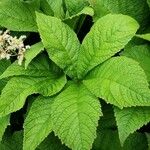
Rodgersia aesculifolia
Chestnut Leaved Rodgersia · Fingerleaf Rodgersia
Description
Source: leafsnapRodgersia aesculifolia is a species of flowering plant in the family Saxifragaceae, native to northern China. It is a substantial, herbaceous perennial growing to 2 m (7 ft) tall by 1 m (3 ft) broad, with textured palmate leaves up to 25 cm (10 in) long, and 60 cm (24 in) erect panicles made up of tiny, star-shaped white or pink flowers in summer. The leaves resemble those of the horse chestnut, hence the specific epithet aesculifolia (chestnut-leaved).This plant has gained the Royal Horticultural Society's Award of Garden Merit.
Care Guide
💧 Water
How should I water my Fingerleaf rodgersia plant?
To properly water the Fingerleaf rodgersia, it is best to use filtered water at room temperature. Tap water may contain harmful particles that can affect the plant's health. The Fingerleaf rodgersia is accustomed to warm environments, so it is important to avoid using cold water, as it can be a shock to the plant. Additionally, it is advisable not to water the plant from above, as this can cause issues with the foliage. Instead, pour the filtered room temperature water directly onto the soil until it is completely soaked. This method benefits the plant by moistening the roots and aiding in their spread throughout the soil to acquire necessary nutrients.
What should I do if I give too much water or too little water to my Fingerleaf rodgersia?
Overwatering is a more common problem for Fingerleaf rodgersia, which can cause wilting, yellowing, and diseases like root rot, mold, and mildew. Underwatering is less common but can lead to brittle, brown leaves. It's important to notice signs of overwatering early and reduce watering immediately. If the soil drains poorly, replace it with a well-draining mix. If underwatering is the issue, simply water more regularly until the signs improve.
How frequently should I water my Fingerleaf rodgersia plant?
If your Fingerleaf rodgersia plant is in a pot, the easiest way to determine if it needs water is by checking the moisture level of the soil. Simply stick your finger into the soil and if the top two to three inches are dry, it's time to water it. If you have your Fingerleaf rodgersia planted outdoors in the ground, you can use the same method to check the soil. Once again, if the top few inches of soil have dried out, it's time to give it water. Typically, during spring and early fall, watering once a week is sufficient. However, during hot weather, you may need to increase the frequency to twice a week or even more. It's worth noting that mature, well-established Fingerleaf rodgersia plants have a remarkable ability to tolerate drought.
How much water should I give my Fingerleaf rodgersia plant?
To properly water your Fingerleaf rodgersia, you should not hold back on the amount of water you give. Make sure the top two to three inches of soil are dry before watering, and then give the plant a thorough watering, soaking the soil completely. The water should be enough to flow through the drainage holes at the bottom of the pot. If you don't see excess water draining, you may have not given enough water. However, be careful not to let water accumulate in the soil, as this can harm the plant. On the other hand, if water is not draining through the pot, it may indicate poorly draining soils, which is not good for the plant's health. If the plant is outdoors, 1 inch of rainfall per week should be sufficient.
At different stages of growth, how should I water my Fingerleaf rodgersia plant?
The water needs of the Fingerleaf rodgersia vary depending on its growth stages. In the first few years or after transplantation, it requires more water than usual. During these stages, the plant invests energy in sprouting new roots, which need additional moisture for optimal growth. However, as the Fingerleaf rodgersia matures, it will require less water. Another growth stage that may require increased watering is during the bloom period, as flower development requires more moisture.
☀️ Light Partial sun
Fingerleaf rodgersia does best with sun for part of the day and can tolerate concentrated rays when necessary. This tolerance comes from its native habitat, which experiences variable light. However, prolonged intense light can stress fingerleaf rodgersia, causing its color to fade and its growth to be reduced.
What are the sunlight requirements for Fingerleaf Rodgersia?
Fingerleaf Rodgersia requires varying amounts of sunlight depending on its environment. For optimal growth, it should be exposed to partial sun, which is about 3-6 hours of sunlight per day, or full sun, which is above 6 hours of sunlight per day. It's important to watch how sunlight moves through your garden to ensure your plants receive a balanced amount of light and shade, promoting health and growth. Despite its need for sun exposure, intense light for prolonged periods can stress Fingerleaf Rodgersia, causing faded color and hampered growth.
How does artificial lighting affect indoor Fingerleaf Rodgersia plants?
Artificial lighting can be crucial for the growth of indoor Fingerleaf Rodgersia plants, especially when natural sunlight is insufficient. Adequate lighting is essential for promoting faster, healthier growth. LED lights are recommended as they can be customized to provide specific wavelengths needed by the plants. Full sun plants require 30-50W/sq ft, partial sun plants 20-30W/sq ft, and full shade plants 10-20W/sq ft of artificial light. The light source should be placed 12-36 inches above the plant, mimicking natural sunlight for about 8-12 hours per day.
What are the signs of insufficient light in Fingerleaf Rodgersia?
When Fingerleaf Rodgersia receives inadequate light, it may exhibit several symptoms indicating stress. These include smaller new leaves, leggy or sparse growth, early leaf drop to conserve resources, slower or halted growth due to energy conservation, lighter-colored new leaves indicating a lack of chlorophyll, and various symptoms from excessive sunlight such as chlorosis, sunscald, leaf curling, wilting, and leaf scorching. These signs help identify when the plant is not receiving the right amount of light.
How can I manage light exposure for my Fingerleaf Rodgersia?
To optimize light exposure for Fingerleaf Rodgersia, gradually adapt your plant to appropriate sunlight conditions. For indoor plants, shift them to increasingly sunnier spots each week until they receive 3-6 hours of direct sunlight daily. Use artificial light sources, like desk or ceiling lamps, for at least 8 hours daily or invest in plant grow lights if necessary. For outdoor plants, move them gradually to sunnier locations each week to prevent sunburn. Reducing obstructions, like pruning tree branches that block sunlight, or transplanting smaller plants to sunnier spots can also help. Note that parts of the plant affected by insufficient sunlight might not recover, but new growth will be healthy following these adjustments.
🌡️ Temperature 5–35°C
Fingerleaf rodgersia is native to habitats with temperatures ranging from 41 to 95 °F (5 to 35 ℃). It favors the cooler end of that range. In warmer seasons it may require shading or relocation to cooler ground.
What is Fingerleaf Rodgersia and where does it originate?
Fingerleaf Rodgersia, botanically known as Rodgersia aesculifolia, is a plant that originates from environments with temperatures ranging from 41 to 95 °F (5 to 35 °C). It is adapted to cooler conditions but has strong cold resistance, thriving best when the temperature stays on the cooler side of its natural temperature range.
How does Fingerleaf Rodgersia handle cold temperatures?
Fingerleaf Rodgersia is highly cold-tolerant and can generally survive winters without special frost protection measures. However, if temperatures are expected to drop below -25°C, it's important to protect the plant by covering it with soil or straw. Additionally, watering the plant abundantly before the first freeze in autumn helps to keep the soil moist and aids the plant in entering a frozen state, which prevents drought and water scarcity during the colder months.
What should I do if the temperature falls below -25°C?
If the temperature falls below -25°C, although Fingerleaf Rodgersia may not show noticeable changes during winter, it could lead to decreased or even no sprouting in spring. In the spring, you should remove any parts of the plant that have failed to sprout to promote healthy growth.
How does Fingerleaf Rodgersia react to high temperatures?
During the summer, it's crucial to keep Fingerleaf Rodgersia's temperature below 35°C. Temperatures exceeding 38°C can cause the leaves to lighten in color, curl, become susceptible to sunburn, and in severe cases, cause the plant to wilt and dry. To combat this, trim away sunburned and dried-up parts of the plant, move it to a shaded location or use a shade cloth, and ensure the soil remains moist by watering in the mornings and evenings.
💨 Humidity
🪴 Soil 6-7
🌱 Fertilizer
For Fingerleaf rodgersia, the primary time to fertilize is in early spring when the flowers are beginning to form. The appropriate fertilizer promotes better blooms and helps Fingerleaf rodgersia produce attractive flowers. Fertilizing in early spring ensures strong flowering during the season and supplies energy for dormant growth phases.
Why should I put fertilizer on my Fingerleaf rodgersia plant?
Fertilization is important for the Fingerleaf rodgersia for several reasons. Primarily, it provides essential nutrients for the plant's growth above and below ground. However, the fertilization needs for this plant are generally low. While it can survive without fertilization, annual fertilization proves to be highly beneficial. It helps the plant stay healthy and may also improve the longevity of its flowers. Therefore, those caring for the Fingerleaf rodgersia should prioritize annual fertilization to ensure it looks its best.
When should I fertilize my Fingerleaf rodgersia?
Fertilize your Fingerleaf rodgersia during late winter to early spring, when it is transitioning from dormancy to active growth. This will help promote healthy growth and a strong start to the season. While early spring is the best time to fertilize, fall is also acceptable. Avoid fertilizing during summer and winter.
When is it better for me to not fertilize my Fingerleaf rodgersia?
To properly fertilize your Fingerleaf rodgersia, it is best to avoid fertilizing it during most of the year. Late winter and early spring are the only acceptable times for fertilization, as this plant has low fertilization requirements and only needs to be fed once a year. Fertilizing during spring, summer, or fall can easily result in overfertilization, causing various issues. However, if you neglected to fertilize in spring, it is permissible to feed the plant during fall. Additionally, there is no need to fertilize during the winter, as the Fingerleaf rodgersia is in a dormant growth phase and does not produce new growth. Therefore, fertilizing during most of the winter is not recommended.
What kind of fertilizer does my Fingerleaf rodgersia plant need?
When choosing a fertilizer for a Fingerleaf rodgersia, any general-purpose fertilizer with a balanced amount of the three main plant nutrients will work well. However, there are a few nutrient blends that can provide even more benefits. Some gardeners believe that higher levels of phosphorus can lead to stronger roots and better flowers. Since Fingerleaf rodgersia is a flowering plant, it may be best to use a phosphorus-rich fertilizer. Whether in granular or liquid form, the important thing is to ensure that there are ample nutrients present. Additionally, aside from manufactured fertilizers, you can also improve the soil for your Fingerleaf rodgersia using organic methods such as compost and manure. These materials can greatly contribute to creating a healthy growing medium for your plant.
How should I add fertilizer to my Fingerleaf rodgersia?
To fertilize a Fingerleaf rodgersia, there are two common methods: using granular or pellet fertilizer. The best time to fertilize is when the plant is transitioning from winter dormant growth to active growth. Once the plant starts sending shoots through the soil in early spring, you can apply the fertilizer. If you prefer liquid fertilizer, dilute it with water before application. It's important to moisten the soil before, during, and after applying either granular or liquid fertilizer.
🪴 Pot & Repot
✂️ Pruning
Fingerleaf rodgersia showcases large, palmate leaves and tall flower spikes, and requires only minimal pruning. The best time to remove dead foliage and spent flowers is from early to late spring, which helps promote growth and improve its appearance. Light trimming also enhances air circulation and reduces the risk of disease, supporting vibrant growth.
🌿 Propagating
🐛 Diseases & pets
☠️ Toxicity
Characteristics
- Plant Type
- Herb
- Life Cycle
- Perennial
- Genus
- Rodgersia
- Family
- Saxifragaceae
- Hardiness Zone
- 5-9
- Mature Height
- 2.13 m
- Mature Spread
- 91 cm
- Leaf Color
- Green
- Leaf Type
- Deciduous
- Flower Color
- White, Cream
- Flower Size
- 2.54 cm
- Bloom Time
- Early summer, Mid summer
- Planting Time
- Spring
- Harvest Time
- Mid summer
- Native Area
- Myanmar, China