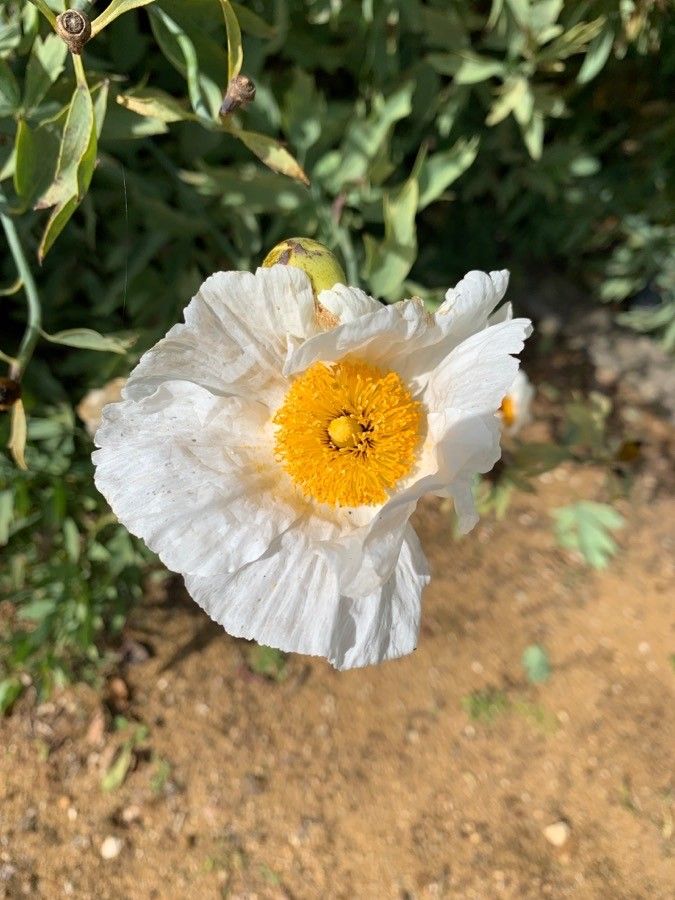
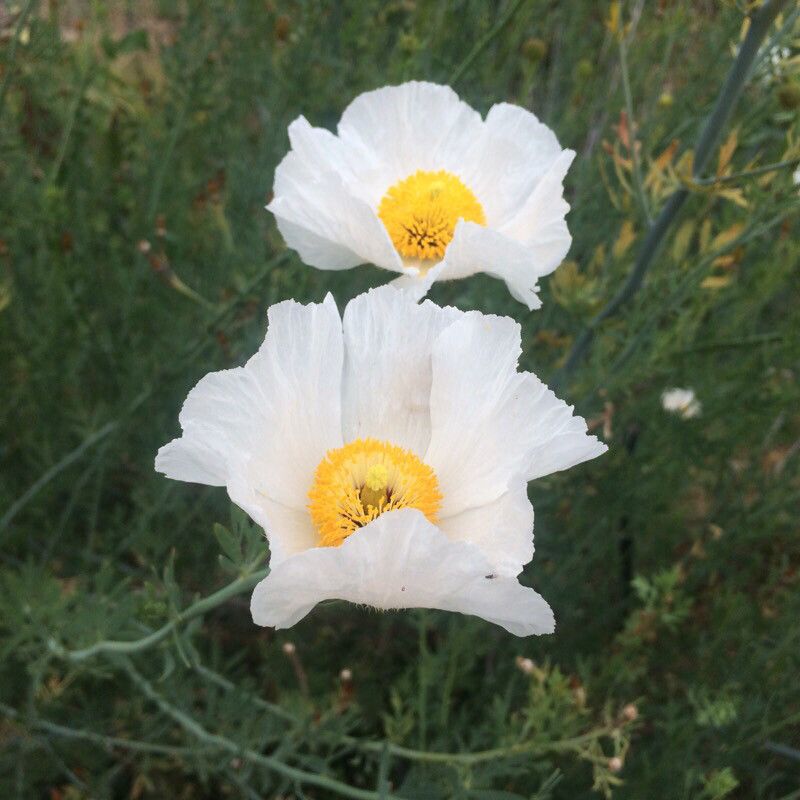
Romneya trichocalyx, commonly known as the bush poppy or hairy matilija poppy, is a perennial plant native to California and Baja California. This member of the Papaveraceae family is celebrated for its large, showy white flowers that bloom in late spring and early summer. The flowers feature a distinctive yellow center brimming with numerous stamens, creating a striking visual display.
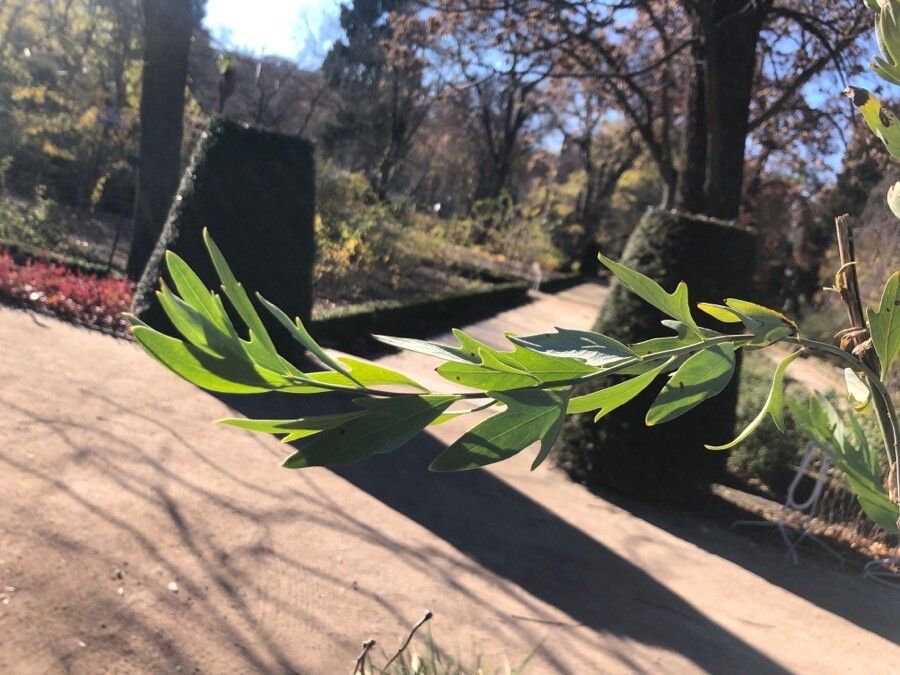
The bush poppy typically reaches a height of up to six feet, with a spread of four to six feet. It has gray-green, deeply lobed leaves and hairy stems, which is why it is also called the "hairy matilija poppy." The plant thrives in full sun but can tolerate some shade in hotter climates.
Once established, Romneya trichocalyx is drought-tolerant but requires regular watering during its first year of growth. It prefers well-draining soil with low fertility, as excessive nutrients can lead to rapid, weak growth.
Historically, Native Americans have used the bush poppy for medicinal purposes, including as an analgesic for toothaches, headaches, and other ailments. However, caution is advised when handling this plant, as all parts are toxic if ingested.
Overall, Romneya trichocalyx is an attractive addition to any garden or landscape. Its stunning blooms and low maintenance needs make it an ideal choice for those seeking drought-tolerant plants native to California's Mediterranean climate zone.
How to keep Romneya Trichocalyx.
Pruning
The bristly matilija poppy is known for its large, white, crepe-paper-like flowers. To maintain its health and encourage abundant blooming, prune the plant in early spring to remove any dead stems. This regular maintenance helps prevent legginess, enhances the plant’s vitality, and ensures robust growth. As a result, the flowers will be healthier and last longer throughout the season.
Botanical profile.
- Life Cycle
- Perennial
- Genus
- Romneya
- Family
- Papaveraceae
Other names.