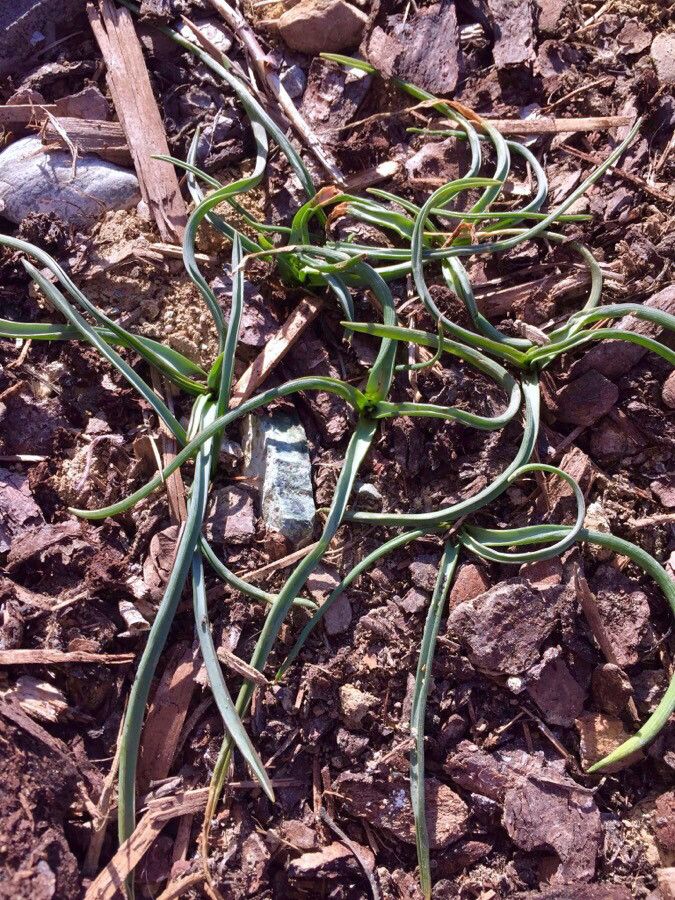
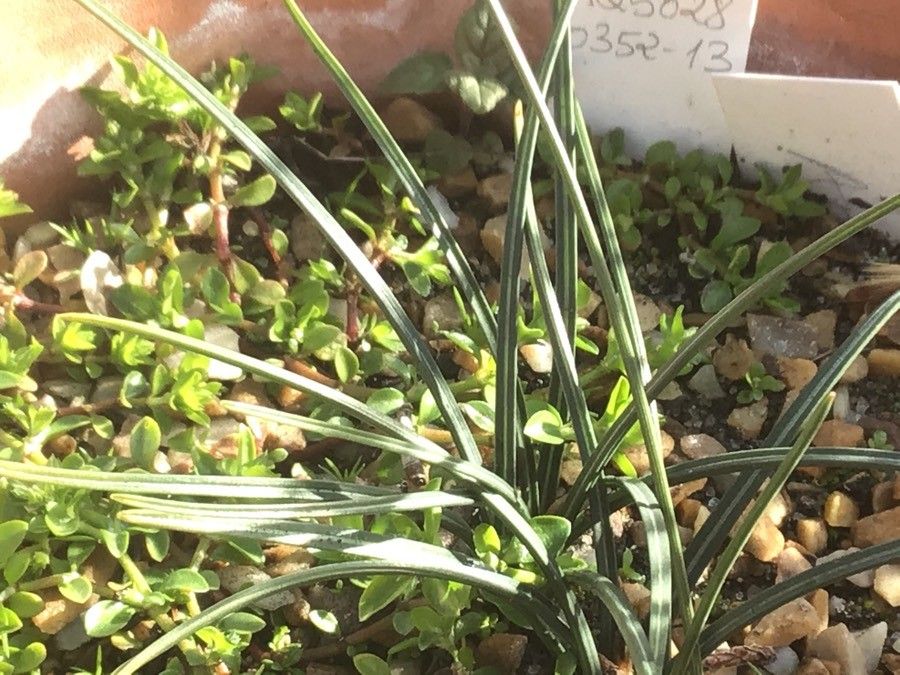
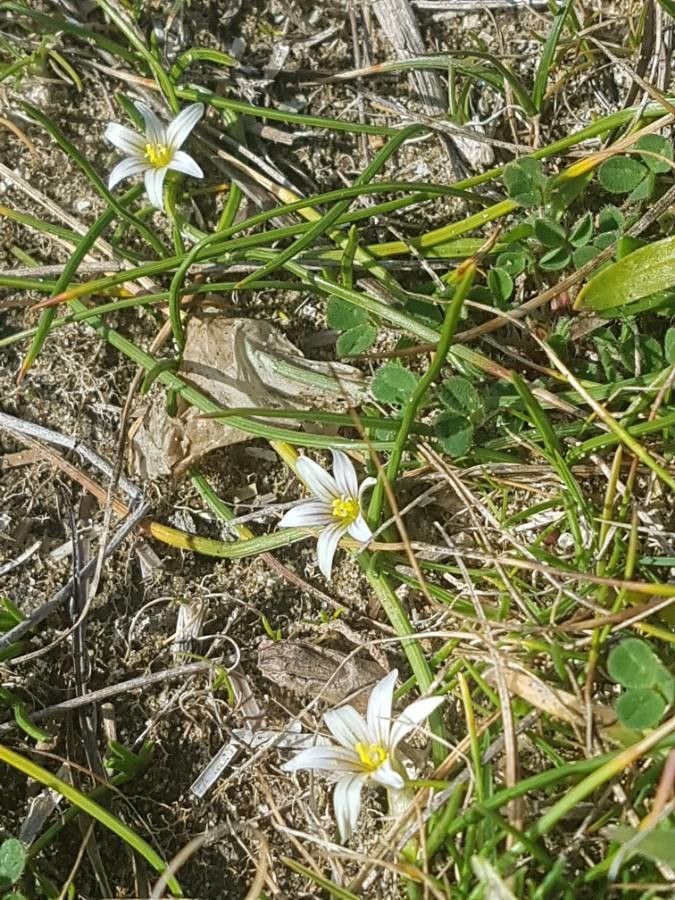
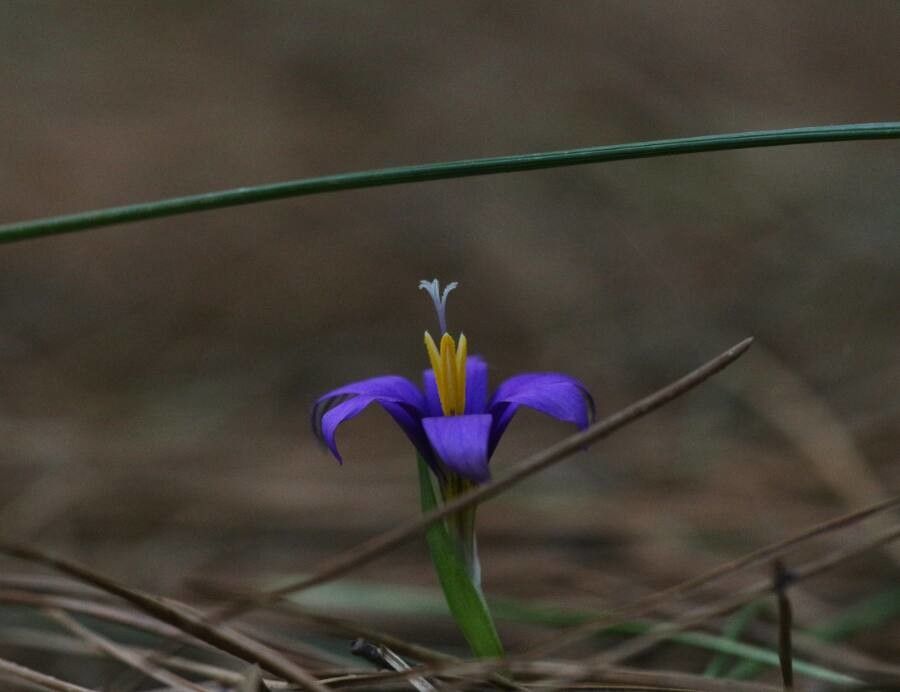
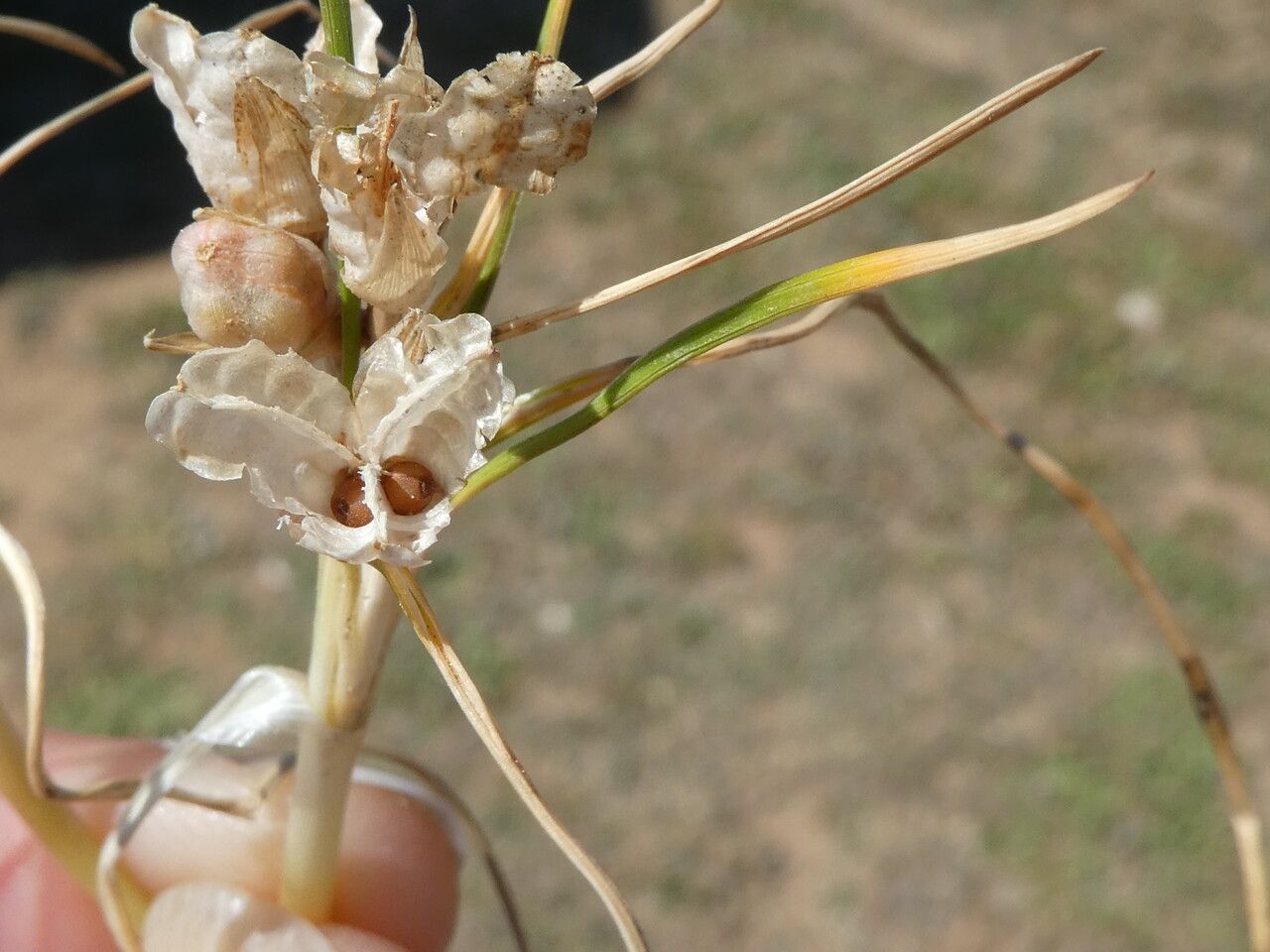
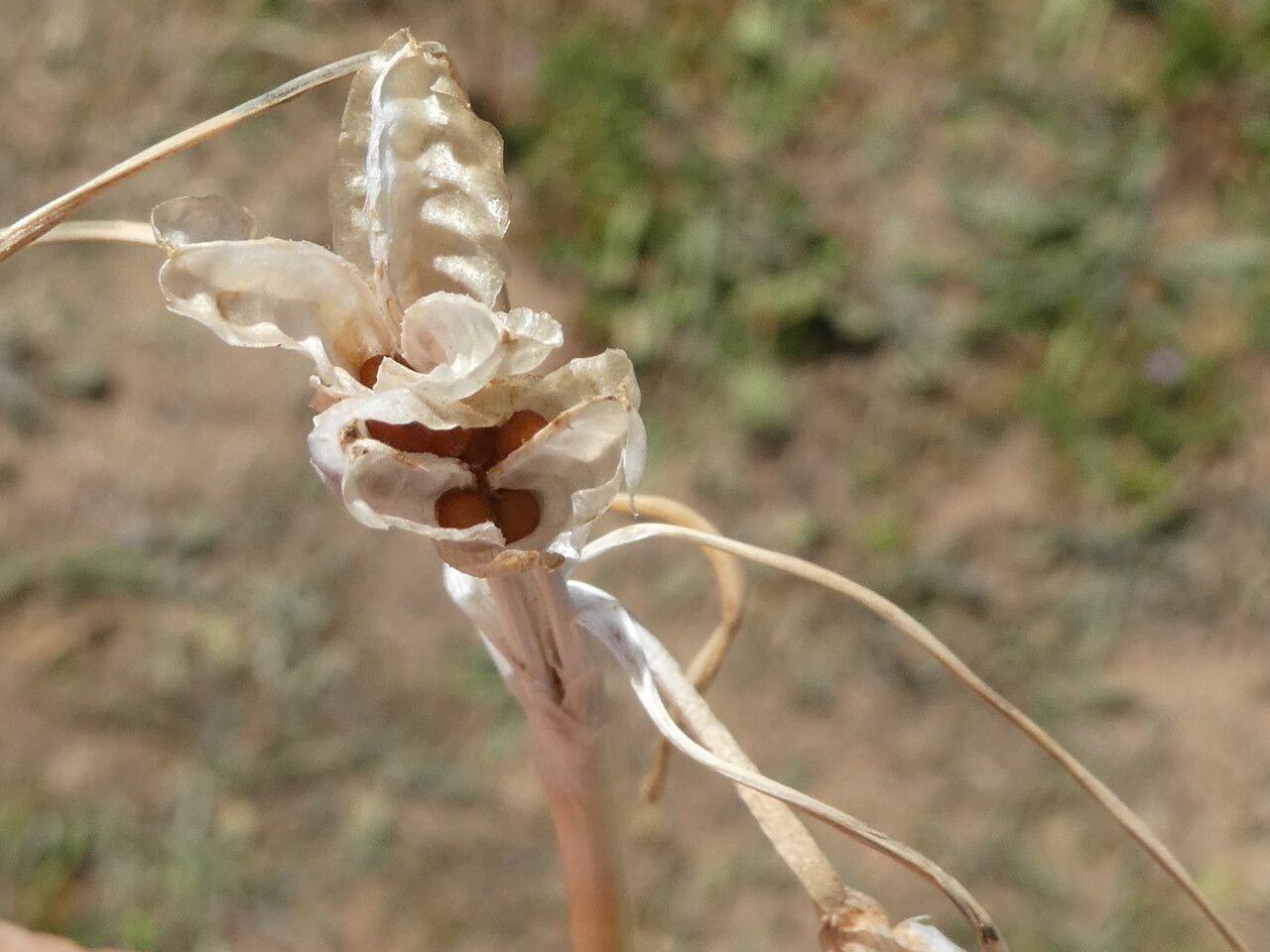
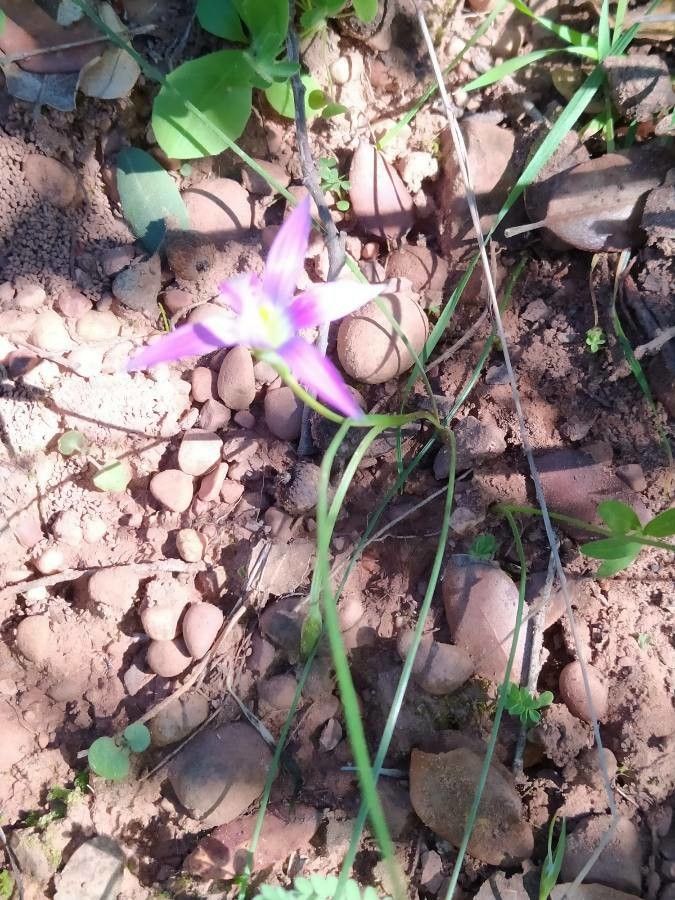
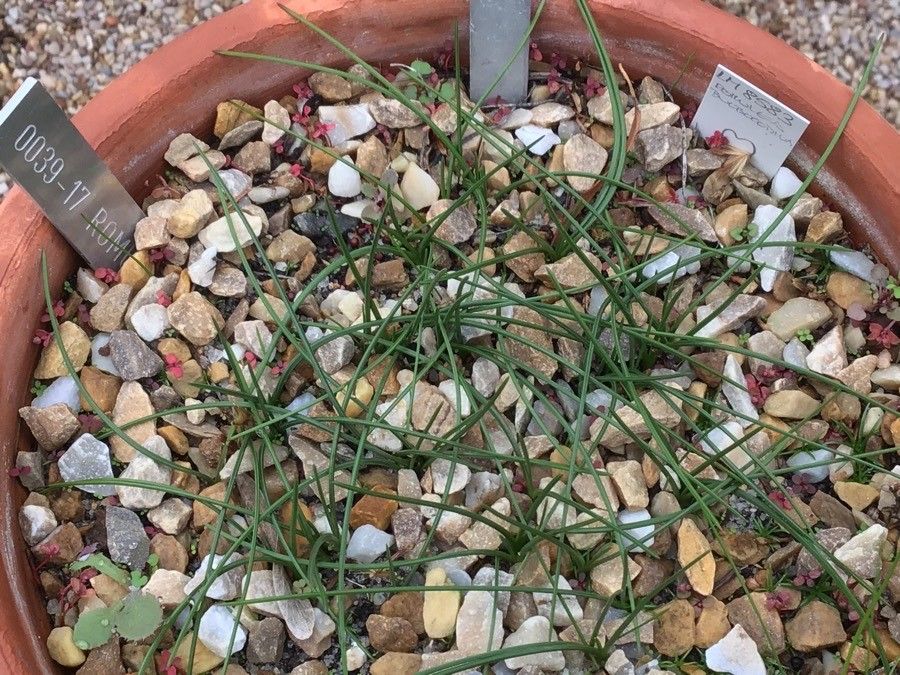
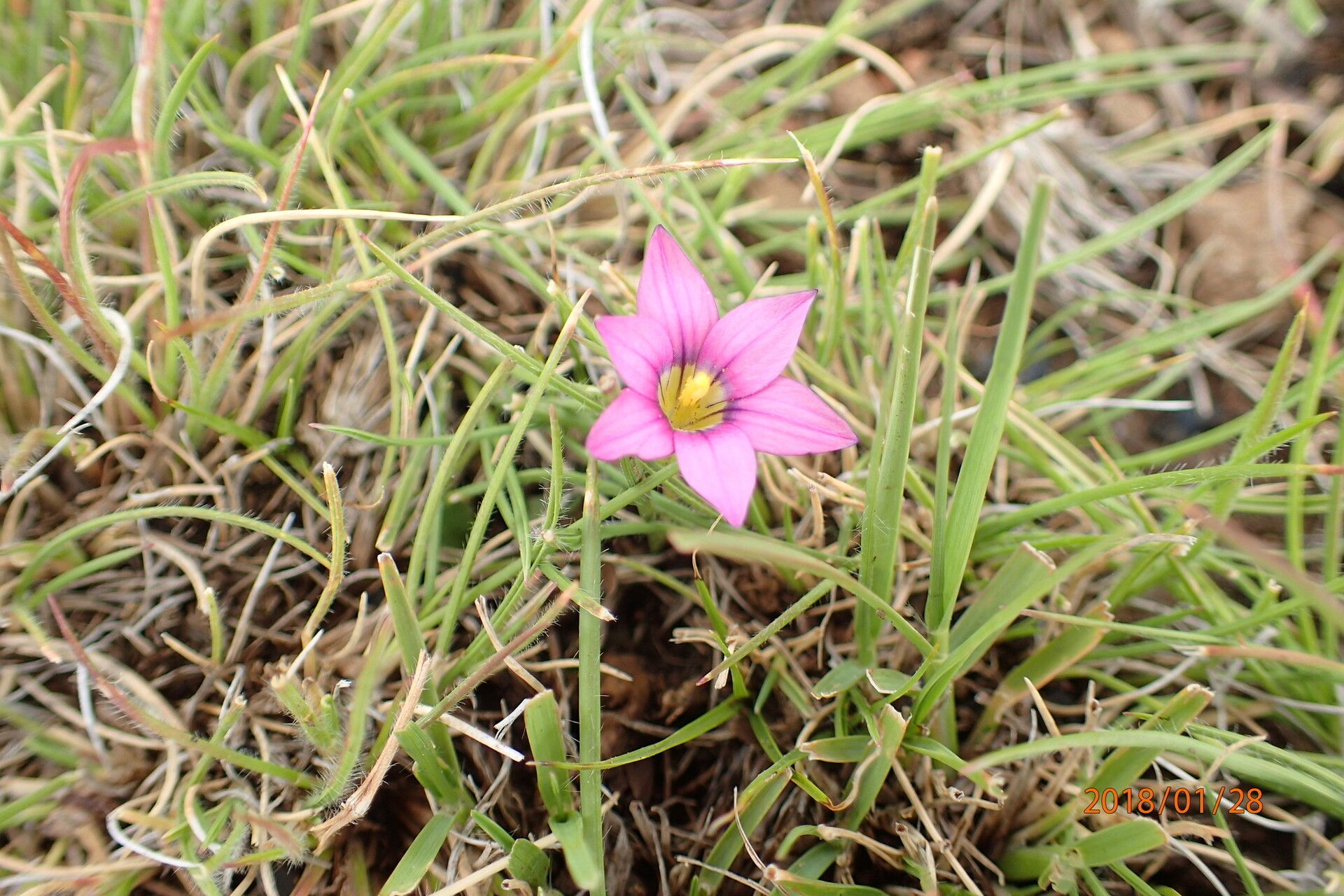
Romulea columnae is a small, perennial plant from the Iridaceae family, native to the Western Cape Province of South Africa. It thrives in sandy soils found in fynbos and renosterveld vegetation. This plant features a single, narrow leaf that can grow up to 10 cm long, emerging from an underground corm. The flowers are small, measuring just 1-2 cm across, and consist of six petals that are typically white or pale pink with yellow centers. These blooms appear from late winter to early spring.
Romulea columnae is easy to grow, favoring well-drained soil and full sun exposure. It can be propagated by dividing the corms or by sowing seeds in autumn or early winter.
Although the plant has no known medicinal uses, it is often employed as an ornamental garden plant due to its attractive flowers and ease of cultivation. However, it is not commonly grown outside its native range.
Overall, Romulea columnae is a charming little flower with a delicate beauty, perfect for adding interest to any garden setting!
Botanical profile.
- Plant Type
- Herb
- Life Cycle
- Perennial
- Genus
- Romulea
- Family
- Iridaceae
- Hardiness Zone
- 7-10
- Mature Height
- 20 cm
- Mature Spread
- 5 cm to 10 cm
- Leaf Color
- Dark Green
- Leaf Type
- Semi-evergreen
- Flower Color
- Lavender
- Flower Size
- 1.02 cm
- Bloom Time
- Early spring, Mid spring
- Planting Time
- Spring, Summer
- Harvest Time
- Late spring, Early summer
Other names.