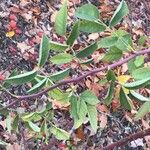
Rosa caesia
Hairy dog rose · Hairy northern dog rose · Northern dog rose
Description
Source: leafsnapRosa caesia is a species of flowering plant belonging to the family Rosaceae.It is native to Europe to Caucasus.
Care Guide
💧 Water Every 1-2 weeks
The hairy dog rose, native to temperate regions, thrives best when provided with moderate moisture. It should be watered once every 1-2 weeks. This plant does particularly well outdoors, where it can benefit from rainwater. Rainwater boosts its growth during the growing season and helps prevent issues like root rot and waterlogging.
☀️ Light Full sun
The hairy dog rose thrives best when given ample amounts of sunlight, much like its original environment known for abundant light. During its various stages of growth, the plant's development is best supported by constant sunlight. However, too much sunlight could detrimentally affect its growth, and the plant doesn't cope well with inadequate light.
🌡️ Temperature 0–32.2°C
The Hairy dog rose is a type of vegetation that originates from temperate climates, flourishing in a wide temperature spectrum between 32 and 90 °F (0 to 32 °C). For regions that are colder, it is advisable to provide extra heat during periods of below freezing temperatures to confirm its continued existence.
💨 Humidity
🪴 Soil 6-7
🌱 Fertilizer
The timing of fertilization for Hairy dog rose is of utmost importance. Apply the fertilizer at the onset of spring and keep this routine monthly until the start of summer. The role of the fertilizer is to aid in the production of beautiful flowers and to supply energy during both dormant and active growth stages.
🪴 Pot & Repot
✂️ Pruning
The hairy dog rose has thorny stems and beautiful blooms. To keep it healthy, prune it in early spring by removing dead branches and suckers. This enhances air circulation and promotes growth. Regular pruning not only encourages flowering but also prevents the plant from becoming too woody, ensuring it remains vibrant and long-lasting in the garden.
🌿 Propagating
🐛 Diseases & pets
☠️ Toxicity
Characteristics
- Plant Type
- Shrub
- Life Cycle
- Perennial
- Genus
- Rosa
- Family
- Rosaceae
- Hardiness Zone
- 3-8
- Mature Height
- 1.52 m to 2.13 m
- Mature Spread
- 0.91 m to 2.13 m
- Leaf Color
- Dark Green, Forest Green
- Leaf Type
- Deciduous
- Flower Color
- Pink, Purple
- Flower Size
- 5.08 cm
- Bloom Time
- Mid spring, Late spring
- Planting Time
- Spring, Summer, Autumn
- Harvest Time
- Late summer, Early fall, Mid fall
- Native Area
- Sweden, Austria, Czech Republic, Slovakia, Bulgaria, Poland, Slovenia, Belarus, Ukraine, Russia, Lithuania, Norway, Hungary, Germany, Italy, Spain, Switzerland, Denmark, Netherlands, Estonia, Finland, Ireland, United Kingdom, Romania, Latvia, Belgium, France