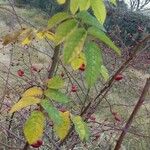
Rosa canina
نسترن · گل رز · سگ گل، · غوزه نسترن · Dog Rose
Description
Source: leafsnapRosa canina, commonly known as the dog rose, is a deciduous shrub in the Rosaceae family. Native to Europe, North Africa, and Asia, it can grow up to 3 meters tall. The plant showcases a sprawling growth habit with arching stems covered in sharp thorns. The leaves of Rosa canina are pinnate, comprising 5 to 7 leaflets with serrated edges. The flowers, which are pink or white, bloom from May to June. They emit a sweet fragrance that attracts bees for pollination. The fruit of Rosa canina is an oval-shaped hip that ripens from August to October. It is bright red or orange and contains numerous small seeds. Rosa canina has been used for medicinal purposes for centuries, largely due to its high vitamin C content, making it an effective treatment for scurvy. The plant also contains antioxidants, flavonoids, tannins, and essential oils, which have anti-inflammatory properties. Besides its medicinal uses, Rosa canina also has ornamental value due to its attractive flowers and fruit hips, making it popular as a garden plant or hedge shrub. In summary, Rosa canina is a highly valued species both for its medicinal properties and aesthetic appeal, making it a cherished plant for gardeners worldwide.
🌳 Dog rose has moved beyond being merely ornamental and makes a significant contribution to ecosystems. Its dense, thorny growth provides excellent shelter for birds and small mammals. The hips are an important food source for wildlife in the fall and winter months, especially for birds like thrushes and waxwings. It can also signal soil conditions: dog rose may show changes in leaf and stem morphology that indicate the presence of certain metals in its growth environment.
🎭 Affection, chastity, matrimony
Care Guide
💧 Water Every 7 days
The dog rose, a deciduous shrub native to Europe and Western Asia, thrives with moderate watering. It should be irrigated every 1-2 weeks but can tolerate short periods of dryness. Consistent moisture is particularly important during the growing season to ensure healthy flowering and growth. Ideally, it is best grown outdoors.
When Should I Water My Dog Rose?
Properly watering your dog rose is crucial for its growth, flower production, and disease resistance. The ideal time to water is when the top 1 to 2 inches of soil around the plant's base are dry to the touch. You can check the soil moisture level by inserting your finger or using a moisture meter. Pay attention to the plant's leaves as well; if they appear wilted, droopy, or lackluster, it might be time to water. The dog rose demands more water during its pre-flowering stage, in warmer temperatures, and when exposed to prolonged sunlight. However, watering too early when the soil is still moist can lead to diseases such as root rot. Similarly, watering too late can result in wilting and stunted growth. Monitoring these conditions will help you maintain a healthy watering schedule for your dog rose.
How Should I Water My Dog Rose?
Watering your dog rose correctly is important for its health and resilience. The dog rose thrives with overhead watering, ensuring to avoid excessive moisture on flowers and fruits. Water in the early morning or late evening to minimize evaporation. When using a watering can, opt for one with a long spout to direct water to the base and avoid wetting the foliage and flowers, which can lead to disease. A moisture meter can be a helpful tool to ensure you're providing just the right amount of water, focusing primarily on watering the base of the plant where the roots can absorb moisture without risking disease on the parts above ground.
How Much Water Does Dog Rose Really Need?
The amount of water your dog rose needs depends on various factors, including the pot size, root depth, and environmental conditions. Generally, a mature dog rose in a 20cm diameter pot should receive about 2 to 3 liters per watering session, ensuring the water reaches deep into the soil to accommodate the extensive root system. The soil should dry out slightly between watering sessions to prevent issues such as root rot. Proper hydration will result in lush, green leaves, firm stems, and ample flower production, while signs of overwatering include yellowing leaves and mold growth on the soil surface.
What Kind of Water is Best for Dog Rose?
Rainwater or filtered water, rich in minerals, is ideal for watering your dog rose, as the plant thrives best with these types. If using tap water, let it stand for a day to allow harmful chemicals like chlorine to evaporate, as dog rose is sensitive to chlorine. Distilled water, lacking essential minerals, is not recommended. Avoid the use of water with high mineral content to prevent leaf tip browning. Water at room temperature is preferred to avoid shocking the plant's roots.
How Do Dog Rose's Watering Needs Change with the Seasons?
The watering needs of dog rose vary by season. In spring, during its active growth phase, maintain consistent soil moisture. Summer brings a period of dormancy and drought resistance; reduce watering and allow the soil to dry slightly. In autumn, as the plant prepares for dormancy, decrease watering frequency while keeping the soil lightly moist. Winter requires minimal watering, allowing the topsoil to dry out between sessions, as the plant is dormant during this period.
☀️ Light Full sun
The dog rose requires a substantial amount of sunlight, which is helpful for its strong growth. It is essential that it gets plenty of unobstructed sunlight, although it can adjust fairly well in places where the sunshine is partially filtered. It thrives under the strong, direct sunlight in its natural habitat. Insufficient light can impede its connection with the sun, limiting its flowering, while excessive sunlight can put the plant under stress.
What are the sunlight requirements for Dog Rose?
Dog Rose requires a generous amount of sunlight to thrive, ideally benefiting from full sun exposure of above 6 hours of sunlight a day, though it can adapt to partial sun conditions of about 3-6 hours of sunlight. The plant flourishes under unimpeded sun rays in its native environment. Too little light can lead to suboptimal growth and flowering, while too much sun might stress the plant. It's crucial to find a perfect balance of light and shade to ensure the plant's happiness and robust growth.
How can artificial lighting be used for Dog Rose indoors?
When natural sunlight is insufficient, especially during winter or in spaces that don't get much sunlight, artificial lighting can be a viable solution to support Dog Rose's growth. For indoor plants, LED lights are a popular choice as they can be customized to provide specific wavelengths of light that plants need. Full sun plants require 30-50W/sq ft of artificial light, partial sun plants need 20-30W/sq ft, and full shade plants need 10-20W/sq ft. The light source should be placed 12-36 inches above the plant to mimic natural sunlight and should be kept on for 8-12 hours per day to simulate the length of natural daylight hours.
What are the symptoms of inappropriate sunlight exposure for Dog Rose?
Dog Rose may display several symptoms if it receives inappropriate sunlight exposure, including small and lighter-colored new leaves, leggy or sparse growth, faster leaf drop, slower or no new growth, chlorosis (yellowing leaves), sunscald, leaf curling, wilting, and leaf scorching. These symptoms can indicate either too much direct sunlight or insufficient sunlight, leading to stress and affecting the plant’s ability to photosynthesize and maintain overall health.
What solutions are available for managing Dog Rose’s light conditions?
To optimize Dog Rose's growth conditions and manage light exposure, you can gradually acclimate the plant to its ideal sunlight conditions. For indoor plants, move them closer to a south-facing window or use artificial light sources to provide at least 6 hours of direct sunlight daily. For outdoor plants, gradually move them to sunnier spots while avoiding sudden changes in light intensity to prevent sunburn. If necessary, prune nearby trees or bushes to reduce shade, or consider transplanting smaller plants to sunnier locations with good drainage. Remember, while the damaged parts may not recover, new growth should be healthy once the plant receives adequate sunlight.
🌡️ Temperature 5–35°C
The dog rose plant originates from temperate zones and is adaptable to diverse temperatures ranging from 5 to 35 ℃ (41 to 95 ℉). Nonetheless, it is more comfortable in a temperature range of 18 to 24 ℃ (64 to 75 ℉). Throughout the winter season, the plant enters a dormant state and can endure temperatures as chilly as -20 to -25 ℃ (-4 to -13 ℉). In warmer climates, it's advisable to position it in areas with partial shade to avert heat strain.
What are the temperature preferences and tolerances of the dog rose plant?
The dog rose plant, native to temperate regions, thrives in a temperature range of 18 to 24°C (64 to 75°F), though it can tolerate a wider range from 5 to 35°C (41 to 95°F). It becomes dormant in winter, withstanding temperatures as low as -20 to -25°C (-4 to -13°F). In hotter climates, it is advisable to plant it in partially shaded areas to prevent heat stress. The plant has a strong resistance to cold and generally does not need special frost protection. However, if temperatures are expected to drop significantly, it's crucial to provide protection by wrapping the trunk and branches with non-woven fabric or cloth. Additionally, ample watering before the first freeze of autumn is recommended to help the plant avoid drought stress during the colder months.
What should I do if my dog rose plant is exposed to temperatures below its cold tolerance level?
If the dog rose plant experiences temperatures below its cold tolerance level, you might not observe immediate damage during the winter. However, by springtime, the branches might become brittle, dry, and fail to produce new shoots. To handle this, trim away any dead branches that have not produced new leaves in the spring. This pruning helps encourage growth and maintains the health of the plant.
How should I care for my dog rose plant during high temperatures?
During the summer, if temperatures exceed the dog rose plant's tolerance, its leaves may turn lighter, and tips might dry out, making the plant vulnerable to sunburn. To mitigate heat stress, trim the sunburned and dried parts of the plant. Relocate the plant to an area that provides shade during the midday and afternoon, or use a shade cloth for protection. Ensure the soil stays moist by watering the plant in the morning and evening. These steps will help in protecting the plant from heat stress and maintaining its health.
💨 Humidity normal (40-60%)
This plant will thrive in moderate humidity, which is probably the level in your home. However, misting it a few times a week can be very beneficial. Make sure the room has good ventilation.
🪴 Soil 5-7
🌱 Fertilizer
For robust growth, apply fertilizer to your Dog rose at the beginning of spring. Consistent fertilization boosts overall well-being, promoting sturdy growth, the ability to withstand harsh environments, and heightened resistance to diseases and pests. Adhere to a particular fertilization routine for your Dog rose to guarantee vivid leaves with rich color and a dense look.
Why should I use fertilizer on my Dog rose?
No matter what type of Dog rose you have, regularly fertilizing it is crucial for its overall health. Supplying the proper nutrients promotes vigorous growth, making the plant more resilient to harsh conditions and better equipped to fight off diseases and pests. Keeping the foliage intact is important because it is one of the most attractive features of your Dog rose. To achieve this, follow a regular fertilization schedule that is specific to your Dog rose. This will result in the development of deep-colored leaves and an overall lush appearance.
When should I fertilize my Dog rose plant?
To help your Dog rose grow healthily, it's recommended to fertilize it during late winter or early spring. This provides the necessary nutrients for the rose to thrive once the weather warms up. If you live in a warm climate, it's also beneficial to fertilize your Dog rose again during early fall to supplement the soil with nutrients for the upcoming growing season. This fall fertilization strengthens the rose and helps it withstand winter without foliage damage. Fertilizing earlier in the year ensures that the new branches have sufficient time to grow and withstand the cold winter.
When is it not a good time to fertilize my Dog rose?
Avoid fertilizing your Dog rose during certain times of the year. First, do not fertilize during early and mid-winter when the plant is dormant. Similarly, avoid fertilizing in late spring and throughout summer when it is hotter and drier. These conditions can have a negative impact on the plant's response to fertilization. Instead, follow a fertilization schedule that focuses on early spring and early fall feedings.
What kind of fertilizer does my Dog rose plant need?
The most important nutrient for a Dog rose is usually nitrogen, but phosphorus and potassium are also important. So, a balanced fertilizer like a 10-10-10 can be effective as it provides all three nutrients in decent amounts. However, a more nuanced ratio of nutrients, with higher nitrogen content like 10-6-4, often leads to optimal growth. You can use either granular or liquid-based fertilizer when feeding your Dog rose.
How do I give my Dog rose plant some plant food?
To fertilize your Dog rose using granular fertilizer, simply sprinkle it on the soil at the right time. The nutrients in the granular fertilizer will be released slowly over time. It's generally a good idea to lightly water your Dog rose before applying the fertilizer. If you prefer, you can use liquid fertilizer instead, but this is not as common. To do so, mix the fertilizer with water and pour it around the base of your Dog rose. Sometimes, it's helpful to do a soil test before fertilizing to check if you need to adjust the pH.
🪴 Pot & Repot 2-3 years
When you're replanting Dog rose, select a pot that is 1-2 inches (2.5-5 cm) bigger with sufficient drainage. Utilize a potting mix that drains well. Choose to repot either in the spring or the fall, making sure the root ball sits a bit below the flower pot rim. After the repotting process is complete, water the plant generously and position it in a cosy area that receives indirect sunlight.
✂️ Pruning
The dog rose is a hardy, deciduous shrub known for its fragrant flowers. To maintain its health and encourage growth, prune it in early spring. Focus on removing dead wood, trimming old canes, and thinning out crowded areas. This will promote vigorous growth and robust flowering, while also improving air circulation. As a result, you'll have healthier, more resilient plants with abundant blooms.
🌿 Propagating
🐛 Diseases & pets
☠️ Toxicity
Rosa canina is generally non-toxic. Coming with such a rich history, this plant has been used medicinally since the time of Hippocrates. Many years ago, the root was known to be able to cure the bite of a wild dog (inspiring the common name, "dog rose"). During World War II, when Britain could not import citrus fruits, the government welcomed the people to eat dog rose hips to treat Vitamin C deficiency. Before consuming the hips, remove the surface hairs, which could aggravate the throat and digestive tract. When eaten mindfully, petals and hips can actually treat digestive ailments and offer flavor in many forms. Harvested hips can be made into tea, syrups, and jams.
Characteristics
- Plant Type
- Shrub, Vine
- Life Cycle
- Perennial
- Genus
- Rosa
- Family
- Rosaceae
- Hardiness Zone
- 5-9
- Mature Height
- 0.91 m to 4.88 m
- Mature Spread
- 0.91 m to 4.57 m
- Leaf Color
- Green, Blue
- Leaf Type
- Deciduous
- Flower Color
- Pink, White
- Flower Size
- 4.06 cm to 6.35 cm
- Bloom Time
- Late spring, Early summer, Mid summer
- Planting Time
- Autumn, Winter, Spring
- Harvest Time
- Mid summer
- Native Area
- Turkey, Sweden, Austria, Slovakia, Montenegro, Pakistan, Slovenia, Morocco, Croatia, Belarus, Uzbekistan, Russia, Iraq, Germany, Romania, Belgium, Moldova, Portugal, Netherlands, France, Tajikistan, Tunisia, Czech Republic, Cyprus, Bulgaria, Poland, Armenia, Greece, Ukraine, Serbia, Lebanon, Norway, Afghanistan, Syria, Kyrgyzstan, Kazakhstan, Italy, Spain, Switzerland, Denmark, Finland, Iran, Albania, Ireland, United Kingdom, Hungary, Algeria, Azerbaijan, Turkmenistan