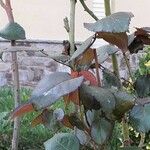
Rosa chinensis
رز بنگال · رز مینیاتوری ( رز چینی) · ورد بلدي · Τριανταφυλλιά · Bengal rose
Description
Source: leafsnapRosa chinensis, commonly known as the China rose or Chinese rose, is a species of flowering plant in the family Rosaceae. Native to China, it has been cultivated for thousands of years for its ornamental beauty and medicinal properties. The plant typically grows up to 2 meters tall and produces large, fragrant flowers in shades of pink, red, or white. Its leaves are dark green, glossy, and have serrated edges. In traditional Chinese medicine, the China rose has been used for its anti-inflammatory properties and to treat digestive disorders, menstrual problems, and skin conditions. Beyond its medicinal applications, it is also a popular ornamental plant in gardens around the world. The China rose thrives in full sun exposure with well-drained soil rich in organic matter. It can be propagated through cuttings or seeds but requires regular pruning to maintain its shape. Overall, Rosa chinensis is a stunning flowering plant that offers both aesthetic appeal and medicinal benefits, making it an excellent addition to any garden or herbal medicine cabinet.
💡 The China rose comes in various colors, each with its own unique meaning. Red symbolizes love, while pink represents first love. White stands for purity and loyalty, and blue conveys affection. Black roses are rarely sent, as they carry several meanings, most of which are negative. Therefore, when giving these flowers as a gift, select a color that aligns with your intentions.
🌳 The china rose pleases both the eyes and the palate. Known for more than its appearance, these striking flowers lend a subtle fragrant note to dishes, enhancing the taste. Surprisingly, the plant's colorful, vitamin-rich hips are ideal for making delicious jams, revealing a tasty aspect of the china rose's beauty.
🎭 Joy, long life, perpetual spring
Care Guide
💧 Water Every 7 days
The China rose originates from humid subtropical regions and thrives in conditions with consistent moisture, although it's important to avoid waterlogging. It typically needs watering every 1-2 weeks. When grown outdoors, this plant benefits from plenty of sunlight and good air circulation. During its active growing season, occasional rainwater can help enhance its flowering potential.
When Should I Water My China Rose?
Watering your China Rose is essential for its health, growth, and flowering. The ideal time to water is when the top 1 to 2 inches of soil is dry. Pay attention to the plant's leaves; wilted or discolored leaves can indicate a need for water. The china rose requires more water during warm temperatures, high sunlight exposure, and, importantly, in its pre-flowering stage to prevent bud drop. Be careful not to water too early or too late to avoid risks like root rot or stunted growth due to dehydration.
How Should I Water My China Rose?
Water your China Rose by focusing on keeping the soil moist and ensuring good drainage to avoid waterlogging. Bottom-watering is recommended, where you place the pot in a tray of water for about 30 minutes, allowing the roots to absorb water without oversaturating the soil's surface. Misting the foliage can help in dry conditions but avoid excessive misting to prevent fungal diseases. Use a watering can with a narrow spout to direct water to the base and avoid wetting the foliage, and consider using a moisture meter to better gauge the soil's moisture level for optimal hydration.
How Much Water Does China Rose Really Need?
The amount of water your China Rose needs depends on its size, pot size, and root depth. Generally, water until it begins to drain from the bottom of the pot, ensuring even and adequate soil moisture. This often amounts to one to two liters of water for a standard 12-inch pot. Observe your plant for signs of adequate watering or the need for more; healthy plants should have vibrant colors and perky leaves. Adapt your watering strategy based on weather conditions, watering more during hot and dry weather.
What Kind of Water is Best for China Rose?
Distilled water or rainwater is ideal for China Rose, as they are free from chemicals and minerals that might affect the plant's health. While tap water is generally suitable, letting it sit for 24 hours before use allows chlorine to evaporate, making it safer for the plant. Be mindful of China Rose's sensitivity to fluoride, chlorine, and high mineral levels like sodium and boron. To avoid issues, use filtered water or let tap water sit out to evaporate harmful components and ensure the water is at room temperature.
How Do China Rose's Watering Needs Change with the Seasons?
China Rose's watering needs vary with the seasons. In spring, water regularly to support active growth, ensuring consistent soil moisture. During summer, reduce watering frequency, allowing the soil to dry slightly between waterings. In autumn, decrease watering frequency further as the plant prepares for dormancy, but keep the soil lightly moist. In winter, water sparingly, allowing the topsoil to dry out between watering sessions, as the plant's moisture requirements are minimal.
☀️ Light Full sun
The growth of China rose is most robust in regions that get a generous amount of sunlight during the day. It can also tolerate moderate light exposure. Inadequate light can result in diminished growth and pale flowers, but if it's overexposed, it may result in leaf sunburn, particularly in the summer months.
What are the sunlight requirements for China Rose?
China Rose (Rosa chinensis) thrives best in conditions where it receives full sun, which is defined as more than 6 hours of sunlight daily. It can also tolerate partial sun, receiving about 3-6 hours of sunlight. It's vital to observe how sunlight moves through your garden, allowing you to select spots that offer an ideal balance of light and shade, ensuring the plants' well-being.
How does inadequate sunlight affect China Rose?
Insufficient sunlight can have several adverse effects on China Rose, including stunted growth and faded blooms. Underexposure may lead to these undesirable outcomes, while overexposure might cause sunburn on the leaves, especially during the summer months. Therefore, it's crucial to provide ample light throughout the day, with partial exposure to light also being tolerable.
Can artificial lighting be used for China Rose, and how?
Yes, artificial lighting can be a vital solution for China Rose, especially when natural sunlight is insufficient, such as during winter or in less sunny spaces. LED lights, which can be tailored to provide specific wavelengths needed by plants, are recommended. For full sun plants, 30-50W per square foot is needed, 20-30W per square foot for partial sun plants, and 10-20W per square foot for full shade plants. The light source should be placed 12-36 inches above the plant, mimicking natural sunlight's distance, and it should remain on for 8-12 hours per day to imitate the length of natural daylight hours.
What are the symptoms of light deficiency in China Rose?
China Rose may display several symptoms due to light deficiency: leggy or sparse growth, faster leaf drop, impact on flowering and fruiting, chlorosis, sunscald, leaf curling, wilting, and leaf scorching. These issues range from stretched-out appearances and yellowing leaves to physical damage from intense sunlight exposure, such as bleached or necrotic areas on plant tissues.
What solutions are available for China Rose's light-related issues?
To address light-related issues in China Rose, gradually move plants to sunnier locations to receive at least 6 hours of direct sunlight daily, and consider using artificial light for additional support. Ensure a south-facing window is utilized and keep curtains open during daylight for maximum exposure. For outdoor plants, avoid sudden changes in light intensity to prevent sunburn. Reducing obstructions, such as pruning trees that block sunlight, can also help, along with transplanting smaller plants to sunnier spots during their dormant period for better growth outcomes.
🌡️ Temperature 5–37.8°C
The China rose plant thrives best in a temperature spectrum of 41 to 100 ℉ (5 to 38 ℃). It originates from regions with a temperate climate that experiences mild temperature changes. To ensure its sustained growth during various seasons, it is recommended to modify the temperature in correspondence.
What is the optimal temperature range for growing China Rose?
China Rose thrives in a temperature range of 41 to 100°F (5 to 38°C), which is typical for its native temperate regions. These areas experience moderate temperature fluctuations, making China Rose adaptable to various seasonal conditions. To promote optimal growth, it's recommended to adjust temperatures accordingly throughout the year. Despite its strong cold resistance, meaning special winter frost protection measures aren't usually necessary, it's important to prepare for temperatures dropping below -25°C by protecting the plant.
How do I protect China Rose in winter?
Although China Rose shows a strong resistance to cold, it's crucial to protect it when winter temperatures are expected to fall below -25°C. Protection can be provided by wrapping the trunk and branches with insulating materials such as non-woven fabric or cloth. Additionally, watering the plant abundantly before the first freeze in autumn, ensuring the soil remains moist, aids in preventing drought and water scarcity during winter and early spring by having the soil enter a frozen state with moisture.
What should I do if the temperature falls below the recommended range for China Rose?
For China Rose, maintaining a temperature above 5°C is ideal, especially during winter. If temperatures drop below -25°C, you might not observe immediate changes, but come spring, you may find the branches brittle and dry, with no new shoots emerging. The remedy is fairly straightforward; prune away any dead branches that fail to produce new leaves in the spring to encourage healthy new growth.
What measures should I take if China Rose experiences temperatures above its tolerance during summer?
During summer, it's essential to keep China Rose's surroundings below 38°C. Exceeding 43°C can cause the leaves to lighten in color, the tips to become dry and withered, and increase the plant's susceptibility to sunburn. To mitigate these conditions, trim away the sunburned and dried-up parts of the plant. Moving it to a location with shade during the midday and afternoon sun or using a shade cloth can also be beneficial. It's important to water the plant in the morning and evening to maintain soil moisture.
💨 Humidity normal (40-60%)
This plant will thrive in moderate humidity, which is probably the level in your home. However, misting it a few times a week can be very beneficial. Make sure the room has good ventilation.
🪴 Soil 6-7
🌱 Fertilizer
The timing for fertilizing a China rose is vital. Begin fertilizing in the early spring and continue on a monthly basis until early summer. The role of fertilizer is to aid in the production of beautiful blooms and to supply energy during both dormant and active growth stages.
Why should I add fertilizer to my China rose?
Fertilizing your China rose is important for several reasons. Firstly, it helps the flower produce beautiful blooms. The best time to fertilize it is early spring, as this ensures excellent flowers during that season. Additionally, fertilizer provides the rose with the energy it needs to store in the ground during its dormant growth phases. By giving it extra nutrients during fall planting or late spring, the rose will have more energy to use once active growth resumes.
When should I fertilize my China rose for the best results?
For effective fertilization of China rose, timing is crucial. Applying fertilizer too early while the China rose is still dormant will be ineffective and wasteful, as it will be washed away by rainwater, causing pollution. The first application of fertilizer should be done in early spring, followed by monthly fertilization until early summer.
When is the best time to not fertilize my China rose?
To ensure healthy blooming, be cautious about the nitrogen content in the fertilizer used for China rose. Excessive nitrogen can result in excessive foliage growth but fewer blooms. Opt for a fertilizer with a lower nitrogen level compared to other nutrients. Avoid fertilizing after early autumn, as this can promote excessive growth just before winter. Additionally, refrain from fertilizing during hot and dry periods when the soil is dry, as it will not effectively deliver the fertilizer and can lead to stimulated growth that requires more water. It is advisable to use fertilizer during the earlier part of the season when temperatures are cooler. Lastly, be mindful that China rose can absorb fertilizer applied to nearby plants or lawns, so be cautious of inadvertently giving the tree/shrub a double-dose of fertilizer.
What kind of fertilizer does my China rose need?
To promote optimal growth and blooming of a China rose, it is recommended to use a fertilizer with a balanced mix of essential plant nutrients, especially phosphorus. Alternatively, organic materials such as compost, worm castings, and manure can be added to improve the soil. To further enhance flower development, experienced gardeners may supplement with water-soluble fertilizers containing phosphorus when the flower buds start to appear. These fertilizers can come in various forms and will generally be effective for your China rose. However, liquid or powdered fertilizers are often considered the best options. Regardless of the chosen type, it is important to dilute the fertilizer and apply it while watering your China rose.
How can I give nutrients to my China rose plant?
To properly fertilize your China rose, always follow the directions for the specific type of fertilizer and conduct research on how to use it. It's crucial not to over-fertilize, so determining the appropriate amount is important. The general guideline is to use the age or trunk diameter of the tree. Estimate using a tenth of a pound of fertilizer per year or per inch of trunk, up to a maximum of one pound. For granular and organic fertilizers like blood meal, apply the substance by sprinkling it around the base of the tree, all the way to the drip line (the area beneath the farthest-reaching branches). Be careful not to let the fertilizer touch the trunk. Over time, the granules will break down and filter into the soil for the roots to absorb. After fertilizing, spread a layer of compost about an inch deep around the base of the tree and water thoroughly.
🪴 Pot & Repot 2-3 years
When transferring a China rose to a new pot, opt for one that is 1-2 inches (2.5-5 cm) larger and has sufficient drainage. Utilize a potting mix that drains well. Carry out the repotting during the spring or autumn, making sure that the root ball is positioned a little below the edge of the flower pot. Thoroughly moisten the plant after repotting and position it in a cozy location receiving indirect sunlight.
✂️ Pruning
The China rose benefits greatly from early spring pruning. By removing dead wood and thinning out crowded canes, you can improve air circulation around the plant. To encourage blooming and maintain an attractive shape, lightly trim any new growth. Additionally, regularly deadhead spent blooms to enhance the plant's health and appearance. This practice not only reduces the risk of disease but also promotes vibrant floral displays.
🌿 Propagating
🐛 Diseases & pets
☠️ Toxicity
Characteristics
- Plant Type
- Shrub, Vine
- Life Cycle
- Perennial
- Genus
- Rosa
- Family
- Rosaceae
- Hardiness Zone
- 5-11
- Mature Height
- 0.91 m to 2.13 m
- Mature Spread
- 0.91 m to 1.83 m
- Leaf Color
- Green
- Leaf Type
- Deciduous, Semi-evergreen
- Flower Color
- Red, Pink, White, Yellow
- Flower Size
- 4.06 cm to 5.08 cm
- Bloom Time
- All year round
- Planting Time
- Spring, Autumn
- Harvest Time
- All year round
- Native Area
- China