Rosa cymosa
Description
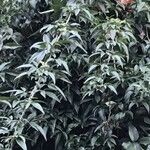
Source: leafsnapRosa cymosa is a species of climbing rose native to China, where it grows from the east coast in Fujian to western Sichuan at up to 1300 m, in warm areas in scrub and gorges, and in bamboo plantations. It is sometimes called the elderflower rose as its flower formation resembles elderberry (Sambucus) flowers. Rosa cymosa has long smooth or hairy stems to 5 m, with a few, hooked thorns. Shoots and leaves are bright red when young. The leaflets are narrowly lanceolate, rounded at the base, and acuminate with a slender, curved point. Stipules are narrow and not attached to the stalk, or soon falling. The pedicels are slender. Flowers small and numerous, in a compound umbel or corymb, creamy-white, 1–1.5 cm across. The hips very small and round, around 5 mm across, and are dull or scarlet-red in color with many small seeds. Rather tender, probably best grown in a greenhouse or conservatory in frosty climates. Flowers in late May and early June.
Care Guide
💧 Water
Elderflower rose originates from moist environments and thrives in well-hydrated soil with consistent moisture. Although it can tolerate moderate drought conditions, it grows best when watered twice a week. Typically grown outdoors, its growth cycle, flowering, and overall health are greatly influenced by the availability of water.
☀️ Light Full sun
Scentless rose comes from open habitats, like sunny meadows and the edges of forests, which offer plenty of light. It does best in Full Sun but will also tolerate Partial Sun, adjusting well to different sunlight levels.
🌡️ Temperature 5–35°C
The scentless rose tolerates a wide range of climate conditions, from blistering summers to frosty winters. However, it does have an ideal temperature range for growth. When temperatures become too high, the plant is susceptible to heat and humidity stress, which can cause it to die. In areas where temperatures approach the lower limit of its cold tolerance, it is important to provide insulation to protect the plant.
💨 Humidity
🪴 Soil 5-7
🌱 Fertilizer
Timing is important when fertilizing Scentless rose. Fertilize in early spring and continue monthly until early summer. Fertilizer encourages lovely blooms and supplies energy during both dormant and active growth phases.
🪴 Pot & Repot
✂️ Pruning
The elderflower rose showcases graceful, arching canes and delicate white blooms. To maintain its health and appearance, prune the plant in early spring to remove dead wood and shape it effectively. Thinning out crowded growth will enhance air circulation, which in turn promotes better flowering. Use sharp, sterilized tools to make precise cuts just above outward-facing buds, ensuring improved health and bloom production.
🌿 Propagating
🐛 Diseases & pets
☠️ Toxicity
Characteristics
- Plant Type
- Shrub
- Life Cycle
- Perennial
- Genus
- Rosa
- Family
- Rosaceae
- Hardiness Zone
- 4-9
- Mature Height
- 0.91 m to 2.13 m
- Mature Spread
- 0.91 m to 1.52 m
- Leaf Color
- Green, Dark Green
- Leaf Type
- Deciduous
- Flower Color
- Pink, White
- Flower Size
- 4.06 cm to 6.35 cm
- Bloom Time
- Early summer, Mid summer
- Planting Time
- Spring, Summer, Autumn
- Harvest Time
- Late summer, Early fall, Mid fall
- Native Area
- Sweden, Austria, Czech Republic, Slovakia, Poland, Croatia, Slovenia, Belarus, Ukraine, Norway, Hungary, Germany, Italy, Spain, Switzerland, Netherlands, Romania, Belgium, Moldova, France