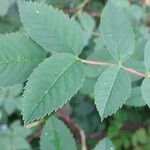
Rosa dumalis
Glaucous dog rose · Short-pedicelled Rose · Dog Rose · Nyponros
Description
Source: leafsnapRosa dumalis, commonly known as the Glaucous Dog Rose, is a deciduous shrub belonging to the Rosaceae family. Native to Europe and Western Asia, it can grow up to 2 meters in height. The plant features arching, thorn-covered stems and a sprawling habit. Its pinnate leaves consist of 5-7 bluish-green leaflets with serrated edges. The flowers of Rosa dumalis, which appear from late spring to early summer, are pink or white with five petals and exude a sweet fragrance that attracts bees, butterflies, and other pollinators. Following the flowering period, the plant produces small, red or orange hips containing seeds. Rosa dumalis thrives in well-drained soil and can grow in full sun or partial shade, though it tolerates some shade as well. While it is drought-tolerant once established, regular watering during dry spells benefits its growth. The Glaucous Dog Rose has been valued for medicinal purposes for centuries, primarily due to the high vitamin C content in its hips, which can be used to make tea or jam. Additionally, its attractive flowers and foliage make it a popular ornamental plant. Overall, Rosa dumalis is an appealing shrub that offers both ornamental beauty and medicinal benefits, making it an excellent addition to any garden landscape design.
🌳 The Glaucous Dog Rose is a fragrant rose bush that would make a lovely addition to any rose or shrub garden. Its delightful and abundant blooms appear during the summer months, providing vibrant color. In late summer and early fall, it also produces decorative rose hips, extending its season of visual interest. This plant thrives in both sunny and partially shaded areas, making it a versatile choice for your garden.
Care Guide
💧 Water Every 7 days
The glaucous dog rose thrives in dry conditions and is drought-tolerant. Once established, it only needs to be watered every three weeks. This plant does well outdoors in temperate areas and adapts easily to changes in moisture levels throughout the seasons.
How should I water my Glaucous dog rose plant?
To ensure excellent root development for your plants, consider using a garden hose placed at the base. Keep in mind that spraying the leaves directly should be avoided. If the plants are outdoors and exposed to direct sunlight, the leaves will require more watering. You can use bubblers or soaker hoses to moisten the roots individually or cover the entire garden or bed. When adding or removing plants, using soaker hoses can help push the roots deeper. Remember to drain any excess water and allow the soil to dry before watering again. To prevent diseases, it is best to water at ground level. On a sunny day, spraying the entire bush with water can be beneficial. Whether your plant is potted or in the ground, keep in mind that deep watering is preferred over light sprinkling for Glaucous dog rose.
What should I do if I give too much or too little water to the Glaucous dog rose plant?
If you overwater a Glaucous dog rose, you will start to notice that the leaves turn yellow, wilt, and drop off. The plant will also look unhealthy, with mushy stems. When you see these signs, try to adjust your watering schedule. Wilting can also indicate under watering, which is when the leaves turn crispy and dry. If the soil is dry, watering alone may not be enough, so give it a thorough watering. This will help the plant recover, but it may still have dry, yellow leaves for a few days due to root damage. Once the plant returns to normal, the yellowing leaves will stop. When you have a Glaucous dog rose indoors, always check the moisture levels in the pot and be careful not to overwater. Look for signs of black spots, which suggest overwatering. If you see these spots, let the soil dry out for a few days before watering again. Overwatering can lead to root rot, so if you notice discolored and slimy roots, consider transferring the plant to a different pot. It's important to prevent root rot by not allowing the soil to become too soggy. When planting a Glaucous dog rose outdoors, be sure to dig a little deeper. If the soil feels too dry when you check it with your fingers, it could mean underwatering. Proper watering is necessary for the plant to recover.
How frequently should I water my Glaucous dog rose?
The Glaucous dog rose prefers deep and infrequent watering. When planted in pots, it's important to soak them in a gallon of water each time, as the limited water storage in pots causes the soil to dry out faster. In cold regions, watering is needed every 3 to 5 days. It's best to water early in the morning when the soil is dry, both outdoors and indoors. To determine if watering is needed, check the soil inside the pot. When the top 2-3 inches of soil are dry, it's time for a full watering. During hot days, check the moisture daily as the heat can quickly dry out the soil. If you have a garden, irrigation of the soil is necessary. In hot climates, water once a week when you notice that about 2 to 3 inches of soil are too dry. Be mindful of the amount of rainfall, as excessive water can lead to root rot. Glaucous dog rose typically grows during spring and fall. When outdoors, add mulch about 3 to 4 inches deep to conserve water. Sandy soil drains faster, so plants in this type of soil need more frequent watering. On the other hand, clay soil requires less frequent watering, allowing the plant to dry for 2-3 days without developing root rot. Keep track of watering dates on a calendar and watch for drooping leaves as a sign that watering might be needed.
How much water does my Glaucous dog rose need?
The Glaucous dog rose typically needs about a gallon of water on a regular basis. For potted plants, water them deeply until you see water coming out of the bottom of the pot. Then, wait for the soil to dry before watering again. You can use a water calculator or moisture meter to keep track of how much water you are giving your plant each week. During the flowering period, make sure to give your plant plenty of water, but then allow the excess moisture to evaporate to avoid root rot. If the Glaucous dog rose is planted outside and there is sufficient rainfall, it may not need additional watering. However, when the Glaucous dog rose is young or newly planted, it should receive 1-2 inches of rain per week. As the Glaucous dog rose grows, it can rely solely on rainfall. Only during exceptionally hot weather or prolonged periods without rain for 2-3 weeks should you consider giving the plant a full watering during cooler parts of the day to prevent heat damage. Additional watering may be necessary during extended dry spells.
Should I water my Glaucous dog rose more or less often depending on the time of year or weather conditions?
The Glaucous dog rose needs outdoor rain, but if it's persistently dry, it needs to be watered. In spring and fall, the soil should be kept moist but not soggy, with alternating dry and moist conditions being ideal. In summer, hot weather and lack of rainfall may require more frequent watering to keep the rose moist. During winter, less water is typically needed as the rose goes dormant. It's best to provide well-draining soil with good drainage at all times. When in pots, the roots have limited growth, so they should be kept well-watered, especially in summer. Deep soaking once or twice a week is recommended, avoiding shallow sprinkles that reach only the leaves. The rose should not be allowed to dry out completely in fall or winter. Over-watering should also be avoided, as sitting in water for too long can be harmful. Applying mulch can reduce stress, conserve water, and promote healthy blooms.
☀️ Light Full sun
The glaucous dog rose requires plentiful sunlight to grow at its best. It does well in abundant sun and can cope even when no shade is available. Ample light supports a healthy life cycle, while altered light conditions may slow its growth or reduce its flowering.
What are the sunlight requirements for Glaucous dog rose?
Glaucous dog rose requires full sun to thrive, meaning it needs above 6 hours of sunlight daily, but it can also tolerate partial sun (about 3-6 hours of sunlight). It's essential to watch how sunlight moves through your garden to find spots that offer the perfect balance of light and shade for your plants, ensuring their happiness. Ample exposure to sunlight is crucial for optimal growth, promoting a healthy lifecycle and enhancing flowering potential.
How does artificial lighting benefit indoor plants like Glaucous dog rose?
When natural sunlight is insufficient, artificial lighting becomes essential for the growth of indoor plants like Glaucous dog rose, especially during winter or in less sunny spaces. Artificial lights, such as LED lights, can be customized to provide specific wavelengths of light needed by plants. For full sun plants, 30-50W/sq ft of artificial light is recommended, while partial sun plants need 20-30W/sq ft, and full shade plants require 10-20W/sq ft. The light source should be placed 12-36 inches above the plant to mimic natural sunlight, and most plants will need 8-12 hours of light per day for optimal growth.
What are the common symptoms of light deficiency in Glaucous dog rose?
Glaucous dog rose may exhibit several symptoms when exposed to suboptimal lighting, including smaller new leaves, leggy or sparse growth, faster leaf drop, slower or no new growth, and lighter-colored new leaves. Conditions such as chlorosis can also occur, where leaves lose their green color and turn yellow due to a breakdown of chlorophyll from excessive sunlight, negatively affecting photosynthesis. Additionally, symptoms like sunscald, leaf curling, wilting, and leaf scorching indicate damage from intense sunlight exposure.
How can I address light deficiency for indoor and outdoor Glaucous dog rose plants?
To address light deficiency for Glaucous dog rose, gradually move plants to a sunnier location, ensuring they receive at least 6 hours of direct sunlight daily. For indoor plants that are large or not easily movable, consider using artificial light, keeping a lamp on for at least 8 hours a day, or investing in professional grow lights for sufficient light exposure. Outdoors, it's important to gradually adapt plants to sunnier spots to prevent sunburn, remembering that parts of the plant affected by insufficient sunlight may not recover, yet new growth will be healthy after increasing light exposure. Additionally, remove or reduce obstructions that block sunlight, and for smaller plants, consider transplanting them to a sunny location with good drainage during their dormant period.
🌡️ Temperature 0–35°C
Glaucous dog rose is native to temperate regions and does well in temperatures ranging from 32 to 95 °F (0 to 35 ℃). In colder months, keep it above freezing to maintain growth.
What is the native climate for Glaucous dog rose, and how does it tolerate temperature changes?
The Glaucous dog rose is native to regions with a temperate climate, thriving in temperatures ranging from 32 to 95°F (0 to 35°C). It has strong cold resistance, allowing it to withstand the cold without special frost protection measures. However, if temperatures are expected to drop below -35°C, it's important to protect the plant by wrapping its trunk and branches with non-woven fabric or cloth. Before the first freeze in autumn, watering the plant abundantly to keep the soil moist ensures it enters a frozen state prepared, which helps prevent winter and early spring drought.
How does low temperature affect Glaucous dog rose, and what should be done?
Glaucous dog rose is cold-tolerant, best thriving above 0°C and should be kept above -30°C during winter. If temperatures fall below -35°C, while there may not be noticeable effects during winter, branches may become brittle and dry by spring, failing to produce new shoots. In spring, it's advisable to prune away any dead branches that have not produced new leaves to encourage healthy growth.
How does high temperature affect Glaucous dog rose, and what are the recommended solutions?
During the summer, the Glaucous dog rose should be kept below 35°C. Temperatures exceeding 38°C can cause the leaves to lighten in color and the tips to dry and wither, making the plant more susceptible to sunburn. To mitigate these effects, trim away sunburned and dried-up parts of the plant. Move the plant to a shaded location or use a shade cloth to protect it from midday and afternoon sun. Ensuring the plant is watered in the morning and evening will help keep the soil moist, further protecting it from heat stress.
💨 Humidity
🪴 Soil 6-7
🌱 Fertilizer
The Glaucous dog rose needs adequate nutrients to achieve optimal fruit production. Fertilize in early spring to encourage new growth and flower development. Regular feeding keeps the plant healthy, helps it produce more delicious fruit, and prevents nutrient deficiency problems such as yellowing leaves and poor fruit production.
🪴 Pot & Repot
✂️ Pruning
The glaucous dog rose is known for its bluish-grey foliage and pink flowers. To keep it healthy, it's beneficial to prune it in early spring. Effective pruning techniques include cutting back the plant by one-third, removing any deadwood, and thinning out the branches to improve air circulation. These steps help enhance blooming, boost vitality, and maintain an attractive shape, ultimately promoting a healthy garden landscape.
🌿 Propagating
🐛 Diseases & pets
☠️ Toxicity
Characteristics
- Plant Type
- Shrub
- Life Cycle
- Perennial
- Genus
- Rosa
- Family
- Rosaceae
- Hardiness Zone
- 3-9
- Mature Height
- 0.91 m to 2.13 m
- Mature Spread
- 1.52 m
- Leaf Color
- Dark Green
- Leaf Type
- Deciduous
- Flower Color
- Pink
- Flower Size
- 4.06 cm to 5.08 cm
- Bloom Time
- Late spring, Early summer
- Planting Time
- Autumn, Winter, Spring
- Harvest Time
- Late summer, Early fall, Mid fall
- Native Area
- Sweden, Austria, Slovakia, Montenegro, Slovenia, Morocco, Croatia, Belarus, Germany, Iceland, Estonia, Romania, Latvia, Moldova, Portugal, Netherlands, France, Tunisia, Czech Republic, Bulgaria, Poland, Greece, Ukraine, Serbia, Lithuania, Norway, Italy, Spain, Switzerland, Denmark, Finland, Albania, Algeria, Hungary