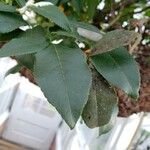
Rosa laevigata
Cherokee rose · Pink Cherokee rose · Camelia rose · Mardan rose
Description
Source: leafsnapRosa laevigata, commonly known as the Cherokee rose, is a species of flowering plant in the rose family. Native to China, this plant has been introduced to other parts of the world, including North America. It is a vigorous climber, capable of growing up to 20 feet tall and spreading up to 10 feet wide. The plant features glossy green, oval-shaped leaves with serrated edges. The Cherokee rose blooms from late spring through early summer, producing large, fragrant white flowers with yellow centers. These flowers are followed by bright red hips, which are edible and high in vitamin C. This plant thrives in full sun and well-drained soil but can also tolerate some shade and moist soil conditions. While drought-tolerant once established, it benefits from regular watering during dry spells. In traditional Chinese medicine, Rosa laevigata has been used for its anti-inflammatory properties and for treating skin conditions such as eczema and acne. Beyond its ornamental appeal, the Cherokee rose offers practical benefits, such as erosion control. Its strong root system helps stabilize soil on steep slopes or riverbanks. Overall, Rosa laevigata is a beautiful climbing plant with fragrant blooms, adding both aesthetic value and practical benefits wherever it grows.
🎭 Love, Psychic Abilities, Healing
Care Guide
💧 Water Every 7 days
The Cherokee rose thrives in humid subtropical regions, where it needs consistent moisture but also shows some resistance to drought. To care for it, water the Cherokee rose every one to two weeks, ensuring that the soil is well-drained. Using rainwater can promote its growth, as it mimics the seasonal patterns of its native climate.
☀️ Light Full sun
Cherokee rose does best in areas that receive abundant sunlight throughout the day. Its native environments are those bathed in sun. While sunlight encourages healthy growth at every stage, too much can parch the Cherokee rose, and too little can limit its development.
What are the sunlight requirements for a Cherokee rose?
Cherokee rose requires full sun, which means it needs above 6 hours of sunlight daily, though it can also tolerate partial sun, defined as about 3-6 hours of sunlight. Observing how sunlight moves through your garden can help you find spots that offer the ideal balance for your plants, ensuring they thrive by getting enough light without suffering from excessive exposure.
What essentials should be considered for the optimal growth of Cherokee rose?
Cherokee rose thrives in regions with abundant sunshine throughout the day, as its growth at all stages benefits from sunlight. However, too much sun can damage the plant, and insufficient sunlight can inhibit its growth. In spaces where natural light is limited, especially during winter, artificial lighting can support its growth. Indoor plants might need artificial lights to mimic natural sunlight, with recommendations being 30-50W/sq ft for full sun plants, 20-30W/sq ft for partial sun plants, and 10-20W/sq ft for full shade plants. The appropriate distance for the light source is 12-36 inches above the plant, with most plants requiring 8-12 hours of light per day.
What are some important symptoms of light deficiency or excess in Cherokee rose?
Cherokee rose can show several symptoms when exposed to less optimal light conditions. Light deficiency can lead to smaller new leaves, leggy or sparse growth, faster leaf drop, slower or halted growth, and lighter-colored new leaves. Conversely, excessive sunlight can cause chlorosis (leaves turning yellow), sunscald (damage from intense exposure), leaf curling (to minimize water loss), wilting (due to rapid water loss), and leaf scorching (brown, dry edges on leaves). These symptoms indicate the plant's struggle with its current light conditions, either seeking more light or being overwhelmed by its intensity.
What solutions are there for Cherokee rose suffering from insufficient or excessive light?
For indoor Cherokee roses suffering from light issues, gradually increase sunlight exposure to at least 6 hours daily or use artificial lighting if moving the plant isn't feasible. Outdoor plants should also be moved progressively to sunnier spots to avoid shock from sudden changes. If plants are shaded by obstructions, consider pruning to enable more light penetration or transplant smaller plants to brighter locations with good drainage. It's crucial to adapt your approach based on whether the plant is indoors, outdoors, or in the ground, ensuring it receives the optimal amount of sunlight for healthy growth. However, remember that parts of the plant damaged by insufficient light might not recover, but new growth will be healthy with improved light conditions.
🌡️ Temperature 5–35°C
The Cherokee rose is native to areas with temperatures between 41 and 95 °F (5 to 35 ℃). This plant favors mild to hot climates and may require temperature adjustments during seasons of extreme heat or cold.
What is the native environment temperature range for Cherokee rose?
Cherokee rose thrives in environments with a temperature range of 41 to 95 °F (5 to 35 °C). It is well-suited to mild to hot climates. During the seasons with extreme heat or cold, temperature adjustments may be necessary to ensure the plant's health. Cherokee rose possesses strong cold resistance, negating the need for special frost protection measures in most winter conditions. However, in cases where winter temperatures are expected to drop below -25°C, it is important to protect the plant from the cold by wrapping the trunk and branches with insulating materials such as non-woven fabric or cloth. Additionally, watering the plant abundantly before the first freeze in autumn helps keep the soil moist and prevents drought and water scarcity during winter and early spring.
How does Cherokee rose react to low temperatures?
Cherokee rose is cold-tolerant and thrives best when temperatures are above 5°C. It should be kept above -20°C during winter months. If temperatures fall below -25°C, the plant may not show immediate changes but its branches can become brittle and dry by springtime, with no new shoots emerging. To mitigate damage from low temperatures, any dead branches that fail to produce new leaves by spring should be pruned away to encourage new growth and maintain the plant's health.
What should be done if a Cherokee rose is exposed to high temperatures?
During the summer, it is crucial to keep the Cherokee rose below 35°C to avoid heat stress. If temperatures exceed 38°C, you may notice the leaves turning a lighter color, the tips becoming dry and withered, and an increased susceptibility to sunburn. To protect the plant under these conditions, trim away any sunburned and dried-up parts. Relocating the plant to a shaded area or employing a shade cloth can protect it from the harsh midday and afternoon sun. Ensuring the soil remains moist through morning and evening watering can also help the Cherokee rose cope with high temperatures.
💨 Humidity
🪴 Soil 5-7
🌱 Fertilizer
The timing of fertilizing the Cherokee rose is important. Start fertilizing in early spring and continue monthly until early summer. Fertilizer encourages attractive blooms and supplies energy during both dormant and active growth stages.
🪴 Pot & Repot
To ensure healthy growth and prevent root rot, provide excellent drainage for Cherokee rose plants grown in pots.
✂️ Pruning
For optimal growth and blooming, it's important to prune Cherokee rose in early spring. Focus on removing any dead or weak stems to encourage healthier growth and more abundant blooms. To improve air circulation and light access, maintain an open structure in the plant. Avoid heavy pruning in late summer, as this can decrease flowering and impact the plant's health. Consistent care throughout the year will ensure sustained blooming and overall vitality.
🌿 Propagating
🐛 Diseases & pets
☠️ Toxicity
According to Web MD, Cherokee Roses are medicinal. Perhaps due to their high amount of vitamin C (1.5%), they can be used to treat "ongoing cough, high blood pressure, swelling (inflammation) of the intestine." PickUpFlowers.com continues on, classifying the Cherokee Rose as "antibacterial, anticholesterolemic, astringent, carminative, depurative, [and] diuretic."
Characteristics
- Plant Type
- Shrub
- Life Cycle
- Perennial
- Genus
- Rosa
- Family
- Rosaceae
- Hardiness Zone
- 5-9
- Mature Height
- 4.88 m to 10.06 m
- Mature Spread
- 4.57 m
- Leaf Color
- Green
- Leaf Type
- Deciduous
- Flower Color
- White
- Flower Size
- 6.35 cm to 10.16 cm
- Bloom Time
- Mid spring, Late spring
- Planting Time
- Spring, Autumn
- Harvest Time
- Late summer, Early fall, Mid fall
- Native Area
- Vietnam, China