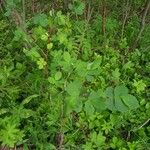
Rosa majalis
Cinnamon rose · May rose · Double cinnamon rose · Cinnamom rose
Description
Source: leafsnapRosa majalis (syn. R. cinnamomea sensu L. 1759, non 1753; R. cinnamomea auct. non L.; cinnamon rose; double cinnamon rose) is a species of deciduous shrubs in the genus Rosa, native to forests of Europe and Siberia. It grows to 2 m. and yields edible hip fruits rich in vitamin C, which are used in medicine and to produce rose hip syrup. It is native to Siberia and northern Europe. Its European distribution encompasses much of European Russia, the Baltic countries and Scandinavia (without Denmark), with more isolated occurrences in Central Europe, primarily in wet habitats in Ukraine, Belarus, Poland, Czechia, Germany and the Alps. It has a history of cultivation in gardens, which in Britain dates to the 16th century.The binomial name Rosa majalis and its synonym Rosa cinnamomea are both ambiguous and have variously been applied to other species of Rosa.
Care Guide
💧 Water
The cinnamon rose flourishes in moderately moist soil, needing a balance of moisture without becoming waterlogged. Water the plant once every three weeks, allowing the soil to dry slightly between watering sessions. Typically grown outdoors, the cinnamon rose benefits from natural rainfall, which supports its seasonal growth cycles.
☀️ Light Full sun
Cinnamon rose comes from open habitats, like sunny meadows and forest margins, that supply ample light. It does best in Full Sun but can also tolerate Partial Sun, adapting well to a range of sunlight conditions.
What are the sunlight requirements for a Cinnamon rose?
Cinnamon rose thrives in environments that provide ample sunlight, such as open sunny meadows and forest edges. It requires full sun, which means it needs more than 6 hours of direct sunlight daily, but it can also grow well in partial sun, facing about 3-6 hours of sunlight. Ensuring that your garden or planting space offers the right balance of light and shade is crucial for the plant's health, as it adapts well to various sunlight conditions.
How can artificial lighting be used for growing Cinnamon rose indoors?
When natural sunlight is insufficient for indoor Cinnamon rose plants, especially during winter or in less sunny spaces, artificial lighting becomes essential for promoting healthy growth. LED lights are popular for indoor plant lighting as they can be customized to provide specific wavelengths needed by the plants. For full sun plants, 30-50W per square foot is recommended, partial sun plants require 20-30W per square foot, and full shade plants need 10-20W per square foot. The artificial light source should be placed 12-36 inches above the plant, mimicking the natural sun's distance, and provided for 8-12 hours per day to replicate natural daylight hours.
What are the symptoms of light deficiency in Cinnamon rose?
Cinnamon rose may show several symptoms when it's not getting enough light, such as smaller new leaves, leggy or sparse growth, faster leaf drop, slower or halted growth, paler new leaves, and even chlorosis where leaves turn yellow due to a breakdown of chlorophyll. Other signs of too much sunlight include sunscald, leaf curling, wilting, and leaf scorching. These symptoms indicate the plant's struggle with the current light conditions, whether it's getting too little or too much light.
What solutions are recommended for light deficiency or excessive sunlight exposure for Cinnamon rose?
To address light deficiencies, gradually reposition the plant to a sunnier spot, ensuring it receives at least 6 hours of sunlight daily. For indoor plants, use a south-facing window or artificial lighting for at least 8 hours a day if moving the plant isn't feasible. For outdoor plants, move them to a sunnier location gradually to avoid shock. Remove any obstructions like tree branches that block sunlight, and consider transplanting smaller plants to brighter areas during their dormant period. Note, however, that parts of the plant already damaged by poor light conditions may not recover, but new growth should be healthy with improved lighting.
🌡️ Temperature 0–32.2°C
The cinnamon rose is very adaptable to different climates, from blazing summers to frosty winters. Still, it requires a certain temperature range for optimal growth. If temperatures become too extreme on the high side, the plant can undergo heat and humidity stress that may kill it. In locations where temperatures near the lower threshold of its cold tolerance, providing insulation to protect the plant is necessary.
What is the botanical name of the Cinnamon rose?
The botanical name of the Cinnamon rose is Rosa majalis. It is a species known for its unique characteristics, but specifics about its essentials and symptoms, if any, were not provided in the data.
💨 Humidity
🪴 Soil 4-6
🌱 Fertilizer
The Cinnamon rose plant needs adequate nutrients for optimal fruit production. Fertilize in early spring to encourage new growth and bloom development. Regular fertilization helps the plant remain healthy, produce more delicious fruit, and prevents nutrient deficiency problems like yellow leaves and poor fruit production.
🪴 Pot & Repot
✂️ Pruning
The cinnamon rose, known for its fragrant pink flowers, benefits greatly from early spring pruning. Important techniques include removing weak stems, thinning branches to improve airflow, and shaping the plant for a balanced appearance. Pruning after the first bloom encourages a second flowering, promotes overall health, and helps reduce disease. For optimal results, always use clean and sharp tools.
🌿 Propagating
🐛 Diseases & pets
☠️ Toxicity
Characteristics
- Plant Type
- Shrub
- Life Cycle
- Perennial
- Genus
- Rosa
- Family
- Rosaceae
- Hardiness Zone
- 3-8
- Mature Height
- 0.91 m to 2.13 m
- Mature Spread
- 0.91 m to 1.52 m
- Leaf Color
- Green, Dark Green
- Leaf Type
- Deciduous
- Flower Color
- Pink
- Flower Size
- 5.08 cm to 6.35 cm
- Bloom Time
- Mid spring, Late spring
- Planting Time
- Spring
- Harvest Time
- Late summer, Early fall, Mid fall
- Native Area
- Sweden, Austria, Czech Republic, Slovakia, Poland, Croatia, Belarus, Ukraine, Russia, Lithuania, Norway, Germany, Italy, Kazakhstan, Switzerland, Denmark, Estonia, Finland, Hungary, Latvia, France