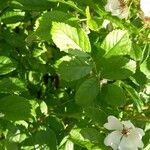
Rosa multiflora
Πολυανθής τριανταφυλλία · Multiflora rose · Rambler rose · Japanese rose · Baby rose
Description
Source: leafsnapRosa multiflora (syn. Rosa polyantha) is a species of rose known commonly as multiflora rose, baby rose, Japanese rose, many-flowered rose, seven-sisters rose, Eijitsu rose and rambler rose. It is native to eastern Asia, in China, Japan, and Korea. It should not be confused with Rosa rugosa, which is also known as "Japanese rose", or with polyantha roses which are garden cultivars derived from hybrids of R. multiflora. It was introduced to North America, where it is regarded as an invasive species.
🌳 Although frequently noted for its invasive character, the multiflora rose may have uses in integrated pest management. By hosting beneficial insects, it can serve as a natural form of pest control. Its dense thickets also provide wildlife habitat and can act as natural barriers for livestock. While it remains controversial, the multiflora rose’s role in agricultural systems warrants further investigation.
🎭 Romance, elegance, youthful purity.
Care Guide
💧 Water
The multiflora rose, which originates from East Asia, thrives in well-drained soil with moderate moisture levels and can tolerate short periods of drought. It is best to water it every 1-2 weeks to allow the soil to dry out slightly between waterings. Typically grown outdoors, the multiflora rose benefits from rainwater during its growing season, which aids in the production of lush foliage and vibrant flowers.
When should I water my Multiflora Rose?
Effective watering is crucial for the health, growth, and flowering of Multiflora Rose. The ideal time to water this plant is when the first inch of soil is dry, indicated by checking the soil moisture with your finger. Yellow or wilting leaves, despite optimal sunlight, suggest the plant needs water. A decrease in flower production or drooping buds also indicates a need for more water, as does stunted growth during the growing season. Be mindful of the risks of both overwatering, such as root rot and fungal diseases, and underwatering, which can dry out the plant, stunt its growth, and reduce flowering.
How should I water my Multiflora Rose?
Multiflora Rose has specific watering needs. It prefers consistently moist soil but does not tolerate waterlogged conditions. Deep watering, which reaches the root zone to encourage deep root growth, is the best technique. It's recommended to water deeply once a week or more often during hot, dry weather. Use a watering can with a fine rose attachment to prevent damage to the delicate foliage and avoid wetting the leaves to minimize disease risk. A moisture meter can also be useful for determining when it's time to water by measuring soil moisture levels.
How much water does Multiflora Rose really need?
The amount of water Multiflora Rose requires depends on several factors including the plant's size, pot size, and root depth. For a young plant in a small pot, 0.5 to 1 liter per watering session may suffice, while a mature plant in a larger pot with a deep root system might need 1.5 to 2 liters. The goal is to maintain slightly moist but well-drained soil. Signs of adequate hydration include healthy foliage and vibrant flower production. Be wary of overwatering, which can cause yellowing leaves and root rot, and underwatering, which can lead to wilting or drooping foliage.
What kind of water is best for Multiflora Rose?
Multiflora Rose is adaptable and can thrive on both rainwater and tap water, provided they're not high in harmful chemicals or salts. Rainwater is preferred for its natural pH balance benefits. If using tap water, it's advisable to let it stand overnight to allow chlorine to evaporate, as Multiflora Rose is moderately sensitive to chlorine. Filtration can remove harmful fluoride, which is recommended despite the plant's tolerance. Water temperature should be at room temperature to avoid shocking the plant.
How do Multiflora Rose's watering needs change with the seasons?
In spring, as Multiflora Rose exits dormancy, it's crucial to maintain evenly moist soil to support new growth without causing waterlogging. During summer's active phase, ensure the soil remains moist to counter increased evaporation. In autumn, gradually reduce watering as the plant prepares for dormancy, but keep the soil from drying out completely. In winter, water sparingly to prevent root drying without overwatering, as the reduced activity of the plant and cooler temperatures slow soil drying.
☀️ Light Full sun
Multiflora rose does best in places that receive plenty of sunlight for most of the day, though it can also tolerate spots where sunlight is intermittent. Too much or too little sun can harm its health, possibly causing growth problems or increasing susceptibility to disease. From its origins, this plant became adapted to environments with varying light conditions.
What are the sunlight requirements for a multiflora rose?
Multiflora rose needs varying amounts of sunlight depending on the plant's specific requirements and adaptations. It thrives best in locations that receive full sun, which is defined as more than 6 hours of sunlight a day. However, it can also grow in partial sun, with about 3-6 hours of sunlight. It's crucial to observe the movement of sunlight through your garden to find spots that offer the right balance of light and shade, ensuring the plant's health and happiness. Additionally, when natural light isn't sufficient, especially for indoor plants, artificial lighting can be employed. Use LED lights, ensuring 30-50W/sq ft for full sun plants, 20-30W/sq ft for partial sun plants, and 10-20W/sq ft for full shade plants. Position the light source 12-36 inches above the plant and mimic natural daylight hours, requiring 8-12 hours of light per day.
What are the signs that a multiflora rose isn't getting enough sunlight?
When the multiflora rose doesn't receive adequate sunlight, various symptoms may occur, including the growth of smaller leaves compared to mature ones, leggy or sparse growth leading to a stretched appearance and potential damage due to weight, early dropping of older leaves to conserve resources, delayed or completely halted growth, lighter-colored new leaves indicating a lack of chlorophyll, and conditions such as chlorosis, sunscald, leaf curling, wilting, and leaf scorching. Chlorosis causes leaves to lose their green color and turn yellow, while sunscald is characterized by pale, bleached areas on the plant, indicative of direct sunlight damage. Leaf curling is a defense mechanism against excessive sunlight, and wilting and leaf scorching point towards damage caused by too much sun.
What solutions can help a multiflora rose get enough sunlight?
To ensure your multiflora rose receives adequate sunlight, gradually moving the plant to sunnier spots is crucial. For indoor plants, shifting them closer to a south-facing window or using artificial light sources such as desk lamps or professional plant grow lights for at least 8 hours a day can help improve light exposure. Outdoor plants too need to be moved gradually, avoiding abrupt changes to prevent sunburn. Removing obstacles like overhanging branches and possibly transplanting to areas with better sunlight and drainage can also be beneficial. It's vital to remember that parts of the plant that have been severely affected by low light may not recover, highlighting the importance of preventive care through proper placement and light management.
🌡️ Temperature 5–35°C
Multiflora rose does best in a temperate climate, with an optimal temperature range of 41 to 95℉ (5 to 35℃). In summer the plant prefers cooler temperatures and high humidity. In winter it can adapt to colder conditions and even survive frosty weather. It is important to provide sufficient coverage to protect the plant from extreme temperatures.
What is the optimal climate for Multiflora rose?
Multiflora rose thrives in a temperate climate, with an optimal temperature range between 41 to 95℉ (5 to 35℃). It prefers cooler temperatures and high humidity during the summer months. In winter, the plant can adjust to colder climates and even survive frosty conditions without the need for special frost protection measures. However, providing adequate coverage to protect the plant against extreme temperatures is important. For example, wrapping the trunk and branches with non-woven fabric or cloth can be beneficial if winter temperatures are expected to drop significantly. Additionally, abundantly watering the plant before the first freeze in autumn, ensuring the soil remains moist and enters a frozen state, helps prevent drought and water scarcity during winter and early spring.
How does low temperature affect Multiflora rose and what are the solutions?
Multiflora rose is known for its cold tolerance, thriving best when the temperature remains above a certain minimum suitable for growth. During winter, it is important to ensure the temperature stays above the minimum tolerable growing temperature. If the temperature falls below a critical lower limit, the plant may not show noticeable changes during winter, but come spring, the branches may become brittle and dry, and no new shoots will emerge. The solution to this problem is to prune away any dead branches in the spring that have failed to produce new leaves, encouraging the growth of healthy new shoots.
What should be done if Multiflora rose experiences high temperature?
During the summer, it's crucial to ensure that the Multiflora rose is kept below the maximum suitable growth temperature. If the temperature goes beyond the maximum tolerable growing temperature, the leaves of the plant may turn lighter in color, the tips may become dry and withered, and the plant may suffer from sunburn. To mitigate these effects, you should trim away the sunburned and dried-up parts. It's also advisable to move the plant to a location with shade from the midday and afternoon sun or use a shade cloth to protect it. Additionally, watering the plant in the morning and evening will help keep the soil moist and support the health of the plant.
💨 Humidity
🪴 Soil 6-7
🌱 Fertilizer
To encourage healthy growth, fertilize your Multiflora rose in early spring. Regular feeding boosts overall health, producing vigorous growth, greater tolerance of harsh conditions, and improved resistance to diseases and pests. Keep to a specific fertilization schedule for your Multiflora rose to preserve vibrant foliage with deep color and a lush appearance.
Why is it necessary to fertilize my Multiflora rose?
Fertilizing regularly is important for the overall health of your Multiflora rose, regardless of the type you have. Providing the right nutrients promotes strong growth, making it more resilient to tough conditions and better at fighting off diseases and pests. To maintain the attractive foliage of your Multiflora rose, it is crucial to establish and stick to a fertilization schedule specific to your plant. This will encourage the development of vibrant leaves and a lush appearance.
When is the right time to add fertilizer to my Multiflora rose?
To ensure healthy growth, it is important to fertilize your Multiflora rose in late winter or early spring. This provides the necessary nutrients for growth when the weather warms up. Additionally, if you live in a warm climate, it can be beneficial to provide another fertilizer feeding in early fall. This helps to add nutrients to the soil for the following growing season and increases the rose's ability to survive winter without foliage damage. Fertilizing earlier in the fall allows the new branches to grow enough to withstand the cold winter.
When should I not add fertilizer to my Multiflora rose?
There are certain times of the year when you should avoid fertilizing your Multiflora rose. One of these times is in the early and mid-winter months when the plant is dormant and does not require any feeding. It is also not recommended to fertilize the plant during late spring and throughout the summer, as this is when the weather is hot and dry, which can negatively affect the plant's response to fertilization. To prevent any potential issues, it is best to follow a fertilization schedule that includes feeding only in early spring and early fall.
What kind of fertilizer does my Multiflora rose plant need?
Nitrogen is typically the most crucial nutrient for Multiflora rose plants, though phosphorus and potassium should not be disregarded. It is recommended to provide a sufficient amount of all three main nutrients to your Multiflora rose, making a balanced fertilizer like a 10-10-10 suitable. However, a more refined nutrient ratio often results in optimal growth. Fertilizers with slightly higher nitrogen content, such as a 10-6-4 ratio, tend to produce better results. Granular or liquid-based fertilizers can be used for application.
How can I add fertilizer to my Multiflora rose plant?
To fertilize your Multiflora rose, there are two options: using a granular fertilizer or a liquid fertilizer. With granular fertilizer, simply sprinkle it on the soil at the right time. It releases nutrients slowly over time. It's recommended to lightly water the rose before applying fertilizer. On the other hand, using liquid fertilizer involves mixing it with water and pouring it around the base of the rose. This method is less common. Prior to fertilizing, it can be helpful to perform a soil test to determine if any pH adjustments are needed.
🪴 Pot & Repot 2-3 years
When repotting a Multiflora rose, select a pot 1–2 inches (2.5–5.1 cm) larger with ample drainage. Use a well-draining potting mix. Repot in spring or fall, making sure the root ball sits slightly below the rim of the flower pot. Water thoroughly after repotting and place the pot in a warm spot with indirect sunlight.
✂️ Pruning
To encourage healthy growth, multiflora rose should be strategically pruned in early spring. Start by removing any dead or diseased wood, and thin out the plant to improve air circulation and light penetration. Be cautious of the thorny canes, and always use sharp, sterile tools to prevent the spread of disease.
🌿 Propagating
🐛 Diseases & pets
☠️ Toxicity
This plant is not considered toxic.
Characteristics
- Plant Type
- Shrub
- Life Cycle
- Perennial
- Genus
- Rosa
- Family
- Rosaceae
- Hardiness Zone
- 5-9
- Mature Height
- 3.05 m to 4.88 m
- Mature Spread
- 3.05 m
- Leaf Color
- Green
- Leaf Type
- Deciduous
- Flower Color
- White, Pink
- Flower Size
- 1.52 cm to 2.03 cm
- Bloom Time
- Late spring, Early summer
- Planting Time
- Spring, Autumn
- Harvest Time
- Mid summer
- Native Area
- Myanmar, Koppen, Japan, South Korea