Rosa pendulina
Mountain rose · Alpine rose · Drooping rose · Pink Double knock out · Măceș de munte
Description
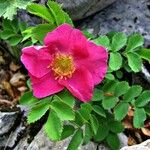
Source: leafsnapRosa pendulina, commonly known as the Alpine Rose or Drooping Rose, is a species of flowering plant in the Rosaceae family. This deciduous shrub can grow up to 1.5 meters tall and features arching, thorny branches. Its dark green, serrated leaves consist of five to seven leaflets. The Alpine Rose produces striking pink or red flowers that bloom in late spring or early summer. These flowers, measuring about 3-4 cm in diameter, have five petals and a sweet fragrance that attracts bees and other pollinators. Native to the mountainous regions of Europe, including the Alps, Carpathians, Pyrenees, and Balkans, this plant prefers well-drained soil and thrives in full sun or partial shade. Historically, the Alpine Rose has been valued for its medicinal properties due to its high vitamin C and antioxidant content, which can boost immunity and improve skin health. Overall, Rosa pendulina is an attractive shrub that enhances any garden with its beauty while also providing medicinal benefits. This makes it an excellent choice for gardeners who seek both aesthetics and functionality from their plants.
Care Guide
💧 Water Every 7 days
The alpine rose, native to mountainous areas, thrives in well-drained soil with moderate moisture and cooler climates. It should be watered every three weeks, allowing the soil to dry out between waterings. Usually grown outdoors, the alpine rose flourishes during the growing season thanks to the cool temperatures and seasonal rainfall.
How should I water my Alpine rose plant in the best way?
To ensure excellent root development, place a garden hose at the base of the plant. Avoid directly spraying the leaves, especially if they are outdoors and exposed to direct sunlight. Moistening the roots can be done with bubblers or soaker hoses that cover the entire garden or bed. After adding or removing plants, make sure to drain excess water and allow the soil to dry before watering again. To prevent diseases, water at ground level instead of spraying. However, on a sunny day, it can be beneficial to spray the entire bush with water. Whether the plant is potted or in the ground, keep in mind that Alpine rose prefers deep watering rather than light sprinkling.
What do I do if I give the Alpine rose too much or too little water?
An overwatered Alpine rose may exhibit yellowing, drooping, and wilting leaves. The plant may also appear lackluster and unhealthy, with mushy stems. When these signs are observed, it is advisable to adjust watering frequency. Conversely, wilting can also indicate under watering, characterized by crispy and dry leaves as opposed to soft and wilted leaves in overwatered plants. In such cases, it is important to check the soil moisture level and provide a thorough watering as needed. Although adequate water will help the Alpine rose recover, the damaged root system may result in the plant still appearing dry with yellow leaves for a few days. Once the plant returns to normal, the yellowing of leaves will cease. Indoor Alpine roses should be monitored for moisture levels, avoiding overwatering and checking for signs of black spots. If present, allow the soil in the pot to dry by refraining from watering for a few days. Overwatering can lead to root rot, indicated by discolored and slimy roots. If root rot is observed, consider transferring the plant to a different pot. To prevent root rot, ensure the soil is not excessively soggy. When planting Alpine roses outdoors, it is recommended to dig deeper and assess the soil moisture content. If the soil feels too dry, it may indicate underwatering, thus requiring adequate watering to aid in plant recovery.
How much water should I give my Alpine rose?
The Alpine rose plant typically requires about a gallon of water on a regular schedule. For potted plants, it is best to water them deeply until the water drips from the bottom of the pot. Afterward, allow the soil to dry before watering again. You can use a water calculator or moisture meter to track how much water you have given the plant in a week. During the flowering period, it is important to provide ample water, but allow the moisture to evaporate to avoid root rot. If the Alpine rose is planted outdoors with sufficient rainfall, it may not need additional watering. However, when the plant is young or newly planted, it should receive 1-2 inches of rain per week. As the Alpine rose grows, it can rely solely on rainfall for survival. Only in extreme weather conditions, such as intense heat or no rainfall for 2-3 weeks, should you consider giving the plant a thorough watering during cooler parts of the day to prevent damage from high temperatures. Additional watering may be necessary during prolonged dry spells.
Do I need to change how often I water my Alpine rose based on the seasons or different weather conditions?
The Alpine rose prefers to be grown outdoors and is generally able to rely on rainfall for watering. However, in persistent dry weather, it may need to be watered. During the spring and fall growing seasons, the soil should be kept moist but not soggy. Alternating dry and moist soil conditions are beneficial for the growth of the Alpine rose. In the summer, hot weather can cause water to evaporate quickly, so additional watering may be needed if there is a lack of rainfall. During winter, the Alpine rose requires less water because it goes into dormancy and drops its leaves. It is recommended to use terracotta or a well-draining soil mixture to help the water evaporate quickly. During the dormant period, the Alpine rose can rely on fall and winter rains for moisture. When the temperature becomes warmer in spring, cultivation can be done to encourage growth and blooming. Good drainage is essential at all times, especially in winter, to avoid ponding or drought. When the plant is in a pot, its root growth is limited, so it should be well-watered, especially in summer. Shallow sprinkles of water should be avoided as they encourage fungus growth and do not reach the deep roots. Even during dormancy in fall or winter, it is important not to let the Alpine rose dry out completely. Adequate drainage is necessary to prevent drowning the plants and potential winter damage. Applying mulch can help reduce stress, conserve water, and promote healthy blooms.
What precautions should I take when watering my Alpine rose in different seasons, climates, or during different periods of growth?
If planting Alpine rose in the ground, it mainly relies on rain. However, if there is no rainfall for 2-3 weeks, you may need to water them deeply. When watering in the summer, it's best to do it in the morning to avoid stressing the roots with a large temperature difference. Avoid watering when it's too hot outside. Start mulching in the spring when the ground is not too cold. The age of the plants is important. Newly planted ones often fail to grow due to lack of water. Once they are established, reduce the watering schedule. During fall and winter, especially if there is water-retaining material in the soil, water them less. The dry winds during those seasons can dry them out, and newly planted ones are at risk of drought. Windy seasons require more frequent watering. Plants in pots dry out faster, so they need more water. If you notice less blooming and drying leaves, they may need more water. Watering potted plants can be complicated and the frequency fluctuates. Avoid letting them sit in water. Don't use containers with saucers, bowls, or trays. Excessive watering in the fall can result in mottled or yellowish foliage. It's always best to avoid overwatering, regardless of the climate or season. During flowering months, you might increase watering frequency, but once they are fully grown, give them a rest. Water them adequately every 3 to 5 days, but avoid sticking to a strict schedule. Check the soil by sticking your finger into the pot or using a moisture meter if you're unsure. Too much water can cause root rot and lead to death, so be cautious about both overwatering and underwatering, regardless of your climate or season.
☀️ Light Full sun
Rosa pendulina, commonly called the Alpine rose, grows best with abundant exposure to sunlight. Plenty of sun promotes healthy growth in this species. Although it can cope with reduced light and still do well, a little shade is merely tolerated and not ideal for growth. Insufficient light can slow its development, while too much can cause burning.
What are the sunlight requirements for Alpine rose (Rosa pendulina)?
The Alpine rose, or Rosa pendulina, thrives best in environments that provide ample sunlight. It requires full sun, which is characterized by more than 6 hours of direct sunlight per day, to foster healthy growth. Although it can tolerate some shade, and partial sun (about 3-6 hours of sunlight) is acceptable, these conditions are not ideal for its optimal growth. The plant can still flourish with less light but prefers a good balance of light and shade to remain healthy. It's important to observe the light patterns in your garden to ensure your Alpine rose gets the right amount of sunlight. Additionally, in cases of insufficient natural light, especially for indoor plants, artificial lighting can be used as a supplementary source to encourage healthy plant growth.
How does insufficient sunlight affect the Alpine rose, and what are the symptoms?
When the Alpine rose does not receive adequate sunlight, it may show several symptoms indicating light deficiency or exposure issues. Insufficient light can lead to smaller new leaves, leggy or sparse growth, rapid leaf drop, slowed or halted new growth, and lighter-colored or yellow leaves (chlorosis). Excessive sunlight, on the other hand, can result in symptoms like sunscald, leaf curling, wilting, leaf scorching, and chlorosis. These symptoms reflect the plant's struggle to adapt to unfavorable light conditions, and addressing them promptly can help restore its health.
What solutions are available for managing light-related issues in Alpine rose plants?
To manage light-related issues in Alpine rose plants effectively, consider gradually acclimating your plant to sunnier spots for both indoor and outdoor settings, ensuring a minimum of 6 hours of direct sunlight for optimal growth. For indoor plants too large or immovable for natural sunlight, artificial lighting, such as LED grow lights, can offer a practical solution. It's crucial to position the light source correctly and maintain adequate lighting duration (8-12 hours per day) to mimic natural conditions. For outdoor plants, a gradual transition to sunnier spots and minimizing obstructions like overhanging branches can help improve sunlight exposure. If needed, transplanting smaller plants to better-lit areas might be beneficial, especially during their dormant periods.
🌡️ Temperature 10–35°C
Alpine rose originates from climates that need a temperate temperature range of 50 to 95 °F (10 to 35 ℃). Across seasons, temperatures must be monitored carefully to ensure optimal growth and bloom.
What are the ideal temperature conditions for Alpine rose?
Alpine rose flourishes in a temperate climate, with optimal growth and blooming conditions occurring in temperatures ranging from 50 to 95 °F (10 to 35 °C). It possesses strong cold resistance, enabling it to withstand winter conditions without special frost protection measures, except in extremely cold climates where temperatures are expected to drop below -25°C. In such cases, providing cold protection by wrapping the trunk and branches with non-woven fabric or cloth is recommended. Additionally, to prevent drought and water scarcity during winter and early spring, it is advisable to water the plant abundantly before the first freeze in autumn, ensuring the soil remains moist and enters a frozen state.
How should Alpine rose be cared for in low temperatures?
Alpine rose is cold-tolerant, thriving best in temperatures above 10°C and requiring protection to remain above -15°C during winter. In circumstances where temperatures fall below -25°C, the plant's branches may become brittle and dry by spring, with no new shoots emerging. To address this issue, it is recommended to prune away any dead branches that have failed to produce new leaves in spring as a solution for revitalization.
What are the effects of high temperatures on Alpine rose and how can they be mitigated?
In high temperatures, specifically during summer, it is important to keep Alpine rose below 35°C. Temperatures exceeding 38°C may result in lighter colored leaves, dry and withered tips, and increased susceptibility to sunburn. To mitigate these effects, trim away the sunburned and dried-up parts. Relocating the plant to a shaded area during the midday and afternoon sun, or using a shade cloth, can provide necessary protection. Additionally, watering the plant in the morning and evening helps to maintain moist soil conditions, which is beneficial for the plant's health.
💨 Humidity normal (40-60%)
This plant will thrive in moderate humidity, which is probably the level in your home. However, misting it a few times a week can be very beneficial. Make sure the room has good ventilation.
🪴 Soil 6-7
🌱 Fertilizer
Proper timing is essential for fertilizing an Alpine rose. Start feeding in early spring and continue monthly up to early summer. Fertilizer encourages attractive blooms and supplies energy during both dormant and active growth periods.
🪴 Pot & Repot Every 12 months
✂️ Pruning
To ensure the health and vibrant blooms of alpine roses, it's important to prune them in early spring. Start by removing any dead or diseased wood. Next, thin out overcrowded branches to improve shape and airflow. After the blooming period, perform light pruning to prevent overgrowth and to promote vigorous flowering in the next season.
🌿 Propagating
🐛 Diseases & pets
☠️ Toxicity
Rosa pendulina contains toxic compounds, so it should not be consumed.
Characteristics
- Plant Type
- Vine, Shrub
- Life Cycle
- Perennial
- Genus
- Rosa
- Family
- Rosaceae
- Hardiness Zone
- 6-9
- Mature Height
- 0.49 m to 2.13 m
- Mature Spread
- 1.52 m
- Leaf Color
- Green, Dark Green
- Leaf Type
- Deciduous
- Flower Color
- Pink
- Flower Size
- 3.81 cm
- Bloom Time
- Late spring, Early summer
- Planting Time
- Spring, Summer
- Harvest Time
- Mid summer
- Native Area
- Austria, Czech Republic, Slovakia, Montenegro, Bulgaria, Poland, Greece, Croatia, Slovenia, Belarus, Ukraine, Serbia, Hungary, Germany, Italy, Spain, Switzerland, Albania, Romania, France