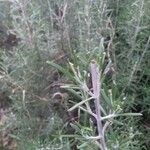
Rosmarinus officinalis
رز ماری · اكليل الجبل · حصى البان · Δενδρολίβανο · Rosemary
Description
Source: leafsnapRosmarinus officinalis, commonly known as rosemary, is a woody perennial herb that belongs to the mint family. Native to the Mediterranean region, it has been widely cultivated around the world for its culinary and medicinal uses. The plant features needle-like leaves, dark green on top and silver-grey underneath, and produces small blue or pink flowers that bloom in late winter or early spring. Rosemary is celebrated in cooking for its strong aroma and distinctive flavor, making it a popular addition to meats, vegetables, soups, stews, and sauces. Beyond its culinary applications, rosemary has been used for centuries for various medicinal purposes, such as aiding digestion and enhancing memory function. The plant thrives in well-drained soil with full sun exposure but can also tolerate partial shade. It can grow up to 6 feet tall if unpruned but can be easily kept at a smaller size with regular pruning. Overall, Rosmarinus officinalis is an appealing plant that not only enriches dishes with its flavor but also offers potential health benefits when consumed or used medicinally.
🌳 Beyond its well-known flavoring qualities, rosemary finds uses across various industries. It appears in the essential oils market for aromatherapy and personal care products because of its pleasant scent and possible therapeutic effects. Rosemary extracts are employed as natural preservatives in the food industry, taking advantage of their antioxidant properties. Its wood, which is relatively sturdy, has been worked into furniture and decorative pieces. There is interest in using rosemary for bioremediation because it may indicate soil metal content.
🎭 Dedication, Intelligence, Faithfulness, Restorative Balm, Steadfastness, Welfare
Care Guide
💧 Water Every 7 days
Water your rosemary evenly when the top few inches of soil dry out. These plants are slightly drought-tolerant, and allowing the top layer of soil to dry between waterings prevents excess water.
☀️ Light Full sun
Rosemary needs a large amount of light to grow vigorously. Native to a habitat with abundant sunlight, rosemary performs best in places that imitate those conditions. It can, however, tolerate areas with less consistent light. Adequate light promotes flowering and boosts fragrance, but too much or too little can result in weak growth or fewer blooms.
🌡️ Temperature 15–37.8°C
In its native growth environment, rosemary does well in temperatures between 59 and 100.4 ℉ (15 to 38 ℃). These temperate woody plants prefer a temperature range of 55 to 100 ℉ (12.8 to 37.8 ℃) and can tolerate occasional frosts, but prolonged exposure to freezing temperatures can damage them. During hotter months, provide supplemental irrigation and shade to ensure they don’t dry out. In cooler months, cover them with cloths at night to protect from frost.
💨 Humidity 1 through 8 (as annual or indoors)
This plant will thrive in moderate humidity, which is probably the level in your home. However, misting it a few times a week can be very beneficial. Make sure the room has good ventilation.
🪴 Soil 6-7
🌱 Fertilizer Every 90 days
Fertilize your Rosemary in early spring to encourage healthy growth. Regular feeding improves its overall health, producing vigorous growth, increased tolerance of harsh conditions, and stronger resistance to pests and diseases. Stick to a set fertilizing routine for your Rosemary to maintain foliage that is richly colored and lush in appearance.
🪴 Pot & Repot 2-3 years
When repotting Rosemary, choose a pot 1-2 inches (2.5–5.1 cm) larger with ample drainage. Use a well-draining potting mix. Repot in spring or fall, ensuring that the root ball is slightly lower than the rim of the flower pot. Water thoroughly after repotting and place it in a warm spot with indirect sunlight.
✂️ Pruning
They don't require extensive pruning. After it flowers, you can trim around the shrub to shape its growth but don't cut off more than 1/3 of the plant. Over pruning can stress the plant, making it vulnerable to pests and diseases.
🌿 Propagating
🐛 Diseases & pets
☠️ Toxicity
Rosemary plants are safe for people and even children; however, they can be mildly toxic to pets. Don't worry; pets that ingest rosemary will only experience low-severity toxicity symptoms like stomach upset.
Characteristics
- Plant Type
- Shrub
- Life Cycle
- Perennial
- Genus
- Rosmarinus
- Family
- Lamiaceae
- Hardiness Zone
- 8-11
- Mature Height
- 0.61 m to 1.83 m
- Mature Spread
- 0.61 m to 1.22 m
- Leaf Color
- Green, Gray
- Leaf Type
- Evergreen
- Flower Color
- Lavender
- Flower Size
- 2.54 cm
- Bloom Time
- Early spring, Mid spring, Late summer, Fall, Winter
- Planting Time
- Spring, Autumn
- Harvest Time
- Late spring, Summer, Fall, Winter
- Native Area
- Mediterranean