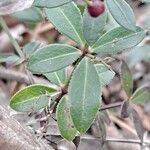
Rubia peregrina
Wild madder · Dyer's Madder · Hedge Madder
Description
Source: leafsnapRubia peregrina, commonly known as wild madder, is a perennial plant from the Rubiaceae family. Native to Europe and North Africa, it thrives in diverse habitats such as woodlands, meadows, and rocky areas. The plant features a woody stem that can grow up to 1 meter in height, with small green leaves arranged in whorls of four or five. Wild madder blooms from June to September, producing small greenish-yellow flowers in clusters at the ends of its stems. These flowers are then followed by red berries, which contain seeds dispersed by birds. The roots of Rubia peregrina have been utilized for centuries for their medicinal properties. They contain a red pigment known as ruberythric acid, historically used as a natural dye for textiles. Traditionally, the roots have served as an anti-inflammatory agent and a treatment for skin disorders such as eczema. In summary, Rubia peregrina is a fascinating plant species with significant cultural and medicinal value, underscoring its importance in our natural world.
Care Guide
💧 Water Every 7 days
Wild madder, native to the Mediterranean, thrives in moderate climates and can tolerate partial drought. It prefers well-drained soil and benefits from weekly watering. As an evergreen plant, it retains moisture in its leaves throughout the year, making it ideal for outdoor settings with natural rainfall.
How should I water my Wild madder plant?
To ensure the health of your Wild madder plant while watering, it is recommended to use filtered water at room temperature. Tap water may contain harmful particles, so filtering it is preferable. The temperature of the water is important because the Wild madder is accustomed to warm environments, and cold water can be a shock. It is best to avoid overhead watering, as it can cause problems with the foliage. Instead, slowly apply the filtered room temperature water directly to the soil until it is completely soaked. This method benefits the plant by moistening the roots and facilitating their spread through the soil to collect necessary nutrients.
What should I do if I give my Wild madder too much or too little water?
Both overwatering and underwatering can harm the health of your Wild madder, but overwatering is more common. Too much water can cause wilting, yellowing, and diseases like root rot, mold, and mildew, which can be fatal. Underwatering is less common but can make the leaves brittle and brown. It's important to recognize signs of overwatering early as some diseases may not be fixable if ignored. Reduce watering immediately if you notice early signs and consider improving soil drainage. If your Wild madder is not getting enough water, simply water more regularly until the signs improve.
How often should I give water to my Wild madder?
If your Wild madder plant is in a pot, the most precise way to determine if it needs water is by sticking your finger into the soil. When the top few inches of soil are dry, it's time to water it. For Wild madder plants grown outdoors in the ground, you can use a similar method to check the soil moisture. Once again, if the top few inches are dry, it's time to water. In the spring and early fall, you'll likely need to water about once a week. During periods of extremely hot weather, you may need to water twice a week or more. However, mature and well-established Wild madder plants have an impressive ability to tolerate drought.
How much water does my Wild madder plant need?
When watering your Wild madder, don't be afraid to use a generous amount of water. Make sure that the top two to three inches of soil are dry before watering. Give the plant a deep watering, making sure to soak the soil completely. The water should be enough to cause excess water to drain out of the pot's drainage holes. If you don't see any excess water draining, you may not have given enough water. However, be careful not to let water accumulate in the soil, as this can harm the plant. If water isn't draining properly from the pot, it could mean that the soil doesn't drain well, which is bad for the plant's health. If the plant is outside, it will generally need about 1 inch of rain per week.
How should I water my Wild madder plant at different times as it grows?
The water needs of the Wild madder can vary based on its growth stages. In the first few years or after transplanting, it requires more water as it focuses on developing new roots for future growth. These roots perform best with slightly higher moisture levels. However, after a few seasons, the water requirements decrease. The bloom period is another stage where more water may be needed, as the plant utilizes significant moisture for flower development.
☀️ Light Partial sun
Wild madder grows most successfully with a moderate amount of sunlight, the type commonly found in zones between full sun and complete shade. Inadequate light reduces its growth and blooming, whereas excessive light may put stress on the plants. Its native habitat is made up of areas that offer a mixture of sun and shade.
What are the sunlight requirements for Wild Madder?
Wild Madder requires about 3-6 hours of sunlight daily, thriving best with moderate exposure to sun, typically seen in transition zones between fully sun-drenched and shaded areas. It's vital to observe your garden's sunlight as it moves throughout the day to choose spots that offer a balance of light and shade, ensuring optimal growth and flowering. Too little sunlight can hamper growth and flowering, while too much could stress the plant.
How can artificial lighting be used for Wild Madder indoors?
For Wild Madder that doesn't receive sufficient natural sunlight, especially during winter or in less sunny spaces, artificial lighting offers a great solution. It's recommended to use LED lights as they can be customized to provide specific wavelengths required by the plants. Full sun plants need 30-50W/sq ft, partial sun plants 20-30W/sq ft, and full shade plants 10-20W/sq ft of artificial light. The light source should be placed 12-36 inches above the plant, mimicking natural sunlight for 8-12 hours per day.
What are the symptoms of insufficient lighting for Wild Madder?
When Wild Madder grows under insufficient lighting, several symptoms can arise: new leaves may become smaller, the plant can show leggy or sparse growth, there may be faster leaf drop, a halt in new growth or delayed growth, leaves may develop irregular color patterns or appear pale, chlorosis can occur, as can sunscald, leaf curling, wilting, and leaf scorching. These symptoms indicate the plant’s struggle under poor light conditions.
What solutions are available for Wild Madder with insufficient sunlight?
To address insufficient sunlight for Wild Madder, gradually adapt them to changing light conditions by shifting them to increasingly sunnier spots each week, aiming for 3-6 hours of direct sunlight daily. If a plant is large or not easily movable, consider using artificial light like a desk or ceiling lamp for at least 8 hours daily, or invest in professional plant grow lights. Gradually moving plants outdoors to sunnier locations can help, as well as reducing obstructions indoors or transplanting smaller plants outdoors during their dormant period to a location with ample sunlight and good drainage.
🌡️ Temperature 10–35°C
Wild madder is a plant native to regions where temperatures range from 50 to 95 °F (10 to 35 ℃). It does best in warm, temperate climates and tolerates that range well. Adjust the temperature within these limits according to the season.
What is the ideal temperature range for growing Wild madder?
Wild madder is a plant that flourishes in temperate climates, thriving in temperatures between 50 to 95 °F (10 to 35 °C). It has strong cold resistance, usually not requiring special frost protection measures during winter. However, if temperatures are expected to drop below -25°C, it's essential to provide cold protection by covering the plant with soil or straw. Additionally, watering the plant abundantly before the first freeze in autumn helps the soil stay moist, preventing drought and water scarcity during winter and early spring.
How does Wild madder react to low temperatures, and what are the solutions?
Wild madder tolerates cold well, optimally growing when temperatures are above 10°C. It should be kept above -15°C during winter. If temperatures fall below -25°C, there may not be noticeable changes immediately, but this can lead to a decreased sprouting rate or no sprouting at all come springtime. The recommended solution for this is to remove any parts of the plant that have failed to sprout in spring.
What should be done if Wild madder experiences high temperatures?
During the hotter summer months, it's important to ensure that Wild madder's temperature stays below 35°C. Exceeding 38°C can cause the leaves to become lighter, curl, and become prone to sunburn or even lead to the wilting and drying of the entire plant. To address this, trim away sunburned and dried-up parts, move the plant to a shaded area or use a shade cloth to protect it from midday and afternoon sun. Watering the plant in the morning and evening will help keep the soil moist and prevent further stress.
💨 Humidity
🪴 Soil 6-7
🌱 Fertilizer
Generally, a single application of fertilizer in spring is enough for Wild madder, although repeated feedings can maximize growth. Feed every month to six weeks. Fertilizing improves the leaves' appearance and function, encouraging even color and a healthy texture. It also promotes root development and nutrient uptake for the plant's long-term health.
Why do I have to add plant food to my Wild madder?
The Wild madder mainly consists of leaves, and fertilization is crucial for maintaining the appearance and function of these leaves. Proper fertilization ensures that the Wild madder retains consistent color and a healthy texture in its leaves. Additionally, fertilization promotes the growth of new roots and the maintenance of existing roots in the soil. This not only keeps the plant healthy at present, but also improves its ability to absorb nutrients from the soil in the long term.
When should I fertilize my Wild madder plant?
When you grow Wild madder outdoors, it will produce new growth in early spring, indicated by the emergence of leaves. This is the optimal time to start fertilizing for the year. Typically, a single application of fertilizer in spring is sufficient for a Wild madder to thrive. However, if you want to maximize growth, you can fertilize multiple times during spring and early summer. In this case, feed your Wild madder approximately once every month to a month and a half.
When is the best time to not fertilize my Wild madder?
During the late fall and winter, Wild madder goes into a dormant phase and stops growing. So, avoid fertilizing it during this time. In spring and summer, if you choose to fertilize multiple times, start reducing the amount of fertilizer as summer approaches because the growth rate of Wild madder slows down. In general, avoid fertilizing during extremely hot weather or when the soil is very dry. Doing so can stress the plant and cause it to die prematurely.
What kind of fertilizer does my Wild madder plant need?
Choosing the best fertilizer for a Wild madder is thankfully not complicated. These plants thrive on a general-purpose garden fertilizer with equal parts nitrogen, phosphorus, and potassium, typically found in a 10-10-10 ratio. It's best to avoid fertilizers with excessive nitrogen. Granular fertilizers are commonly recommended for Wild madder, particularly slow-release varieties that are easy to apply to the soil. Additionally, feeding the plant with organic soil amendments like compost can be beneficial.
How can I help my Wild madder grow better?
1. In early spring, wait for your Wild madder plant to show its first leaves poking through the soil's surface. 2. Once you see this sign, apply a balanced slow-release fertilizer in granular form to the soil around the base of the Wild madder. 3. If desired, you can repeat this process later in the season. 4. When applying fertilizer, ensure it reaches the soil at the base of the plant, not the plant itself. You may need to move some leaves to access the soil above the roots. 5. It is generally a good idea to water your Wild madder before and after applying fertilizer.
🪴 Pot & Repot
✂️ Pruning
Wild madder is a vigorous plant with whorled leaves. To maintain its health and encourage strong growth, prune it from early to late spring. During pruning, remove any dead stems and thin out crowded areas to improve air circulation. Regular pruning not only enhances flowering but also helps control the growth of wild madder. Additionally, be sure to clean your tools to prevent the spread of disease.
🌿 Propagating
🐛 Diseases & pets
☠️ Toxicity
Characteristics
- Plant Type
- Herb
- Life Cycle
- Perennial
- Genus
- Rubia
- Family
- Rubiaceae
- Hardiness Zone
- 6-9
- Mature Height
- 0.49 m to 2.44 m
- Mature Spread
- 30 cm to 91 cm
- Leaf Color
- Green
- Leaf Type
- Evergreen
- Flower Color
- Yellow
- Flower Size
- 0.51 cm to 0.76 cm
- Bloom Time
- Early summer, Mid summer
- Planting Time
- Summer
- Harvest Time
- Late summer, Early fall, Mid fall