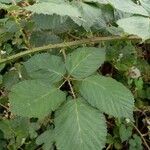
Rubus armeniacus
Himalayan blackberry · Himalaya blackberry · Himalaya giant blackberry · Himalaya-berry · Himalayan Giant
Description
Source: leafsnapRubus armeniacus, the Himalayan blackberry or Armenian blackberry, is a species of Rubus in the blackberry group Rubus subgenus Rubus series Discolores (P.J. Müll.) Focke. It is native to Armenia and Northern Iran, and widely naturalised elsewhere. Both its scientific name and origin have been the subject of much confusion, with much of the literature referring to it as either Rubus procerus or Rubus discolor, and often mistakenly citing its origin as western European. Flora of North America, published in 2014, considers the taxonomy unsettled, and tentatively uses the older name Rubus bifrons.In some areas, the plant is cultivated for its berries, but in many areas it is considered a noxious weed and an invasive species.
🌳 Although the himalayan blackberry is primarily known for its fruit, this hardy plant has unexpected uses. Its dense growth makes it an effective soil stabilizer and erosion controller, and it is often employed in restorative landscaping. Craftspeople also use its strong canes to make handmade baskets and wickerwork, highlighting the plant's versatility beyond culinary uses. Not commonly exploited, the himalayan blackberry holds promise for local craftsmanship and ecological management.
🎭 Recovery, Funds, Safeguarding.
Care Guide
💧 Water
The Himalayan blackberry, native to temperate regions, thrives with a moderate water supply and needs watering every 2 to 3 weeks. While it is drought-tolerant, it also benefits from humidity. Outdoors, the Himalayan blackberry primarily relies on rainfall, which is particularly beneficial during its active growing season, as it enhances the plant's health and water absorption.
How should I water my Himalayan blackberry plant?
Your Himalayan blackberry is not very picky when it comes to watering. You can use any common watering tool, such as watering cans, hoses, or even cups. It's important to water the plant directly on the soil, making sure to moisten all areas evenly to provide water to all parts of the root system. Using filtered water is recommended, as tap water may contain harmful particles. It's also best to use water at or slightly above room temperature, as extremely hot or cold water can shock the plant. However, the Himalayan blackberry generally does well with any type of water.
What should I do if I give too much or too little water to my Himalayan blackberry plant?
When it comes to outdoor plants, especially new ones or seedlings, they can often suffer from lack of watering. It's important to remember that you should continue watering them regularly for a few months after planting, as small or recently planted trees need this extra attention. Once the roots are established, Himalayan blackberry plants can typically rely on rainwater for hydration. However, if you have Himalayan blackberry planted in pots, overwatering becomes a more common issue. In the event that you accidentally overwater your plant, it's crucial to act quickly to address the problem. Firstly, stop watering the plant immediately to minimize the impact of overwatering. Next, you should examine the roots by removing the plant from its pot. If you find any signs of root rot, trim away the affected roots and consider applying a fungicide to prevent further damage. If there are no signs of root rot, you can safely return the plant to its pot. Lastly, repot the Himalayan blackberry in well-draining soil. On the other hand, underwatering is usually an easier problem to solve. If you notice that the leaves are drooping, drying out, or falling off, it's a sign that the plant is not getting enough water. Simply increase the frequency of watering, and you will see the leaves regain their fullness. It's important to promptly adjust your watering schedule if you notice signs of underwatering.
How often do I need to water my Himalayan blackberry?
If your outdoor plants receive sufficient rainfall, they can grow normally without additional watering. However, if your area lacks rainfall, you should water them every 2 weeks in the spring and fall, and more frequently during the summer. In winter, when plants require less water due to slower growth, water sparingly or not at all. Young or newly planted Himalayan blackberries need more frequent watering to help them establish and become drought tolerant. For potted plants, there are two main approaches to determining watering frequency for your Himalayan blackberry. The first method is to follow a predetermined watering schedule of once a week or once every other week. However, this may not always be sufficient as it doesn't consider the unique growing conditions of your blackberry. Watering frequency can also vary depending on the season. During summer, when the plant's water needs are highest, a predetermined schedule may not be enough. An alternative option is to monitor soil moisture and water when the top two to four inches of soil, about ⅓ to ½ of the pot depth, have completely dried out.
How much water does my Himalayan blackberry require?
Watering your Himalayan blackberry may surprise you because it doesn't always require a lot of water. If only a few inches of soil have dried since your last watering, giving it about five to ten ounces of water is sufficient for healthy growth. You can also determine the amount of water based on the moisture of the soil. Take note of how many inches of soil have dried out between waterings. To ensure the plant receives enough moisture, water all the layers of dry soil from the previous watering. If over half of the soil has dried out, consider giving more water than usual. In these cases, continue watering until you see excess water draining from the pot's holes. If your Himalayan blackberry is planted in a rainy outdoor area, it may not need additional watering. However, when the plant is young or establishing itself, ensure it receives 1-2 inches of rain per week. As it grows and establishes, it can rely on rainwater alone. Only when the weather is hot and there is no rain for 2-3 weeks should you give the plant a thorough watering to prevent stress.
How do I know if I am watering my Himalayan blackberry plant enough?
The Himalayan blackberry is more likely to be harmed by overwatering than underwatering. There are some clear signs to watch out for when overwatering occurs. Typically, an overwatered Himalayan blackberry will have yellowing leaves and may shed some leaves. Overwatering can also cause the plant's overall structure to shrink and may lead to root rot. Conversely, an underwatered Himalayan blackberry will also start to wilt. Additionally, its leaves may turn brown or become brittle to the touch. In either case, if you notice signs of overwatering or underwatering, it is important to take action to restore the health of your Himalayan blackberry.
☀️ Light Full sun
Himalayan blackberry prefers abundant light but can tolerate moderate sun, reflecting its native habitat. Adequate sunlight is essential for healthy growth. However, both too much and too little light can hinder development and vitality, so finding the proper balance is important.
What are the sunlight requirements for Himalayan blackberry (Rubus armeniacus)?
The Himalayan blackberry requires full sun exposure, which means it needs above 6 hours of sunlight. It can also tolerate partial sun, receiving about 3-6 hours of sunlight. Monitoring the sunlight throughout your garden helps in finding spots that offer the perfect balance of light and shade, ensuring the plants' wellbeing and happiness.
What essentials should be considered for the healthy growth of Himalayan blackberry?
For healthy growth, Himalayan blackberry thrives in abundant light but can withstand moderate sun, reflecting its native habitat's conditions. Proper sunlight is critical, as both overwhelming and insufficient light can prevent the plant's development and vitality. If natural light is insufficient, especially during winter or in less sunny areas, artificial lighting becomes crucial. LED lights are recommended for indoor plants because they provide specific wavelengths needed for growth. Full sun plants need between 30-50W/sq ft of artificial light, partial sun plants require 20-30W/sq ft, and full shade plants need about 10-20W/sq ft.
What are the symptoms of light deficiency in Himalayan blackberry?
Symptoms of light deficiency in Himalayan blackberry include smaller new leaves compared to older ones, leggy or sparse growth indicating a stretched-out appearance, faster leaf drop as a conservation effort, slower or halted growth, lighter-colored new leaves due to lack of chlorophyll, and chlorosis, where leaves lose their green color. Direct excessive sunlight exposure can cause sunscald, leaf curling as a defense mechanism, wilting from increased water loss, and leaf scorching, characterized by brown, dry edges on leaves.
What solutions can alleviate the light-related issues of Himalayan blackberry?
To address light-related issues, indoor plants should be moved to a sunnier location gradually until they get at least 6 hours of sunlight, preferably through a south-facing window. Using artificial light for at least 8 hours daily can also supplement light needs. For outdoor plants, a careful transition to sunnier spots is necessary to avoid sunburn. Reducing obstructions like pruning trees can increase sunlight exposure. Transplanting in the plant's dormant period to a brighter location might also benefit smaller plants. It's noted that damaged parts might not recover, but new growth will be healthy post-adjustment.
🌡️ Temperature 10–35°C
Himalayan blackberry, a temperate woody plant, prefers temperatures between 50 and 95 ℉ (10 to 35 ℃) for growth. It is adapted to the cool, moist conditions of the Pacific Northwest. During the hot summer months, the plant benefits from regular watering and partial shade to avoid water loss and heat stress.
What are the ideal growth conditions for Himalayan blackberry?
Himalayan blackberry, scientifically known as Rubus armeniacus, thrives in a temperate climate, preferring a temperature range of 50 to 95°F (10 to 35°C). It is well-suited to the cool and moist environment of the Pacific Northwest. To ensure optimal growth, particularly during the hot summer months, it benefits from regular watering and some partial shade to mitigate water loss and heat stress. Strong in its cold resistance, the Himalayan blackberry usually does not require specific frost protection measures in winter. However, if temperatures are forecasted to plummet below -25°C, providing some form of cold protection, such as wrapping the trunk and branches in non-woven fabric or cloth, is advisable. Additionally, watering the plant generously before the first freeze in autumn, to maintain soil moisture, can help prevent winter and early spring drought conditions.
How does low temperature affect Himalayan blackberry and what are the solutions?
Himalayan blackberry is quite cold-tolerant and performs best when the temperature remains above 10°C. Throughout the winter, it is crucial to keep the temperature above -15°C. If the temperature dips below -25°C, the branches might not show immediate distress, but they could become brittle and dry, failing to produce new shoots by spring. The solution for dealing with such cold damage is to prune away any dead branches that have not produced new leaves come spring.
How does high temperature affect Himalayan blackberry and what are the solutions?
During the summer, it is important to keep Himalayan blackberry below 35°C. Temperatures exceeding 38°C may cause the leaves to lighten in color, tips to dry and become withered, and increase susceptibility to sunburn. To mitigate these effects, trim away the sunburned and dried-up parts of the plant. Moving the plant to a shaded location or utilizing a shade cloth to protect it from midday and afternoon sun can be beneficial. Additionally, water the plant in the morning and evening to ensure the soil remains moist and supports its growth.
💨 Humidity
🪴 Soil 6-6
🌱 Fertilizer
Fertilize your Himalayan blackberry in early spring to encourage healthy growth. Consistent feeding improves overall health, producing vigorous growth, better resilience to challenging conditions, and increased resistance to pests and diseases. Follow a regular fertilization schedule for your Himalayan blackberry to keep the foliage vibrant, deeply colored, and lush in appearance.
Why should I put fertilizer on my Himalayan blackberry plants?
To ensure your Himalayan blackberry thrives, regardless of the type you have, it's important to fertilize regularly. Proper nutrient supply promotes strong growth, enhances resilience to tough conditions, and improves the plant's ability to fight diseases and pests. Since the foliage is a standout feature, it's essential to maintain its beauty. This involves establishing a tailored fertilization schedule to encourage vibrant, lush leaves.
When should I fertilize my Himalayan blackberry?
To keep your Himalayan blackberry healthy and promote growth, it is recommended to fertilize it for the first time in late winter or early spring. This gives the plant the necessary nutrients to thrive once the weather warms up. In warm climate regions, it can be beneficial to provide another round of fertilization in early fall. This not only provides additional nutrients for the upcoming growing season but also increases the plant's resilience, helping it withstand the winter without damage. Fertilizing earlier in the fall ensures that new branches have enough time to grow and become hardy before the cold sets in.
When is it not a good idea for me to add fertilizer to my Himalayan blackberry plants?
There are a few times of the year when it is not recommended to fertilize your Himalayan blackberry. The first time is during the early and mid-winter months when the plant is dormant and doesn't need any nutrients. It is also not advisable to fertilize during late spring and summer when the weather is hot and dry. Fertilizing during this time can negatively affect the plant. To avoid any issues, it is best to stick to a fertilization schedule that involves feeding in early spring and early fall.
What kind of plant food does my Himalayan blackberry need?
Nitrogen is typically the most important nutrient for a Himalayan blackberry, but phosphorus and potassium should not be overlooked. While a balanced fertilizer like 10-10-10 can suffice, a more specific nutrient ratio tends to promote optimal growth for this plant. Fertilizers with higher nitrogen content, such as 10-6-4, often yield better results. Both granular and liquid-based fertilizers can be used for application.
How should I fertilize my Himalayan blackberry plant?
To fertilize your Himalayan blackberry, you have two options: using a granular fertilizer or a liquid fertilizer. For the granular fertilizer, simply sprinkle it on the soil at the right time. It releases nutrients slowly over time, so make sure to water your blackberry, even lightly, before applying the fertilizer. Using a liquid fertilizer is less common, but still an option. Mix the fertilizer with water and pour the mixture onto the soil around the base of your blackberry. Before fertilizing, it can be helpful to perform a soil test to determine if you need to adjust the pH levels.
🪴 Pot & Repot Every 12 months
✂️ Pruning
Pruning is essential for the health and productivity of Himalayan blackberry plants. After harvesting, remove all the canes that have borne fruit. Cut back the first-year canes by half to promote lateral growth. Trim any overcrowded canes, eliminate suckers, and ensure that the canes in patches are well-spaced. Dispose of the pruned canes properly to prevent the spread of disease.
🌿 Propagating
🐛 Diseases & pets
☠️ Toxicity
Characteristics
- Plant Type
- Shrub
- Life Cycle
- Perennial
- Genus
- Rubus
- Family
- Rosaceae
- Hardiness Zone
- 6-9
- Mature Height
- 3.96 m to 10.06 m
- Mature Spread
- 2.13 m to 4.88 m
- Leaf Color
- Green
- Leaf Type
- Evergreen
- Flower Color
- White, Pink
- Flower Size
- 2.03 cm to 2.54 cm
- Bloom Time
- Late spring, Early summer, Mid summer
- Planting Time
- Summer, Autumn, Spring
- Harvest Time
- Mid summer
- Native Area
- Armenia, Azerbaijan