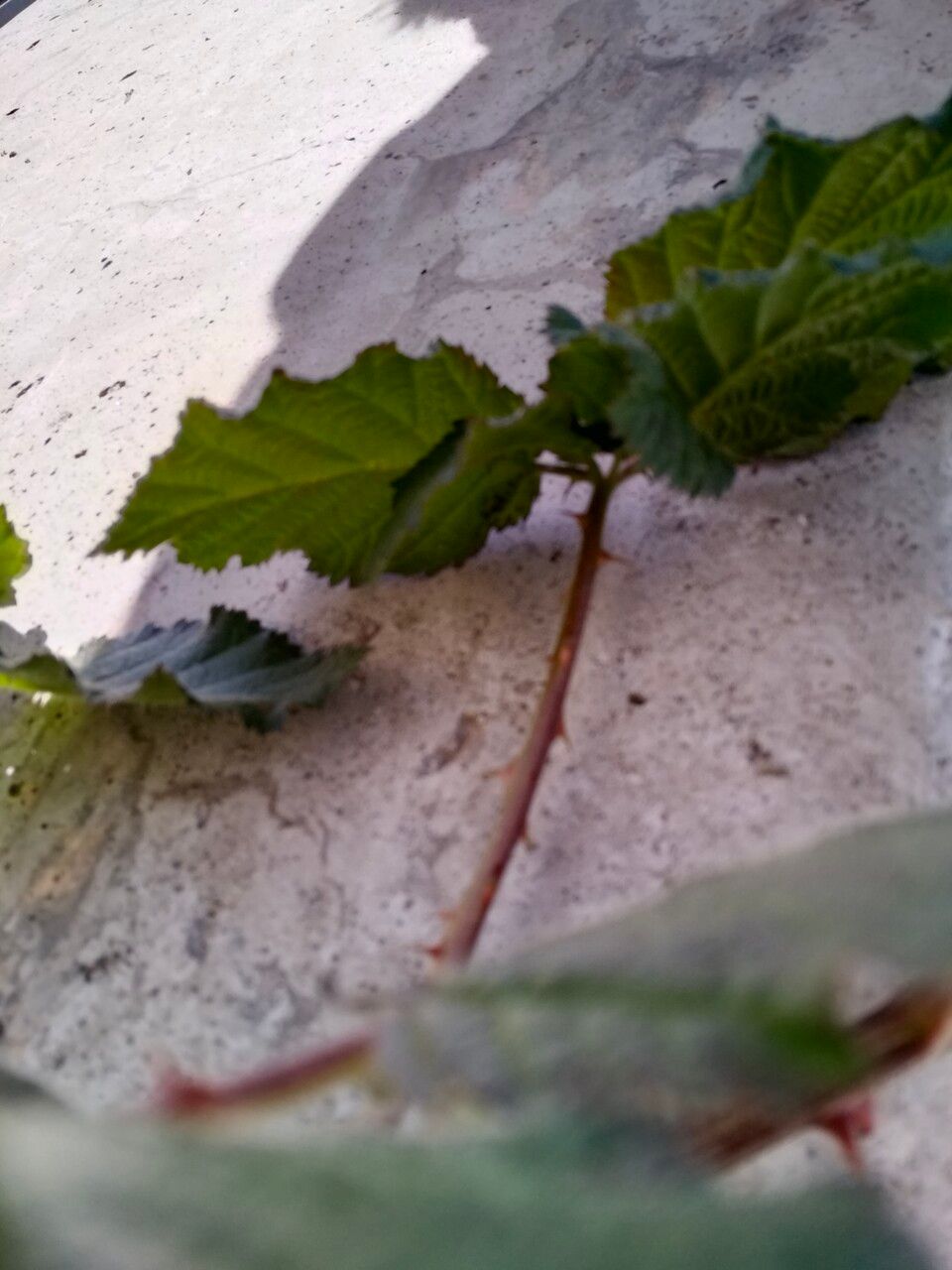
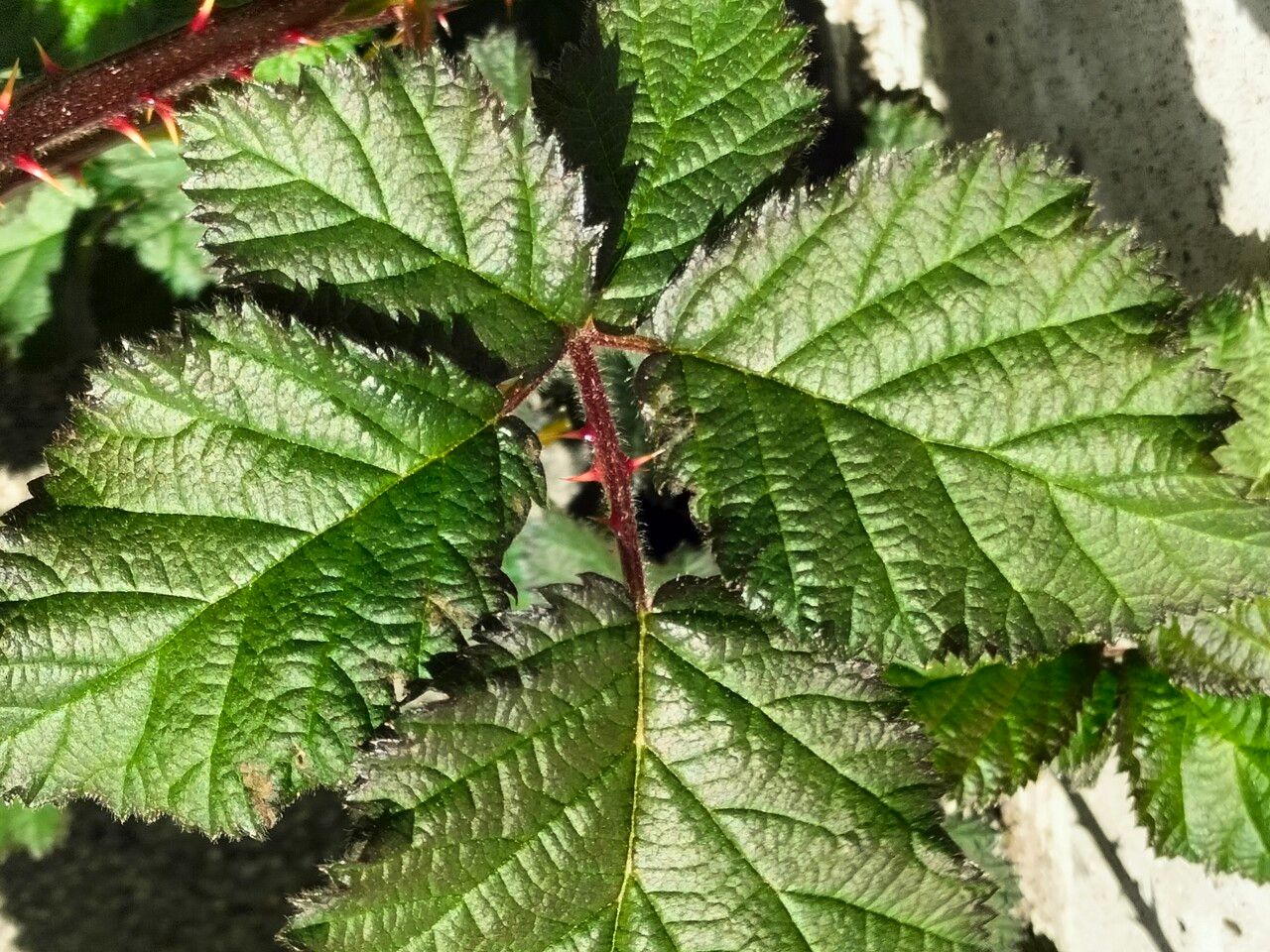
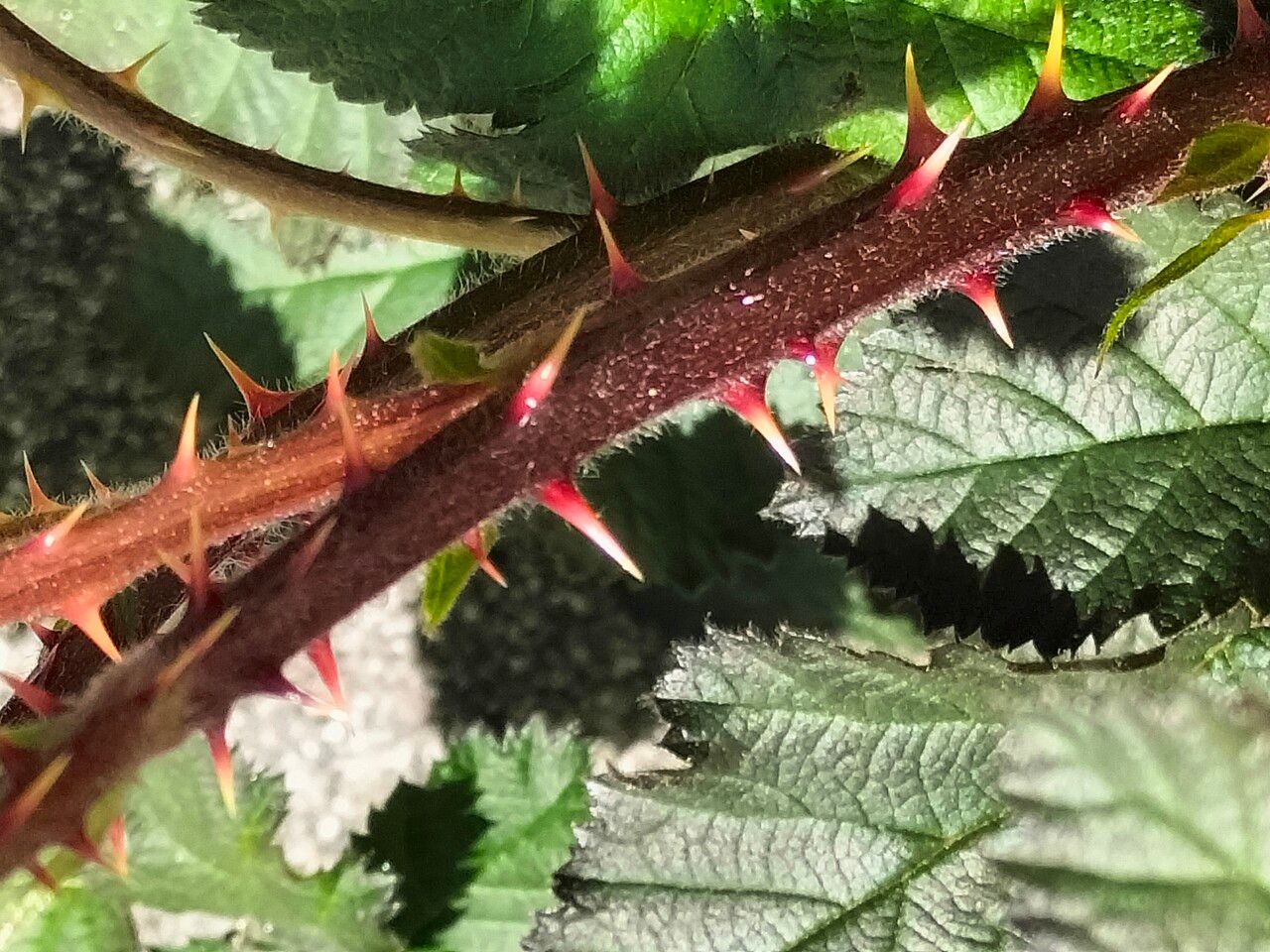
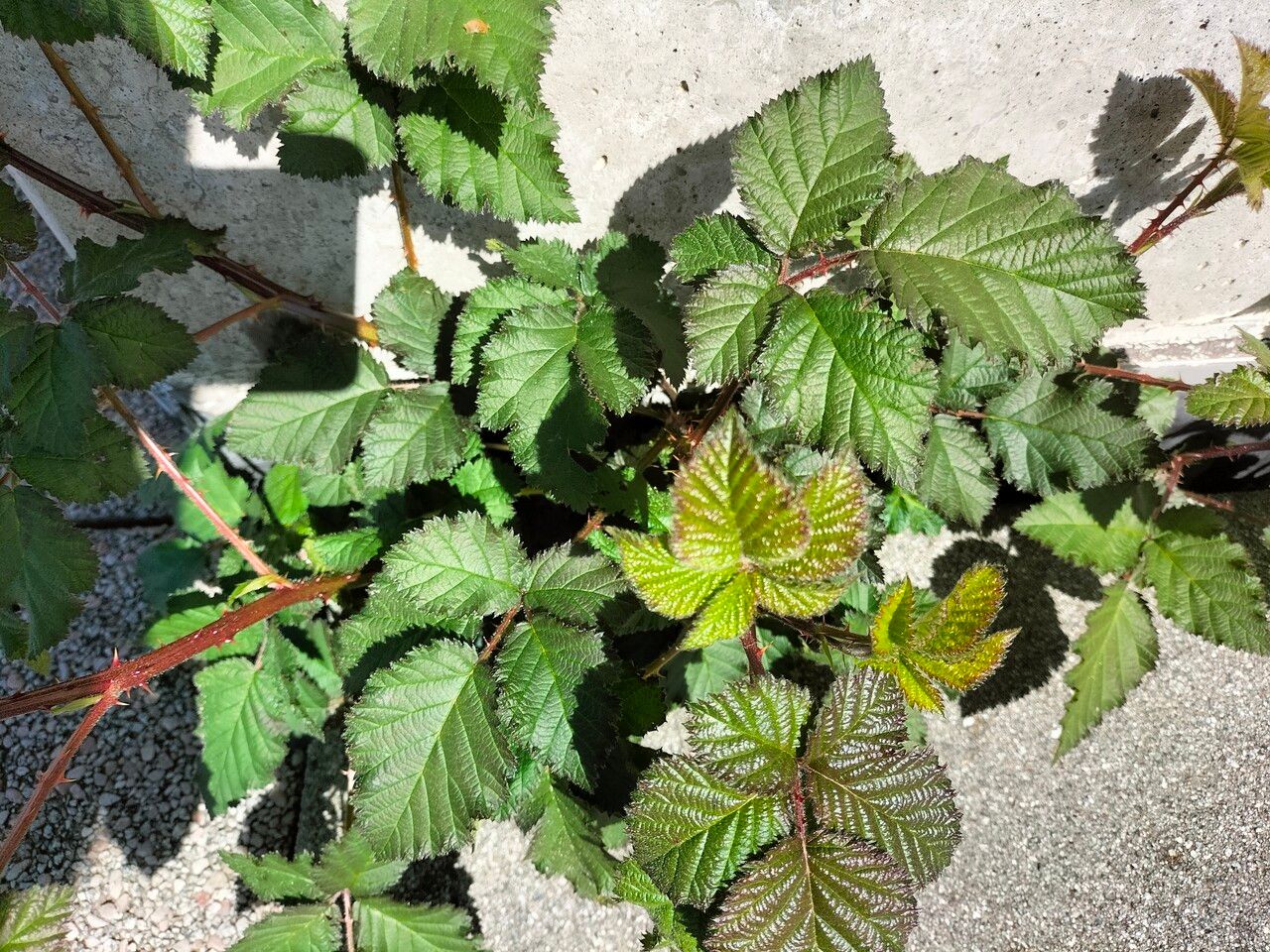
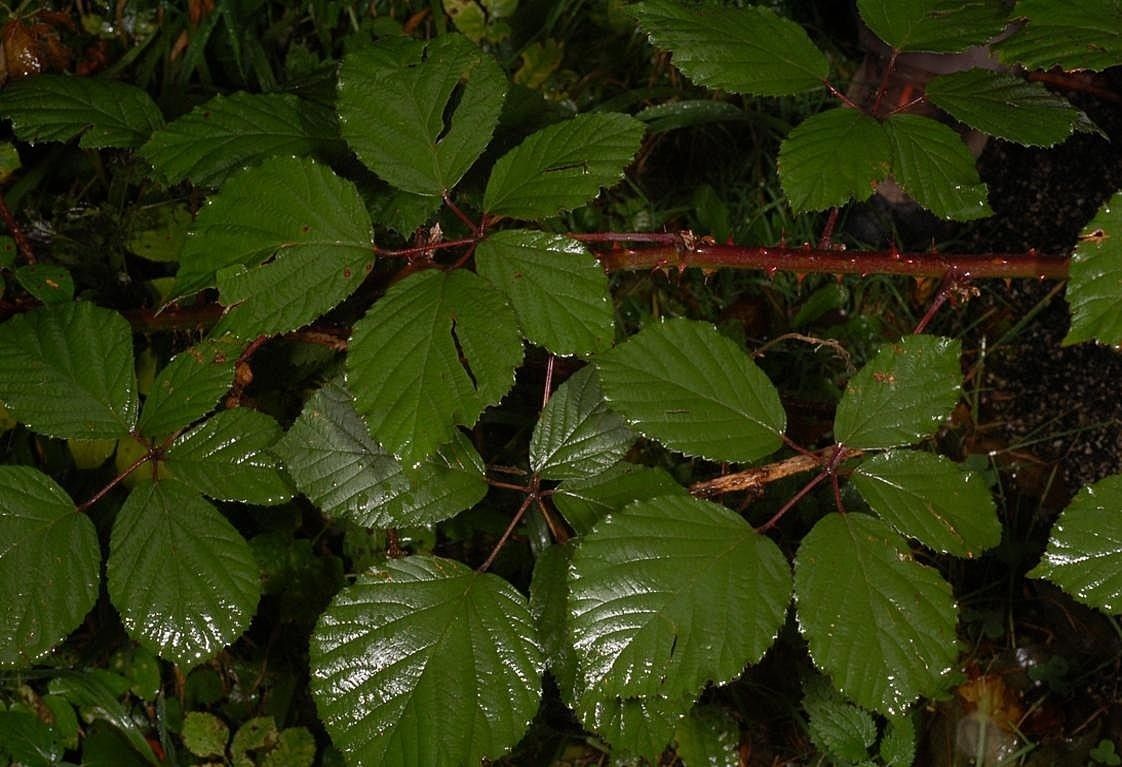
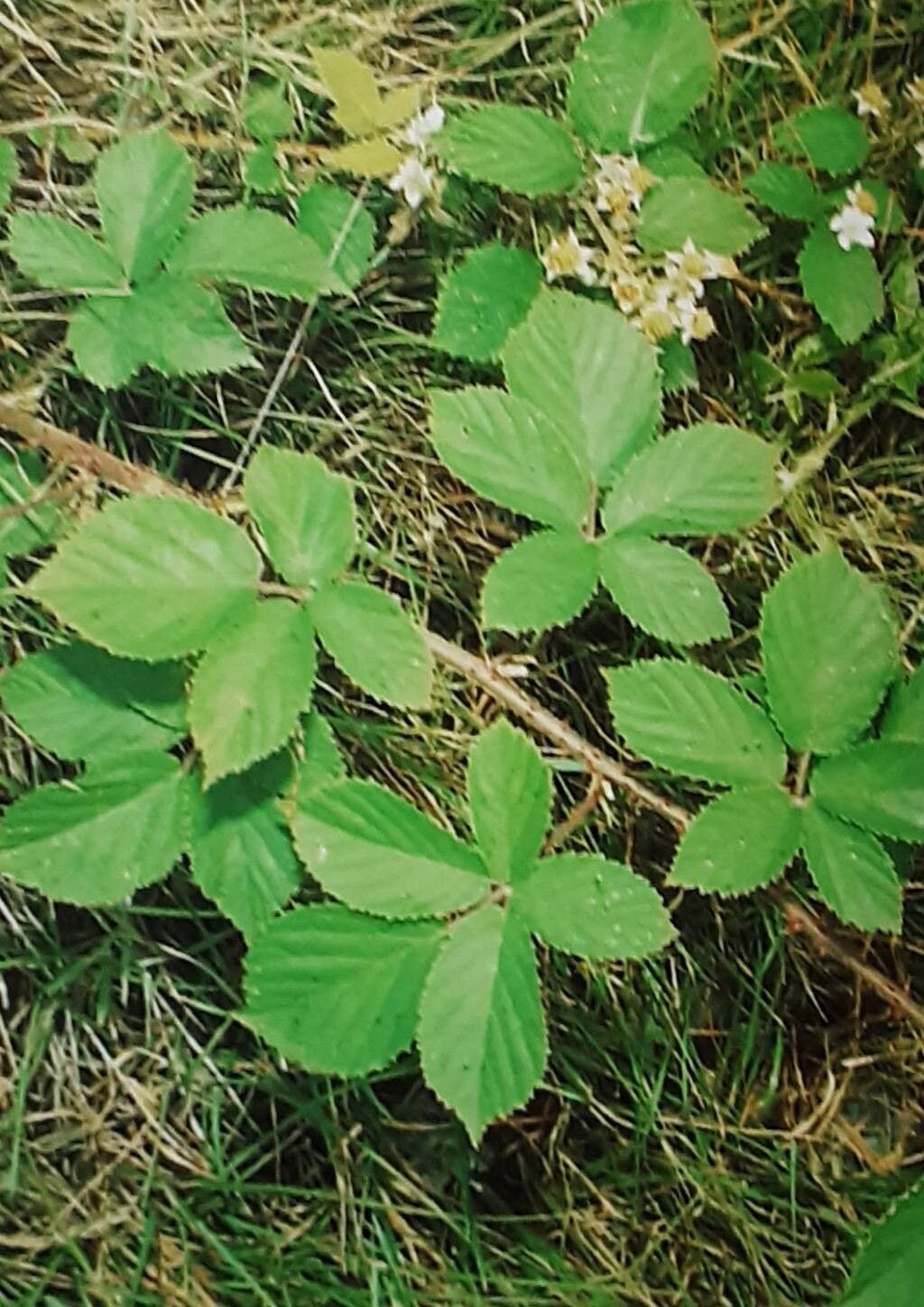
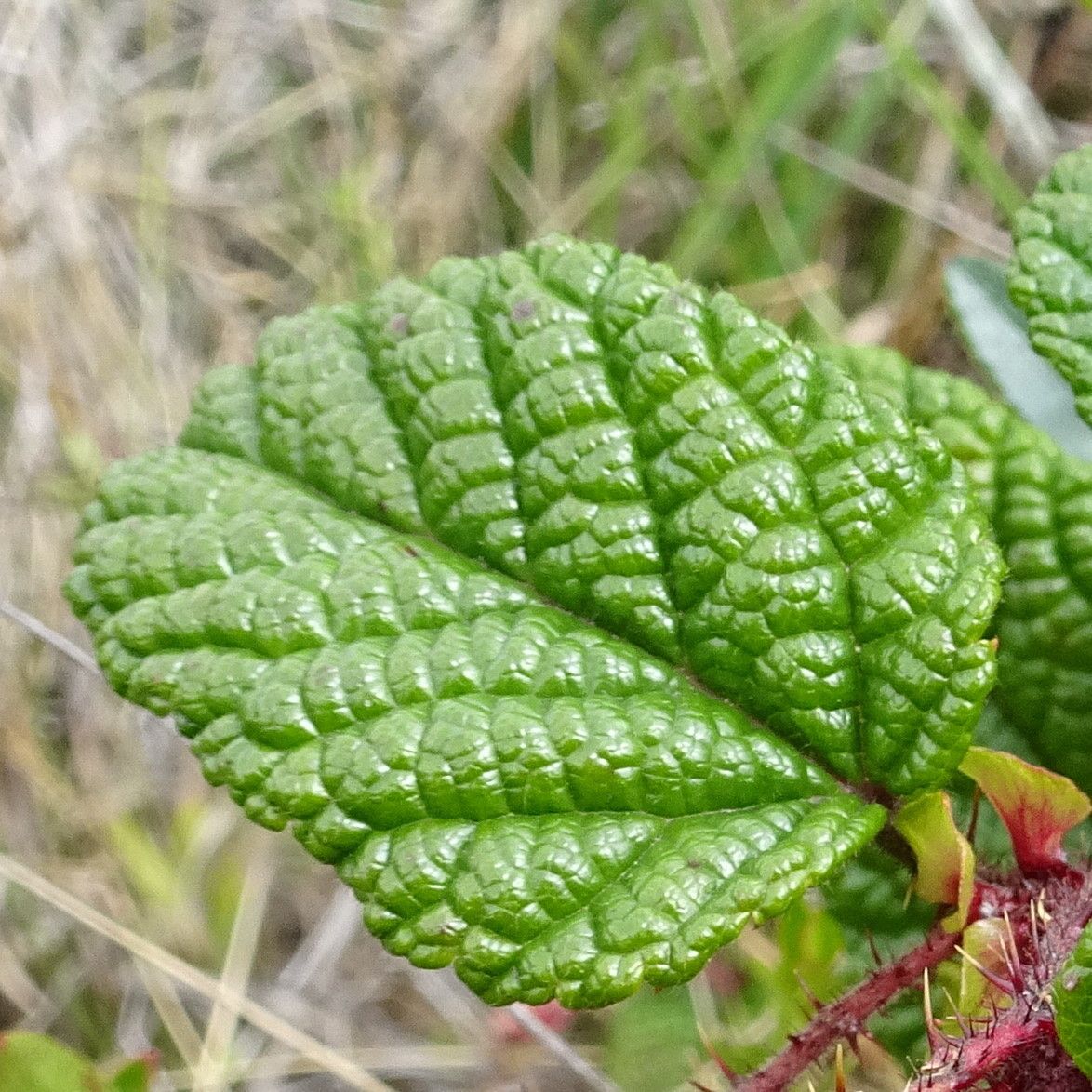
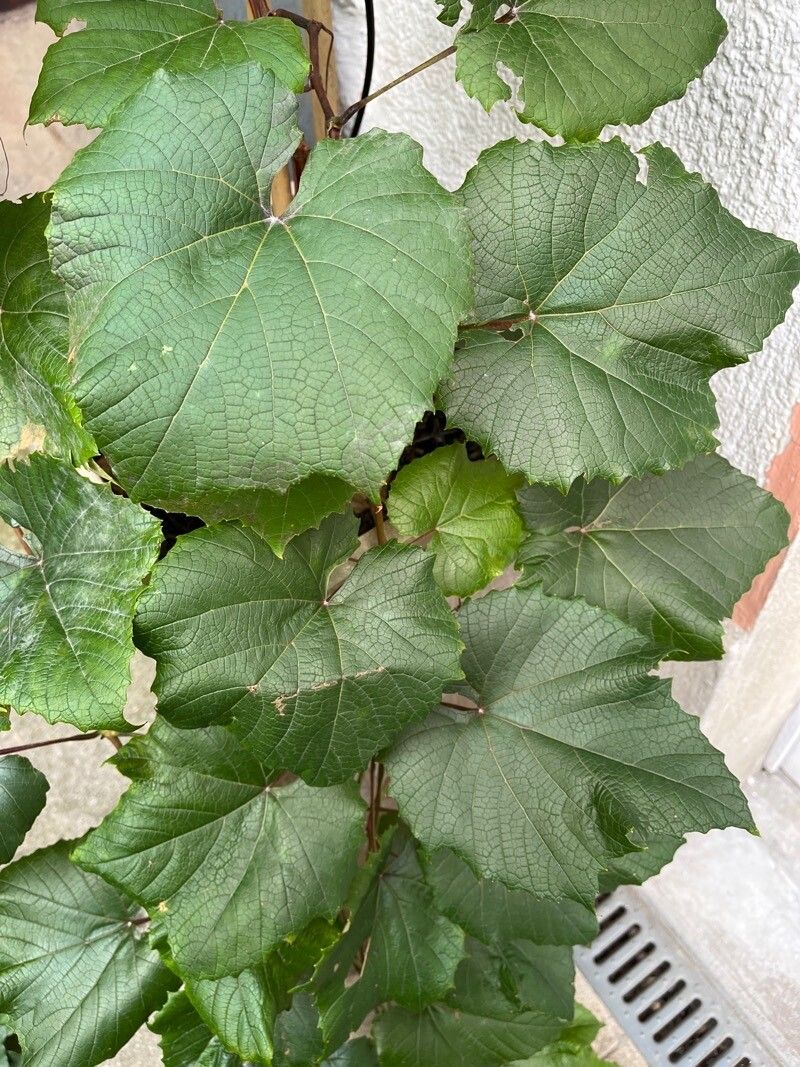
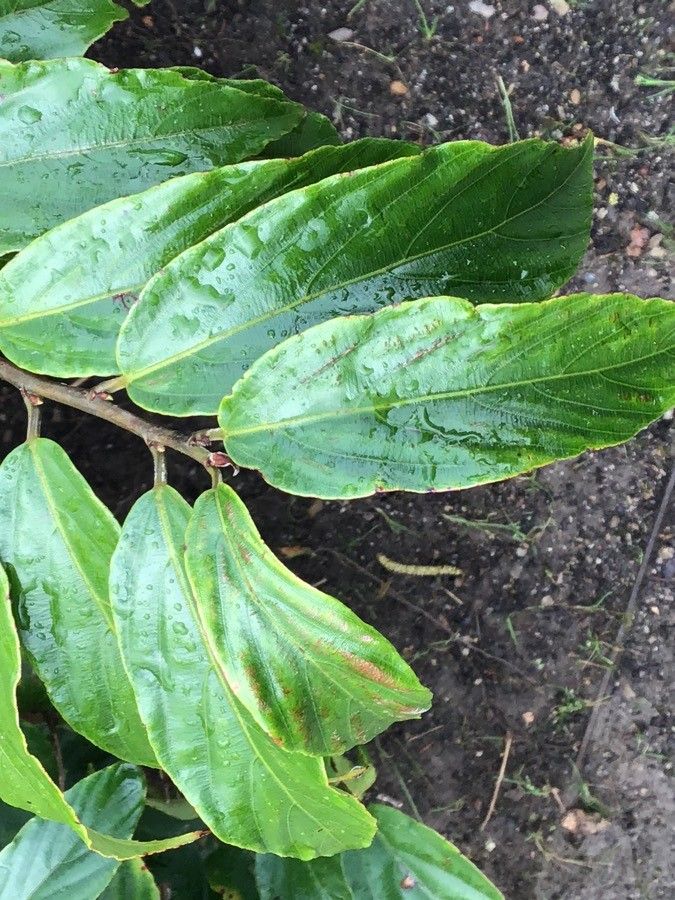
Rubus bifrons, the European blackberry or Himalayan blackberry, is a European species of flowering plant in the rose family. It is widespread across much of Europe and naturalized in scattered parts of North America. It is sometimes considered to include the species R. armeniacus.Rubus bifrons is a spiny shrub up to 50 cm (20 inches) tall. Stems are biennial, arching, sometimes creeping. Leaves are palmately compound with three or five leaflets. Flowers are white or pink, in large arrays at the ends of branches, sometimes containing as many as 100 flowers. Fruits are black.
The European blackberry has good resistance to disease and is generally not susceptible to illnesses. Regarding care, this plant is fairly low-maintenance. Planted outdoors, it needs only light watering, and larger specimens usually do not require pruning. Smaller plants, however, should be pruned after they finish blooming. The European blackberry is suitable for anyone with an outdoor area, such as a garden or deck, and does not demand extensive care experience.
How to keep Rubus Bifrons.
Light
European blackberry thrives in places that get abundant sunlight all day, but it can also tolerate locations where sunlight is somewhat intermittent. These conditions closely resemble its native habitat. Both too much and too little light can interfere with its growth and health.
Water
The European blackberry grows best in conditions with moderate moisture, although it can withstand short periods of dryness. It thrives in evenly moist soil and typically needs watering every 1 to 2 weeks. When grown outdoors in temperate regions, applying mulch can help retain moisture during its active growing season.
Temperature
The European blackberry plant originates from temperate regions and prefers mild to warm conditions, flourishing within a typical range of 50 to 95 ℉ (10 to 35 ℃). In colder months it may need protection from low temperatures—such as being covered or moved indoors—if conditions fall below 25 ℉ (-4 ℃).
Fertilizer
Fertilize your European blackberry in early spring to encourage healthy growth. Regular feeding boosts overall health, producing vigorous growth, increased tolerance of harsh conditions, and enhanced resistance to pests and diseases. Follow a specific fertilization schedule for your European blackberry to keep the foliage vibrant with deep color and a lush appearance.
Pruning
The European blackberry grows vigorously with its thorny canes. To maintain healthy growth, prune it between early and late winter while the plant is dormant. Start by removing any dead canes and thinning out the older ones. Trim the lateral branches, but be sure to leave a few buds intact. This will improve air circulation, reduce the risk of disease, and foster healthy growth and better fruit quality.
Pot & Repot
When repotting a European blackberry, select a container 1–2 inches (2.5–5.1 cm) larger that has good drainage. Use a well-draining potting mix. Repot in spring or fall, making sure the root ball sits slightly below the rim of the pot. Water thoroughly after repotting and place it in a warm spot with indirect sunlight.
Botanical profile.
- Plant Type
- Shrub, Vine
- Life Cycle
- Perennial
- Genus
- Rubus
- Family
- Rosaceae
- Hardiness Zone
- 6-9
- Mature Height
- 49 cm
- Mature Spread
- 0.61 m to 6.1 m
- Leaf Color
- Green
- Leaf Type
- Evergreen
- Flower Color
- White, Pink
- Flower Size
- 11.43 cm
- Bloom Time
- Late spring, Early summer, Mid summer
- Planting Time
- Autumn
- Harvest Time
- Mid summer
- Native Area
- Germany, Austria, Italy, Switzerland, Czech Republic, Slovakia, Romania, Netherlands, Poland, Hungary, Croatia, Slovenia, Belgium, Ukraine, France
Other names.
Reader questions.
What are the sunlight requirements for European blackberry?
European blackberry thrives in areas with abundant sunlight throughout the day, requiring more than 6 hours of sunlight for full sun conditions, and can also survive in partial sun conditions with about 3-6 hours of sunlight. This mimics its native environment conditions closely. An essential tip is to observe how sunlight moves through your garden, selecting spots that ensure a balance of light and shade for your plants' optimum growth. Artificial lighting can be used to supplement natural light, especially for indoor plants or in areas with less sunlight. LEDs are recommended, with full sun plants needing 30-50W/sq ft, partial sun plants 20-30W/sq ft, and full shade plants 10-20W/sq ft of artificial light.
What is the native region and preferred temperature range for the European blackberry plant?
The European blackberry plant, scientifically known as Rubus bifrons, is native to temperate regions. It flourishes in mild to warm temperatures, with a preferred temperature range of 50 to 95°F (10 to 35°C).
What are the symptoms of light deficiency or overexposure in European blackberry?
European blackberry shows several symptoms in response to inadequate sunlight or overexposure. Light deficiency can lead to smaller leaves, leggy growth, faster leaf drop, slower or halted growth, and lighter-colored new leaves. On the flip side, excessive sunlight can cause chlorosis, sunscald, leaf curling, wilting, and leaf scorching. These symptoms either indicate stress from not enough light or damage from too much direct sunlight.
How should European blackberry plants be protected during cold seasons?
During the colder seasons, when temperatures drop below 25°F (-4°C), European blackberry plants may require temperature adjustments such as covering or bringing indoors to protect them from the cold. While they possess strong cold resistance and special frost protection measures are usually not necessary, temperatures expected to fall below -25°C warrant cold protection measures. This can involve wrapping the trunk and branches with non-woven fabric or cloth. Additionally, watering the plant abundantly before the first freeze in autumn is recommended to ensure the soil remains moist and enters a frozen state, which helps prevent drought and water scarcity during winter and early spring.
How can I address sunlight-related issues in European blackberry?
To address sunlight-related issues in European blackberry, start by gradually moving your plants to sunnier locations to ensure they receive at least 6 hours of direct sunlight each day. For indoor plants, consider using artificial lighting if they're not easily movable. Outdoors, adjust plant positions with care to avoid sunburn, and indoors, use south-facing windows or artificial grow lights to supplement light. If physical barriers cause shadowing, consider pruning or transplanting the plant during its dormant period to a brighter location. Remember, parts of the plant that have suffered due to low light may not recover, but new growth should be healthy with improved light conditions.
What are the symptoms and solutions for European blackberry plants in low temperatures?
European blackberry plants are cold-tolerant and thrive best when temperatures are above 10°C. During the winter, they should be kept above -15°C. If temperatures fall below -25°C, there may not be noticeable changes during winter, but the branches may become brittle and dry in spring, with no new shoots emerging. The solution for this is to prune away any dead branches that have failed to produce new leaves in the spring.
How should European blackberry plants be cared for in high temperatures?
In high temperatures, specifically during summer, European blackberry plants should be kept below 35°C. Should the temperature exceed 38°C, the plant's leaves may lighten in color, tips may become dry and withered, and the plant becomes more susceptible to sunburn. To address this, sunburned and dried-up parts should be trimmed away. The plant should be moved to a location that provides shade during the midday and afternoon sun, or a shade cloth can be used to create shade. Watering the plant in the morning and evening to keep the soil moist is also essential.