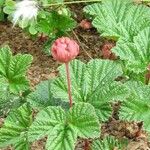
Rubus chamaemorus
Cloudberry · Bake-apple · Baked-apple-berry · Salmonberry · Yellow-berry
Description
Source: leafsnapRubus chamaemorus, commonly known as cloudberry, is a perennial plant in the rose family, native to the Arctic and subarctic regions of Europe, Asia, and North America. The plant grows up to 25 cm tall and features a creeping stem that produces leaves with three to five lobes. Its flowers, which bloom from May to July, are white or pinkish. The fruit of Rubus chamaemorus is a bright orange-yellow berry that resembles a raspberry but has a unique sweet and tart flavor. The berries ripen from July to August in the northern hemisphere. Cloudberry plants prefer moist soil conditions such as bogs or wetlands but can also thrive in well-drained dry soils. For optimal growth, they require full sun exposure. Traditionally, Rubus chamaemorus has been used in medicine for its anti-inflammatory properties and its ability to treat digestive disorders like diarrhea and constipation. Today, cloudberry fruit is highly sought after by chefs around the world for its unique flavor profile and is used in various culinary applications such as jams, jellies, syrups, liqueurs, and even ice cream.
Care Guide
💧 Water Every 7 days
Cloudberry plants, which originate from bogs and alpine regions, thrive in environments with high moisture and cool temperatures. They need consistent hydration but can tolerate short periods of dryness. Watering them once a week is usually sufficient, making cloudberries well-suited for outdoor cultivation. During their active growing season, they particularly benefit from natural rainfall.
How should I water my Cloudberry plant?
To properly care for the Cloudberry plant, it is important to use filtered water at room temperature. Tap water should be avoided because it may contain harmful particles. The Cloudberry prefers warm environments, so cold water can be detrimental. Additionally, it is recommended to avoid overhead watering as it can lead to problems with the foliage. Instead, it is best to apply filtered room temperature water directly to the soil until it is completely soaked. This helps moisten the roots and assists them in spreading through the soil to gather necessary nutrients.
What should I do if I give my Cloudberry plant too much water or not enough water?
It's important to be aware of both overwatering and underwatering when taking care of your Cloudberry plant, but overwatering is a more common problem. If the Cloudberry receives too much water, its stems and leaves may wilt and turn yellow. Overwatering for a long time can also lead to diseases like root rot, mold, and mildew, which can kill the plant. Underwatering is less common because the Cloudberry plant tolerates drought well. However, it's still possible, and if it happens, you'll notice the leaves becoming brittle and brown. It's crucial to spot the signs of overwatering early when caring for your Cloudberry because certain diseases like root rot may not be fixable if you wait too long. If you see early signs of overwatering, reduce your watering schedule immediately. Additionally, check the soil quality where your Cloudberry is growing. If the soil doesn't drain well, replace it with a loose, well-draining potting mix. On the other hand, if you notice signs of underwatering, simply water the plant more regularly until the signs subside.
How frequently should I water my Cloudberry?
If your Cloudberry plant is in a pot, the most precise way to determine if it needs water is by checking the soil with your finger. If the top two to three inches of soil feel dry, it's time to water it. If you have your Cloudberry plant planted outdoors, you can use a similar method to test the soil. Again, if the top few inches of soil are dry, it's time to water it. Typically, during the spring and early fall, you'll need to water this plant about once a week using this method. However, during extremely hot weather, you might need to water it twice a week or even more. It's worth noting that mature, well-established Cloudberry plants have a great ability to tolerate drought.
How much water does my Cloudberry plant need?
When watering your Cloudberry, don't be afraid to give it a good amount of water. Make sure the top two to three inches of soil are dry before watering. It's important to thoroughly water the plant and soak the soil completely. You should add enough water so that it drains out of the bottom of the pot. If you don't see any excess water draining, then you have probably not given enough water. However, be careful not to let water accumulate in the soil, as this can harm the plant. On the other hand, if water is not draining through the pot, it could mean that the soil is not draining well, which is not good for the plant's health. If the plant is outside, one inch of rain per week should be enough.
How do I water my Cloudberry plant at different growth stages?
The water needs of the Cloudberry can vary at different growth stages. When the Cloudberry is in its early years or has just been transplanted, it requires more water. This is because it is focused on developing new roots to support future growth, and these roots need extra moisture. As the Cloudberry matures, it will require less water. Additionally, during the bloom period, the plant may need more water to support flower development.
☀️ Light Full sun
Cloudberry prefers environments with unobstructed sunlight. It can also adapt to locations where the sun's rays are partly blocked. However, too much shade or excessive light can interfere with its healthy growth. This preference reflects its native habitat, as it usually thrives in open or semi-shaded surroundings. Poor light management can cause weak development or reduced strength.
What are the sunlight requirements for Cloudberry plants?
Cloudberry plants thrive in conditions where they receive full sun, which is defined as more than 6 hours of direct sunlight daily, or partial sun, which accounts for about 3-6 hours of sunlight. It's crucial to observe how sunlight moves through your garden to find spots that offer a balance of light and shade, ensuring the plants' well-being. Excessive shade or too much direct light can negatively impact the Cloudberry's growth, reflecting its natural preference for clear to semi-shaded environments.
Can Cloudberry plants grow with artificial lighting?
Yes, Cloudberry plants can grow under artificial lighting, especially when natural sunlight is insufficient, such as during winter or in locations that don't receive enough sunlight. Indoor Cloudberry plants benefit from artificial lights, which support their growth by mimicking natural sunlight conditions. LED lights are recommended due to their ability to provide specific wavelengths needed for plant growth. Full sun plants typically need 30-50W/sq ft, partial sun plants require 20-30W/sq ft, and full shade plants need 10-20W/sq ft of artificial light. The light source should be placed 12-36 inches above the plant, ensuring it receives 8-12 hours of light per day to thrive.
What are the symptoms of inadequate lighting for Cloudberry plants?
Cloudberry plants show several symptoms when they don't receive enough light, including smaller new leaves, leggy or sparse growth, faster leaf drop, slower or no new growth, and leaves with lighter color or irregular patterns indicating a lack of chlorophyll. Conversely, symptoms of too much light include chlorosis, where leaves turn yellow, sunscald indicated by pale or necrotic areas on the plant, leaf curling as a defense against excessive sunlight, wilting due to increased water loss, and leaf scorching seen as brown, dry edges on leaves.
How can I address light-related issues in Cloudberry plants?
To address light-related issues in Cloudberry plants, gradually increase their exposure to sunlight if they have been under low light, aiming for at least 6 hours of direct sunlight daily. For indoor plants that are large or not easily movable, consider providing sufficient light using a desk or ceiling lamp for at least 8 hours daily or invest in professional plant grow lights. Outdoor plants should also be moved gradually to sunnier spots to avoid shock and sunburn. For ground plants, reduce obstructions by pruning obstructing trees and consider transplanting to a sunnier location during the plant's dormant period for better growth.
🌡️ Temperature 5–35°C
Cloudberry is native to habitats where temperatures commonly range from 32 to 77 °F (0 to 25°C). Throughout the seasons, it can tolerate slightly cooler or warmer conditions, but excessive exposure can jeopardize its health. To achieve optimal growth, keep conditions closely within this preferred temperature range.
What is the optimal temperature range for growing cloudberry?
Cloudberry thrives in environments where temperatures typically fluctuate between 32 to 77°F (0 to 25°C). It can adapt to slightly lower or higher temperatures across different seasons, but maintaining it within this preferred range is crucial for its optimal growth. Although cloudberries are highly tolerant of the cold and do not require additional frost protection measures during winter, it's essential to adequately water the plant before the first freeze in autumn. This ensures the soil stays moist and freezes, thereby preventing drought and water scarcity for the plant during winter and early spring.
How does cloudberry respond to extremely low temperatures?
Cloudberry is extremely cold-tolerant, capable of withstanding winter temperatures above -25°C (-13°F). However, if the temperature falls below this threshold, there might not be noticeable impact during the winter, but a significant decrease in sprouting or even a complete lack of sprouting could occur during spring. If this happens, it is recommended to remove any parts of the plant that have failed to sprout in the spring to encourage new growth and maintain plant health.
What should I do if my cloudberry is exposed to high temperatures?
Cloudberry plants struggle in high temperatures, specifically when temperatures exceed 25°C (77°F). Under such conditions, their growth may stop, and they become more susceptible to rot. To mitigate damage from overexposure to heat, you should trim away any sunburned and dried-up parts of the plant. Additionally, moving the plant to a shaded location or using a shade cloth to protect it from the midday and afternoon sun can be beneficial. Ensuring the soil remains moist by watering the plant in the morning and evening will also help in coping with high temperature stress.
💨 Humidity
🪴 Soil 5-7
🌱 Fertilizer
The Cloudberry plant needs adequate nutrients for optimal fruit production. Fertilize in early spring to encourage new growth and bloom development. Regular fertilization helps the plant remain healthy, produce more delicious fruit, and prevents nutrient deficiency problems like yellow leaves and poor fruit production.
🪴 Pot & Repot
✂️ Pruning
Cloudberry plants benefit significantly from strategic pruning. To promote healthy growth, it's important to remove old or diseased canes in early spring. Later in the season, thinning out dense areas improves air circulation. This approach encourages vigorous new growth and increases fruit yield, enhancing the plant's overall health and reducing the risk of disease.
🌿 Propagating
🐛 Diseases & pets
☠️ Toxicity
Characteristics
- Plant Type
- Herb, Shrub
- Life Cycle
- Perennial
- Genus
- Rubus
- Family
- Rosaceae
- Hardiness Zone
- 2-4
- Mature Height
- 10 cm to 25 cm
- Mature Spread
- 91 cm
- Leaf Color
- Green
- Leaf Type
- Deciduous
- Flower Color
- White
- Flower Size
- 1.52 cm to 3.05 cm
- Bloom Time
- Mid spring, Late spring
- Planting Time
- Spring, Autumn
- Harvest Time
- Mid summer, Late summer
- Native Area
- Sweden, Czech Republic, Poland, Belarus, China, Russia, Lithuania, Norway, Germany, Denmark, Myanmar, Estonia, Mongolia, Japan, Koppen, Finland, Ireland, United Kingdom, Latvia