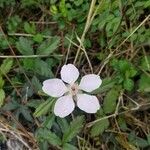
Rubus cuneifolius
American bramble · Sand blackberry · Sand bramble
Description
Source: leafsnapRubus cuneifolius, the sand blackberry, is a North American species of flowering plant in the rose family. It occurs in the eastern United States in every coastal state from Louisiana to New Hampshire, with the exception of Rhode Island. There are also reports of inland populations in Tennessee, Arkansas, and Oklahoma, and the species has become an invasive species in South Africa.The genetics of Rubus is extremely complex, so that it is difficult to decide on which groups should be recognized as species. There are many rare species with limited ranges such as this. Further study is suggested to clarify the taxonomy.
Care Guide
💧 Water
Sand blackberry is well-suited to areas with sporadic rainfall, thriving with moderate moisture and demonstrating drought resistance. It prefers relatively dry conditions and requires watering only twice a week. Seasonal rain patterns are especially important during its growth phases, as they significantly affect water availability and fruit production.
☀️ Light Full sun
The sand blackberry is native to open settings like sun-drenched meadows and the boundaries of forests, which offer plenty of light. It flourishes in conditions of Full Sun but can also withstand Partial Sun, demonstrating a good adaptation to diverse sunlight circumstances.
What are the sunlight requirements for Sand Blackberry (Rubus cuneifolius)?
Sand Blackberry (Rubus cuneifolius) thrives in varying amounts of sunlight, requiring full sun, which entails more than 6 hours of sunlight daily, or partial sun, which means about 3-6 hours of sunlight. It's vital to observe the movement of sunlight through your garden to find spots that offer an ideal mix of light and shade. This ensures your plants remain healthy and happy, adapting to their environment effectively.
Is there any special advice on choosing a planting spot for Sand Blackberry based on sunlight?
When choosing a spot for your Sand Blackberry, it's crucial to note how sunlight moves through your garden. This observation will help you select locations that provide a perfect balance between light and shade, which is essential for the plant's health and happiness. Ensuring your Sand Blackberry receives the right amount of sunlight is key to its growth.
🌡️ Temperature 0–35°C
Sand blackberry displays a strong capacity to adapt to higher temperatures as well as significant temperature fluctuations. It's vital to monitor watering and offer sufficient shading when temperatures soar to avoid sun scalding. Nonetheless, its ability to endure cold temperatures is rather limited. Although it can deal with a certain level of coldness, overly frigid conditions could result in frost injuries.
What is Sand Blackberry?
Sand Blackberry, scientifically known as Rubus cuneifolius, is a species of plant recognized by its unique characteristics, though specific details about its essentials such as general description, content, or additional attributes were not provided in the data. Information on its symptoms or other relevant details was also not available, indicative of the need for further details to understand its nature and applications fully.
💨 Humidity
🪴 Soil 5-6
🌱 Fertilizer
For maximal fruit yield, the Sand blackberry plant needs abundant nutrients. Early spring is the ideal time to fertilize for fresh growth and flower formation. Consistent fertilization assists the plant in maintaining health, producing tastier fruit, and averting problems related to nutrient deficiency, such as yellow foliage and inadequate fruit production.
🪴 Pot & Repot
✂️ Pruning
To enhance the growth and fruiting of sand blackberry plants, prune them in early spring. Begin by removing weak canes to improve air circulation, and cut the remaining canes back to about 24 inches. This practice is well-suited to the sand blackberry's growth cycle and helps increase yield while maintaining the plant's vigor.
🌿 Propagating
🐛 Diseases & pets
☠️ Toxicity
Characteristics
- Plant Type
- Shrub
- Life Cycle
- Perennial
- Genus
- Rubus
- Family
- Rosaceae
- Hardiness Zone
- 3-9
- Mature Height
- 0.91 m to 2.13 m
- Mature Spread
- 0.91 m to 1.52 m
- Leaf Color
- Dark Green, Forest Green
- Leaf Type
- Semi-evergreen
- Flower Color
- White, Pink
- Flower Size
- 2.03 cm to 3.05 cm
- Bloom Time
- Late spring, Early summer
- Planting Time
- Spring, Autumn
- Harvest Time
- Mid summer, Late summer, Early fall