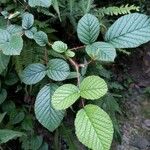
Rubus ellipticus
Cheeseberry · Yellow raspberry · Yellow Himalayan raspberry · Asian Wild Raspberry · Broadleafed Bramble
Description
Source: leafsnapRubus ellipticus, commonly known as the Himalayan raspberry or golden Himalayan raspberry, is a flowering plant in the rose family. Native to the Himalayas and other mountainous regions of Asia, this plant typically grows up to 3 meters tall. It features thorny stems and large, dark green elliptical leaves. The plant blooms from May to August, showcasing white or pinkish flowers, which are followed by edible golden-yellow fruits resembling raspberries. The fruit of Rubus ellipticus is rich in antioxidants and has been used for medicinal purposes in traditional Asian medicine for centuries. It is believed to possess anti-inflammatory properties and is used as a natural remedy for various ailments, including diarrhea, dysentery, fever, coughs, and colds. Rubus ellipticus can be easily cultivated from seeds or cuttings but requires well-drained soil and plenty of sunlight. It can be grown both indoors and outdoors, though it prefers cooler temperatures ranging from 10-25°C. Overall, Rubus ellipticus is an attractive plant that produces delicious fruits with numerous health benefits, making it an excellent addition to any garden or landscape design project.
Care Guide
💧 Water Every 7 days
The yellow Himalayan raspberry, which comes from the Himalayan region, thrives in high humidity and needs consistent moisture without becoming waterlogged. Ideally, it should be watered twice a week. The plant does well outdoors, benefiting from natural rainfall. During the growing season, attentive irrigation is essential to ensure robust growth and to support flowering and fruit production.
☀️ Light Full sun
Yellow Himalayan raspberry prospers in locations that receive plentiful sunlight throughout the day. It can, however, still maintain healthy growth in areas with somewhat reduced light. An imbalance—either too much or too little light—can undermine the plant's vitality. This reflects its original habitat, which is characterized by abundant sunshine.
🌡️ Temperature 15–35°C
Yellow Himalayan raspberry is native to regions where temperatures range from 59 to 95°F (15 to 35°C). It generally prefers warmer climates. Seasonal adjustments may be necessary to reproduce its natural environment.
💨 Humidity
🪴 Soil 6-6
🌱 Fertilizer
For the Yellow Himalayan raspberry plant to produce ideal fruit, it necessitates an adequate amount of nutrients. To facilitate new growth and bloom formation, fertilization should be done in the early spring. Feeding the plant regularly ensures its health, fosters the growth of tastier fruit, and averts problems related to nutrient shortage such as yellowing leaves and subpar fruit yield.
🪴 Pot & Repot
✂️ Pruning
The yellow Himalayan raspberry grows vigorously, featuring thorny canes. To promote a healthy and productive plant, prune the canes in early spring to remove weak growth and improve air circulation. Be sure to use clean, sharp tools for precise cutting. This helps manage growth and prevent disease.
🌿 Propagating
🐛 Diseases & pets
☠️ Toxicity
Characteristics
- Plant Type
- Shrub
- Life Cycle
- Perennial
- Genus
- Rubus
- Family
- Rosaceae
- Hardiness Zone
- 7-10
- Mature Height
- 4.57 m
- Mature Spread
- 3.05 m to 3.96 m
- Leaf Color
- Green
- Leaf Type
- Deciduous
- Flower Color
- White
- Flower Size
- 1.02 cm to 1.52 cm
- Bloom Time
- Early spring, Mid spring
- Planting Time
- Spring, Summer, Autumn
- Harvest Time
- Late spring, Early summer, Mid summer
- Native Area
- Nepal, Sri Lanka, Vietnam, Myanmar, Philippines, Bhutan, Pakistan, Laos, Thailand