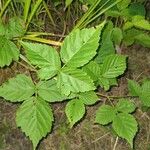
Rubus flagellaris
American dewberry · Northern dewberry · Whiplash Dewberry · Common Dewberry · Prickly Raspberry
Description
Source: leafsnapRubus flagellaris, the northern dewberry, also known as the common dewberry, is a North American species perennial subshrub species of dewberry, in the rose family. This dewberry is distributed across much of Canada, Mexico, and the United States. It grows in diverse habitats ranging from drier savannas to temperate deciduous forests.
🌳 Northern dewberry not only delights the palate—its fruit is used in delicious pies and spreads—but it also serves as a source of natural dye for textiles. Its versatility reaches the foliage as well: when the leaves are processed they emit a garlic-like odor, which has given the plant a quirky reputation as a "vampire repellent."
Care Guide
💧 Water
The Northern dewberry requires moderate watering, ideally every 2-3 weeks, and thrives in conditions with balanced humidity. It originates from regions with consistent rainfall, and as an adaptation, it sheds its leaves during dry spells to conserve moisture. This characteristic makes it well-suited for outdoor environments.
☀️ Light Full sun
Northern dewberry does best in full sun but can also tolerate lower light levels. Both too little and too much sun can harm its growth and overall health. Native to open fields and savannas, this plant is used to abundant daytime light yet can adapt to reduced light conditions.
What are the sun requirements for Northern Dewberry (Rubus flagellaris)?
Northern Dewberry requires full sun exposure to thrive, meaning it should receive above 6 hours of sunlight daily. However, it can also tolerate partial sun conditions, which is about 3-6 hours of sunlight. Observing how sunlight moves through your garden is crucial for choosing spots that offer the right balance of light and shade, ensuring your plants grow happily and healthily.
How does insufficient or excessive sun exposure affect Northern Dewberry?
Northern Dewberry, native to open fields and savannas, is accustomed to ample sunlight throughout the day but can adapt to less light. Insufficient or excessive sunlight can negatively impact its health and growth. When natural sunlight is not enough, especially in winter or in less sunny spaces, artificial lighting can be used to promote better growth. Indoor plants might need artificial lights like LED, which can mimic natural sunlight conditions and should be customized based on the plant's specific needs.
What are the recommended practices for using artificial lighting on plants?
When using artificial lighting for plants, it’s essential to choose the right type of light, such as LED, which can provide specific wavelengths needed by the plants. For full sun plants, 30-50W/sq ft of artificial light is needed, partial sun plants need 20-30W/sq ft, and full shade plants require 10-20W/sq ft. The light source should be placed 12-36 inches above the plant to mimic natural sunlight, and most plants will need 8-12 hours of light per day to mimic natural daylight hours.
What are some symptoms of light deficiency or overexposure in Northern Dewberry?
Symptoms of light deficiency in Northern Dewberry include smaller new leaves, leggy or sparse growth, faster leaf drop, delayed or halted growth, lighter-colored new leaves, and general weakness. Overexposure symptoms include chlorosis—an indication of chlorophyll breakdown, sunscald signified by pale or necrotic areas on the plant, leaf curling as a defense mechanism against water loss, wilting due to excessive transpiration, and leaf scorching which appears as brown, dry edges or patches on leaves.
What are some solutions to address light-related issues in Northern Dewberry?
To optimize light exposure for Northern Dewberry, gradually relocate the plant to a sunnier spot until it receives the required amount of direct sunlight. If moving the plant is not feasible, consider using artificial light, like desk or ceiling lamps, for at least 8 hours daily or invest in professional grow lights. Outdoor plants should be moved gradually to avoid sunburn. For plants in the ground, reduce sunlight obstructions and consider transplanting during the dormant period to a location with ample sunlight and good drainage. Remember, while parts of the plant affected by insufficient sunlight may not recover, promoting correct light exposure can ensure new growth is healthy.
🌡️ Temperature 5–35°C
Northern dewberry is native to habitats with a temperate climate and grows best at temperatures between 68 and 95 °F (20 to 35 ℃). If extreme weather occurs, adjustments may be necessary; provide adequate sunlight in colder months and shade during the hottest periods of summer.
What is the native climate for Northern dewberry?
Northern dewberry, scientifically known as Rubus flagellaris, is native to temperate climates and thrives best in temperature ranges from 68 to 95 °F (20 to 35 °C). It requires adjustments during extreme weather conditions, including ensuring adequate sun exposure during the colder months to maintain warmth and providing shade during the peak of summer to protect from excessive heat.
Does Northern dewberry require frost protection measures during winter?
Northern dewberry exhibits strong cold resistance and typically does not require special frost protection measures in winter. However, in regions where winter temperatures are expected to plummet below -30°C, it's crucial to safeguard the plant by wrapping its trunk and branches with non-woven fabric or cloth. To further prepare the plant for winter, it's advisable to water it abundantly before the first freeze in autumn, ensuring the soil remains moist as it enters a frozen state. This preparation helps prevent drought and water scarcity for the plant during the winter and the early spring months.
How does low temperature affect Northern dewberry, and what are the solutions?
Northern dewberry is cold-tolerant and flourishes when temperatures remain above 20°C but should be kept above 0°C during winter. Exposure to temperatures below -30°C might not show immediate changes, but come spring, the branches could become brittle and dry, leading to a lack of new shoots. The solution to this issue is to prune away any dead branches in the spring that have failed to produce new leaves, encouraging healthier growth.
How does high temperature affect Northern dewberry, and what are the mitigation methods?
During the summer, it is crucial to keep Northern dewberry's temperature below 35°C. When temperatures soar above 41°C, the plant may experience signs of distress, such as leaves becoming lighter in color, tips drying out, and an increased risk of sunburn. The remedial actions include trimming away sunburned and withered sections of the plant, relocating it to a shaded area during the harsh midday and afternoon sun, or using a shade cloth. Additionally, maintaining soil moisture through watering in the morning and evening can help alleviate stress from high temperatures.
💨 Humidity
🪴 Soil 6-7
🌱 Fertilizer
To encourage healthy growth, fertilize your Northern dewberry in early spring. Regular feeding boosts overall health, leading to vigorous growth, increased resilience to harsh conditions, and enhanced resistance to pests and diseases. Follow a specific fertilization schedule for your Northern dewberry to maintain foliage that is vibrant, deeply colored, and lush in appearance.
🪴 Pot & Repot
✂️ Pruning
To ensure the Northern dewberry flourishes, it's important to prune strategically during its dormant period, from early to late winter. Focus on key techniques such as removing dead canes, cutting back older canes to encourage new growth, and thinning out any tangled stems. This careful pruning will enhance fruit quality, reduce the risk of disease, and promote the overall health and productivity of the plant.
🌿 Propagating
🐛 Diseases & pets
☠️ Toxicity
Characteristics
- Plant Type
- Shrub
- Life Cycle
- Perennial
- Genus
- Rubus
- Family
- Rosaceae
- Hardiness Zone
- 4-10
- Mature Height
- 20 cm to 30 cm
- Mature Spread
- 1.22 m to 1.83 m
- Leaf Color
- Green, Blue
- Leaf Type
- Evergreen, Deciduous
- Flower Color
- White
- Flower Size
- 2.54 cm to 7.62 cm
- Bloom Time
- Mid spring, Late spring
- Planting Time
- Autumn
- Harvest Time
- Early summer, Mid summer
- Native Area
- Mexico