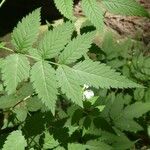
Rubus fraxinifolius
ATHERTON RASPBERRY
Description
Source: leafsnapRubus fraxinifolius, also known as mountain raspberry in English or ragimot, is a species of flowering plant, a fruiting shrub in the raspberry family, that is native to Asia.
Care Guide
💧 Water
☀️ Light Partial sun
The Atherton raspberry is native to habitats like forest understories or rocky locations, where it grows in natural shade. It favors partial sun but can adjust to full sun or full shade, demonstrating its versatility and hardiness.
What are the sunlight requirements for the Atherton raspberry (Rubus fraxinifolius)?
The Atherton raspberry, also known by its botanical name Rubus fraxinifolius, thrives in various sunlight conditions. For 'full sun' exposure, it requires above 6 hours of sunlight per day to flourish. In contrast, for 'partial sun,' about 3-6 hours of sunlight daily is adequate. When planning where to plant your Atherton raspberry, it's important to observe the sunlight pattern in your garden carefully. Finding the ideal locations that provide the right mix of light and shade is crucial for the happiness and health of your plants.
🌡️ Temperature 15–35°C
Atherton raspberry adapts well to temperature, tolerating higher heat and larger temperature swings. In hot weather, attention should be paid to watering and providing appropriate shade to prevent sunburn. However, Atherton raspberry is relatively sensitive to low temperatures; while it can endure some cold, excessively cold conditions can cause frost damage.
What is the botanical name of the Atherton raspberry?
The botanical name of the Atherton raspberry is Rubus fraxinifolius.
💨 Humidity
🪴 Soil 5-6
🌱 Fertilizer
The Atherton raspberry plant needs adequate nutrients for optimal fruit production. Apply fertilizer in early spring to encourage new growth and flower development. Regular feeding keeps the plant healthy, yields more flavorful fruit, and prevents nutrient-deficiency problems such as yellowing leaves and reduced fruit production.
🪴 Pot & Repot
✂️ Pruning
The Atherton raspberry features arching canes and produces white flowers. To maintain its health, it's important to prune the plant in early spring. Remove any dead canes and thin out crowded areas to improve air circulation. Regular pruning helps prevent disease and encourages growth. Be sure to use clean tools to enhance the plant's resilience.
🌿 Propagating
🐛 Diseases & pets
☠️ Toxicity
Characteristics
- Plant Type
- Shrub
- Life Cycle
- Perennial
- Genus
- Rubus
- Family
- Rosaceae
- Hardiness Zone
- 7-10
- Mature Height
- 3.05 m
- Mature Spread
- 1.52 m to 2.13 m
- Leaf Color
- Green, Dark Green
- Leaf Type
- Deciduous
- Flower Color
- White
- Flower Size
- 2.03 cm
- Bloom Time
- Late spring, Summer, Early fall, Mid fall
- Planting Time
- Spring, Summer
- Harvest Time
- Mid summer, Late summer, Fall, Early winter
- Native Area
- Indonesia, Philippines, China