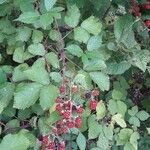
Rubus gratus
Bramble · Black Berry · Jam · European Bramble · Focke Berry
Description
Source: leafsnapRubus gratus is a species of bramble found across much of Northwest Europe.
Care Guide
💧 Water
☀️ Light Full sun
Rubus gratus comes from open habitats, like sunlit meadows and forest margins, where light is plentiful. It thrives in Full Sun but can also tolerate Partial Sun, adapting well to different sunlight conditions.
🌡️ Temperature 5–35°C
Rubus gratus shows strong adaptability to a range of climate conditions, whether in blazing summers or frosty winters. However, it does have an optimal temperature range for growth. If temperatures become excessively high, the plant is susceptible to heat and humidity stress, which can lead to its death. In areas where temperatures near the lower limit of its cold tolerance, it is important to take insulating measures to protect the plant.
💨 Humidity
🪴 Soil 6-7
🌱 Fertilizer
The Rubus gratus plant needs adequate nutrients to achieve optimal fruit production. Fertilize in early spring to encourage new growth and flowering. Regular feeding helps the plant remain healthy, produce more flavorful fruit, and prevents nutrient-deficiency problems like yellowing leaves and poor fruit production.
🪴 Pot & Repot
✂️ Pruning
🌿 Propagating
🐛 Diseases & pets
☠️ Toxicity
Characteristics
- Plant Type
- Shrub, Vine
- Life Cycle
- Perennial
- Genus
- Rubus
- Family
- Rosaceae
- Hardiness Zone
- 4-9
- Mature Height
- 0.91 m to 2.13 m
- Mature Spread
- 0.91 m to 1.52 m
- Leaf Color
- Green, Dark Green
- Leaf Type
- Deciduous
- Flower Color
- White, Pink
- Flower Size
- 2.03 cm to 3.05 cm
- Bloom Time
- Early summer, Mid summer
- Planting Time
- Autumn, Winter
- Harvest Time
- Late summer, Early fall
- Native Area
- Germany, Denmark, France, Poland, Ireland, United Kingdom, Belgium, Netherlands