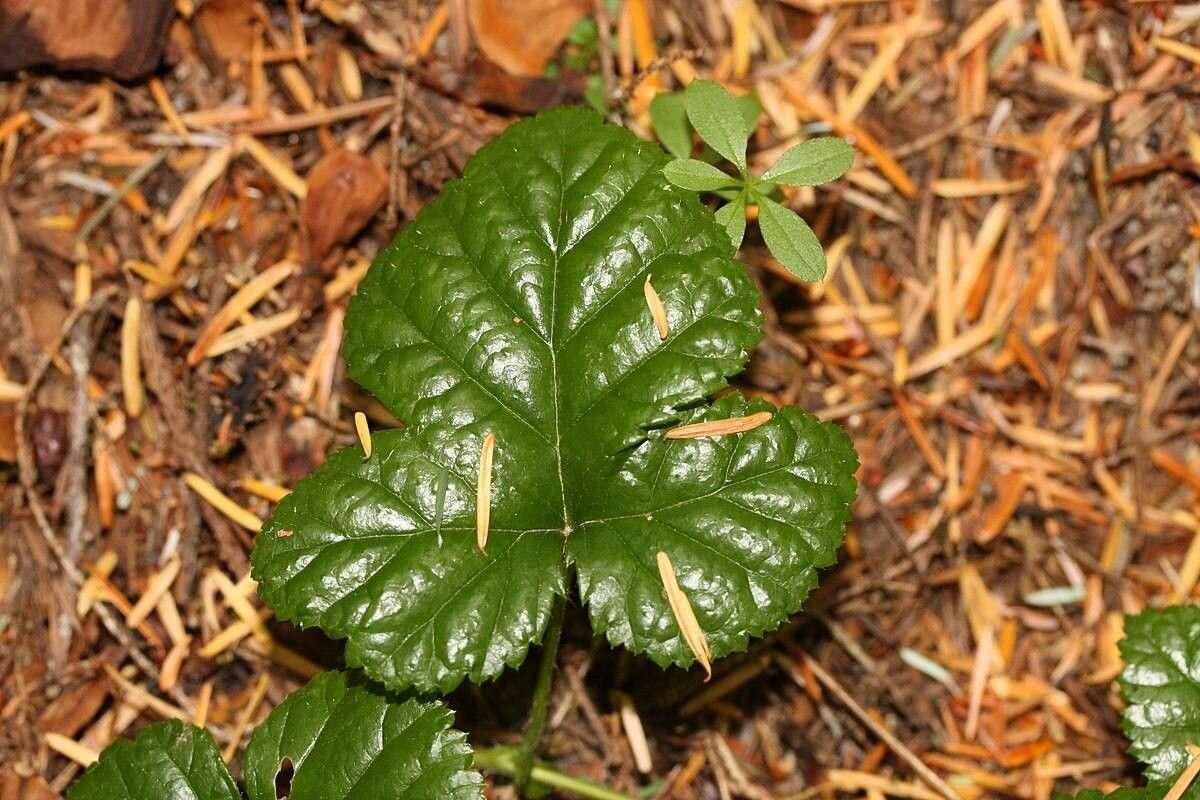
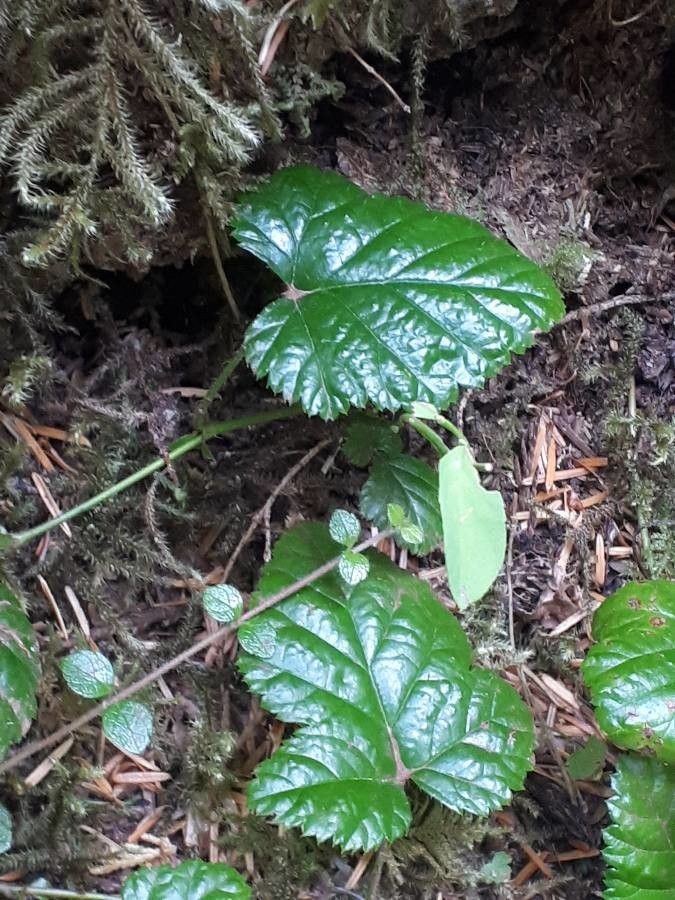
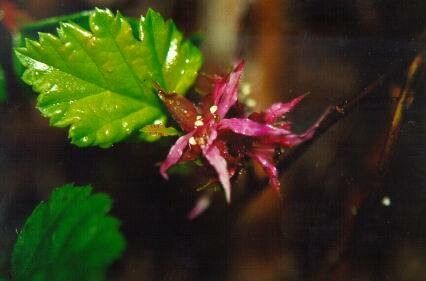
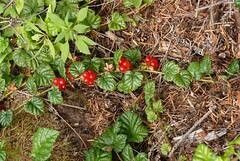
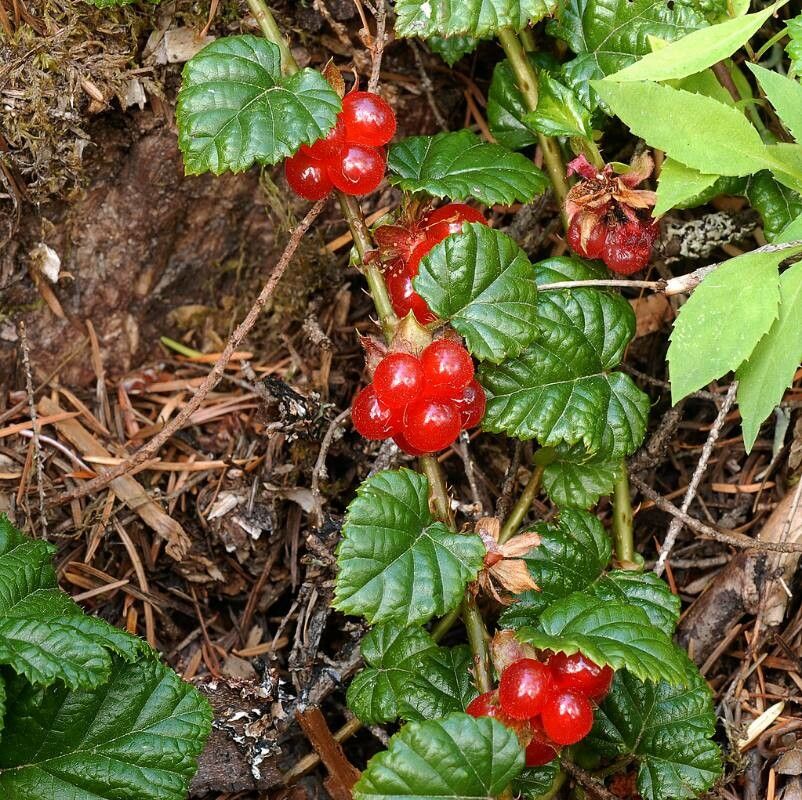
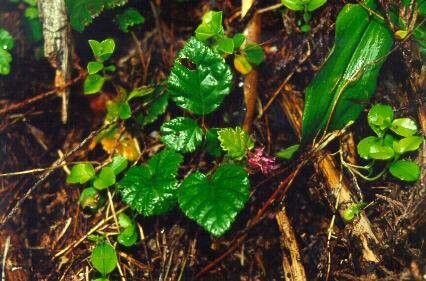
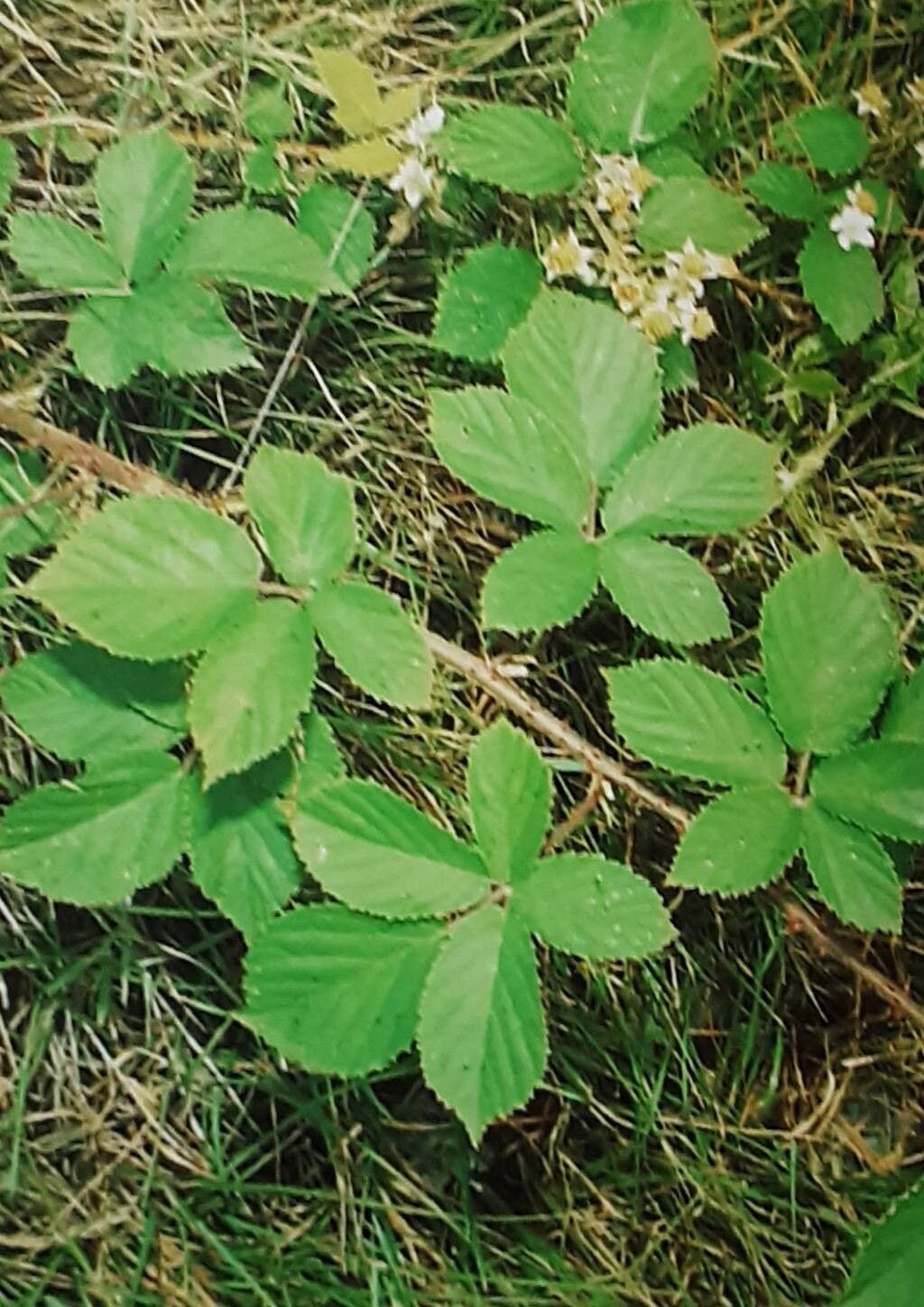
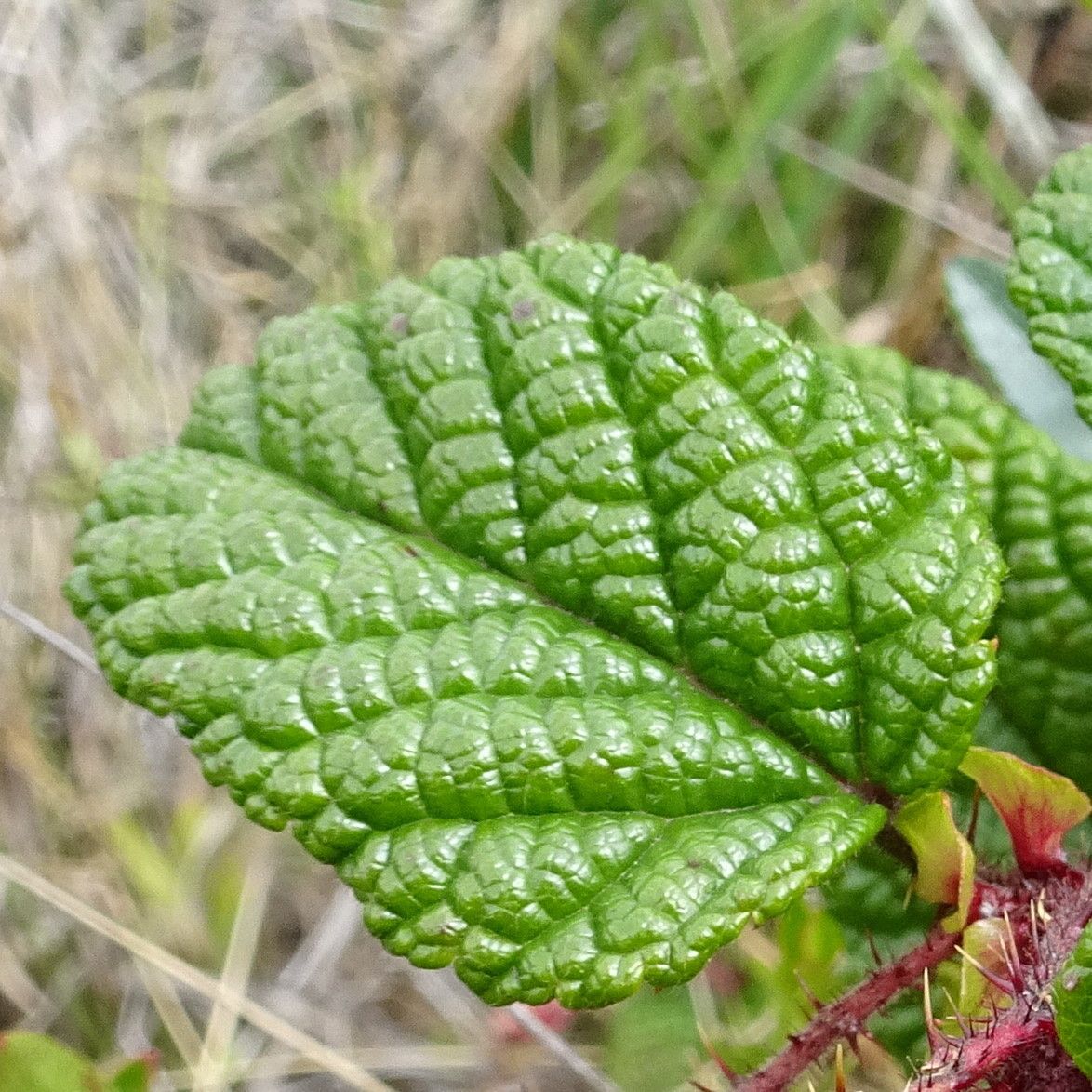
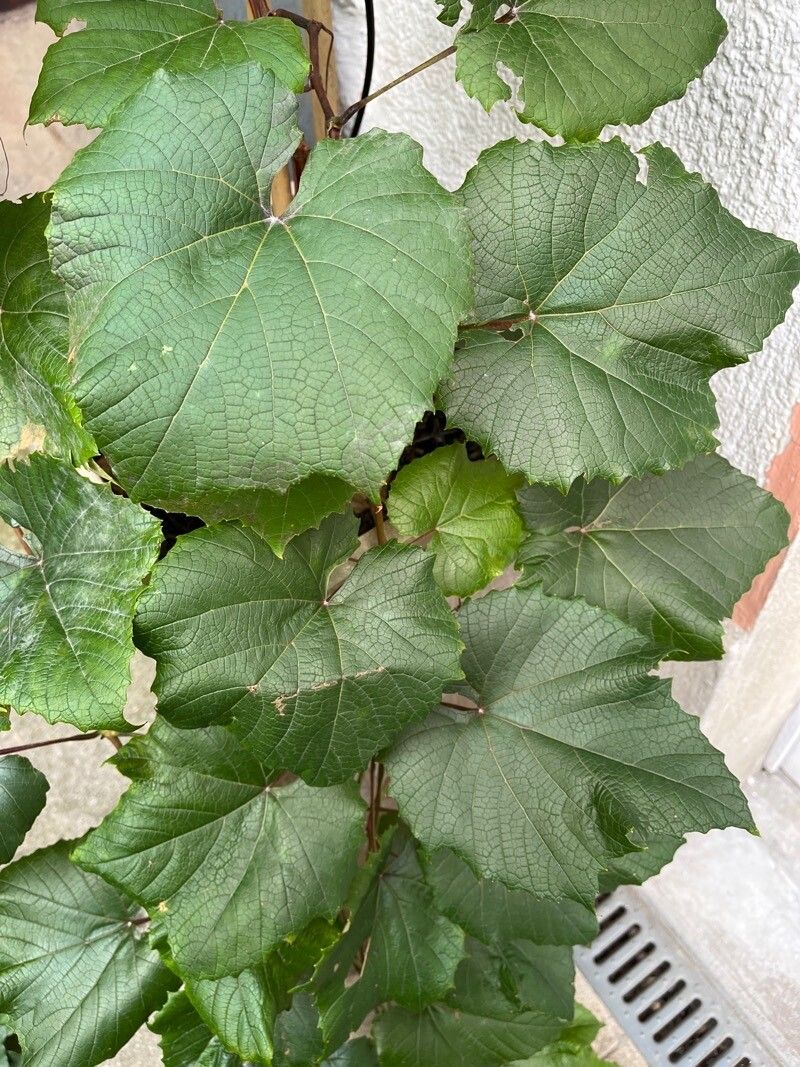
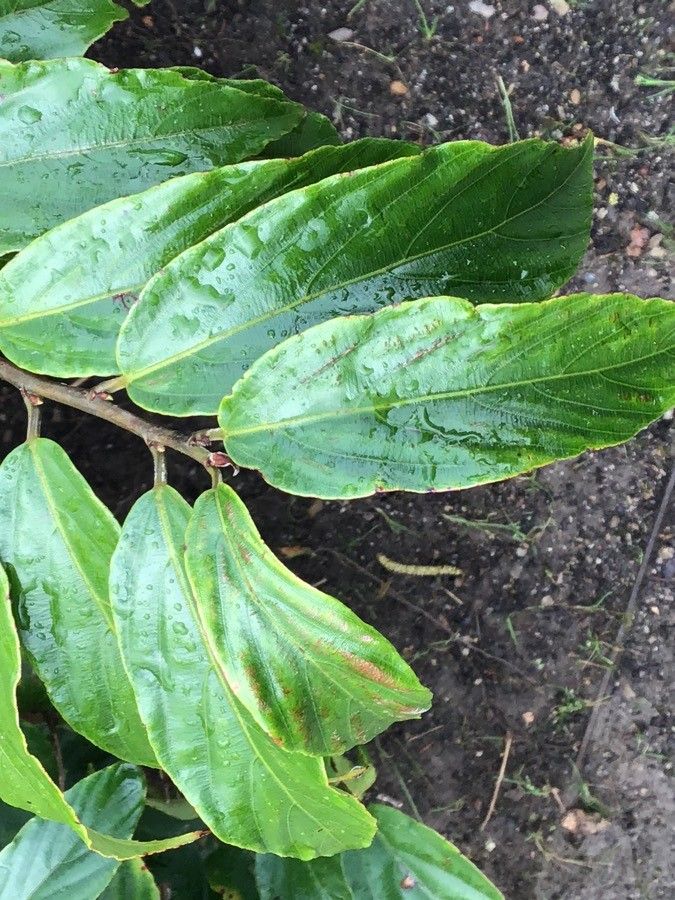
Rubus nivalis, commonly known as snow raspberry, is a species of flowering plant in the rose family. It is native to northwestern North America: British Columbia, Washington, Idaho, Oregon, and far northern California.Rubus nivalis is a small, prickly shrub up to 15 cm (6 inches) tall, with stems creeping along the ground. Leaves are evergreen, sometimes simple (non-compound) but sometimes compound with 3 leaflets. Flowers are pink or magenta. Fruit is red with only 3-10 drupelets. It grows in forests that are shaded and moist.
Snow raspberry has strong resistance to disease and is typically not likely to get sick. Still, it can be affected by insects and diseases present in the nearby environment, though such infections are generally mild. Regarding upkeep, this plant needs a moderate level of care. Regular pruning is necessary to preserve an attractive appearance and encourage healthy growth. Applying fertilizer can also support better flowering. Snow raspberry is a good choice for anyone who has outdoor space, like a garden or patio, and it doesn't demand extensive gardening experience. When cultivated indoors, however, it may need more attention.
How to keep Rubus Nivalis.
Fertilizer
One fertilizer application in spring is typically adequate for Snow raspberry, although repeated feedings can maximize growth. Feed every month to month and a half. Fertilization improves the appearance and function of the leaves, helping maintain even color and a healthy texture. It also promotes root development and nutrient uptake for the plant’s long-term health.
Botanical profile.
Other names.