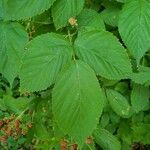
Rubus occidentalis
Black raspberry · Wildr raspberry · Ouchy yumyums · Blackcap · Wild black raspberry
Description
Source: leafsnapRubus occidentalis is a species of Rubus native to eastern North America. Its common name black raspberry is shared with other closely related species. Other names occasionally used include bear's eye blackberry, black cap, black cap raspberry, and scotch cap.
💡 Black raspberries are commercially grown in the western United States. These berries tend to be expensive because the yield per acre is low, despite being harvested by machines. They are often mistaken for blackberries. However, once picked, black raspberries have a hollow core, whereas blackberries have a white or green core where they were attached to the stem.
🌳 The black raspberry, valued for its versatile and flavorful berries, is highly regarded in cooking. Its berries have a distinct, bold, tart taste suitable for eating fresh, for cooking, and as an excellent condiment in a variety of desserts and meals. Top-quality black raspberry berries have outstanding flavor. Aside from the fruit, the plant’s young shoots, which resemble rhubarb, are also edible. Best gathered in early spring, they are pleasant both raw and cooked after peeling. Additionally, the leaves and root bark of the black raspberry are used to make aromatic tea, emphasizing the plant’s broad usefulness beyond just its fruit.
🎭 Safeguarding, Affection, Regret
Care Guide
💧 Water Every 1-2 weeks
Black raspberries thrive in moderately moist conditions, preferring well-drained soil that is slightly damp. Water them every 1 to 2 weeks, taking care to avoid overwatering or waterlogging. As a deciduous plant, their water requirements change with the seasons. Consistent moisture is necessary during the spring and summer months to ensure optimal growth and fruiting.
When Should I Water My Black Raspberry?
It's essential to water your black raspberry plants appropriately to ensure healthy growth and plentiful fruit production. Over or under-watering can stress the plant, leading to reduced yields and increased susceptibility to diseases and pests. To determine when to water, check if the top one inch of soil is dry by inserting your finger up to the first knuckle near the plant's base; if it feels dry, it's time to water. Wilting leaves are an immediate sign that your plant needs water, but be sure to verify as leaves might wilt slightly in intense sunlight even if the soil moisture is adequate. The ideal leaf color is a vibrant green which indicates proper hydration; a dull green or yellow signifies the need for more water, while dark, glossy leaves may indicate over-watering. Also, look out for stunted growth as a sign of water stress. The timing of your watering is crucial—watering too early or too late in the day can lead to various issues, including root rot from over-watering or halted fruit production from under-watering.
How Should I Water My Black Raspberry?
To effectively water black raspberry, which favours a moderate-to-high level of hydration, utilize a watering can with a long spout to concentrate the water at the base of the plant and avoid foliage wetness. Alternatively, a drip or trickle irrigation system is highly recommended to ensure water directly reaches the soil without splashing the leaves, thereby reducing disease risk. Tools like a moisture meter can provide exact soil moisture levels, helping to maintain optimal hydration without over-watering. Best practices include watering in the morning so the plant has time to absorb moisture before the heat of the day, and the excess water can evaporate, thus preventing diseases that thrive in damp conditions. Additionally, during the fruiting season, ensure that the plant does not receive excessive water which can result in less flavorful fruits and potential fungal diseases.
How Much Water Does Black Raspberry Really Need?
Black raspberries require about 1-1.5 inches of water per week to sustain their shallow root systems, which extend up to 12-18 inches deep. This guideline ensures the plants receive adequate hydration without the risk of waterlogging, keeping in mind that adjustments may be necessary depending on pot size, root depth, and overall plant size. Signs of adequate hydration include full, green leaves, sturdy and upright stems, and abundant flowering and fruit set. Conversely, symptoms like wilting or dry-looking leaves suggest underwatering, while yellowing leaves, root rot, and the presence of fungus or mold indicate over-watering. Balancing watering amounts is crucial for the health of your black raspberry plants, complemented by cultivating them in well-drained soil and adjusting watering based on soil moisture levels observed between waterings.
What Kind of Water is Best for Black Raspberry?
Black raspberry, with moderate sensitivity to water quality, thrives best with rainwater due to its natural, chemical-free properties and balanced pH level. Distilled water serves as a decent alternative but lacks beneficial minerals. Tap water is permissible if other sources aren't available, although its chlorine content can harm the plant. Filtered water, removing harmful contaminants, is a safer choice. To reduce potential damage from chlorine and fluoride found in tap water, let the water sit out for at least 24 hours for dechlorination or use a fluoride-removing filter. Furthermore, maintaining water at room temperature (around 68-72°F or 20-22°C) is crucial as extreme temperatures can shock and stress the plant.
How Do Black Raspberry's Watering Needs Change with the Seasons?
The watering requirements for black raspberries vary seasonally to support their growth and dormancy cycles. During the spring, the active growth phase, ensure the soil is consistently moist with regular watering. In summer, as the plant enters dormancy, reduce the frequency but ensure the soil stays slightly moist. Come autumn, with the plant preparing for winter dormancy, gradually decrease watering frequency further, keeping the soil lightly moist. Winter demands minimal moisture due to dormancy; thus, water sparingly, allowing the topsoil to dry out between sessions. Adapting your watering practices to the seasonal changes of the black raspberry ensures the plant remains healthy year-round.
☀️ Light Full sun
Black raspberry grows best in locations with plenty of sunlight to ensure healthy development. However, it can tolerate moderate sunlight. Its native habitat usually receives abundant sun, which has shaped its growth. Too much or too little sunlight can potentially impact its overall health and vigor.
What are the sunlight requirements for black raspberry plants?
Black raspberry plants thrive in areas that receive generous amounts of sunlight. They require full sun exposure, defined as more than 6 hours of sunlight daily, but can also tolerate partial sun, which is about 3-6 hours of sunlight. The plant's origin habitat typically has abundant sunlight, crucial for its healthy growth. However, both excessive and insufficient sunlight can negatively affect the plant's health and vigor. It's important to watch how sunlight moves through your garden to select spots that offer a perfect balance of light and shade, ensuring the plants' happiness.
How can artificial lighting be used for black raspberry plants indoors?
Indoor black raspberry plants require adequate lighting for optimal growth, especially when natural sunlight is insufficient, such as during winter or in less sunny spaces. Artificial lights, like LED lights, are beneficial because they can provide the specific wavelengths of light that plants need. For full sun plants, 30-50W/sq ft of artificial light is needed; partial sun plants require 20-30W/sq ft, and full shade plants need 10-20W/sq ft. The light source should be placed 12-36 inches above the plant, mimicking natural sunlight. Most plants will need 8-12 hours of light per day to mimic natural daylight hours adequately.
What are the symptoms of light deficiency in black raspberry plants?
Black raspberry plants can show several symptoms when they experience light deficiency, including smaller new leaves, leggy or sparse growth, faster leaf drop, slower or no new growth, and lighter-colored new leaves. Excessive sunlight can cause chlorosis, where leaves lose their green color and turn yellow, sunscald that damages leaves or stems, leaf curling as a defense mechanism against excessive sunlight, wilting due to increased water loss, and leaf scorching characterized by brown, dry, and crispy edges on leaves. These symptoms indicate the plant is not receiving the optimal light conditions for its health.
What solutions can help black raspberry plants receive adequate sunlight?
To ensure black raspberry plants receive adequate sunlight, gradually move them to sunnier locations, aiming for at least 6 hours of direct sunlight daily. For indoor plants, use a south-facing window and keep curtains open during the day or consider using artificial lighting like desk or ceiling lamps for at least 8 hours daily, or professional plant grow lights for ample light. For outdoor plants, avoid sudden changes in light intensity to prevent sunburn. Minimize sunlight obstructions by pruning trees or transplanting smaller plants to locations with ample sunlight and good drainage. It's important to note that parts of the plant affected by insufficient sunlight may not recover, but new growth will be healthy after increasing light exposure.
🌡️ Temperature 5–32.2°C
Black raspberry prefers a native growth environment with temperatures ranging from 41 ℉ (5 ℃) to 90 ℉ (32 ℃). It flourishes in warm, sunny conditions but can be damaged by extended periods of high heat or by low moisture. In spring and summer, keep temperatures between 60 ℉ (15 ℃) and 80 ℉ (27 ℃) to encourage optimal growth. In fall and winter, keep temperatures between 25 ℉ (-4 ℃) and 60 ℉ (15 ℃) to support healthy dormancy.
What are the ideal temperature conditions for growing black raspberry?
Black raspberry, or Rubus occidentalis, prefers a native growth environment with temperatures ranging from 41°F (5°C) to 90°F (32°C). To promote optimal growth during the spring and summer, it is recommended to maintain temperatures between 60°F (15°C) to 80°F (27°C). For supporting healthy dormancy in the fall and winter, temperatures should be adjusted between 25°F (-4°C) to 60°F (15°C). Black raspberry exhibits strong cold resistance, hence special frost protection measures are generally unnecessary. However, in regions where winter temperatures are expected to plummet below -30°C, providing cold protection through methods like wrapping the trunk and branches with protective materials is advisable. Additionally, before the onset of the first freeze in autumn, abundant watering is recommended to keep the soil moist and prevent drought and water scarcity during the colder months.
How should I care for black raspberry in extremely cold temperatures?
Black raspberry shows a high tolerance to cold and grows best when the temperature stays above 5°C. However, during the winter, it's crucial to ensure that the temperature does not fall below -25°C. Should the temperature drop below -30°C, you might not notice any immediate changes during the winter, but come spring, the branches may turn brittle and dry, and no new shoots will emerge. The solution to this problem is to prune away any dead branches that have failed to produce new leaves in the spring. This helps maintain the health and productivity of the plant.
What should I do if my black raspberry plant experiences high temperatures?
During the summer, it's essential to keep the temperature below 32°C for black raspberry plants. If temperatures rise above 35°C, you might notice the leaves becoming lighter in color, tips becoming dry and withered, and an increased risk of the plant sustaining sunburn. To mitigate these issues, trim away sunburned and dried-up parts. Moving the plant to a shaded location, especially during the midday and afternoon sun, or utilizing a shade cloth can provide relief. Additionally, watering the plant in the morning and evening helps keep the soil moist and reduces the stress on the plant.
💨 Humidity
🪴 Soil 5-6
🌱 Fertilizer
Apply fertilizer to your Black raspberry in early spring to encourage healthy growth. Fertilizing regularly boosts overall health, leading to vigorous growth, increased resilience to difficult conditions, and better resistance to diseases and pests. Maintain a specific fertilization schedule for your Black raspberry to preserve vibrant, deep-colored foliage and a lush appearance.
Why should I put fertilizer on my Black raspberry plant?
No matter which type of Black raspberry you have, regular fertilization is crucial for its overall health. Supplying the right nutrients helps promote stronger growth, making your Black raspberry more resilient to challenging growing conditions and better equipped to combat diseases and pests. The foliage of your Black raspberry is highly desirable, so it's important to maintain it. This requires following a consistent fertilization schedule tailored to your specific Black raspberry variety. By doing so, you can encourage the development of vibrant, lush leaves.
When should I fertilize my Black raspberry?
To keep your Black raspberry plant healthy and strong, it's important to fertilize it at the right times. In late winter or early spring, give your plant its first dose of fertilizer. This will provide all the nutrients it needs to start growing well when the weather warms up. If you live in a warm climate area, it's also a good idea to fertilize again in early fall. This will give the plant extra nutrients for the following growing season and help it survive the winter without damage. By fertilizing earlier in the season, the new branches will have enough time to grow and be more resistant to the cold winter.
When is it not a good idea to add fertilizer to my Black raspberry plant?
Avoid fertilizing your Black raspberry during certain periods of the year. First, during the early and mid-winter months when the plant is dormant and does not require feeding. Second, during late spring and throughout the summer as the weather is hotter and drier, making it more likely for the Black raspberry to have a negative response to fertilizer. To prevent these issues, stick to a fertilization schedule of feeding only in early spring and early fall.
What kind of fertilizer does my Black raspberry plant require?
In general, nitrogen is the most important nutrient for Black raspberries, but this doesn't mean that phosphorus and potassium are not important. In fact, Black raspberries typically require a good amount of all three main nutrients. This is why a balanced fertilizer, such as a 10-10-10, can be effective. However, a more specific ratio of nutrients often leads to the best growth for Black raspberries. Fertilizers that have a slightly higher nitrogen content, like a 10-6-4 ratio, often work well. When it comes to fertilizing, you have the option of using either granular or liquid-based fertilizers.
How do I make my Black raspberry plant grow better?
To fertilize your Black raspberry, you have two options: granular fertilizer or liquid fertilizer. With granular fertilizer, simply sprinkle it on the soil at the right time. The slow-release feature of granular fertilizer gradually releases nutrients into the soil. Before applying any fertilizer, it's a good idea to lightly water your Black raspberry. On the other hand, using liquid fertilizer is less common. To apply it, mix the fertilizer with water and pour the mixture onto the soil around the base of your Black raspberry. Additionally, consider conducting a soil test beforehand to check if any pH adjustments are necessary.
🪴 Pot & Repot 2-3 years
When repotting Black raspberry, select a pot 1-2 inches (2.5–5.1 cm) larger with ample drainage. Use a well-draining potting mix. Repot in spring or fall, making sure the root ball sits slightly lower than the rim of the flower pot. Water thoroughly after repotting and place it in a warm spot with indirect sunlight.
✂️ Pruning
Black raspberry is a bushy, fruit-bearing plant with thorny stems. To maintain its health and productivity, prune the plant in early spring. Start by cutting back the canes from the previous year and removing any weak ones. This will enhance air circulation, encourage fruit production, and reduce the risk of disease. For more detailed instructions, consult reputable sources.
🌿 Propagating
🐛 Diseases & pets
☠️ Toxicity
Characteristics
- Plant Type
- Shrub
- Life Cycle
- Perennial
- Genus
- Rubus
- Family
- Rosaceae
- Hardiness Zone
- 4-8
- Mature Height
- 2.13 m to 3.05 m
- Mature Spread
- 1.22 m to 2.44 m
- Leaf Color
- Green
- Leaf Type
- Deciduous
- Flower Color
- White
- Flower Size
- 1.02 cm
- Bloom Time
- Late spring, Early summer
- Planting Time
- Spring, Autumn
- Harvest Time
- Mid summer