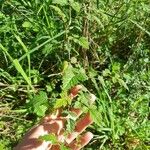
Rubus parvifolius
Japanese raspberry · Trailing raspberry · Small-leaf bramble · Threeleaf blackberry · Small-leaf raspberry
Description
Source: leafsnapRubus parvifolius, called Japanese bramble, or Australian raspberry in the United States or native raspberry in Australia is a species of plant in the rose family. It is a scrambling shrub native to eastern Asia (China, Japan, Korea, Vietnam) and Australia. It has also become naturalized in a few scattered locations in the United States.Rubus parvifolius is a shrub up to 2 meters tall with arching branches armed with curved prickles. Young stems are finely pubescent, becoming hairless with age. The leaves are pinnate with 3 to 5 toothed leaflets. Flowers are numerous, in clumps at the end of stems, and have red or pink petals. The red fruit is 1 cm wide.
🌳 Japanese raspberry has been observed to have an unusual use beyond its edible qualities — it acts as a novel phytoindicator. Its occurrence and condition can indirectly signal the presence of certain metal ions in the soil, offering a natural and cost-effective way to monitor soil health and possible contamination.
Care Guide
💧 Water
The Japanese raspberry thrives in well-draining soil with moderate moisture levels. It does best when watered once every three weeks. This plant can tolerate short periods of dryness, and during the colder months, it enters dormancy, which significantly reduces its water requirements.
☀️ Light Full sun
The japanese raspberry does best with plentiful sunlight, although it can tolerate lower light levels. Coming from regions with abundant sun, the plant depends on sunlight to promote healthy development. Either too much or too little sun can upset its usual growth pattern and general health.
What are the sunlight requirements for Japanese raspberry plants?
Japanese raspberry plants thrive under generous sunlight exposure, ideally benefiting from environments that offer ample sun. These plants require full sun, receiving more than 6 hours of sunlight daily, but they can also adapt to partial sun conditions, which means about 3-6 hours of sunlight. It's crucial to watch how sunlight moves through your garden to find the perfect balance of light and shade for these plants, ensuring their happiness and health. Inadequate sunlight or an overabundance can disrupt their growth and overall well-being.
How can artificial lighting support the growth of Japanese raspberry plants indoors?
Indoor Japanese raspberry plants require adequate lighting to grow optimally, especially when natural sunlight is insufficient, such as during winter or in less sunny spaces. Artificial lighting, like LED lights, provides a crucial solution by offering the specific wavelengths of light needed by the plants. For full sun plants, 30-50W per square foot of artificial light is recommended, partial sun plants need 20-30W per square foot, and full shade plants require 10-20W per square foot. Position the light source 12-36 inches above the plant to mimic natural sunlight and ensure the lights are on for 8-12 hours per day to simulate the length of natural daylight hours.
What are the symptoms of light deficiency or overexposure in Japanese raspberry plants?
Japanese raspberry plants show various symptoms under suboptimal lighting conditions. Light deficiency leads to small leaves, leggy or sparse growth, faster leaf drop, slower or no new growth, and lighter-colored new leaves, indicating a survival mode due to poor light conditions. Overexposure to sunlight can cause symptoms like chlorosis, where leaves turn yellow from the breakdown of chlorophyll, sunscald resulting in damaged plant tissues, leaf curling as a defense mechanism to reduce water loss, wilting from excessive transpiration, and leaf scorching characterized by brown, dry, and crispy leaf edges.
What are the solutions for improving the health of Japanese raspberry plants with light-related issues?
To address light-related issues in Japanese raspberry plants, gradually move them to sunnier locations, ensuring they receive at least 6 hours of direct sunlight daily. For indoor plants that are large or not easily movable, consider using artificial light, keeping a lamp on for at least 8 hours a day or investing in professional plant grow lights. Outdoors, avoid sudden changes in light intensity to prevent sunburn. If plants are blocked by obstructions like trees, prune the branches to let sunlight through. For smaller plants, consider transplanting during their dormant period to a location with ample sunlight and good drainage. Keep in mind that parts of the plant affected by insufficient light may not recover, but new growth should be healthy after adjusting the light exposure.
🌡️ Temperature 5–35°C
The Japanese raspberry is a hardy plant indigenous to regions with temperatures between 68 and 95°F (20 to 35℃). It grows best in those warmer conditions. In cooler or hotter seasons, temperatures should be adjusted gradually to support healthier growth.
What climates are ideal for growing Japanese Raspberry (Rubus parvifolius)?
Japanese raspberry thrives best in climates with temperatures ranging from 68 to 95°F (20 to 35°C), which are its ideal growing conditions. It is a resilient plant that has adapted to thrive in warmer conditions, demonstrating strong cold resistance that typically negates the need for special frost protection measures during winter. However, it's important to gradually adjust temperatures during colder or hotter seasons to promote healthier growth. If winter temperatures are expected to drop below -30°C, cold protection by wrapping the trunk and branches with materials like non-woven fabric or cloth is recommended. Adequate watering before the first freeze in autumn to ensure the soil remains moist is crucial for preventing drought and water scarcity during winter and early spring.
How does low temperature affect Japanese Raspberry and what are the solutions?
Japanese raspberry is notably cold-tolerant and fares best when temperatures stay above 20°C. Throughout the winter, it's crucial to keep the plant above 0°C to prevent damage. If temperatures plummet below -30°C, the plant may not exhibit immediate changes but can show effects by spring with branches becoming brittle and dry, and no new shoots emerging. The recommended solution for these symptoms is to prune away any dead branches in the spring that have failed to produce new leaves, helping the plant to recover and grow healthy new shoots.
What impact does high temperature have on Japanese Raspberry and how can it be mitigated?
During the summer, it's important to ensure that Japanese raspberry stays below 35°C to avoid heat stress. Temperatures exceeding 38°C can lead to symptoms such as the leaves becoming lighter in color, tips drying and withering, and an increased susceptibility to sunburn. To mitigate these issues, you should trim away the sunburned and dried-up parts of the plant. Moving the plant to a location that offers shade during the midday and afternoon sun, or using a shade cloth, can protect it. Additionally, watering the plant in the morning and evening can help keep the soil moist and reduce the risk of heat stress.
💨 Humidity
🪴 Soil 6-7
🌱 Fertilizer
The Japanese raspberry plant needs adequate nutrients to achieve the best fruit production. Apply fertilizer in early spring to encourage new growth and flower development. Regular feeding keeps the plant healthy, yields more flavorful fruit, and avoids nutrient-deficiency problems like yellowing leaves and poor fruit production.
🪴 Pot & Repot
✂️ Pruning
The Japanese raspberry plant is characterized by its small leaves and thorny stems. To maintain its health and productivity, it benefits from pruning in early spring. By removing weak or dead canes, you can improve air circulation and allow more sunlight to reach the plant. Trimming the lateral branches also encourages better fruiting. This practice not only reduces the risk of disease but also promotes strong growth, extending the plant's productive lifespan.
🌿 Propagating
🐛 Diseases & pets
☠️ Toxicity
Characteristics
- Plant Type
- Shrub
- Life Cycle
- Perennial
- Genus
- Rubus
- Family
- Rosaceae
- Hardiness Zone
- 4-9
- Mature Height
- 0.91 m to 2.13 m
- Mature Spread
- 91 cm
- Leaf Color
- Green
- Leaf Type
- Deciduous
- Flower Color
- Pink, White
- Flower Size
- 1.02 cm
- Bloom Time
- Late spring, Early summer, Mid summer
- Planting Time
- Autumn, Winter
- Harvest Time
- Mid summer
- Native Area
- Russia, Vietnam, Japan, Koppen, South Korea, China