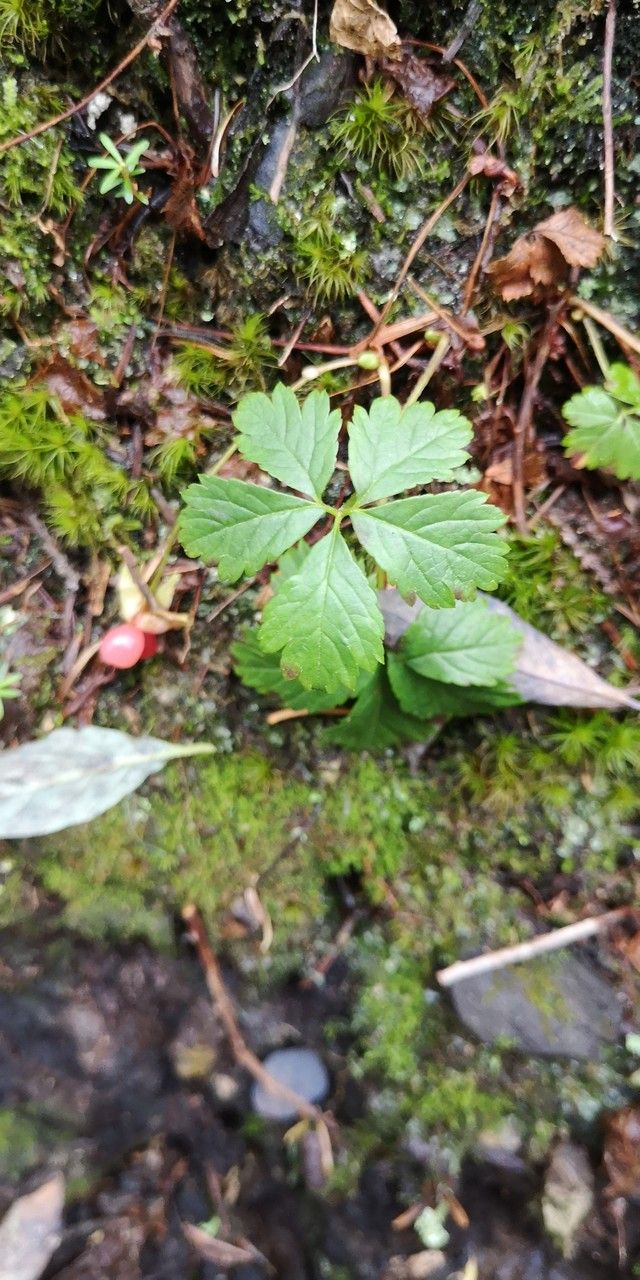
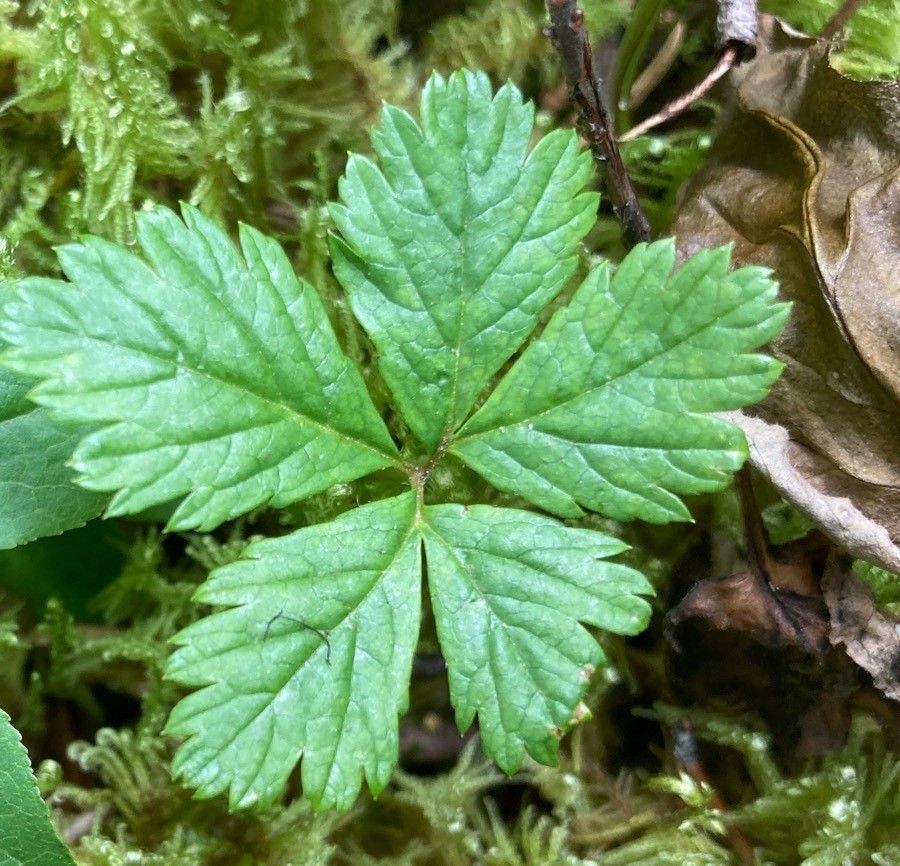
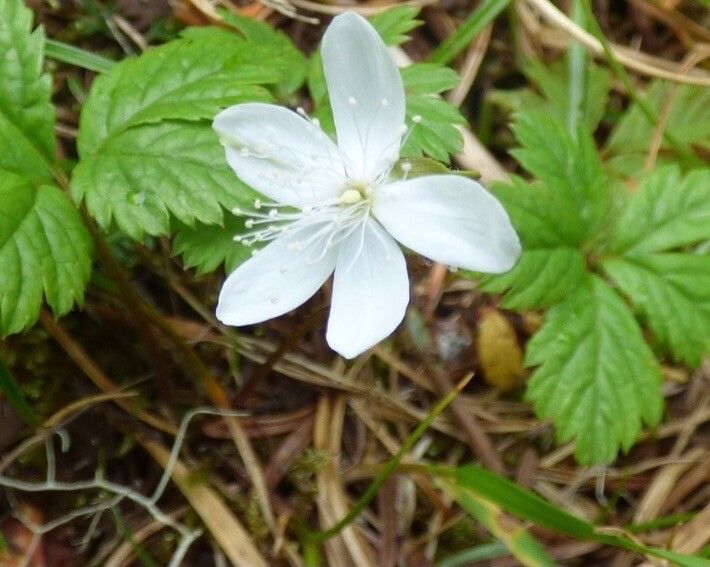
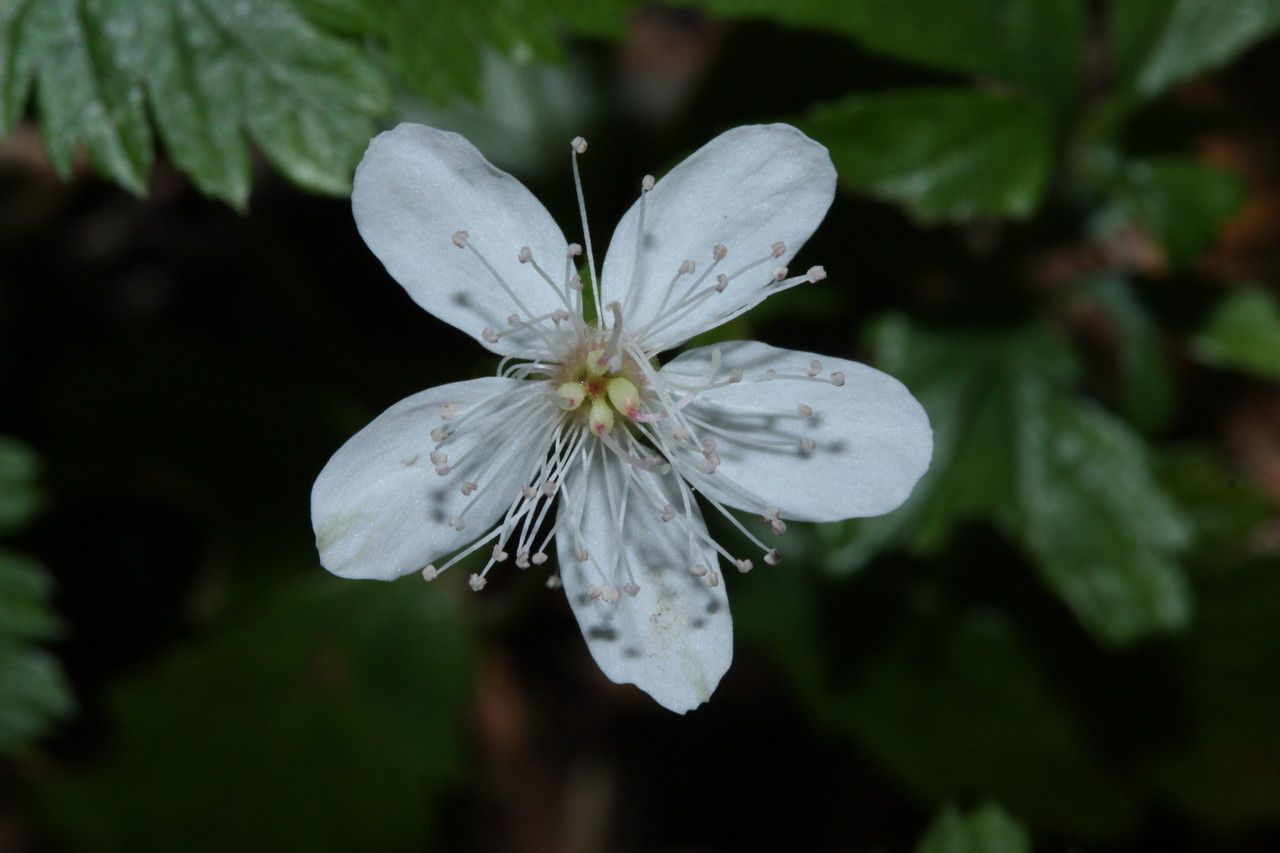
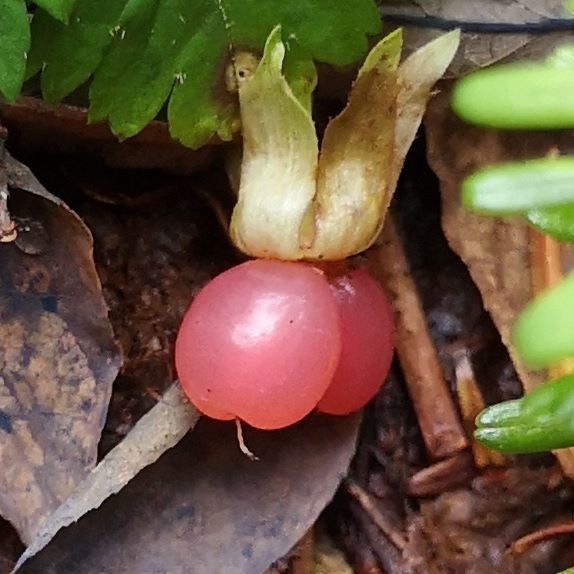
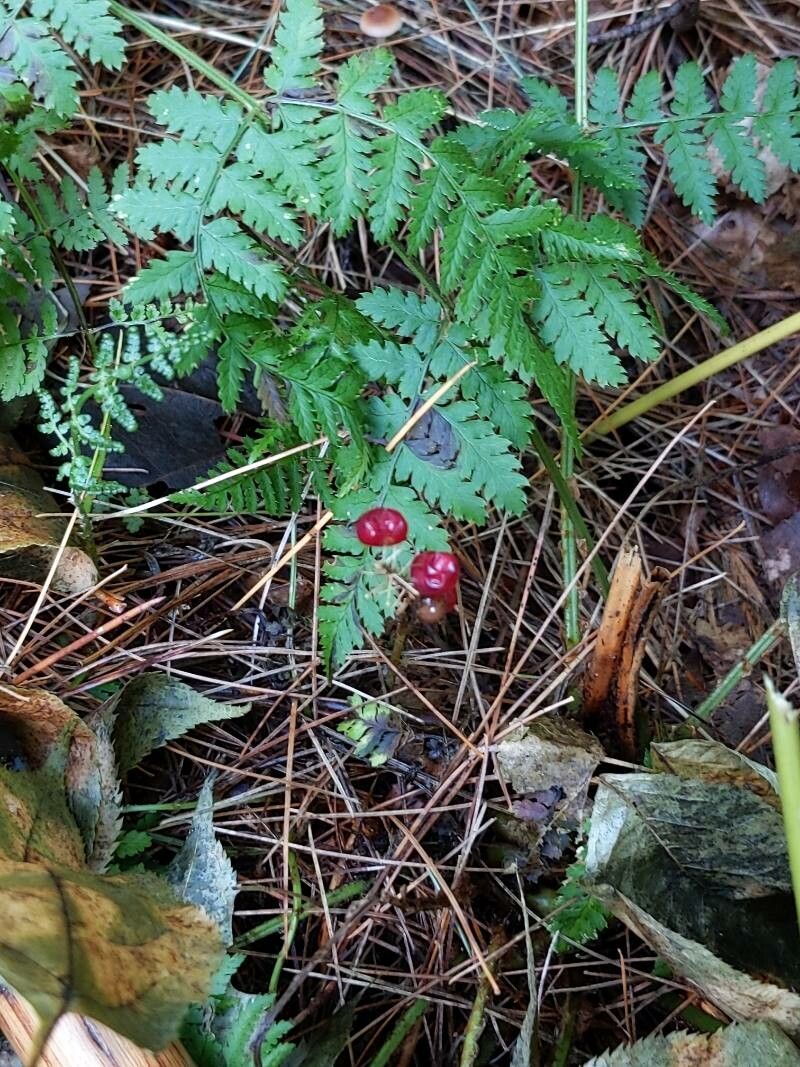
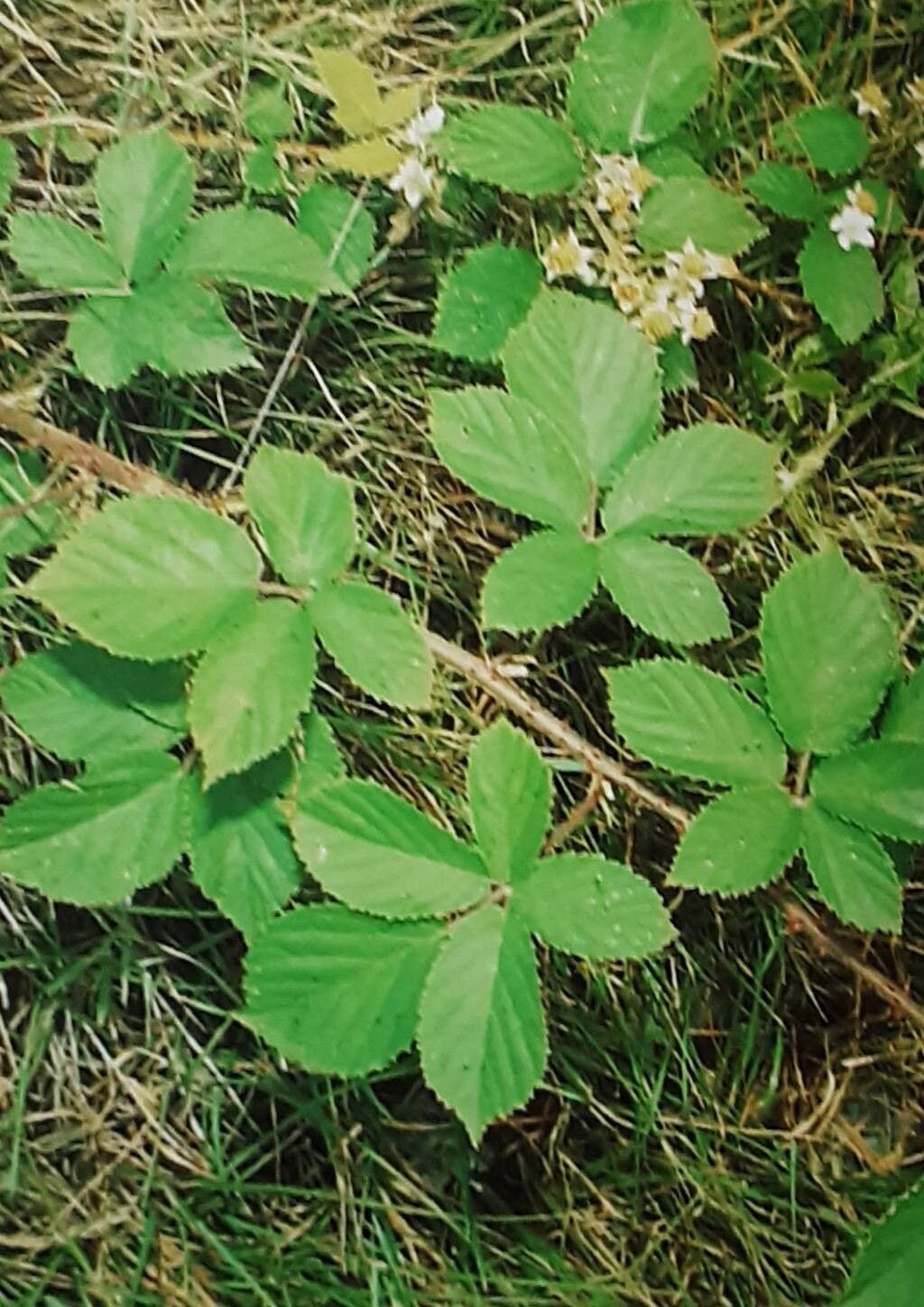
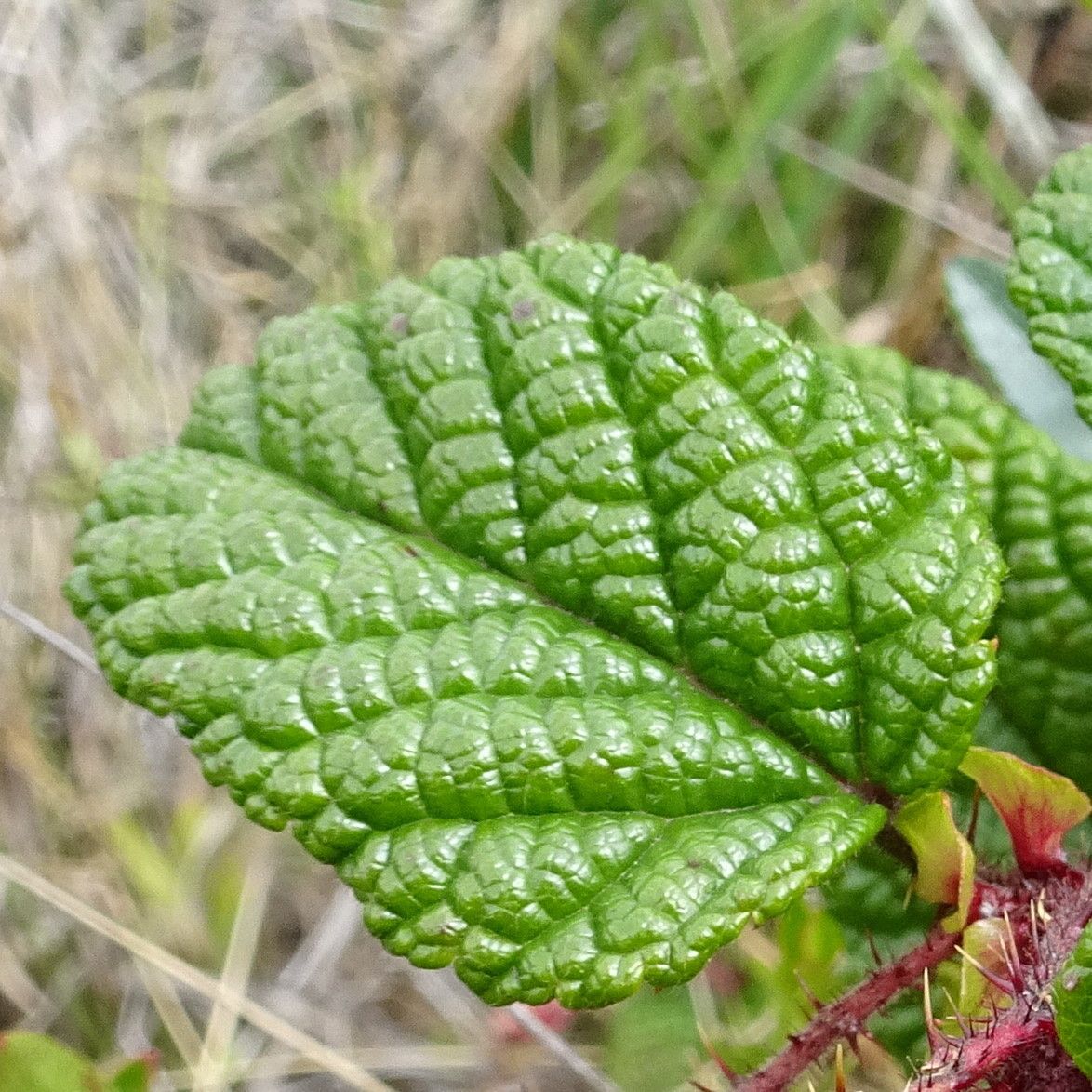
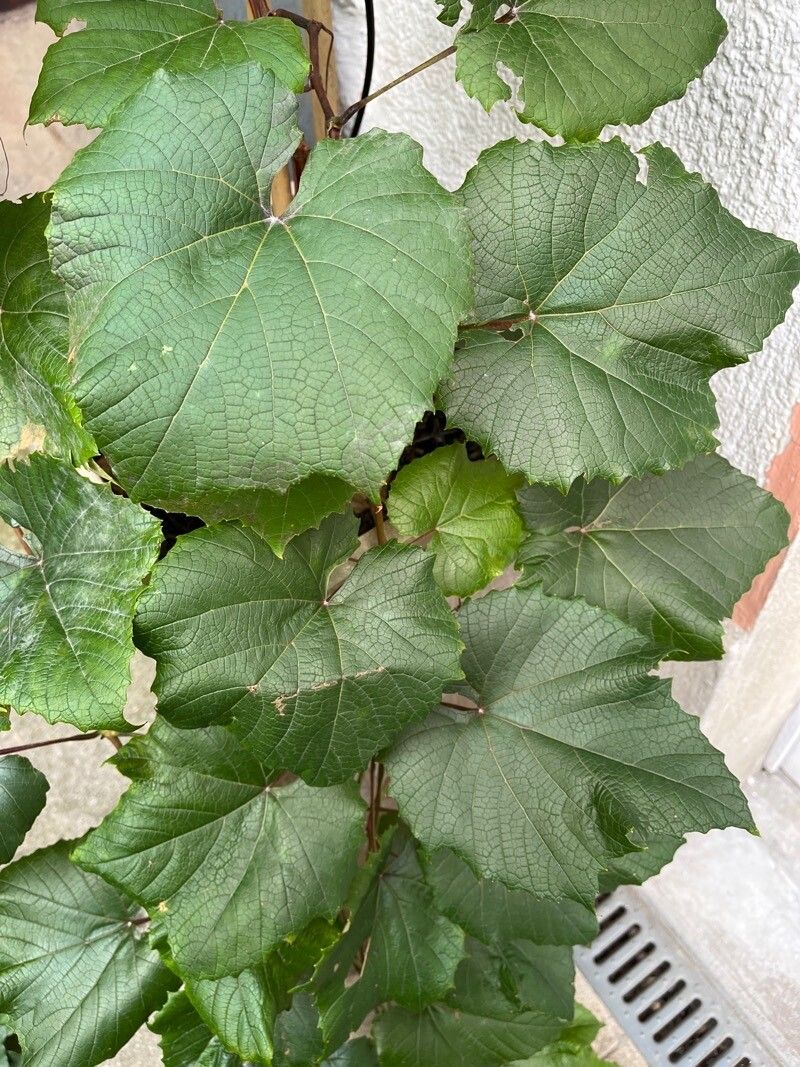
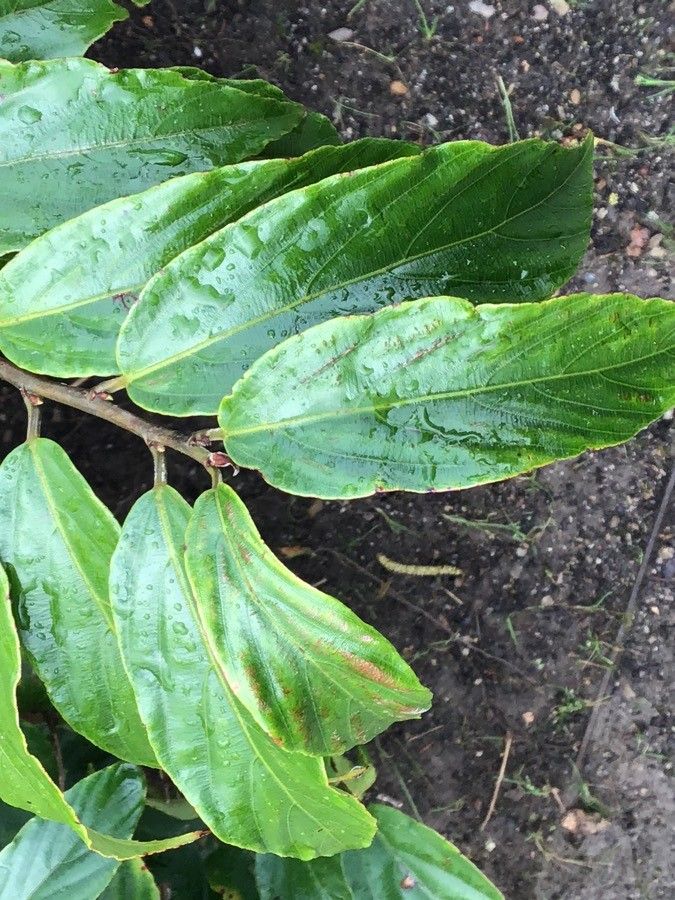
Rubus pedatus is an Asian and North American species of raspberry known under the common names five-leaved bramble, strawberryleaf raspberry and creeping raspberry. Rubus pedatus is a low shrub or herb with thorn-less creeping stems. The leaves are alternate, deciduous, divided into 5 leaflets (hence the name) each coarsely toothed. The flowers are white, 1–2 cm (0.5–1 in) across, and occur singly on slender stalks. The fruits are bright red, and consist of small clusters of drupelets, sometimes as few as one drupelet per fruit. The fruits are edible.Rubus pedatus is found in moist mossy forests, glades, stream banks and bog forests on the Pacific coasts of eastern Russia, Oregon, Washington, British Columbia and Alaska, inland to Yukon, Alberta, and Montana.
Strawberryleaf raspberry is fairly resistant to disease and typically not prone to illness. Still, it can be affected by pests and diseases present in its environment. Such infections are generally mild. Regarding care, this plant needs moderate upkeep. It should be pruned regularly to keep a neat appearance and support healthy growth. Applying fertilizer can also encourage flowering. Strawberryleaf raspberry is appropriate for anyone with outdoor space, like a garden or patio, and does not demand extensive care experience. It may need more attention if grown indoors.
How to keep Rubus Pedatus.
Light
Strawberryleaf raspberry naturally occurs in places like forest understories and rocky areas, where it grows in natural shade. It prefers partial sun but can tolerate both full sun and full shade, illustrating its versatility and hardiness.
Water
The strawberryleaf raspberry flourishes in moist environments and needs watering every week to keep its foliage lush. It does best with indirect light and consistent indoor temperatures, and it thrives in high humidity. During its growing season, regular watering promotes healthy, vigorous growth and resilience.
Temperature
Strawberryleaf raspberry can tolerate a wide range of temperatures, but its distribution may still be restricted by different combinations of moisture and heat. It grows best in warm summer climates with sufficient rainfall or irrigation. Extended periods of cloudy, rainy weather or prolonged high temperatures can raise the chances of the plant dying. In winter, adequate protection from cold can increase its survival rate.
Fertilizer
The Strawberryleaf raspberry plant needs adequate nutrients for best fruit production. Fertilize in early spring to promote new growth and bloom development. Regular feeding keeps the plant healthy, produces more flavorful fruit, and prevents nutrient-deficiency problems like yellowing leaves and poor fruit yield.
Pruning
The strawberryleaf raspberry is known for its lobed leaves and edible berries. To encourage healthy growth and better fruit production, it benefits from strategic pruning between early and late spring. Focus on the following steps: trim older canes, thin out excess stems to improve air circulation, and remove any dead wood. For more specific guidance, consult local horticultural experts.
Botanical profile.
- Plant Type
- Herb, Shrub
- Life Cycle
- Perennial
- Genus
- Rubus
- Family
- Rosaceae
- Hardiness Zone
- 3-7
- Mature Height
- 3 cm to 10 cm
- Mature Spread
- 30 cm to 61 cm
- Leaf Color
- Green, Dark Green
- Leaf Type
- Deciduous
- Flower Size
- 1.02 cm to 2.03 cm
- Bloom Time
- Late spring, Early summer
- Planting Time
- Spring, Summer
- Harvest Time
- Mid summer, Late summer
- Native Area
- Russia, Japan
Other names.
Reader questions.
How much sunlight is required for Strawberryleaf raspberry (Rubus pedatus)?
Strawberryleaf raspberry (Rubus pedatus) thrives in conditions where it can receive varying amounts of sunlight. For optimal growth, it requires 'Full sun,' which means it should be in a location that receives above 6 hours of sunlight daily. Alternatively, it can also grow well in 'Partial sun' conditions, where it gets about 3-6 hours of sunlight. It's essential to observe how sunlight moves through your garden, ensuring that you choose spots that provide the right balance of light and shade. This careful selection will significantly contribute to the happiness and health of your plants.