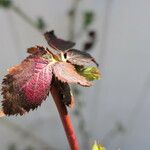
Rubus pensilvanicus
Pennsylvania blackberry · Pennsylvania Raspberry
Description
Source: leafsnapRubus pensilvanicus, commonly known as the Pennsylvania blackberry, is a species of flowering plant in the rose family. Native to eastern North America, it thrives in various habitats, including forests, meadows, and roadsides. The plant typically grows to a height of 1-2 meters and features thorny stems and compound leaves that are green on top and pale underneath. The flowers, which appear from May to July, are white or pinkish with five petals. These are followed by edible blackberries that ripen from July to September. Rubus pensilvanicus serves as a vital food source for wildlife such as birds and small mammals and can also be used by humans in jams or pies. Additionally, this plant has been used for medicinal purposes, such as treating diarrhea or sore throats, due to its high tannin content. However, it's important to note that Rubus pensilvanicus can become invasive if not properly managed, spreading through underground rhizomes. Therefore, it should be planted with caution in areas where it might pose a problem.
Care Guide
💧 Water Every 7 days
Once established, Pennsylvania blackberries require minimal care, needing about 1 inch (2.54 cm) of water per week. If you’re growing them in containers, adjust your watering schedule based on the condition of the soil. Water the plants deeply when the top layer of soil feels dry, and ensure the soil is well-drained.
☀️ Light Full sun
Pennsylvania blackberry comes from open habitats, such as sunny meadows and forest edges, that provide abundant light. It prefers full sun but can also tolerate partial sun, adjusting well to a range of sunlight conditions.
What are the sunlight requirements for Pennsylvania blackberry (Rubus pensilvanicus)?
The Pennsylvania blackberry, or Rubus pensilvanicus, thrives in various sunlight conditions, requiring either full sun or partial sun to prosper. Full sun exposure means the plant should receive above 6 hours of sunlight daily, while partial sun exposure refers to about 3-6 hours of sunlight daily. It's wise to observe the movement of sunlight through your garden to identify spots that offer the ideal combination of light and shade. This careful selection ensures the plants remain happy and healthy by receiving the amount of light they need.
🌡️ Temperature 0–32.2°C
Pennsylvania blackberry is highly adaptable to a variety of climates, from hot summers to cold winters. That said, it has an optimal temperature range for healthy growth. If temperatures get too high, the plant is susceptible to heat and humidity stress, which can cause it to die. In areas where temperatures approach the lower limit of its cold tolerance, taking insulating measures to protect the plant is important.
💨 Humidity
🪴 Soil 6-6
🌱 Fertilizer
The Pennsylvania blackberry plant needs adequate nutrients for optimal fruit production. Fertilize in early spring to support new growth and bloom development. Regular fertilization helps the plant stay healthy, produce more delicious fruit, and prevents nutrient deficiency issues like yellow leaves and poor fruit production.
🪴 Pot & Repot
✂️ Pruning
The Pennsylvania blackberry plant features thorny canes and produces dark, edible berries. To optimize its growth, you should focus on key pruning techniques. This involves removing weak canes and thinning out overcrowded areas, ideally in early spring. Pruning at this time promotes new growth and increases fruit yield. Additionally, proper pruning enhances air circulation and sunlight penetration, which helps reduce the risk of disease.
🌿 Propagating
🐛 Diseases & pets
☠️ Toxicity
Characteristics
- Plant Type
- Shrub
- Life Cycle
- Perennial
- Genus
- Rubus
- Family
- Rosaceae
- Hardiness Zone
- 3-8
- Mature Height
- 10 cm to 15 cm
- Mature Spread
- 10 cm to 15 cm
- Leaf Color
- Forest Green, Dark Green
- Leaf Type
- Deciduous
- Flower Color
- White
- Flower Size
- 2.54 cm to 7.62 cm
- Bloom Time
- Mid spring, Late spring, Early summer
- Planting Time
- Spring, Summer, Autumn
- Harvest Time
- Mid summer, Late summer, Early fall