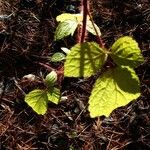
Rubus phoenicolasius
Wine raspberry · Wineberry · Japanese wineberry · Purple-leaf blackberry · Hairy bramble
Description
Source: leafsnapRubus phoenicolasius, commonly known as wineberry, is a deciduous shrub native to China, Japan, and Korea. This plant belongs to the rose family and is closely related to raspberries and blackberries. It can grow up to 3 meters tall, featuring arching stems covered in reddish-brown hairs. The leaves are green and typically composed of three or five leaflets with serrated edges. In early summer, the wineberry produces small white or pink flowers, which are followed by bright red fruit covered in fine hairs called "drupelets." These drupelets offer a sweet-tart flavor reminiscent of raspberries but with a hint of wine-like taste, which is the origin of the plant's common name. Wineberry is considered an invasive species in certain parts of North America, where it was introduced as an ornamental plant. It can grow rapidly and outcompete native plants for essential resources such as sunlight, water, and nutrients. Despite its invasive nature, the fruit of Rubus phoenicolasius has gained popularity among foragers due to its unique flavor profile. The fruit can be eaten fresh or used to make jams, jellies, or pies. Overall, Rubus phoenicolasius is an interesting shrub with both ornamental value, due to its attractive foliage, and edible value, due to its delicious fruit. However, it should be used cautiously to prevent it from spreading uncontrollably into natural habitats where it does not belong.
🌳 Although prickly shrubs such as wineberry may discourage people because of their thorns, birds relish their sweet red fruit. This ornamental shrub both attracts the eye and provides food, producing tasty red berries for wildlife and humans alike. People use the ripe berries in indulgent preparations like sauces, jellies, or even a full-bodied wine. Wineberry is also useful for its tannin-rich leaves, commonly used to soften leather for quality upholstery and car interiors.
🎭 Sanctity, Contrition, Jealousy
Care Guide
💧 Water Every 7 days
Wineberry thrives in environments with consistent moisture and humidity, needing watering every three weeks. Although it has moderate drought tolerance, it can adapt to changes in seasonal water availability, making it a resilient choice for temperate regions and a versatile addition to gardens.
When Should I Water My Wineberry?
Properly watering your wineberry (Rubus phoenicolasius) is vital for its growth, fruit production, and disease resistance. The plant thrives in consistently moist soil, but it should not be waterlogged. You can determine the need for watering by checking if the top 1-2 inches of soil feel dry, observing signs of wilting or droopy leaves, and noting any changes in leaf color, such as yellowing or dryness. It's particularly crucial to water regularly during the fruit development stage and in high temperatures. However, be cautious of overwatering and underwatering, as both can negatively impact the plant's health. Monitoring these signs attentively will aid in maintaining an effective watering schedule.
How Should I Water My Wineberry?
Watering wineberry effectively involves a few key techniques. The best method is bottom-watering, where the plant pot is placed in a tray of water, allowing the soil to absorb moisture from the bottom, ensuring the roots receive enough water without oversaturating the surface or wetting the foliage, which could lead to fungal diseases. There's no need for special equipment, but a moisture meter can be useful. Focus watering at the base of the plant, avoiding the leaves. It's better to underwater slightly than to overwater. Always check the top inch of soil for moisture level and adjust your watering frequency based on the plant's needs and prevailing weather conditions.
How Much Water Does Wineberry Really Need?
Wineberry requires a balance in soil moisture; it prefers it moist but not waterlogged. The amount of water needed depends on factors like pot size, root depth, and plant size. A general rule is to provide thorough watering that reaches the pot's bottom to ensure the roots are well-hydrated, typically around 0.5 to 1 liter per session. A well-hydrated wineberry will display healthy, green foliage without wilting or drooping. Overwatering and underwatering can lead to root rot, yellowing leaves, or reduced fruit production. Watering should ideally be done in the early morning or late afternoon to minimize evaporation, and soil moisture should be checked regularly and adjusted according to the plant's needs.
What Kind of Water is Best for Wineberry?
Wineberry thrives best when watered with rainwater because it's rich in natural nutrients and free of harmful chemicals. Filtered water is the next best alternative, offering a balanced pH suitable for plant growth. Tap water and distilled water are less favorable due to potential chlorine and chemical content. Wineberry is moderately sensitive to chlorine; if using tap water, let it sit for 24 to 48 hours to allow chlorine to evaporate. Regular water treatments aren't necessary if using rainwater or filtered water, but for tap water, dechlorination is advisable. Use room-temperature water to avoid shocking the plant's roots.
How Do Wineberry's Watering Needs Change with the Seasons?
Wineberry's watering needs vary throughout the year. In spring, during its active growth phase, it requires regular watering to keep the soil consistently moist. Summer's fruiting phase demands moderate watering, with deep waterings once or twice a week. Come autumn, as it prepares for dormancy, reduce watering frequency, aiming for lightly moist soil. Winter sees the plant in dormancy, where watering should be minimal, only enough to prevent the soil from completely drying out. Adjust your watering based on seasonal climate changes to ensure the plant's health and productivity.
☀️ Light Full sun
Wineberry does best with prolonged exposure to sunlight but can still grow when the light is filtered. Sunlight supports its healthy development and growth. Native to regions with strong sun exposure, its growth may be impaired by either too much or too little light.
How much sunlight does wineberry require?
Wineberry needs extensive exposure to sunlight for healthy development and growth, thriving best under conditions of full sun, which constitutes above 6 hours of sunlight daily. However, it can also manage with partial sun, about 3-6 hours of sunlight. Its origin in areas with good sunlight influence suggests that its growth could be compromised by both excessive or insufficient light.
What steps should be taken if natural sunlight is insufficient for wineberry?
If natural sunlight is insufficient, especially during winter or in less sunny spaces, artificial lighting can be a vital solution for wineberry. LED lights are recommended because they can be customized to provide specific wavelengths needed for optimal growth. For full sun plants, 30-50W per square foot is needed; partial sun plants require 20-30W per square foot, and full shade plants need 10-20W per square foot. The light source should be placed 12-36 inches above the plant to mimic natural sunlight, with most plants needing 8-12 hours of light per day.
What are the symptoms of light deficiency in wineberry?
When wineberry is exposed to suboptimal lighting, it may exhibit symptoms such as small leaves, leggy or sparse growth, faster leaf drop, slower or no new growth, and lighter-colored new leaves. These symptoms indicate a lack of sufficient sunlight, affecting the plant's health and growth.
How can one mitigate symptoms of excessive sunlight exposure in wineberry?
Excessive sunlight exposure can cause symptoms like chlorosis, sunscald, leaf curling, wilting, and leaf scorching in wineberry. Managing these issues involves providing optimal light conditions and protecting the plant from intense sunlight that might damage it. Careful monitoring and adjustment of the plant's exposure to sunlight are crucial for maintaining its health.
What solutions are available for wineberry's optimal growth in terms of sunlight?
To ensure optimal growth for wineberry in terms of sunlight, you can gradually move the plant to a sunnier location each week until it gets at least 6 hours of direct sunlight daily. For indoors, using artificial light for large or immovable plants and keeping a lamp on for at least 8 hours daily can help. Outdoors, it's important to avoid sudden changes in light intensity and reduce obstructions like pruning trees that block sunlight. Transplanting smaller plants during their dormant period to a location with better sunlight and drainage is also advised.
🌡️ Temperature 5–32.2°C
The natural growing range for wineberry is -13 to 86 ℉ (-25 to 30℃). It prefers temperatures of 41 to 90℉ (5 to 32℃), with optimal growth at 68 to 77℉ (20 to 25℃). In winter it can tolerate -13 to 23℉ (-25 to -5℃), so winter protection is required. In summer, ensure adequate moisture and ventilation to prevent heat damage.
What is the native growth temperature range for wineberry?
The native growth environment for wineberry spans a broad temperature range of -13 to 86°F (-25 to 30°C). However, it thrives best within a more specific temperature range of 41 to 90°F (5 to 32°C), with optimal growth observed at temperatures between 68 to 77°F (20 to 25°C). In the winter season, wineberry can endure temperature lows from -13 to 23°F (-25 to -5°C), which means winter protection is crucial for its survival. During the summer, ensuring that wineberry has enough moisture and proper ventilation is vital to avoid heat damage. This plant is exceptionally cold-tolerant, requiring no additional frost protection in winter. Yet, before the onset of the first freeze in autumn, watering the plant generously to maintain soil moisture is advisable as it helps prevent drought conditions and water scarcity for the plant in the winter and early spring.
How does low temperature affect wineberry and what are the solutions?
Wineberry exhibits great tolerance to cold temperatures; however, during winter, it is crucial to keep the temperature above the plant's growth limit. If temperatures fall below this threshold, there might not be noticeable impacts immediately, but come spring, the branches may turn brittle and dry, failing to sprout new shoots. The solution to this problem, occurring after an overly cold winter, involves pruning away any dead branches that have not produced new leaves come spring, to encourage healthy growth.
How does high temperature affect wineberry and what are the solutions?
Wineberry plants are not well-suited to high temperatures. When the mercury climbs above their maximum comfortable growth temperature, they may lose leaves significantly, and in extreme heat, the entire plant might wither and die. To mitigate high temperature stress, it's recommended to trim away any parts of the plant that have become sunburned or dried out. Relocating the plant to a shaded spot, especially from the harsh midday and afternoon sun, or using a shade cloth, can offer relief. Additionally, watering the plant during the cooler morning and evening hours can help maintain the necessary soil moisture to support the plant through periods of high heat.
💨 Humidity normal (40-60%)
This plant will thrive in moderate humidity, which is probably the level in your home. However, misting it a few times a week can be very beneficial. Make sure the room has good ventilation.
🪴 Soil 6-6
🌱 Fertilizer
Fertilize your Wineberry in early spring to encourage healthy growth. Regular feeding boosts overall health, leading to vigorous growth, greater resilience in harsh conditions, and improved resistance to pests and diseases. Follow a consistent fertilization schedule for your Wineberry to keep the foliage vibrant, deeply colored, and lush in appearance.
Why is it necessary to add fertilizer to my Wineberry?
No matter what type of Wineberry you have, regular fertilization is essential for a healthy plant. Providing the right nutrients will result in stronger growth and increased resistance to difficult growing conditions, diseases, and pests. The foliage of your Wineberry is a standout feature, so it's crucial to maintain it. To achieve this, establish and follow a regular fertilization schedule tailored to your Wineberry. By doing so, you can expect vibrant, lush leaves with a deep color.
When should I fertilize my Wineberry plant?
To ensure healthy growth, it's best to fertilize your Wineberry in late winter or early spring. This provides the necessary nutrients for the plant to thrive in warmer weather. If you live in a warm climate region, an extra fertilization in early fall is beneficial. This adds nutrients for the following growing season and helps the Wineberry withstand the winter cold without damage. Fertilizing earlier allows new branches to grow and become more resilient against the winter.
When is the best time to not fertilize my Wineberry?
There are certain times throughout the year that you should avoid fertilizing your Wineberry. The first of these times is in the early and mid-winter months when the plant is dormant and does not need to be fed. Additionally, it is not recommended to fertilize the plant in late spring and during the entire summer. This is because the weather during that time is usually hotter and dryer, which can have a negative impact on the Wineberry's response to fertilization. To prevent any problems, it is best to stick to a fertilization schedule that includes feeding only in early spring and early fall.
What kind of fertilizer should I use for my Wineberry plant?
Nitrogen is typically the most important nutrient for Wineberries, but phosphorus and potassium are still important. It is recommended to use a balanced fertilizer like a 10-10-10, as Wineberries need a decent amount of all three main nutrients. However, a more nuanced ratio of nutrients can lead to optimal growth. Fertilizers with slightly higher nitrogen, like a ratio of 10-6-4, can work well. Both granular and liquid-based fertilizers can be used for fertilizing.
How should I add fertilizer to my Wineberry plant?
To fertilize your Wineberry, you have two options: using a granular fertilizer or a liquid fertilizer. If you choose the granular fertilizer, simply sprinkle it on the soil at the appropriate time. This slow-release fertilizer will gradually release nutrients into the soil. It's a good idea to lightly water your Wineberry before applying the fertilizer. On the other hand, if you prefer the liquid fertilizer, mix it with water and pour the mixture around the base of your Wineberry. This method is less commonly used. Before fertilizing, consider conducting a soil test to determine if any pH adjustments are necessary.
🪴 Pot & Repot Every 12 months
✂️ Pruning
Wineberry has red, edible fruit and bristly stems. For optimal growth, prune in early spring by removing dead or diseased canes and thinning the oldest canes down to ground level. This process encourages new growth, improves air circulation, and prevents overcrowding, all of which enhance fruit production and reduce the risk of disease.
🌿 Propagating
🐛 Diseases & pets
☠️ Toxicity
Characteristics
- Plant Type
- Shrub
- Life Cycle
- Perennial
- Genus
- Rubus
- Family
- Rosaceae
- Hardiness Zone
- 5-7
- Mature Height
- 0.91 m to 3.05 m
- Mature Spread
- 91 cm
- Leaf Color
- Green, Yellow
- Leaf Type
- Deciduous
- Flower Color
- Pink, White
- Flower Size
- 0.51 cm to 1.02 cm
- Bloom Time
- Late spring, Early summer
- Planting Time
- Spring, Autumn
- Harvest Time
- Mid summer
- Native Area
- Koppen, Japan, South Korea, China