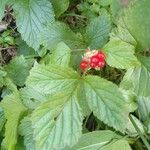
Rubus saxatilis
Stone bramble · Láávžámyerji · Greenland thornless blackberry · Rock bramble · Roebuck-berry
Description
Source: leafsnapRubus saxatilis, commonly known as stone bramble or rock raspberry, is a species of flowering plant in the rose family. This low-growing shrub typically reaches heights of 10-30 cm and spreads through underground rhizomes. The plant features thorny stems and produces small white or pink flowers during the summer, followed by edible red berries that ripen from late summer to early fall. Native to Europe and Asia, stone bramble has been introduced worldwide as an ornamental plant. It thrives in well-drained soils and is often found on rocky slopes, cliffsides, and open woodlands. The berries of Rubus saxatilis are rich in vitamin C and have been used for centuries for their medicinal properties. They are commonly used to make jams, jellies, pies, syrups, or can be eaten fresh. Overall, Rubus saxatilis is an attractive, low-growing shrub with edible fruits that can be enjoyed either fresh or processed into various culinary delights, while also providing medicinal benefits.
Care Guide
💧 Water Every 7 days
Stone bramble flourishes in cool temperate regions and requires moderate moisture. To maintain its drought resistance, it should be watered weekly. This plant is usually grown outdoors, and its water needs change with the seasons. During dormancy, it requires less water, while in spring, as it begins to grow, it needs more.
How should I water my Stone bramble plant?
To properly water the Stone bramble, it is recommended to use filtered water at room temperature. Tap water may harm the plant as it can contain harmful particles. The Stone bramble is native to warm climates, so using cold water may shock it. It is also advised to avoid overhead watering, as it may cause issues with the foliage. Instead, generously water the soil with filtered room temperature water until it is fully saturated. This will benefit the plant by moistening its roots and helping them spread and absorb essential nutrients from the soil.
What should I do if I give my Stone bramble too much or too little water?
Both overwatering and underwatering can harm the health of your Stone bramble, but overwatering is more common. When the plant gets too much water, its stems and leaves may wilt and turn yellow. Prolonged overwatering can also cause diseases like root rot, mold, and mildew, which can be fatal. Stone brambles are less likely to be underwatered, as they can tolerate drought well. However, underwatering is still possible, and if it occurs, the leaves may become brittle and brown. It's important to recognize signs of overwatering early when caring for your Stone bramble. Some diseases caused by overwatering, like root rot, may be irreversible if not addressed promptly. If you see early signs of overwatering, reduce your watering immediately. Additionally, check the soil quality where your Stone bramble is growing. If it drains poorly, replace it with a loose, well-draining potting mix. On the other hand, if you notice signs of underwatering, simply increase your watering frequency until those signs subside.
How frequently do I need to water my Stone bramble?
If your Stone bramble is in a pot, the best way to determine if it needs water is by checking the soil. Simply stick your finger into the soil and if the first two to three inches feel dry, it's time to water. If you have your Stone bramble planted in the ground outdoors, you can use a similar method. When the top few inches of soil are dry, it's time to water. Typically, during spring and early fall, watering once a week is sufficient. However, during extremely hot weather, you may need to water twice a week or more. It's important to note that mature, well-established Stone brambles have impressive drought tolerance.
How much water does my Stone bramble plant require?
To properly water your Stone bramble, don't hesitate to give it a generous amount of water. Make sure the top two to three inches of soil are dry before watering. It's best to thoroughly soak the soil, allowing excess water to flow out of the drainage holes at the bottom of the pot. If you don't see any excess water draining, you may have not given enough water. However, be cautious not to let water accumulate in the soil, as this can harm the plant. On the other hand, if water doesn't drain properly from the pot, it could indicate poorly draining soil, which is harmful to the plant's health. If the plant is outdoors, about 1 inch of rain per week should be adequate.
How do I water my Stone Bramble when it is growing at different stages?
The water requirements of the Stone bramble depend on its growth stages. In the early years and after being transplanted, it needs more water due to the energy it puts into developing roots. These roots require extra moisture for optimal growth. As the plant matures, it requires less water. Additionally, during the blooming period, the Stone bramble may need increased water due to the significant moisture used in flower development.
☀️ Light Full sun
The dwarf Red Blackberry thrives with plentiful sunlight, promoting its growth and overall vigor. Moderate light, such as dappled shade, can also be adequate. Too much sun may cause the plant to show signs of scorching. Too little light can hinder its development and reduce flowering and fruiting. Its origin in forest clearings influences how it adapts to sunlight.
What are the sunlight requirements for Stone Bramble (Rubus saxatilis)?
Stone Bramble requires a strong preference for abundant exposure to the sun and can flourish under full sun conditions, which means above 6 hours of sunlight daily. It can also tolerate areas of partial sun exposure, about 3-6 hours of sunlight. In its natural habitat, this plant is accustomed to well-lit environments. Thus, excessive or insufficient light may affect its growth. It's important to watch how sunlight moves through your garden and choose spots that provide the right balance of light and shade, ensuring the happiness of your plants.
How can artificial lighting be used for Stone Bramble indoors?
Indoor Stone Bramble plants require adequate lighting for optimal growth, especially when natural sunlight is insufficient. Artificial lights offer a vital solution, promoting faster, healthier growth. LED lights are a popular choice because they can provide specific wavelengths needed by plants. Full sun plants need 30-50W/sq ft of artificial light, partial sun plants need 20-30W/sq ft, and full shade plants need 10-20W/sq ft. The light source should be placed 12-36 inches above the plant to mimic natural sunlight, and the duration should mimic the length of natural daylight hours, with most plants needing 8-12 hours of light per day.
What are the symptoms of inadequate lighting for Stone Bramble?
When Stone Bramble is placed in rooms with inadequate lighting, it may exhibit symptoms such as smaller new leaves compared to previous ones, leggy or sparse growth, faster leaf drop, slower or no new growth, lighter-colored new leaves, chlorosis (leaves losing their green color), sunscald (damage from intense sunlight exposure), leaf curling, wilting, and leaf scorching. These symptoms indicate a need for better light exposure to maintain the plant's health and growth.
What solutions can be applied for Stone Bramble suffering from poor lighting?
To counter poor lighting conditions for Stone Bramble, gradually move indoor plants to sunnier locations until they receive at least 6 hours of direct sunlight daily, utilizing south-facing windows. Consider using artificial light for plants that are large or not easily movable, keeping a lamp on for at least 8 hours daily or investing in plant grow lights. For outdoor plants, move them to the best sunlight spot gradually to avoid sunburn. Minimize obstructions by pruning trees if they block sunlight and consider transplanting smaller plants during their dormant period to a location with better sunlight and drainage. Note that parts of the plant affected by prior insufficient sunlight may not recover, but new growth will be healthy.
🌡️ Temperature 5–25°C
Dwarf Red Blackberry originates from cool to temperate regions and prefers temperatures of 41 to 77 °F (5 to 25 ℃). Adjustments to the growing environment should be made seasonally to accommodate its preference for cooler conditions.
What is the native climate for Stone Bramble?
Stone bramble, botanically known as Rubus saxatilis, is native to temperate climates. It thrives best in a temperature range between 41 to 89.6 °F (5 to 32 °C), preferring cooler environments. During peak summer, if temperatures exceed its comfortable range, measures such as shading or mulching are recommended to moderate the temperature. Stone bramble has a notable cold resistance, thus special frost protection measures are generally not required during winter. Nevertheless, if winter temperatures are anticipated to fall below -30°C, it's critical to provide cold protection by covering the plant with materials like soil or straw. Additionally, watering the plant abundantly before the first freeze in autumn helps ensure the soil remains moist and enters a frozen state, which aids in preventing drought and water scarcity throughout the winter and early spring months.
How does Stone Bramble react to low temperature conditions?
Stone bramble is exceptionally cold-tolerant, thriving best when the temperature remains above 5°C. During winter, it is advised to keep temperatures above -25°C. However, when temperatures fall below -30°C, while there might not be immediate visible effects during the winter, a decrease in sprouting or absence of sprouting can be expected during spring. In response to such conditions, it is recommended to remove any parts of the plant that have failed to sprout come spring, as a solution to encourage healthy growth.
How does Stone Bramble react to high temperature conditions?
During the summer months, it is crucial to ensure that Stone bramble's surrounding temperature does not exceed 32°C. High-temperature stress occurs when temperatures surpass 35°C resulting in symptoms such as leaves becoming lighter in color, prone to curling, susceptible to sunburn, and, in severe cases, the plant may wilt and completely dry out. To mitigate these effects, one should trim away the sunburned and dried-up parts. It's also beneficial to move the plant to a location offering shade during the midday and afternoon sun, or utilize a shade cloth. Additionally, maintaining soil moisture by watering the plant in the morning and evening is vital for the plant's well-being under high temperature stress.
💨 Humidity
🪴 Soil 5-6
🌱 Fertilizer
The Dwarf Red Blackberry needs adequate nutrients to achieve optimal fruit production. Fertilize in early spring to encourage new growth and bloom development. Regular feeding keeps the plant healthy, produces more flavorful fruit, and prevents nutrient deficiency problems like yellowing leaves and poor fruit yields.
Why should I add fertilizer to my Stone bramble plant?
The main structure of the Stone bramble is comprised of its leaves. Fertilizing the plant is crucial to ensure that the leaves remain in good condition and continue to perform their function effectively. Proper fertilization promotes consistent leaf color and a healthy texture. Additionally, fertilization aids in the growth of new roots and the maintenance of existing ones below the soil's surface. This not only keeps the plant healthy in the present, but also enhances its ability to absorb nutrients from the soil in the future.
When should I fertilize my Stone bramble?
If you grow your Stone bramble outdoors each year, you will see new growth shooting out in early spring. This is when you should start fertilizing the plant. Usually, a single application of fertilizer will suffice, but if you want to maximize growth, you can fertilize multiple times throughout the spring and early summer. In this case, feed your Stone bramble about once every month to a month and a half.
When is not a good time to add fertilizer to my Stone bramble plant?
During late fall and winter, your Stone bramble goes into a dormant phase and stops growing. It's best not to fertilize it during this time. In spring and summer, if you choose to fertilize, gradually reduce the amount as summer approaches and the growth rate slows down. In general, avoid fertilizing when the weather is too hot or the soil is extremely dry, as this can stress and harm your Stone bramble.
What kind of fertilizer does my Stone bramble plant require?
Choosing the right fertilizer for a Stone bramble is actually quite simple. These plants do well with a general-purpose garden fertilizer that contains equal amounts of nitrogen, phosphorus, and potassium. A ratio of 10-10-10 or something similar works great. Just be cautious of fertilizers with excessive nitrogen content. The best options for a Stone bramble are typically granular fertilizers that release slowly and are easy to apply to the soil. Additionally, feeding your plant with organic soil amendments like compost can be beneficial.
How should I fertilize my Stone bramble plant?
In early spring, wait until your Stone bramble's first leaves barely emerge from the soil's surface. Once you see this, apply a granular slow-release fertilizer with a balanced formula to the soil around the base of the plant. If desired, you can repeat this process later in the season. When reapplying fertilizer, remember to apply it to the soil at the base of the plant, not directly onto the plant itself. Sometimes, you may need to move some leaves to access the soil above the roots. It's also a good idea to water your Stone bramble both before and after applying fertilizer.
🪴 Pot & Repot
✂️ Pruning
The stone bramble is a plant characterized by its sprawling growth and red, edible fruits. To ensure optimal growth, prune the plant from early to late spring. This process should include removing dead canes, thinning the plant, and cutting back stems. After pruning, it's essential to sterilize your tools and apply mulch. This helps maintain moisture, reduce weed growth, improve air circulation, and enhance fruit production.
🌿 Propagating
🐛 Diseases & pets
☠️ Toxicity
Characteristics
- Plant Type
- Herb, Shrub
- Life Cycle
- Perennial
- Genus
- Rubus
- Family
- Rosaceae
- Hardiness Zone
- 4-5
- Mature Height
- 10 cm to 15 cm
- Mature Spread
- 1.22 m to 2.44 m
- Leaf Color
- Green, Blue
- Leaf Type
- Deciduous
- Flower Color
- White, Pink
- Flower Size
- 2.54 cm
- Bloom Time
- Late spring, Early summer
- Planting Time
- Summer, Autumn
- Harvest Time
- Mid summer