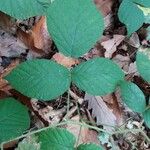
Rubus scaber
BlackBerry · Scabrous Bramble
Description
Source: leafsnapRubus scaber, commonly known as the rough-leaved raspberry, is a deciduous shrub in the Rosaceae family. Native to Asia, it can be found in countries such as China, Japan, Korea, and Taiwan. This plant typically grows up to 2 meters in height and features thorny stems with rough leaves that are green on the top and white underneath. The flowers are small, with five petals that range in color from white to pink. The fruit of Rubus scaber is a red, raspberry-like berry with a sweet-tart flavor. It is often used to make jams and jellies or enjoyed fresh as a snack. The plant prefers moist soil conditions but can tolerate some drought once established. For centuries, Rubus scaber has been used in traditional Chinese medicine for its anti-inflammatory properties, which have been found effective against various ailments such as arthritis and sore throat. Overall, Rubus scaber is an attractive shrub with edible fruit, making it an excellent addition to any garden or landscape design. Its medicinal properties add to its appeal, offering potential health benefits.
Care Guide
💧 Water Every 7 days
☀️ Light Partial sun
Rubus scaber is native to habitats like forest understories and rocky areas, where it grows in natural shade. It prefers partial sun but can tolerate full sun or full shade, showing its versatile, hardy nature.
🌡️ Temperature 15–35°C
Rubus scaber shows strong adaptability to a wide range of climatic conditions, whether in blazing summers or frigid winters. Nonetheless, it has an ideal temperature range for growth. If temperatures become excessively high, the plant is vulnerable to heat and humidity stress, which can cause its death. In areas where temperatures approach the lower edge of its cold tolerance, taking insulating measures to protect the plant is important.
💨 Humidity
🪴 Soil 6-7
🌱 Fertilizer
The Rubus scaber plant needs adequate nutrients to achieve optimal fruit production. Apply fertilizer in early spring to support new growth and flower development. Regular feeding helps the plant remain healthy, produce tastier fruit, and prevents nutrient-deficiency problems like yellowing leaves and poor fruit yields.
🪴 Pot & Repot
✂️ Pruning
🌿 Propagating
🐛 Diseases & pets
☠️ Toxicity
Characteristics
- Plant Type
- Shrub
- Life Cycle
- Perennial
- Genus
- Rubus
- Family
- Rosaceae
- Hardiness Zone
- 7-10
- Mature Height
- 0.91 m to 2.13 m
- Mature Spread
- 0.91 m to 1.52 m
- Leaf Color
- Green, Dark Green
- Leaf Type
- Deciduous
- Flower Color
- White
- Flower Size
- 1.52 cm to 2.54 cm
- Bloom Time
- Early summer, Mid summer
- Planting Time
- Autumn, Winter
- Harvest Time
- Late summer, Early fall
- Native Area
- Germany, Czech Republic, Poland, Ireland, United Kingdom, Croatia, France