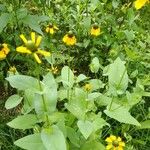
Rudbeckia amplexicaulis
Clasping-leaf coneflower · Clasping coneflower · Clasping-leaved Coneflower · Coneflower
Description
Source: leafsnapDracopis is a monotypic genus with Dracopis amplexicaulis (clasping coneflower; syn. Rudbeckia amplexicaulis) the sole species. It is native to North America. It is an annual plant growing to 1 m tall, with simple or branched stems. The leaves are oval, 5–10 cm (2.0–3.9 in) long and 2–4 cm (0.79–1.57 in) broad. The flowers are produced in daisy-like inflorescences, with yellow to yellowish-purple florets. It is distinguished from the genus Rudbeckia (in which it used to be treated) by the presence of chaff subtending the ray flowers. It is one of at least four genera in the flowering plant family Asteraceae whose members are commonly known as coneflowers; the others being Echinacea, Rudbeckia and Ratibida. In cultivation in the UK this plant has gained the Royal Horticultural Society’s Award of Garden Merit.
🌳 Clasping-Leaved Coneflower plays an important role in ecosystems beyond simple visual appeal by acting as a lure for pollinators. The bright yellow petals are not only attractive to people; they are very effective at drawing bees, butterflies, and other beneficial insects. This connection improves pollination for many plants and helps maintain the health and diversity of habitats. Clasping-Leaved Coneflower is often used in conservation areas and natural garden designs specifically for this ecological role.
Care Guide
💧 Water
The Clasping-Leaved Coneflower flourishes in environments with moderate moisture and requires consistent watering. To maintain an even level of soil moisture, it is advisable to water the plant weekly. Ideally grown outdoors, this coneflower needs more frequent watering during its active growth phase and less during dormancy, reflecting its natural rainfall patterns.
☀️ Light Full sun
Clasping-Leaved Coneflower performs best with uninterrupted sunlight all day long. It can also endure circumstances in which the sunlight is somewhat reduced. Its native habitat was open areas with ample solar radiation. An imbalance in light—either excessive or insufficient—can limit its growth and development.
What are the sunlight requirements for Clasping-Leaved Coneflower?
Clasping-Leaved Coneflower thrives in conditions that mimic its natural habitat of open, sun-drenched environments. It requires full sun, which means it should receive more than 6 hours of sunlight a day, but it can also grow under partial sun, receiving about 3-6 hours of sunlight. Continuous exposure to sunlight is essential for its growth, though it can survive in slightly muted sun conditions. Note that both too much and too little sunlight can negatively impact the plant's health and growth.
How can I use artificial lighting for Clasping-Leaved Coneflower indoors?
Indoor Clasping-Leaved Coneflower plants require adequate lighting to grow well, especially when natural sunlight is insufficient, like during winter or in less sunny spaces. Artificial lighting, such as LED lights, can provide the necessary wavelengths for optimal plant growth. For plants needing full sun, 30-50W/sq ft of artificial light is recommended; for partial sun plants, 20-30W/sq ft; and for full shade plants, 10-20W/sq ft. The light source should be placed 12-36 inches above the plant and kept on for 8-12 hours per day to mimic natural daylight hours effectively.
What symptoms indicate insufficient light in Clasping-Leaved Coneflower?
Clasping-Leaved Coneflower shows several symptoms when it doesn't receive adequate light, such as smaller new leaves, leggy or sparse growth, faster leaf drop, slower or ceased new growth, and lighter-colored or chlorotic new leaves. Excessive sunlight can also cause issues including sunscald, which results in pale, bleached areas on leaves or stems, leaf curling as a defense against excessive light, wilting from too much water loss, and leaf scorching characterized by brown, dry edges on leaves.
How can I manage light exposure for Clasping-Leaved Coneflower?
For optimal growth of Clasping-Leaved Coneflower, gradually acclimate the plant to receive at least 6 hours of direct sunlight daily. If indoors and the plant is large, use artificial light or keep a lamp on for at least 8 hours daily. To manage outdoor light exposure, move the plants progressively each week to avoid sudden changes that might cause sunburn. If obstructions like trees block sunlight, consider pruning them. For smaller plants, transplant them during their dormant period into a location with ample sunlight. Note that parts of the plant damaged by insufficient light might not recover, but new growth should be healthy after adjusting light exposure.
🌡️ Temperature 10–25°C
The Clasping-Leaved Coneflower is native to areas with temperate climates and prefers temperatures from 68 to 95 °F (20 to 35 ℃). During cooler periods, keeping temperatures above 68 °F (20 ℃) encourages healthy growth.
What is the ideal temperature range for Clasping-Leaved Coneflower?
The Clasping-Leaved Coneflower thrives in moderate climates, with an ideal temperature range between 68 to 95°F (20 to 35°C). To ensure healthy growth during cooler seasons, it is beneficial to maintain a temperature above 68°F (20°C). This plant is known for its cold-tolerance and does not require additional frost protection measures during winter. However, it is advised to water the plant generously before the first freeze of autumn to keep the soil moist, which helps prevent water scarcity for the plant during the colder months.
How does Clasping-Leaved Coneflower respond to extremely low temperatures?
The Clasping-Leaved Coneflower exhibits remarkable cold tolerance and can withstand winter temperatures down to -25°C. Although there might not be noticeable changes during the winter, temperatures dropping below this threshold can lead to a decrease in springtime sprouting, or in some cases, plants may not sprout at all. In response to such situations, it is recommended to remove any parts of the plant that have failed to sprout in the spring.
What should be done if Clasping-Leaved Coneflower is exposed to high temperatures?
Clasping-Leaved Coneflower is not tolerant to high temperatures, especially those exceeding 35°C, as its growth will halt and it becomes prone to rot under such conditions. To mitigate the impact of high temperatures, affected sunburned and dried-up parts of the plant should be trimmed away. Additionally, moving the plant to a shaded location, especially one that shields it from midday and afternoon sun, or using a shade cloth can be beneficial. Ensuring the soil remains moist by watering the plant during the morning and evening is also crucial under these conditions.
💨 Humidity
🪴 Soil 6-7
🌱 Fertilizer
When the Clasping-Leaved Coneflower has opened most of its blooms to full size, resume fertilizing. During peak bloom production, apply fertilizer once every three to four weeks, as weather allows. Then, when the plant begins producing fewer new blooms, stop fertilizing; there's no need to feed it once it can no longer produce more blooms.
🪴 Pot & Repot
✂️ Pruning
The Clasping-Leaved Coneflower is known for its vibrant yellow blooms and distinctive clasping leaves. To promote growth and continuous flowering, prune the plant from early to late spring by removing dead stems and spent flowers. Be sure to use clean, sharp tools to maintain the plant's health and enhance the overall appearance of your garden.
🌿 Propagating
🐛 Diseases & pets
☠️ Toxicity
Characteristics
- Plant Type
- Herb
- Life Cycle
- Annual, Biennial
- Genus
- Rudbeckia
- Family
- Asteraceae
- Hardiness Zone
- 6
- Mature Height
- 30 cm to 91 cm
- Mature Spread
- 49 cm
- Leaf Color
- Green, Blue
- Leaf Type
- Deciduous
- Flower Color
- Yellow, Gold
- Flower Size
- 2.54 cm to 5.08 cm
- Bloom Time
- Early summer, Mid summer
- Planting Time
- Autumn
- Harvest Time
- Mid summer