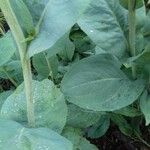
Rudbeckia maxima
Cabbage coneflower · Great coneflower · Giant coneflower · Cabbage leaf coneflower · Large coneflower
Description
Source: leafsnapRudbeckia maxima, commonly known as the giant coneflower or cabbage leaf coneflower, is a perennial plant native to the central and southern regions of the United States. A member of the Asteraceae family, it can grow up to 8 feet tall with a spread of 3 to 4 feet. The plant features large basal leaves that can reach up to 2 feet in length and have a blue-green color with a waxy texture. The flowers of Rudbeckia maxima are yellow-orange with dark brown centers that resemble cones. These blooms appear from mid-summer through early fall, attracting bees, butterflies, and other pollinators. This plant thrives in full sun or partial shade and prefers well-drained soil. While it is drought-tolerant once established, it benefits from regular watering during dry spells. Additionally, Rudbeckia maxima is deer-resistant. Often used as an ornamental plant in gardens, Rudbeckia maxima is appreciated for its impressive size, attractive foliage, and showy flowers. It also makes an excellent cut flower for floral arrangements due to its long stems. Overall, Rudbeckia maxima is a stunning addition to any garden or landscape, providing beauty throughout much of the growing season while requiring minimal maintenance once established.
🌳 Although the Great Coneflower is appreciated for its ornamental beauty, its usefulness also reaches into ecology and landscape management. It not only provides an important nectar source for pollinators like bees and butterflies, supporting the health and diversity of local ecosystems, but is also used in restoration projects for its ability to thrive in poor soils and help stabilize disturbed soils.
Care Guide
💧 Water Every 7 days
The Great Coneflower thrives in moist, well-drained environments, preferring consistent moisture but showing some tolerance to drought. To maintain optimal soil balance, watering once a week is ideal. This plant is best suited for outdoor growth, where it can benefit from natural rainfall. It is important to keep the soil evenly damp without allowing it to become waterlogged.
How should I water my Great Coneflower?
When watering the Great Coneflower, it is important to use filtered water that is at room temperature. Tap water may have harmful particles, so filtered water is preferred. The plant comes from a warm environment, so it is best to avoid using cold water as it may shock the plant. Additionally, overhead watering should be avoided to prevent foliage complications. Instead, water the plant by applying filtered room temperature water directly to the soil until it is fully soaked. This helps to moisten the roots and promote their growth and nutrient absorption.
What should I do if I give my Great Coneflower plant too much water or not enough water?
Overwatering and underwatering can harm your Great Coneflower, but overwatering is more commonly seen. When the plant gets too much water, the stems and leaves may wilt and turn yellow. Overwatering for a long time can also cause root rot, mold, and mildew, which can kill the plant. Underwatering is less likely, as the Great Coneflower tolerates drought well. However, it is still possible, and in such cases, the leaves become brittle and brown. It is important to recognize signs of overwatering early on. Some diseases caused by overwatering, like root rot, may be irreparable if not addressed promptly. Reduce watering immediately if you notice these signs and check the soil quality. If the soil drains poorly, replace it with a loose, well-draining potting mix. Conversely, if signs point to insufficient water, increase watering until the signs disappear.
How much water does my Great Coneflower need?
If your Great Coneflower is in a pot, the most precise way to determine if it needs water is to check the soil by sticking your finger into it. If the top two to three inches of soil are dry, it is time to water. If you have the Great Coneflower planted outdoors, you can use the same method. If the top few inches of soil are dry, it is time to water. During the spring and early fall, you will likely need to water this plant about once a week using this method. However, in extremely hot weather, you may need to water it at least twice a week or even more. It is important to note that a mature and well-established Great Coneflower has the ability to withstand drought conditions.
How much water does my Great Coneflower require?
When watering your Great Coneflower, make sure you are generous with the amount of water you give. Wait until the first two to three inches of soil are dry, then water the plant thoroughly so that the soil is completely soaked. The water should be enough to cause excess water to flow out of the drainage holes at the bottom of the pot. If you don't see any excess water draining, it means you haven't watered enough. However, be careful not to let the water accumulate in the soil, as this can harm the plant. Poorly draining soil can also be a problem, so make sure to avoid it. If the plant is outside, a weekly rainfall of 1 inch will be enough.
How should I water my Great Coneflower as it grows?
The water needs of the Great Coneflower can vary depending on its growth stages. In the first few years of its life or when you have recently transplanted it, you should water it more than usual. During these stages, the plant focuses on developing new roots that will support future growth. For these roots to thrive, they require slightly more moisture than during later, more mature phases. As the seasons pass, the Great Coneflower will require less water. Additionally, during the bloom period, when the plant is developing flowers, it may need extra water to support this process.
☀️ Light Full sun
Great Coneflower grows best when it receives light for most of the day. It also does well in locations where light is present for part of the day. Uneven light exposure can cause reduced growth, lower plant vigor, and fewer blooms.
What are the sun requirements for Great Coneflower?
The Great Coneflower requires full sun, characterized by more than 6 hours of sunlight a day, or partial sun, which means about 3-6 hours of sunlight daily. It's crucial to observe how sunlight moves through your garden to select locations that ensure an optimal balance of light and shade, contributing to the well-being of your plants.
What are the essentials for growing Great Coneflower successfully?
For optimal growth, the Great Coneflower needs substantial light exposure throughout most of the day but can also thrive with light available for a part of the day. Insufficient light exposure may result in less vigorous growth and reduced blooming. In conditions where natural light is inadequate, artificial lighting can be a suitable alternative, especially during winter or in less sunny spaces. LED lights are recommended for indoor plants, with full sun plants requiring 30-50W/sq ft, partial sun plants needing 20-30W/sq ft, and full shade plants requiring 10-20W/sq ft of artificial light. The light should be placed 12-36 inches above the plant and provided for 8-12 hours a day to mimic natural sunlight conditions.
What are the symptoms of light deficiency in Great Coneflower?
Symptoms of light deficiency in Great Coneflower include smaller new leaves, leggy or sparse growth, increased leaf dropping, halted growth, lighter-colored new leaves, and chlorosis or loss of leaf green color. Excessive sunlight can cause sunscald, leaf curling, wilting, and leaf scorching, indicating damage to the plant's tissues and affecting its health.
What solutions can address light-related issues in Great Coneflower?
To combat light deficiency, gradually move indoor plants to sunnier spots to ensure they receive at least 6 hours of direct sunlight daily, utilizing south-facing windows for maximum exposure. Artificial lighting is also beneficial for plants that are not easily moved, with professional grow lights or regular lamps used for additional light. Outdoor plants should be gradually relocated to sunnier areas to adapt without the risk of sunburn. If sunlight is blocked by objects like trees, consider pruning to improve light access. For smaller plants with obstructed light, transplanting during their dormant period to locations with ample sunlight and good drainage is advisable.
🌡️ Temperature 5–35°C
Great Coneflower is native to climates with temperatures varying from 41 to 95 °F (5 to 35 °C). It does best within this temperature range. As seasons change, small adjustments to temperature may be helpful to mimic its natural habitat.
What are the ideal temperature conditions for growing Great Coneflower?
Great Coneflower thrives in climates where the temperature ranges from 41 to 95 °F (5 to 35 °C). It has a strong resistance to cold, making it adaptable to various thermal conditions. Slight adjustments in temperature with the change of seasons can be beneficial to mimic the natural habitat of the Great Coneflower. During winter, special frost protection measures are generally not needed, but in cases where temperatures are expected to drop below -25°C, it's important to provide protection by covering the plant with soil or straw. Moreover, watering the plant abundantly before the first freeze in autumn is recommended to ensure the soil remains moist and enters a frozen state, which helps prevent drought and water scarcity for the plant during the colder months.
How does low temperature affect Great Coneflower and what solutions are recommended?
Great Coneflower is cold-tolerant and performs best when temperatures are kept above 5°C. In the winter, it should not be exposed to temperatures below -20°C. When temperatures fall below -25°C, the plant may not show immediate damage but could have decreased or no sprouting in the spring. In such cases, any parts of the plant that have failed to sprout should be removed in the spring as a part of its care routine.
What should be done if Great Coneflower is exposed to high temperatures?
During the summer, it's crucial to ensure the Great Coneflower is not exposed to temperatures above 35°C. Exposure to temperatures exceeding 38°C can cause the leaves to lighten in color, become prone to curling, suffer from sunburn, and in severe cases, lead to wilting and drying of the entire plant. To mitigate these risks, affected parts should be trimmed away. The plant should also be moved to a location that provides shade during the midday and afternoon sun or protected with a shade cloth. Additionally, watering the plant in the morning and evening to maintain soil moisture is recommended to help the Great Coneflower cope with high temperatures.
💨 Humidity
🪴 Soil 6-7
🌱 Fertilizer
The best time to fertilize a Great Coneflower is in early spring, when it is coming out of dormancy and starting active growth. Fertilization supplies essential nutrients for healthy growth. Although Great Coneflower has relatively low fertilizer requirements, an annual application can improve its survival and encourage better, longer-lasting flowers.
Why should I put fertilizer on my Great Coneflower?
Fertilization is important for the Great Coneflower and other plants because it provides essential nutrients for growth. Although the Great Coneflower has relatively low fertilization needs and can survive without it, annual fertilization can greatly benefit the plant, promoting its survival and improving flower quality. Those who want their Great Coneflower to look its best should prioritize annual fertilization.
When should I fertilize my Great Coneflower for the best results?
The best time to fertilize a Great Coneflower is during late winter to early spring when it is transitioning from its dormant phase to active growth. Fertilizing at this time promotes healthy growth and helps the plant kickstart the season. Although early spring is the most beneficial, fertilizing during the fall is also acceptable. However, it is not recommended to feed a Great Coneflower during summer or winter.
When is it better to not put fertilizer on my Great Coneflower?
To ensure optimal growth of your Great Coneflower, it's best to fertilize it only during late winter and early spring. This plant has low fertilizer needs, so a single annual feeding is enough. Fertilizing during spring, summer, and fall can lead to overfertilization and its associated issues. However, if you missed fertilizing in spring, it's okay to feed it in the fall. It's important to note that you should refrain from fertilizing during most of the growing season and also during winter. During the winter, the Great Coneflower is in a dormant phase and does not produce new growth, making fertilization unnecessary.
Which fertilizer does my Great Coneflower plant require?
To effectively fertilize a Great Coneflower, a general-purpose fertilizer with balanced levels of the three main plant nutrients will suffice. However, there are specialized nutrient blends that can provide even greater benefits. Many gardeners believe higher phosphorus levels lead to stronger roots and better flowers, making a phosphorus-rich fertilizer ideal for Great Coneflowers. It doesn't matter if the fertilizer is in granular or liquid form, as long as it contains ample nutrients. Besides manufactured fertilizers, organic options like compost and manure are also excellent for enhancing the soil and creating a healthy environment for your Great Coneflower to thrive.
How do I make my Great Coneflower grow better?
To fertilize a Great Coneflower, you can use granular or pellet fertilizer applied to the soil around the plant. Wait until early spring when the plant starts sending shoots through the soil before applying the fertilizer. If you prefer, you can use liquid fertilizer diluted with water. In any case, it's important to moisten the soil before, during, and after fertilization.
🪴 Pot & Repot
✂️ Pruning
The Great Coneflower boasts tall stems and vibrant yellow blooms. To maintain its health and appearance, prune in early spring to remove any damaged stems, and again in late spring to tidy up spent flowers, which encourages growth and flowering. Be sure to clean your tools to prevent the spread of disease. Regular pruning also improves airflow and sunlight exposure, which benefits this sun-loving plant.
🌿 Propagating
🐛 Diseases & pets
☠️ Toxicity
Characteristics
- Plant Type
- Herb
- Life Cycle
- Perennial
- Genus
- Rudbeckia
- Family
- Asteraceae
- Hardiness Zone
- 5-9
- Mature Height
- 1.52 m to 2.13 m
- Mature Spread
- 0.91 m to 1.22 m
- Leaf Color
- Blue, Green, Gray, Silver
- Leaf Type
- Deciduous
- Flower Color
- Gold
- Flower Size
- 2.54 cm to 7.62 cm
- Bloom Time
- Early summer, Mid summer
- Planting Time
- Spring
- Harvest Time
- Mid summer