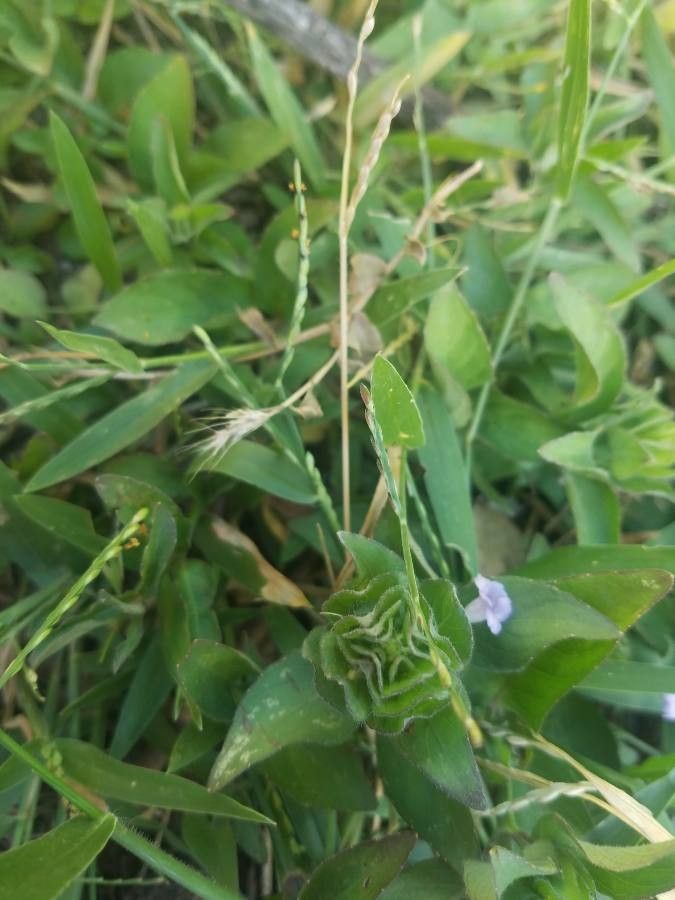
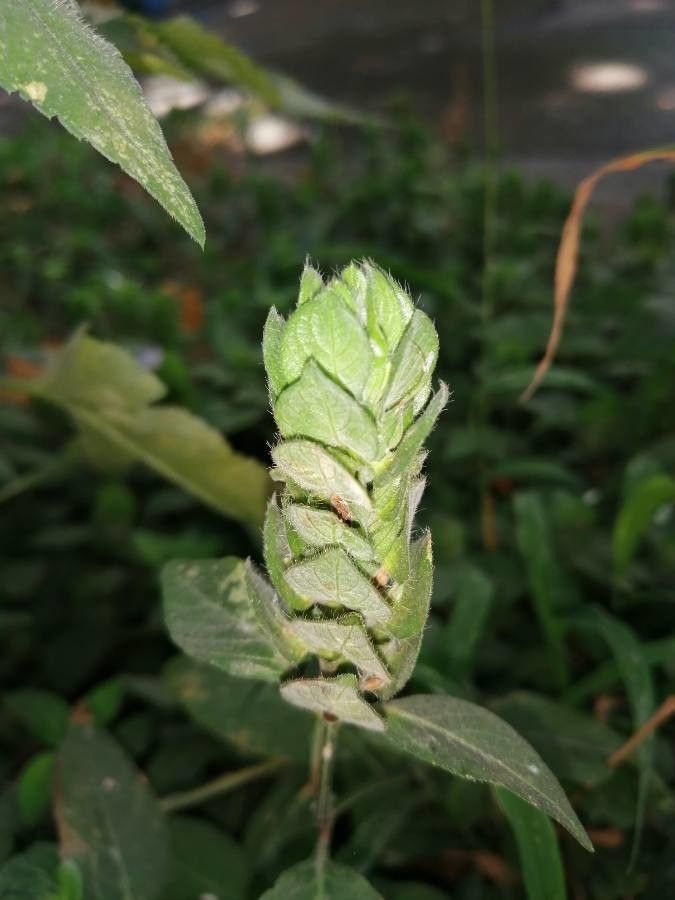
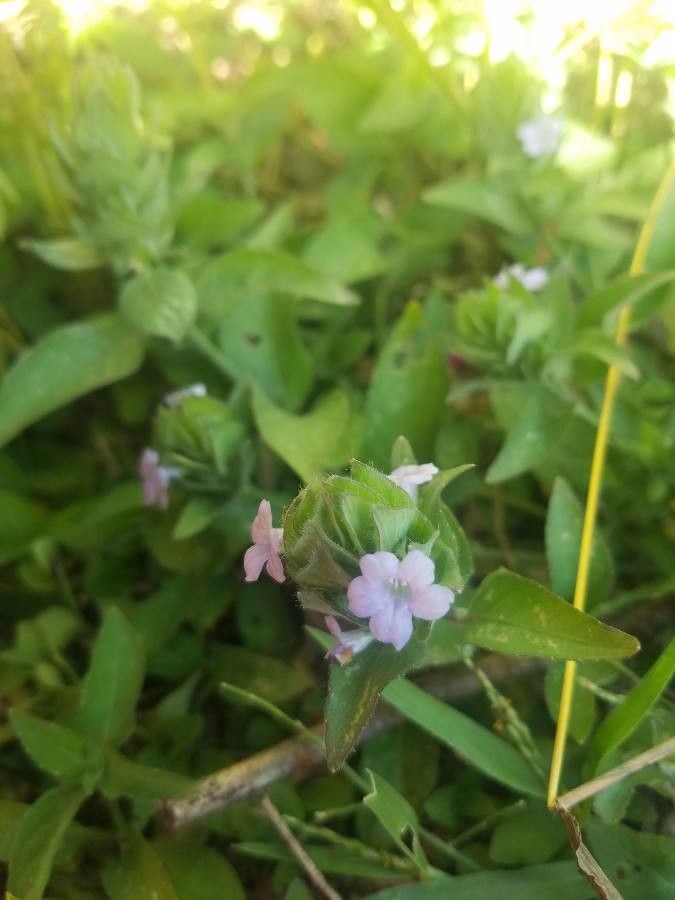
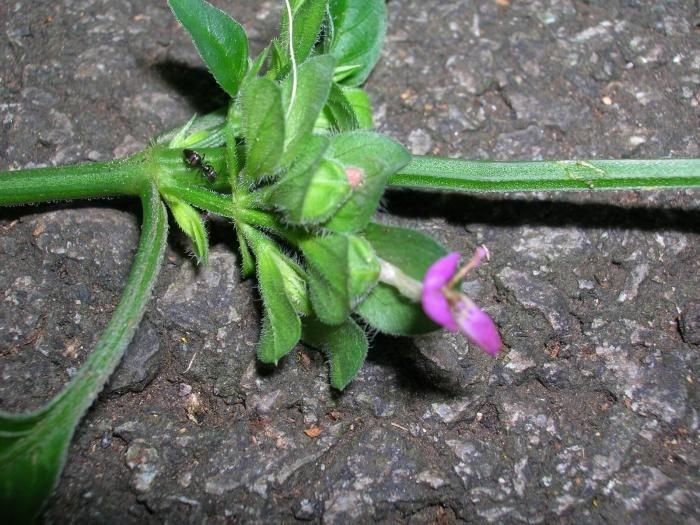
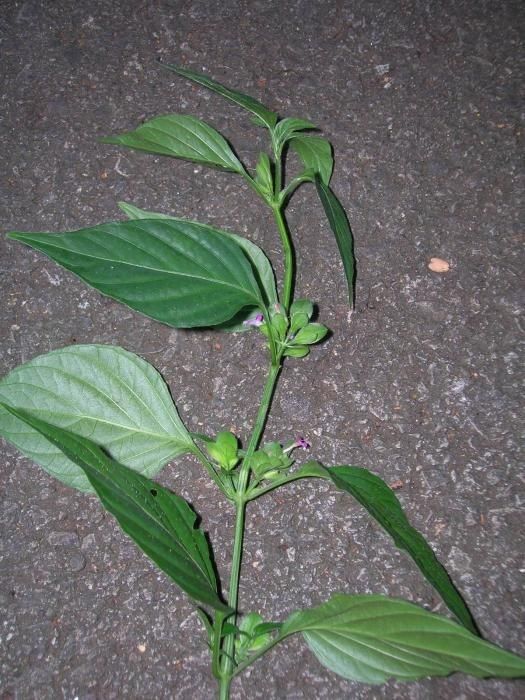
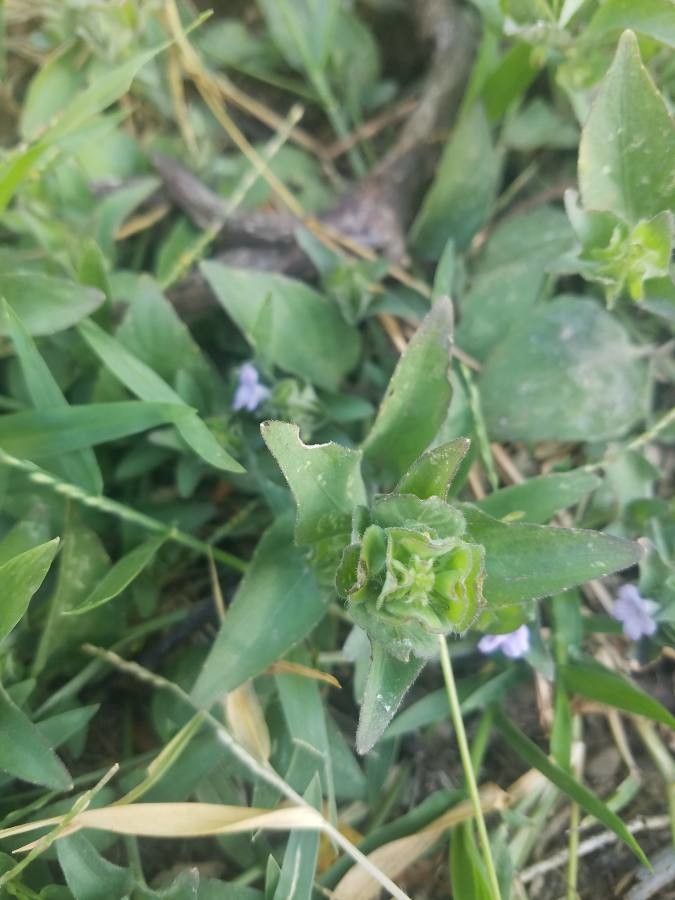
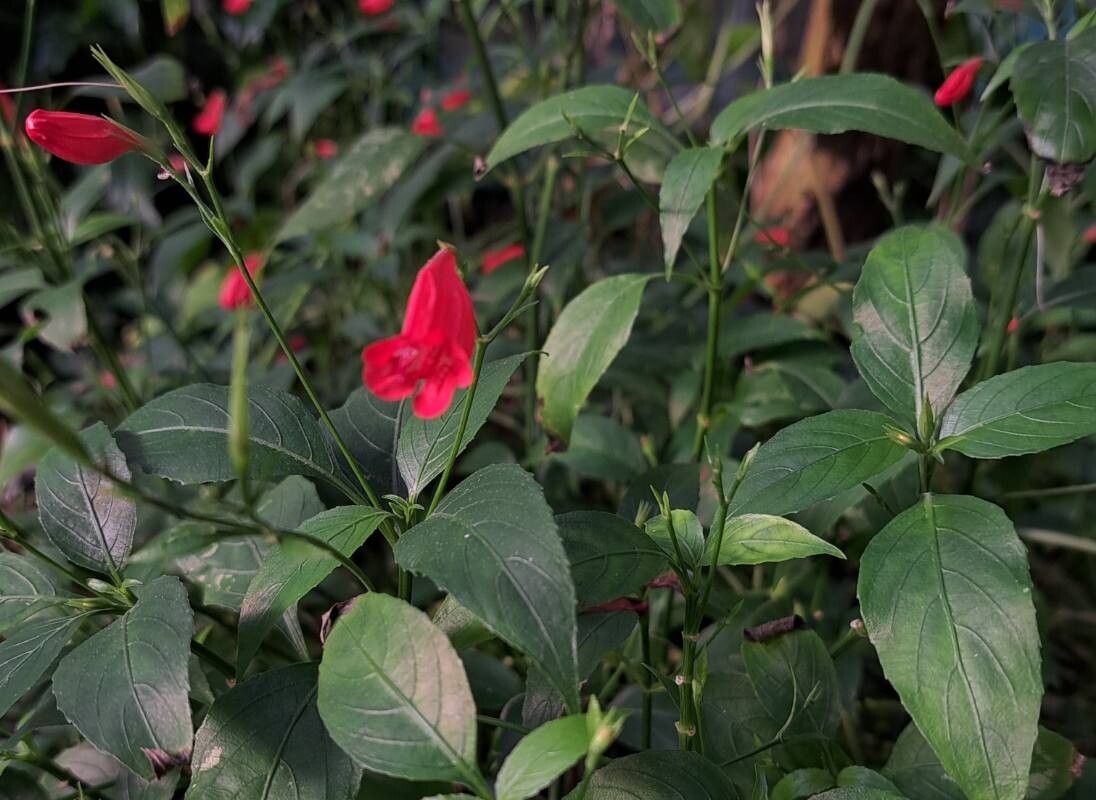
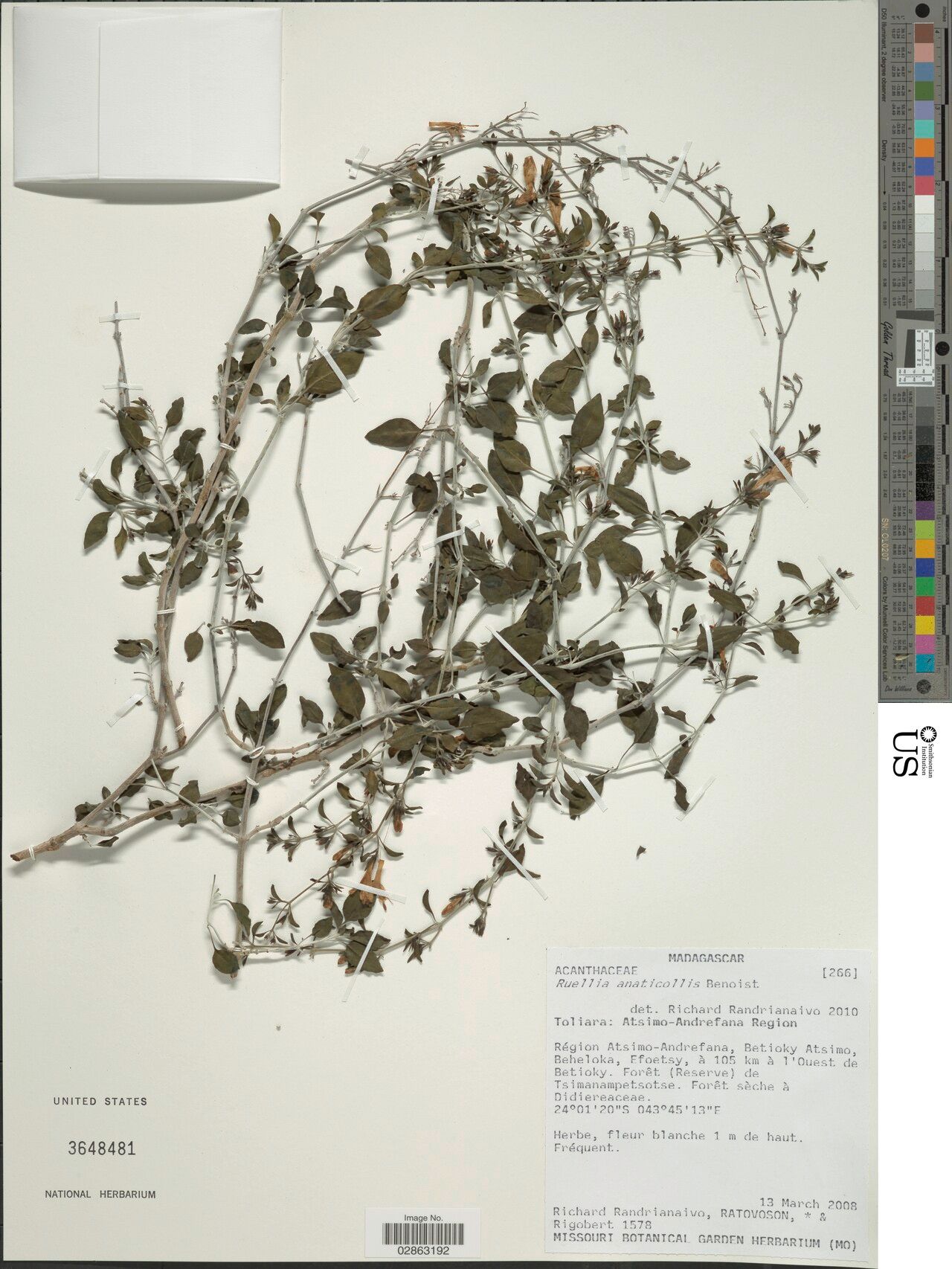
Ruellia blechum, the green shrimp plant or Browne's blechum, is a species of flowering plant in the family Acanthaceae. It is native to Mexico, the Caribbean, and northern and western South America, and has been introduced to Brazil, Taiwan, many Pacific islands, and the US states of Hawaii, Louisiana and Florida. Its popularity as an ornamental has led to it becoming invasive in places as far flung as Papua New Guinea.
Browne's blechum has good resistance to disease and is generally not prone to illnesses. Still, it can be vulnerable to pests and diseases found in its environment. Such infections are typically mild. Regarding care, this plant needs moderate maintenance. It should be pruned regularly to preserve a neat appearance and support healthy growth. Applying fertilizer can also help encourage flowering. Browne's blechum is appropriate for anyone with an outdoor area, like a garden or patio, and does not demand extensive care experience. It may need more attention when grown indoors.
How to keep Ruellia Blechum.
Light
Browne's blechum is native to habitats such as forest understories and rocky areas, where it grows in naturally shaded conditions. It prefers partial sun but can also tolerate full sun or full shade, demonstrating its adaptable and hardy nature.
Water
Browne's blechum flourishes in moist environments, preferring to be watered weekly, though it can tolerate brief dry periods. As an evergreen plant, it needs regular moisture to keep its foliage healthy throughout the year, both indoors and outdoors. This reflects its natural habitat in regions with consistent rainfall.
Temperature
Browne's blechum comes from tropical areas, which are generally warm and humid. Consequently, it is well suited to high heat and humidity. It does not tolerate sudden temperature shifts and prefers a steady thermal environment, so avoiding indoor temperature fluctuations is important. It typically cannot withstand cold and needs warmer temperatures to grow. If the ambient temperature falls too low, the plant may stop growing or even perish.
Fertilizer
Browne's blechum needs the most fertilizer during its active growth period, which takes place mainly in spring, summer, and early fall. Fertilizing supplies essential nutrients that the soil may lack, encouraging healthy root and stem growth and promoting attractive foliage, a notable trait of this particular plant.
Pruning
Browne's blechum is known for its lush foliage and purple flowers. To encourage growth and shape the plant, prune it from early to late spring. Use clean tools to remove dead stems, improve air circulation, and promote blooming. Make cuts just above a node. For specific pruning techniques tailored to Browne's blechum, consult detailed guides.
Botanical profile.
- Plant Type
- Herb
- Life Cycle
- Perennial
- Genus
- Ruellia
- Family
- Acanthaceae
- Hardiness Zone
- 8-11
- Mature Height
- 49 cm
- Mature Spread
- 30 cm to 46 cm
- Leaf Color
- Green
- Leaf Type
- Deciduous
- Flower Color
- White, Pink, Purple
- Flower Size
- 1.02 cm
- Bloom Time
- All year round
- Planting Time
- Spring, Summer, Autumn
- Harvest Time
- All year round
- Native Area
- Belize, Honduras, Mexico, Guatemala, Peru, Dominican Republic, Panama, Jamaica, Colombia, Bahamas, Cuba, Haiti, Bolivia, Venezuela, Guyana, El Salvador, Nicaragua, Ecuador, Suriname, Costa Rica
Other names.
Reader questions.
How should I water my Browne's blechum to keep it healthy?
To properly water the Browne's blechum, it's best to use filtered water at room temperature. Tap water may contain harmful particles, so using filtered water is important. Additionally, the water should be at room temperature or slightly warmer since the plant is accustomed to a warm environment and cold water can be a shock to its system. It's advised to avoid watering the plant from above, as this can cause problems with the foliage. Instead, water the soil directly with your filtered room temperature water until the soil is thoroughly soaked. This helps moisten the roots and allows them to continue spreading through the soil and collecting the necessary nutrients.
What are the sunlight requirements for Browne's blechum?
Browne's blechum requires about 3-6 hours of sunlight, commonly referred to as partial sun. It's crucial to observe how sunlight moves through your garden to find spots that offer a perfect balance of light and shade, ensuring the plants get an environment where they can thrive happily. Additionally, Browne's blechum can adapt to full shade conditions, thanks to its native habitats like forest understories or rocky areas that are naturally shaded.
What is Browne's blechum?
Browne's blechum, also known by its botanical name Ruellia blechum, is a plant species. Details about its essential features, symptoms it may cause or address, and any additional information are not provided in the data.
What do I do if I give my Browne's blechum plant too much or too little water?
Overwatering and underwatering can harm your Browne's blechum, but overwatering is more commonly an issue. When this plant gets too much water, its stems and leaves may wilt and turn yellow. Extended overwatering can also cause diseases like root rot, mold, and mildew, which can be lethal. Browne's blechum is relatively drought-tolerant, so underwatering is less likely, but still possible. In cases of underwatering, the leaves may become brittle and brown. It's crucial to promptly recognize signs of overwatering. Some diseases caused by overwatering, such as root rot, may be irreversible if not addressed promptly. If you notice early signs of overwatering, reduce watering immediately and check the soil's drainage. If it drains poorly, replace it with a loose, well-draining potting mix. Conversely, if signs indicate insufficient water, increase watering frequency until the signs resolve.
How can artificial lighting benefit indoor plants like Browne's blechum?
Indoor plants, including Browne's blechum, can significantly benefit from artificial lighting, especially when natural sunlight is insufficient. Artificial lights, such as LED lights, can be customized to provide specific wavelengths needed for optimal plant growth. For instance, full sun plants require 30-50W/sq ft of artificial light, partial sun plants need 20-30W/sq ft, and full shade plants need 10-20W/sq ft. The light source should be placed 12-36 inches above the plant and kept on for 8-12 hours per day to mimic natural sunlight conditions.
How frequently do I need to water my Browne's blechum?
If your Browne's blechum is in a pot, the most precise way to determine if it needs water is to check the soil moisture by sticking your finger into the soil. If the top two to three inches of soil are dry, it's time to water. For Browne's blechum grown outdoors in the ground, you can use a similar method to test the soil. Again, if the top few inches of soil have dried out, it's time to water. In the spring and early fall, watering once a week is usually sufficient. However, during extremely hot weather, you may need to water twice or more per week. It's important to note that mature, well-established Browne's blechum plants are usually drought-tolerant.
What are symptoms of insufficient light in Browne's blechum?
When Browne's blechum is grown indoors under insufficient light, it may exhibit several symptoms, including smaller new leaves, leggy or sparse growth, faster leaf drop, slower or no new growth, lighter-colored new leaves, chlorosis, sunscald, leaf curling, wilting, and leaf scorching. These symptoms indicate that the plant is not receiving enough sunlight to perform essential processes like photosynthesis efficiently.
How much water does my Browne's blechum plant need?
To properly water your Browne's blechum, don't be afraid to give it a generous amount of water. Check the top 2-3 inches of soil and if they are dry, it's time to water thoroughly. Make sure to saturate the soil completely and allow excess water to drain out through the holes in the pot. If you don't see any excess water draining, it means you haven't watered enough. However, be careful not to let water accumulate in the soil, as this can be harmful to the plant. Also, if water doesn't drain well from the pot, it suggests that the soil is not draining properly and this can negatively affect the plant's health. If the plant is outside, about 1 inch of rain per week should be sufficient.
What solutions can address light deficiency issues in Browne's blechum?
To combat light deficiency in Browne's blechum, one can gradually move the plants to sunnier spots, increasing direct sunlight exposure to 3-6 hours daily. For larger or immovable plants indoors, consider using artificial lighting, such as desk lamps or professional plant grow lights, for at least 8 hours daily. Outdoors, gradually adapt your plants to sunnier locations to prevent sunburn. Minimize obstructions by pruning trees or moving plants to sunnier spots. For smaller plants, consider transplanting during the dormant period to a location with better sunlight and drainage. Note that while parts of the plant affected by low light may not recover, new growth will be healthier after improving light conditions.
How do I water my Browne's blechum as it grows?
The water needs of the Browne's blechum can vary at different growth stages. In the early years or after transplanting, it requires more water to support root development for future growth. As the plant matures, it will need less water. Additionally, during the bloom period, the Browne's blechum may require extra water due to the water demands of flower development.
How should I water my Browne's blechum in different seasons?
The Browne's blechum has different water needs depending on the season. In the hottest months of the year, it will need the most water. During summer, you may need to water it more than once a week, depending on how quickly the soil dries. However, in winter, the plant goes into a dormant phase and requires much less water. In fact, it may not need any water at all during the winter months. If you do choose to water it during winter, make sure to only do so about once a month. Overwatering during this time can increase the risk of disease for your Browne's blechum.
What's the difference between watering my Browne's blechum inside and outside?
When growing Browne's blechum indoors, gardeners who don't live in temperate and tropical regions should keep in mind that soil in a container can dry out faster than ground soil. Additionally, factors like air conditioning units can further contribute to the need for more frequent watering compared to if the plant was planted outside. In such cases, the plant may require less watering if it receives regular rainfall. However, for those growing Browne's blechum indoors, relying on rainwater to soak the soil is not an option, so more frequent watering will be necessary.