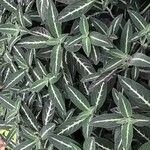
Ruellia makoyana
Monkey plant · Velvet plant
Description
Source: leafsnapRuellia makoyana, commonly known as the trailing velvet plant or monkey plant, is a popular houseplant native to Brazil. This low-growing perennial, belonging to the Acanthaceae family, can reach heights of up to 30 cm. The plant is characterized by its dark green leaves with prominent veins and a soft, velvety texture on both sides. One of the most striking features of Ruellia makoyana is its beautiful flowers. These trumpet-shaped blooms are a deep purple color with a white throat and appear in clusters throughout the year, adding color and vibrancy to any indoor space. Ruellia makoyana thrives in bright but indirect light and well-draining soil that is kept moist but not waterlogged. While it can tolerate some drought, it does not fare well in overly wet conditions. This easy-to-care-for plant is an excellent addition to any indoor garden and works wonderfully in hanging baskets on patios or balconies due to its trailing habit. With proper care, Ruellia makoyana can thrive for many years indoors, providing year-round beauty!
Care Guide
💧 Water Every 7 days
The monkey plant, native to humid tropical regions, flourishes in high humidity and consistently moist soil. To keep it healthy, water it once a week. For indoor settings, regular misting is also helpful to mimic its natural environment, supporting vibrant growth during its active season.
What should I do if I give my Monkey plant too much or too little water?
When caring for your Monkey plant, both overwatering and underwatering can harm its health. However, overwatering is a more common issue. If your Monkey plant receives too much water, its stems and leaves may wilt and turn yellow. Overwatering for a long time can also cause diseases like root rot, mold, and mildew, which can kill the plant. Underwatering is less likely because the Monkey plant can tolerate drought. But if it happens, the leaves may become brittle and brown. It's important to notice signs of overwatering quickly. Some diseases from overwatering, like root rot, can't be corrected if you wait too long. If you see early signs of overwatering, reduce watering immediately. Consider replacing the soil if it drains poorly. On the other hand, if your Monkey plant lacks water, simply water it more regularly until the signs disappear.
How much should I water my Monkey plant?
If your Monkey plant is in a pot, you can determine if it needs water by putting your finger in the soil. If the top two to three inches of soil are dry, it's time to water it. When growing the Monkey plant outdoors, you can also use this method. Once the top few inches of soil have dried out, it's time to water it. Typically, during spring and early fall, watering once a week should suffice. However, during very hot weather, you may need to water it two or more times a week. It's important to note that mature Monkey plants are quite resilient and can withstand drought.
How much water does my Monkey plant require?
To properly water your Monkey plant, don't hold back on the amount of water you give it. Wait until the top two to three inches of soil are dry and then give it a thorough watering. Make sure to water it enough so that the soil is completely soaked. You'll know you've added enough water when you see excess water flowing out of the drainage holes at the bottom of the pot. If you don't see any excess water draining, you likely didn't give the plant enough water. However, be careful not to let the water accumulate in the soil as this can harm the plant. On the other hand, if you don't see any water draining from the pot, it may mean that the soil doesn't drain well, which is not good for the plant's health. Lastly, if the plant is outside, one inch of rain per week will be sufficient.
How do I water my Monkey plant as it grows?
The amount of water the Monkey plant needs can vary depending on its growth stages. In the first few years of its life or after transplanting, it requires more water than usual. During these stages, the plant focuses on developing new roots that will support future growth, so they need extra moisture. As the plant matures, it will require less water. Another stage that may require more water is when the plant is blooming. Flower development utilizes a significant amount of moisture, so it's essential to provide adequate water during this time.
How do I water my Monkey plant throughout the year?
The Monkey plant has its highest water needs in the hottest months, such as during the height of summer. Depending on how fast the soil dries out, you may need to water it more than once per week during this time. On the other hand, during winter, the plant enters a dormant phase and requires much less water than usual. In fact, you may not need to water the plant at all during the winter months. However, if you choose to water it during this time, make sure to do so no more than about once per month. Overwatering during winter increases the risk of the Monkey plant getting sick.
☀️ Light Partial sun
Monkey plant thrives in areas with moderate sunlight, though it can adjust to abundant sun. Its native environment features diffused light that promotes healthy growth. Excessive sunlight can stress the plant, while insufficient light can impede its development.
What are the sunlight requirements for a Monkey Plant?
The Monkey Plant requires partial sun, about 3-6 hours of sunlight per day, but it can also thrive in full sun conditions, which mean more than 6 hours of sunlight daily. It's essential to observe how sunlight moves through your garden to find spots that offer a balance of light and shade, ensuring optimal growth conditions for your Monkey Plant. Overexposure or insufficient light can stress the plant, hindering its development.
What essentials should be considered for optimal growth of a Monkey Plant?
For optimal growth, a Monkey Plant flourishes in moderate sun exposure but can adjust to generous sunlight, thanks to its native habitat known for diffused light. When natural sunlight is not enough, especially in winter or darker spaces, artificial lighting becomes crucial. LED lights are recommended because they can provide specific light wavelengths needed by plants. The amount of artificial light required varies: 30-50W/sq ft for full sun plants, 20-30W/sq ft for partial sun, and 10-20W/sq ft for full shade plants. The light should be placed 12-36 inches above the plant, mimicking natural sunlight for 8-12 hours daily.
What are common symptoms of inadequate light in Monkey Plants?
Symptoms of inadequate light in Monkey Plants include smaller new leaves, leggy or sparse growth, faster leaf drop, slowed or stopped growth, lighter-colored or irregularly patterned new leaves indicating chlorophyll and nutrient deficiency. Overexposure can lead to chlorosis (yellowing leaves due to chlorophyll breakdown), sunscald (damaged leaves/stems from intense light), leaf curling (a defense mechanism against sunlight), wilting (loss of turgor pressure due to excessive water loss), and leaf scorching (brown, dry edges on leaves from too much sun).
How can I address light-related issues in Monkey Plants?
To optimize growth for indoor Monkey Plants, gradually increase sun exposure to 3-6 hours daily or use artificial lighting for plants that can't be moved easily, ensuring at least 8 hours of light. Outdoors, move plants to sunnier spots weekly to prevent sunburn. If the plant is small, consider transplanting it during its dormant period in late winter or early spring to a location with more sunlight and good drainage. Prune any trees or shrubs blocking sunlight to your outdoor plants. Although parts of the plant damaged by poor light may not recover, new growth should be healthy with improved light conditions.
🌡️ Temperature 20–37.8°C
The monkey plant comes from moderately temperate areas and does best at temperatures of 68 to 100.4 °F (20 to 38 ℃). It prefers warmer indoor conditions during the season, but a slight temperature reduction in winter is acceptable.
What are the ideal conditions for growing a Monkey Plant?
The Monkey Plant, known botanically as Ruellia makoyana, thrives in environmentally moderate regions, preferring a temperature range between 68 to 100.4 °F (20 to 38 °C). It's extremely heat-loving and does not tolerate cold temperatures well. During seasonal changes, it flourishes in warmer indoor settings, although a slight decrease in temperature during winter is tolerable. To support its growth, it's ideal to maintain temperatures above 20°C, especially through the colder months. For outdoor-grown Monkey plants, it's advised to bring them indoors during autumn, placing them near a bright window but away from direct heat sources to avoid harm.
How do you care for a Monkey Plant during low temperature conditions?
Monkey Plants prefer warm environments and struggle with low temperatures, thriving best when the mercury stays above 20°C. During winter, it's crucial to keep the temperature above 0°C to avoid damage. Exposure to temperatures below -5°C can result in lighter leaf color, gradually turning brown or black after frost damage, accompanied by symptoms such as wilting and drooping. To safeguard the Monkey Plant in cold conditions, trim off frost-damaged parts and move the plant indoors to a warm spot, preferably near a south-facing window for ample sunlight. Avoid placing it near heaters or air conditioning vents to prevent air dryness.
What should you do if a Monkey Plant is exposed to high temperatures?
During the summer, it's important to ensure that a Monkey Plant's surrounding temperature doesn't exceed 38°C. Exposure to temperatures above 43°C can cause the leaves to lighten in color and increase susceptibility to sunburn. To care for a Monkey Plant in high temperatures, trim away any sunburned and dried-up parts. Relocate the plant to a spot shielded from the midday and afternoon sun. Watering the plant in the morning and evening can help keep the soil moist, further protecting it from the adverse effects of high temperatures.
💨 Humidity
🪴 Soil 6-7
🌱 Fertilizer
Proper fertilization is essential for Monkey plant's health and appearance. Fertilize Monkey plant during summer, repeating monthly throughout the season. Nutrients fuel growth and maintain plant components. Fertilization improves Monkey plant's flower display, ensuring the best blooms.
Why should I put fertilizer on my Monkey plant?
Fertilizer and soil nutrients are like fuel for your Monkey plant's growth. Plants use these nutrients to develop new plant material and keep themselves in good condition. For Monkey plants, fertilization is especially important to have beautiful flowers, which are the main attraction. Gardeners should prioritize fertilization to ensure the best blooms.
When should I fertilize my Monkey plant?
The Monkey plant goes through two main phases each year. The first phase is the dormant phase, which occurs during winter. During this phase, the plant experiences minimal new growth. The second phase is the active growth phase, which takes place in spring and fall. This is when fertilization is most important for your Monkey plant. It is recommended to start fertilizing in the spring and continue once a month throughout spring and most of the summer. As fall approaches, you can gradually decrease the frequency of fertilization.
When is it not a good idea to fertilize my Monkey plant?
To support the growth of Monkey plants without risking root burn, it is important to provide extra nutrients during the active growth stage in spring and summer. However, fertilizing should be stopped during the fall and winter when the plant enters its dormant stage.
What kind of fertilizer does my Monkey plant need?
To maximize the growth of your Monkey plant, it is best to use a fertilizer with a balanced mix of three main plant nutrients, with slightly more phosphorus. Alternatively, you can enhance your Monkey plant's soil by adding organic materials like compost, worm castings, and manure. Different types of fertilizers are available, but liquid or powdered ones tend to be the most effective for Monkey plants. Regardless of the type you choose, make sure to dilute the fertilizer and apply it while watering your Monkey plant.
How do I make my Monkey plant grow better?
1. Find a suitable fertilizer and learn the ideal fertilization schedule for your Monkey plant. 2. Learn how to apply your fertilizer by mixing the liquid fertilizer with water before applying it to the soil. 3. Follow the manufacturer's guidance on how to feed your plants, as different fertilizers may have different directions. 4. The instructions should include information on how to properly dilute the fertilizer to prevent overfertilization. 5. Mixing your fertilizer in water is an easy process. 6. Once the mixture is ready, simply pour it into the soil where your Monkey plant lives.
🪴 Pot & Repot 2-3 years
When repotting a Monkey plant, pick a pot 1–2 inches (2.5–5.1 cm) larger that provides ample drainage. Use a well-draining potting mix. Repot in spring or fall, making sure the root ball sits slightly lower than the rim of the flower pot. Water thoroughly after repotting and place the plant in a warm spot with indirect sunlight.
✂️ Pruning
The monkey plant is a tropical perennial that benefits from pruning between early spring and late winter. To maintain its shape and health, trim away any unhealthy stems. Light pruning encourages denser growth and more blooms. However, avoid heavy pruning during the blooming period to reduce stress and ensure the plant remains vibrant and healthy.
🌿 Propagating
🐛 Diseases & pets
☠️ Toxicity
Characteristics
- Plant Type
- Herb
- Life Cycle
- Perennial, Annual
- Genus
- Ruellia
- Family
- Acanthaceae
- Hardiness Zone
- 9-11
- Mature Height
- 61 cm
- Mature Spread
- 46 cm
- Leaf Color
- Green, Gray, Variegated, Silver, Purple
- Leaf Type
- Evergreen
- Flower Color
- Pink, Purple
- Flower Size
- 2.54 cm to 5.08 cm
- Bloom Time
- All year round
- Planting Time
- Spring, Summer, Autumn
- Harvest Time
- All year round
- Native Area
- Brazil