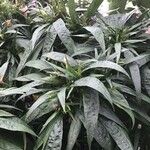
Ruellia simplex
اطلسی مکزیکی · Mexican petunia · Spanish-ladies · Britton's Wild Petunia · Mexican blue-bells
Description
Source: leafsnapRuellia simplex, often referred to as Mexican petunia or Britton's wild petunia, is a perennial flowering plant native to Mexico and South America. A member of the Acanthaceae family, it is widely cultivated as an ornamental plant in gardens and landscapes. The plant can grow up to 3 feet tall and features lance-shaped leaves that range from 2 to 6 inches in length. Its trumpet-shaped flowers, which boast five petals, come in shades of purple, pink, or white. These blooms appear from summer through fall, attracting bees, butterflies, and hummingbirds. Mexican petunias thrive in full sun but can also tolerate partial shade. While they prefer moist soil, they can endure drought conditions once established. The plants are easy to propagate from both seeds and cuttings. However, while Mexican petunias are beautiful additions to gardens, they can become invasive if not properly managed, as they spread rapidly through underground rhizomes. To control their growth, it is recommended to remove spent flowers before they produce seeds and to divide the plants every few years. Overall, Ruellia simplex is a delightful addition to any garden. Its vibrant blooms attract pollinators and require minimal care, making it an ideal choice for novice gardeners.
💡 The Mexican petunia was named after the French botanist Jean de la Ruelle. In Florida, it is considered invasive, likely having been introduced as an ornamental plant before it became a weed. As an alternative for ornamental purposes, a different species called Ruellia caroliniensis is available in Florida. This alternative species requires less water and features smaller flowers.
🌳 Although the Mexican petunia is mainly appreciated for its ornamental appeal, it fulfills an important ecological function as a larval host for several butterfly species, including the Common Buckeye, creating a living tapestry of fluttering colors. Its low maintenance needs and rapid growth make it an excellent choice for ecological landscaping to support butterfly populations and help maintain a balanced ecosystem.
🎭 Bitterness, Fury, Making peace, Your presence comforts me.
Care Guide
💧 Water Every 7 days
Originating from humid environments, the Mexican petunia thrives with consistent moisture and benefits from a watering schedule of twice a week for optimal growth. While it is typically grown outdoors, the Mexican petunia can also adapt to indoor settings if the proper humidity is maintained. Although it displays moderate drought tolerance and can withstand short dry periods, regular watering is recommended to ensure its best performance.
When Should I Water My Mexican Petunia?
Proper and timely watering is crucial for the health and development of the Mexican Petunia (Ruellia simplex), influencing its growth, flower production, and disease resistance. The plant needs watering when the top 1 to 2 inches of soil feels dry to the touch. Signs that indicate the need for watering include wilted, lackluster leaves that lose their vibrant color and tend to fade or yellow. It's particularly important to water the plant during its pre-flowering stage to prevent bud drop and ensure full flowering. Mexican Petunia requires more water during periods of warm temperatures and high sunlight exposure. However, watering too early when the soil is moist can lead to root diseases, and watering too late can cause wilting or even plant death due to dehydration.
How Should I Water My Mexican Petunia?
To water a Mexican Petunia effectively, you can use a watering can with a long spout to accurately water the base of the plant without wetting the leaves, helping to control water flow and prevent overwatering. Bottom watering is another beneficial technique; place the plant pot in a tray of water for 15-30 minutes, allowing it to absorb moisture from the bottom up, then remove any remaining water to prevent waterlogging. Employing a moisture meter can help you understand the plant's watering needs more accurately, avoiding over- or under-watering. It's important to avoid wetting the foliage as it can increase the risk of diseases and to maintain a consistent watering schedule, adjusting according to seasonal changes and the plant’s growth stages.
How Much Water Does Mexican Petunia Really Need?
The Mexican Petunia, originating from tropical environments, prefers moist but well-drained soil, matching its moderate water needs. A good practice is to water thoroughly until excess water drains out, indicating sufficient hydration. Pot size and plant size affect water quantity needed; typically, a pot 12 inches deep is suitable for mature plants. Observing the plant’s wellness, such as bright and firm leaves, can guide you regarding proper hydration. Excessive watering can lead to root rot, whereas insufficient watering may result in wilting and leaf drop. It is crucial to find a balance to maintain plant health.
What Kind of Water is Best for Mexican Petunia?
Mexican Petunia thrives best with rainwater due to its softness and lack of chemicals found in tap water. If using tap water, let it sit out for 24 hours before watering to evaporate chlorine, as the plant is sensitive to chlorine and fluoride, which can cause leaf burn or wilting. Over time, hard tap water may also introduce excessive minerals to the soil, leading to nutrient imbalances. Treating tap water by dechlorination or using filtered water can mitigate these issues. For watering, lukewarm to room temperature water is optimal to avoid shocking the plant’s system.
How Do Mexican Petunia's Watering Needs Change with the Seasons?
Seasonal changes significantly influence the watering needs of Mexican Petunia. During its active growth phase in spring, consistent soil moisture is vital. In summer, higher temperatures and evaporation rates may necessitate more frequent watering, while mulching can aid in retaining soil moisture. Watering should be gradually reduced in autumn as the plant prepares for dormancy. In winter, the plant requires minimal moisture; water sparingly, allowing the topsoil to dry out between waterings to prevent root rot. Overall, adjusting watering habits according to the season is key to maintaining plant health.
☀️ Light Full sun
Mexican petunia thrives best in sun-rich zones for the most favorable growth. While it can survive in less bright areas, continual sunlight exposure promotes a healthier growth cycle. Its native habitat reflects this light level, boosting its liveliness. Inadequate light might hinder its growth, while too much sunlight could lead to the paling of the leaves.
What are the sun requirements for Mexican petunia?
Mexican petunia thrives best when exposed to optimal sunlight conditions which vary depending on its setting. Full sun exposure means the plant should receive above 6 hours of sunlight daily, while partial sun refers to about 3-6 hours of sunlight. It's crucial to observe the movement of sunlight through your garden to select the ideal spots for planting, ensuring a suitable balance of light and shade that best supports the plant's growth and development.
How does sunlight affect the growth of Mexican petunia?
Sunlight plays a significant role in the vigorous growth and health of Mexican petunia. This plant prefers abundant sunlight, mirroring its native habitat conditions, to foster optimal growth. Although it can survive in less illuminated areas, maximum exposure to sunlight encourages healthier development. A lack of sufficient light might decelerate growth, and too much direct exposure can lead to paler leaves. For plants kept indoors where natural sunlight may be inadequate, especially during winter or in less sunny areas, implementing artificial lighting is key to promoting better growth. Artificial lights, particularly LED ones, should be adjusted to provide the necessary wavelengths and intensity (30-50W/sq ft for full sun plants, 20-30W/sq ft for partial sun plants, and 10-20W/sq ft for full shade plants), positioned 12-36 inches above the plant, and be kept on for 8-12 hours a day to mimic natural daylight conditions.
What symptoms indicate light deficiency in Mexican petunia?
Light deficiency in Mexican petunia can lead to several noticeable symptoms signaling the need for better lighting conditions. These symptoms include the production of smaller leaves than usual, leggy or sparse growth with extended spaces between leaves or branches, early leaf drop to conserve energy, and a general halt in new growth indicating the plant has entered a survival state. Furthermore, new leaves may appear pale or develop irregular color patterns due to insufficient light, a sign of lack of chlorophyll and essential nutrients. Addressing these symptoms early by providing adequate lighting can prevent more severe damages like chlorosis, sunscald, leaf curling, wilting, and leaf scorching which indicate adverse effects from too much sunlight or improperly adjusted artificial lighting.
How can light-related issues in Mexican petunia be solved?
To address light-related issues in Mexican petunia, a gradual adjustment to the plant's light exposure is recommended. For indoor settings, progressively relocating plants to sunnier spots or using artificial lighting, like a desk lamp or professional grow lights for at least 8 hours daily, can greatly benefit the plant. Outdoor plants should also be acclimatized by slowly moving them to areas with more sunlight each week, avoiding abrupt changes to prevent sunburn. If sunlight is blocked by environmental factors like trees, consider pruning or even relocating smaller plants to sunnier locations. It’s important to note that while affected parts of the plant might not recover, new growth will be healthy with improved light conditions.
🌡️ Temperature 15–37.8°C
Mexican petunia primarily grows in temperatures between 59 and 100 ℉ (15 to 38 ℃), yet it can withstand temperatures as low as 40 ℉ (4.4 ℃). It flourishes in hot conditions and especially appreciates temperatures about 77 ℉ (25 ℃). In the event of cold weather, it is advisable to relocate the plant indoors or shield it to safeguard it from frosty temperatures.
What is the ideal temperature range for Mexican petunia?
The ideal temperature range for Mexican petunia (Ruellia simplex) is between 59 to 100°F (15 to 38°C), with a preference for temperatures around 77°F (25°C). This plant thrives in warm weather and has some tolerance to cold, being able to survive temperatures as low as 40°F (4.4°C). However, if temperatures are expected to drop below -5°C, temporary protective measures should be taken, such as wrapping the plant with materials to keep it warm. After the cold spell, these protections should be removed to avoid any damage to the plant.
How does Mexican petunia respond to low temperatures, and what are the recommended protections?
Mexican petunia has moderate tolerance to low temperatures and performs best when kept above 15°C. It can survive winters with temperatures above -5°C, but when the temperature falls below -10°C, the plant may show symptoms like drooping leaves, which could recover in mild cases but may wilt and fall off in severe conditions. To protect the plant from cold, it's advised to trim off frost-damaged parts, wrap the plant with non-woven fabric or cloth, and set up a wind barrier to shield it from cold winds.
How does Mexican petunia react to high temperatures, and how can you mitigate heat stress?
In summer, it's important to ensure that the Mexican petunia does not remain in temperatures above 38°C, as exceeding 43°C can lead to symptoms such as lightening of leaf color, dry and withered leaf tips, curled leaves, and increased susceptibility to sunburn. To mitigate heat stress, trim away sunburned and dried parts of the plant, move it to a shaded location or use a shade cloth to protect it from the midday and afternoon sun, and water the plant in the morning and evening to maintain soil moisture.
💨 Humidity normal (40-60%)
This plant will thrive in moderate humidity, which is probably the level in your home. However, misting it a few times a week can be very beneficial. Make sure the room has good ventilation.
🪴 Soil 5-7
🌱 Fertilizer
Usually, a single dose of fertilizer applied in spring is adequate for Mexican petunia, though you can enhance growth by fertilizing it several times. It's recommended to feed it once every 30 to 45 days. The process of fertilization improves the look and functionality of the leaves, encouraging a uniform color and a healthy feel. Moreover, it spurs the growth of roots and the absorption of nutrients, which contributes to the enduring health of the plant.
Why should I add plant food to my Mexican petunia?
The main structure of the Mexican petunia is made up of its leaves. Fertilization is an important way to ensure that the leaves look great and function properly. Proper fertilization helps the Mexican petunia maintain consistent leaf color and a healthy texture. Additionally, fertilization aids in root development and maintenance. This means that fertilization not only keeps the plant healthy in the present, but also helps it absorb nutrients from the soil more effectively in the future.
When should I put fertilizer on my Mexican petunia?
If you grow your Mexican petunia outdoors, it will start growing again in early spring. This is when you should fertilize it for the year. Usually, one application of fertilizer is enough. But if you want it to grow more, you can fertilize it multiple times throughout spring and early summer. In this case, feed it every month or so.
When should I not give fertilizer to my Mexican petunia?
During the late fall and winter, your Mexican petunia goes into a dormant phase where it stops growing. During this time, avoid fertilizing it. In the spring and summer, if you choose to fertilize, start reducing the amount of fertilizer as summer approaches because the petunia's growth rate will slow down. It's always best to not fertilize the petunia during very hot weather or when the soil is extremely dry as this can cause stress and premature death.
What kind of plant food does my Mexican petunia need?
Choosing the right fertilizer for a Mexican petunia is actually quite simple. These plants thrive on a garden fertilizer that contains equal amounts of nitrogen, phosphorus, and potassium - usually referred to as a 10-10-10 ratio. It's best to avoid fertilizers with high nitrogen levels. Most of the recommended fertilizers for Mexican petunias are in granular form, and they should be slow-release and easy to apply to the soil. Additionally, feeding your Mexican petunia with organic soil amendments like compost can be beneficial.
How do I make my Mexican petunia plant grow better?
To ensure the healthy growth of your Mexican petunia, wait until you see the first leaves emerging in early spring. Once this happens, apply a slow-release fertilizer with a balanced formula to the soil surrounding the base of the plant. If desired, you can repeat this process later in the season. Remember to apply the fertilizer to the soil, not the plant itself, which may require moving some leaves aside. Additionally, it is beneficial to water your Mexican petunia before and after fertilizing.
🪴 Pot & Repot 2-3 years
For repotting a Mexican petunia, select a pot that is 1-2 inches (2.5-5 cm) larger and has sufficient drainage. Opt for a potting mixture with good drainage capabilities. Carry out the repotting process during spring or autumn, and make sure the root ball is positioned slightly below the rim of the flower pot. Make sure to water it properly after the repotting and keep it in a warm location that receives indirect sunlight.
✂️ Pruning
The Mexican petunia is a resilient perennial known for its vibrant purple flowers and its tendency to spread quickly. To manage its growth and encourage blooming, it's best to prune it from early to late spring. Regular pruning not only helps control its spread but also improves air circulation and overall plant health, maintaining a tidy appearance in your garden.
🌿 Propagating
🐛 Diseases & pets
☠️ Toxicity
Characteristics
- Plant Type
- Herb
- Life Cycle
- Perennial
- Genus
- Ruellia
- Family
- Acanthaceae
- Hardiness Zone
- 8-11
- Mature Height
- 91 cm
- Mature Spread
- 30 cm to 61 cm
- Leaf Color
- Green, Purple
- Leaf Type
- Evergreen
- Flower Color
- Purple, Lavender
- Flower Size
- 7.62 cm
- Bloom Time
- All year round
- Planting Time
- Spring
- Harvest Time
- All year round
- Native Area
- Uruguay, Cuba, Paraguay, Argentina, Haiti, Mexico, Honduras, Guatemala, Bolivia, Venezuela, Peru, Brazil, Dominican Republic, Costa Rica, Jamaica