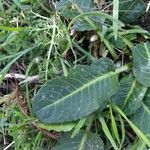
Rumex pulcher
Fiddle dock · Red dock · Fiddle-leaf dock
Description
Source: leafsnapRumex pulcher, commonly known as fiddle dock or beautiful dock, is a perennial herbaceous plant in the Polygonaceae family. Native to Europe and western Asia, it has been introduced and naturalized in North America. The plant can grow up to 1 meter tall and features a basal rosette of long, narrow leaves with slightly wavy edges. The leaves of Rumex pulcher are dark green, with prominent veins on their undersides. Its erect stem supports branching inflorescences that bear small clusters of greenish flowers from June to August. These flowers eventually give way to small, triangular seeds dispersed by the wind. Rumex pulcher prefers moist soils in full sun or partial shade but can tolerate dry conditions once established. It is often found along roadsides, in meadows, riverbanks, or disturbed areas. The plant has been used medicinally for centuries due to its high tannin content, which has astringent properties useful for treating diarrhea and other gastrointestinal disorders. Additionally, it contains anthraquinones, which have laxative effects when consumed in large quantities. Overall, Rumex pulcher is an attractive ornamental plant with medicinal properties, making it an interesting addition to any garden or landscape design project.
🌳 Often written off as just a weed, fiddle dock is valued by sheep and goat herders for its forage value, particularly when other food sources are limited. Its hardiness and modest nutritional value make it a dependable supplemental feed in pastoral systems.
Care Guide
💧 Water Every 7 days
Fiddle dock thrives in consistently moist soil, but it's important to avoid waterlogging the plant. To maintain its vigor, water it weekly. Although it primarily flourishes outdoors, it remains resilient throughout the growing season. Careful irrigation is essential to support its robust growth.
How should I water my Fiddle dock?
To properly water the Fiddle dock plant, follow these guidelines for optimal care. Firstly, it is recommended to use filtered water at room temperature. Tap water may contain harmful particles that can negatively impact the plant's health. Additionally, considering the Fiddle dock plant's origin in warm environments, it is crucial to avoid shocking it with cold water. Instead, use water that is at room temperature or slightly warmer. Another important tip is to refrain from overhead watering, as it can lead to issues with the foliage. Instead, focus on thoroughly soaking the soil with your filtered room temperature water. This method provides numerous benefits, such as ensuring the roots are adequately moistened and enabling them to spread and absorb essential nutrients from the soil.
What should I do if I give too much or too little water to my Fiddle dock?
Overwatering is a common issue for Fiddle dock plants and can cause wilting, yellowing of leaves, and diseases such as root rot, mold, and mildew that can be fatal. Underwatering is less common but still possible, resulting in brittle and brown leaves. It's important to identify and address signs of overwatering early, as some diseases may not be reversible if left unchecked. Reduce watering immediately if you notice early signs and consider replacing poorly draining soil with a well-draining potting mix. In contrast, if your Fiddle dock appears to be receiving too little water, increase your watering schedule until the signs improve.
How frequently should I water my Fiddle dock?
One way to check if your potted Fiddle dock plant needs watering is to stick your finger into the soil. If the top two to three inches of soil feel dry, it's time to water. The same method applies if you grow your Fiddle dock outdoors in the ground. Check the top few inches of soil and water if it's dry. Usually, watering once a week during spring and early fall is enough. However, in hot weather, you may need to water two or more times per week. Despite this, mature and well-established Fiddle dock plants have good drought resistance.
How much water does my Fiddle dock require?
When watering your Fiddle dock, don't be shy about giving it a good amount of water. Make sure the first two to three inches of soil are dry before watering and then give it a thorough soaking. You want the water to completely soak the soil and drain through the drainage holes at the bottom of the pot. If you don't see excess water draining, it means you haven't watered enough. However, be careful not to let water accumulate in the soil, as that can harm the plant. If there is no water draining through the pot, it could mean the soil doesn't drain well, which is not good for the plant's health. If the plant is outside, 1 inch of rain per week should be enough.
How do I give my Fiddle dock the right amount of water as it grows?
The water needs of the Fiddle dock vary depending on its growth stages. In the early years and after transplantation, the plant requires more water because it is focused on developing new roots for future growth. These new roots perform best when they receive additional moisture. As the plant matures, its water requirements decrease. Additionally, during the bloom period, when flowers are developing, the Fiddle dock may need extra water to support the moisture demands of the blossoms.
☀️ Light Full sun
Fiddle dock favors abundant, direct sunlight throughout the day, though it can survive in locations with lower light. In its natural range it prospers in strong sun. Insufficient light limits its growth, while excessive light rarely causes problems.
What are the sunlight requirements for Fiddle dock?
Fiddle dock requires full sun, characterized by more than 6 hours of direct sunlight daily, to thrive. It can survive in partial sun, approximately 3-6 hours of sunlight, but its growth may be hampered in inadequate light conditions. The plant is native to environments with strong sunlight, and while it manages to grow in less sunny conditions, lack of sufficient light restricts its growth. Excess light is rarely an issue for the Fiddle dock, indicating its high tolerance for sunlight.
How can artificial lighting be used for indoor plants?
Indoor plants that cannot receive adequate natural sunlight, especially during winter or in less sunny spaces, benefit greatly from artificial lighting. LED lights are a popular choice because they can be customized to provide the specific wavelengths needed by plants. Full sun plants require 30-50W per square foot of artificial light, partial sun plants need 20-30W per square foot, and full shade plants need 10-20W per square foot. The light source should be placed 12-36 inches above the plant to mimic natural sunlight, and most plants need 8-12 hours of light per day. This setup promotes faster, healthier growth by compensating for the lack of natural light.
What are the symptoms of inadequate sunlight in Fiddle dock?
Symptoms of inadequate sunlight in Fiddle dock include smaller new leaves, leggy or sparse growth, faster leaf drop, slower or no new growth, and lighter-colored new leaves indicating a lack of chlorophyll and essential nutrients. Excessive sunlight can cause chlorosis, leading to yellowing leaves, sunscald with damaged plant tissue, leaf curling as a defense mechanism, wilting due to increased transpiration, and leaf scorching from excessive light.
What are the solutions to insufficient sunlight for indoor, outdoor, and ground-planted Fiddle docks?
To mitigate insufficient sunlight for Fiddle dock: For indoor plants, gradually move them to receive at least 6 hours of direct sunlight daily using a south-facing window or artificial light, such as desk lamps or professional grow lights, for 8+ hours daily. Outdoors, gradually move plants to sunnier spots while avoiding drastic changes to prevent sunburn. For ground planting, remove obstructions like branches to allow more sunlight, and consider transplanting smaller plants during their dormant period to a well-lit location with good drainage. Note that parts affected by low light might not recover, but new growth should be healthy with improved light conditions.
🌡️ Temperature 15–32.2°C
Fiddle dock comes from climates where temperatures are generally between 59 and 89.6 °F (15 to 32 ℃). It prefers these moderate conditions, so during colder winter or hotter summer months, appropriate temperature adjustments may need to be made to ensure fiddle dock's healthy growth.
What is the ideal temperature range for fiddle dock?
Fiddle dock thrives in climates that maintain moderate temperatures, ideally ranging from 59 to 89.6 °F (15 to 32 °C). It has strong cold resistance, meaning special frost protection measures are not generally necessary. However, in regions where winter temperatures are expected to drop below -10°C, protections such as covering the plant with soil or straw are advisable. Additionally, watering the plant abundantly before the first freeze of autumn helps ensure the soil remains moist, aiding the plant through winter and early spring.
How does low temperature affect fiddle dock, and what are the solutions?
Fiddle dock is cold-tolerant, best thriving above 15°C and should be kept above -5°C during winter. If temperatures fall below -10°C, the plant may show no visible changes during the winter but could experience decreased sprouting or fail to sprout at all in the spring. If this occurs, removing parts of the plant that have not sprouted in the spring is recommended as a solution to this problem.
What impact does high temperature have on fiddle dock, and how can it be managed?
In summer, it's crucial to ensure that fiddle dock's environment remains below 32°C. Exceeding 35°C can cause the leaves to lighten in color, become prone to curling, and even lead to sunburn, with severe cases resulting in the wilting and drying out of the plant. To manage high temperatures, it's advisable to trim away sunburnt and dried-up parts of the plant, relocate it to a shadier spot or employ shade cloths for protection from the midday and afternoon sun. Ensuring the plant is watered in the morning and evening will help keep the soil moist and the plant healthy.
💨 Humidity
🪴 Soil 6-7
🌱 Fertilizer
One spring fertilization is generally enough for Fiddle dock, though multiple applications can maximize growth. Apply fertilizer every one to one-and-a-half months. Fertilizing improves the leaves' appearance and function, maintaining even color and a healthy texture. It also promotes root development and nutrient uptake for long-term plant health.
🪴 Pot & Repot
✂️ Pruning
🌿 Propagating
🐛 Diseases & pets
☠️ Toxicity
Characteristics
- Plant Type
- Herb
- Life Cycle
- Perennial
- Genus
- Rumex
- Family
- Polygonaceae
- Hardiness Zone
- 8
- Mature Height
- 61 cm
- Mature Spread
- 20 cm to 40 cm
- Leaf Color
- Green, Dark Green
- Leaf Type
- Evergreen
- Flower Color
- Green
- Flower Size
- 0.20 cm to 0.25 cm
- Bloom Time
- Late spring, Early summer, Mid summer
- Planting Time
- Spring, Summer
- Harvest Time
- Early summer, Mid summer
- Native Area
- Libya, Egypt, Turkey, Austria, Morocco, Iraq, Germany, Romania, Portugal, France, Tunisia, Cyprus, Bulgaria, Greece, Italy, Spain, Switzerland, Israel, Iran, Albania, Ireland, United Kingdom, Hungary, Algeria, Turkmenistan