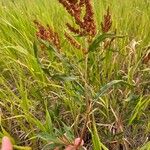
Rumex salicifolius
Willow dock · Willow-leaf dock · Willow-leaved Dock
Description
Source: leafsnapRumex salicifolius is a species of flowering perennial plant in the knotweed family known by the common names willow dock and willow-leaved dock. It is native to much of western North America, and more specifically, in southern and central parts of California, and some parts of Arizona and Nevada. It can also be found in parts of Europe as an introduced species and a roadside weed. It is an extremely variable plant which is generally divided into many varieties, some of which may actually be specimens of other species.
Care Guide
💧 Water
Willow dock flourishes in moist environments and needs consistent moisture, with weekly watering, to mimic its native habitat. It has a high tolerance for waterlogged soils, so when cultivating it outdoors, it's important to consider seasonal rainfall patterns that can impact its growth cycles and watering needs.
☀️ Light Full sun
Willow dock does very well with plentiful sunlight, which boosts its growth and vigor. In its native environment it also tolerates moderate sun. However, it is sensitive to extremes — both too much and too little sunlight can threaten its vitality.
What are the sunlight requirements for Willow Dock?
Willow Dock (Rumex salicifolius) requires considerable sunlight exposure for optimal growth and health, thriving admirably under full sun, which entails over 6 hours of sunlight daily, and can also adapt to partial sun, with about 3-6 hours of sunlight. It's crucial to observe the movement of sunlight through your garden to find spots that offer a balance of light and shade, ensuring plant happiness. However, too much or too little sun can harm the plant, indicating the importance of monitoring and adjusting the plant's exposure to sunlight suitably.
How does artificial lighting benefit indoor Willow Dock plants?
Indoor Willow Dock plants benefit significantly from artificial lighting, especially when natural sunlight is insufficient, such as during winter or in less sunny locations. Artificial lights provide essential support for optimal growth, facilitating healthier and faster development. LED lights are particularly recommended for indoor plant lighting, as they can mimic the specific wavelengths required by plants. The intensity and duration of artificial light should be adjusted based on the plant's natural needs, with full sun plants requiring 30-50W/sq ft, partial sun plants 20-30W/sq ft, and shade plants 10-20W/sq ft of light, and placed 12-36 inches from the plant for 8-12 hours a day to imitate natural sunlight conditions.
What are the indicators of inadequate lighting for Willow Dock?
Inadequate lighting can lead to several noticeable symptoms in Willow Dock, including smaller new leaves, leggy or sparse growth, premature leaf drop, halted growth, lighter-colored new leaves, chlorosis (leaf yellowing), sunscald, leaf curling, wilting, and leaf scorching. These symptoms suggest the plant is not receiving enough sunlight, negatively affecting its health and growth. It's essential to address these signs promptly by adjusting the plant's exposure to light, either by moving it to a sunnier location or using artificial lighting solutions.
What strategies can be employed to manage light exposure for Willow Dock?
To manage light exposure for Willow Dock effectively, gradually acclimate the plant to sunnier conditions by moving it incrementally each week until it receives at least 6 hours of sunlight daily. For indoor plants, consider supplementing with artificial light if the plant is large or immobile, ensuring at least 8 hours of light exposure daily. Outdoors, avoid abrupt changes in light intensity to prevent sunburn. Identify and minimize obstructions blocking sunlight, and consider transplanting smaller plants during their dormant period to sunnier locations with good drainage. Although parts of the plant affected by insufficient light may not recover, new growth should appear healthy with improved light conditions.
🌡️ Temperature 20–35°C
Willow dock originates from areas where temperatures range from 68 to 95 °F (20 to 35 °C). It performs best in those conditions, so it's important to reproduce that climate when growing willow dock in other seasons if necessary.
What is the ideal climate for growing Willow dock?
Willow dock, scientifically known as Rumex salicifolius, is native to climates where temperatures range between 68 to 95°F (20 to 35°C). It thrives best under these conditions. To ensure the plant's growth, it is essential to replicate this climate, especially in different seasons. Willow dock is heat-loving, and exposure to cold can be detrimental. In autumn, it's recommended to bring outdoor-grown Willow dock indoors, placing it near a bright window but away from heaters. During winter, maintaining temperatures above 20°C is beneficial, while temperatures approaching or dropping below 5°C can harm the plant.
How does Willow dock react to low temperatures?
Willow dock prefers warm temperatures and does not tolerate low temperatures well. It thrives when the temperature is maintained above 20°C. During winter, it is crucial to keep the plant above 5°C. Exposure to temperatures below 1°C can cause the leaves to lighten in color, and following frost damage, they gradually turn brown or black. Symptoms such as wilting and drooping may also occur. To mitigate frost damage, trim off the frost-damaged parts and move the plant to a warmer indoor location. Placing it near a south-facing window ensures ample sunlight while avoiding placement near heaters or air conditioning vents helps prevent excessive dryness in the air.
What should you do if Willow dock is exposed to high temperatures?
During summer, it is important to keep Willow dock's temperature below 35°C to prevent heat stress. Conditions exceeding 41°C can lighten the color of the leaves and make the plant more prone to sunburn. If the plant suffers from sunburn, the sunburned and dried-up parts should be trimmed away. Move the plant to a location that provides shade from the intense midday and afternoon sun to protect it. Additionally, watering the plant in the morning and evening helps keep the soil moist and supports the plant's health under high-temperature conditions.
💨 Humidity
🪴 Soil 6-7
🌱 Fertilizer
Willow dock needs the most fertilizer during its active growth period, which occurs mainly in spring, summer, and early fall. Fertilizing supplies essential nutrients that the soil may be lacking, supporting healthy root and stem development and the attractive foliage that is a notable characteristic of this plant.
🪴 Pot & Repot
✂️ Pruning
Willow dock benefits from pruning in early to late spring, which encourages new growth and improves its overall health. During pruning, concentrate on removing dead stems and thinning out crowded areas to enhance air circulation. Regular pruning helps prevent disease, control the plant's size, and enhance its appearance, ensuring it flourishes throughout the growing season.
🌿 Propagating
🐛 Diseases & pets
☠️ Toxicity
Characteristics
- Plant Type
- Herb
- Life Cycle
- Perennial
- Genus
- Rumex
- Family
- Polygonaceae
- Hardiness Zone
- 10
- Mature Height
- 0.3 m to 1.07 m
- Mature Spread
- 0.61 m to 1.52 m
- Leaf Color
- Green, Dark Green
- Leaf Type
- Deciduous
- Flower Color
- Yellow, Green, Red, Brown
- Flower Size
- 10.16 cm to 20.32 cm
- Bloom Time
- Late spring, Early summer, Mid summer
- Planting Time
- Spring, Summer, Autumn
- Harvest Time
- Mid summer, Late summer, Early fall
- Native Area
- Mexico, Canada