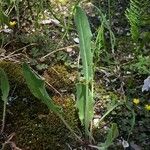
Rumex thyrsiflorus
Narrow-leaf sorrel · Garden sorrel · Narrow-leaved Garden Sorrel · Narrow-leaved Sorrel · Compact dock
Description
Source: leafsnapRumex thyrsiflorus, commonly known as the swamp dock or western dock, is a perennial herbaceous plant in the family Polygonaceae. Native to North America, it thrives in wetlands, marshes, and along streams and rivers. This plant features a stout stem that can reach up to 2 meters in height, adorned with large, ovate or lanceolate leaves. These dark green leaves have prominent veins and a waxy upper surface. The small, greenish-red flowers of Rumex thyrsiflorus are densely clustered on tall spikes. Swamp dock is a vital food source for wildlife, including waterfowl, deer, elk, and beavers, which feed on its leaves. Additionally, its seeds provide nourishment for birds such as finches. In traditional Native American medicine, tribes like the Navajo used Rumex thyrsiflorus roots to treat various ailments, including stomach problems, while other tribes applied it externally to treat skin conditions. Overall, Rumex thyrsiflorus plays a crucial ecological role by providing habitat for wildlife and offering medicinal properties, making it an essential species in North America's ecosystem.
Care Guide
💧 Water Every 7 days
Garden sorrel, native to temperate regions, thrives in moist soil and requires weekly watering to grow well. Although it can withstand brief dry spells, a steady supply of water is best. Natural rainfall is especially beneficial to garden sorrel during its active growing season, promoting better health and growth.
How should I water my Garden sorrel the best way?
To properly water Garden sorrel, it is best to use filtered water at room temperature. Tap water may contain harmful particles, so filtering it is important. The water should be at room temperature or slightly warmer because Garden sorrel is accustomed to a warm environment and cold water can be a shock to its system. It is also recommended to avoid watering from above, as this can cause problems with the foliage. Instead, gradually soak the soil with your filtered room temperature water until it is completely saturated. This benefits the plant by moistening the roots and aiding in their spread through the soil to gather necessary nutrients.
What should I do if I give my Garden sorrel too much or too little water?
Both overwatering and underwatering can harm your Garden sorrel. However, overwatering is a more common problem. If your Garden sorrel gets too much water, its stems and leaves may wilt and turn yellow. Overwatering over time can also cause diseases like root rot, mold, and mildew, which can be fatal to the plant. Underwatering is less likely for Garden sorrel since it can tolerate drought to some extent. But it's still possible, and in that case, the leaves may become brittle and brown. When taking care of your Garden sorrel, it's important to recognize the signs of overwatering early. Some diseases caused by overwatering, like root rot, may not be fixable if you wait too long. If you notice early signs of overwatering, reduce your watering immediately. You should also check the soil quality where the Garden sorrel is growing. If the soil drains poorly, replace it with loose, well-draining potting mix. On the other hand, if your Garden sorrel shows signs of not getting enough water, simply water it regularly until the signs go away.
How frequently should I give water to my Garden sorrel?
To determine if your potted Garden sorrel needs water, stick your finger into the soil and check if the top two to three inches are dry. If they are, it's time to water it. If you have Garden sorrel planted outdoors, you can use the same method. If the top few inches of soil are dry, it's time to water it. During spring and early fall, watering once a week should be sufficient. In extremely hot weather, consider increasing the frequency to twice a week or more. However, mature and well-established Garden sorrel can tolerate drought well.
How much water does my Garden sorrel require?
When watering your Garden sorrel, don't hold back on the amount of water you give. Make sure the first two to three inches of soil are dry, then give the plant a thorough watering to completely soak the soil. You should add enough water that it flows out of the drainage holes at the bottom of the pot. If you don't see water draining out, you may have underwatered the plant. Be careful not to let water accumulate in the soil, as this can harm the plant. Conversely, if water is not draining well from the pot, it indicates that the soil is not draining properly, which is bad for the plant's health. If the plant is outside, it only needs about 1 inch of rain per week.
What is the best way to water my Garden sorrel as it grows at different stages?
The water needs of Garden sorrel can vary depending on its growth stages. When it is in the first few years of its life or has recently been transplanted, it requires more water than usual. This is because during these stages, Garden sorrel focuses on developing new roots that will support future growth. To ensure optimal root performance, a bit more moisture is necessary. As the plant matures, it will require less water. Additionally, during the bloom period, Garden sorrel may need more water due to the significant amount of moisture used for flower development.
☀️ Light Full sun
Garden sorrel is native to sunlit habitats like open fields and sunny meadows. It prefers full sun but can also tolerate partial sun.
What are the sunlight requirements for Garden Sorrel?
Garden Sorrel, a sun-loving perennial herbaceous plant, thrives in environments that offer full sun, which is characterized by more than 6 hours of direct sunlight daily. However, it can also tolerate partial sun conditions, where it would receive about 3-6 hours of sunlight. It's crucial to watch how sunlight moves through your garden, selecting spots that ensure a balance of light and shade for your plants' optimal growth.
How can artificial lighting supplement sunlight for Garden Sorrel?
When natural sunlight is insufficient, especially during winter or in less sunny spaces, artificial lighting can be a crucial solution. For indoor plants, LED lights are recommended because they can be customized to provide specific wavelengths needed for optimal plant growth. Full sun plants need about 30-50W per square foot of artificial light, partial sun plants require 20-30W per square foot, and full shade plants need 10-20W per square foot. The artificial light source should be placed 12-36 inches above the plant, mimicking natural sunlight distance, and should be kept on for 8-12 hours per day to simulate the length of natural daylight hours.
What are the common symptoms of light deficiency in Garden Sorrel?
Light deficiency in Garden Sorrel can lead to symptoms such as smaller new leaves, leggy or sparse growth, faster leaf drop, slower or no new growth, and paler new leaves. These signs indicate that the plant is not receiving adequate sunlight for photosynthesis and nutrient synthesis. Conditions like Chlorosis, where leaves lose their green color, Sunscald, Leaf Curling, Wilting, and Leaf Scorching can also occur due to inappropriate light levels, showing the detrimental effects of both insufficient and excessive sunlight exposure on plant health.
What solutions are there for managing light conditions for Garden Sorrel?
Managing light conditions involves adapting the environment to meet the plant's needs. Indoors, gradually moving the plant to sunnier locations or using artificial lighting like desk or ceiling lamps for at least 8 hours daily can help. For outdoor plants, gradual relocation to sunnier spots while avoiding sudden changes in light intensity is key to preventing sunburn. Pruning obstructions or transplanting to better-lit areas can be effective strategies. It's important to note that while parts of the plant affected by insufficient light may not recover, providing adequate light will ensure new growth is healthy.
🌡️ Temperature 0–21.1°C
Garden sorrel naturally comes from regions where temperatures are mostly between 32 and 70 °F (0 to 21 ℃). To reproduce its native conditions, keep temperatures within that range. Adjustments may be needed as the seasons change.
What is the native climate for garden sorrel and how should its environment be maintained?
Garden sorrel (Rumex thyrsiflorus) is originally native to climates where temperatures primarily range from 32 to 70 °F (0 to 21 °C). To ensure the plant thrives, it's important to mimic its natural environment by maintaining a similar temperature range. As seasons change, making adjustments to replicate this temperature range is necessary. Despite its high tolerance to cold, there are no additional frost protection measures required during winter. Nevertheless, before the first freeze in autumn, it is advised to water the plant generously so that the soil remains moist as it enters a frozen state. This preparation helps prevent drought and water scarcity for the plant during the winter and early spring.
How does garden sorrel react to low temperatures?
Garden sorrel exhibits an extreme tolerance to cold temperatures, being able to withstand conditions above -40°C. However, if the winter temperature drops below this threshold, while there might not be noticeable changes during the winter, it could result in a decrease in sprouting or even lead to no sprouting at all come springtime. To address this, any parts of the plant that have failed to sprout in the spring should be removed. This helps in managing the plant's health and ensuring its continued growth despite low temperature challenges.
What should I do if garden sorrel is exposed to high temperatures?
Garden sorrel is not tolerant to high temperatures. If the temperature rises above 21°C, its growth halts, and it becomes increasingly susceptible to rot. In such situations, it's important to trim away any sunburned or dried-up parts of the plant. Moving the plant to a location that offers shade during the midday and afternoon sun can also help, or alternatively, creating shade with a cloth. Ensuring that the plant is watered in the morning and evening will help keep the soil moist, thus mitigating the effects of high temperatures and supporting the plant's health.
💨 Humidity
🪴 Soil 6-7
🌱 Fertilizer
To maximize the yield and flavor of Garden sorrel, provide sufficient nitrogen throughout the growth cycle, including before planting and at harvest. Plants that are adequately watered and fertilized develop plentiful, healthy leaves and show less bitterness. Before planting, amend the soil with organic matter such as compost or manure, preferably 2 to 8 weeks beforehand.
🪴 Pot & Repot
✂️ Pruning
Pruning garden sorrel in early spring is ideal. Begin by removing any dead or damaged stems. Next, shape the plant by trimming it back to healthy buds. Consistent, light trimming encourages new growth, improves the plant's appearance, and boosts its vigor, resulting in a healthier plant overall.
🌿 Propagating
🐛 Diseases & pets
☠️ Toxicity
Characteristics
- Plant Type
- Herb
- Life Cycle
- Perennial
- Genus
- Rumex
- Family
- Polygonaceae
- Hardiness Zone
- 2
- Mature Height
- 40 cm to 91 cm
- Mature Spread
- 30 cm to 61 cm
- Leaf Color
- Green, Blue
- Leaf Type
- Deciduous
- Flower Color
- Green, Red
- Flower Size
- 0.20 cm to 0.25 cm
- Bloom Time
- Late spring, Early summer, Mid summer
- Planting Time
- Spring, Autumn
- Harvest Time
- Mid summer, Late summer, Early fall
- Native Area
- Sweden, Austria, Bulgaria, Poland, Greece, Belarus, Ukraine, China, Russia, Norway, Hungary, Germany, Italy, Kazakhstan, Denmark, Netherlands, Mongolia, Finland, Albania, Romania, Belgium, France