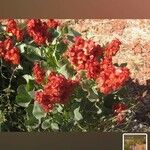
Rumex venosus
Wild begonia · Wild hydrangea · Winged dock · Veined dock · Veiny dock
Description
Source: leafsnapRumex venosus is a species of flowering plant in the knotweed family known by the common names veiny dock, winged dock, sand dock, and wild-begonia (though it is not related to the genus Begonia). While not of any particular agricultural use, its cousins rhubarb and buckwheat are. It is native to central and western North America, from southern parts of the Canadian prairies, through to Mexico. It can be found in many types of habitat, including sagebrush, dunes, and other sandy areas. It is commonly found in heavily grazed pastures as livestock tend to avoid it, allowing veiny dock to spread uninhibited. It is a common food plant of the ruddy copper butterfly.
Care Guide
💧 Water
Veiny dock flourishes in conditions similar to its native habitat, needing consistent moisture and able to withstand short periods of dryness. Watering it weekly promotes optimal growth. Commonly grown outdoors, veiny dock benefits from natural rainfall and adapts well to different climate zones, adjusting to seasonal water availability.
☀️ Light Full sun
Veiny dock is a perennial, herbaceous species that favors sunny sites and originates from open habitats, frequently thriving in meadows and grasslands. It prefers full sun but can also tolerate partial sunlight.
What are the sunlight requirements for Veiny Dock?
Veiny dock requires full sun, which means it thrives in places where it receives more than 6 hours of sunlight daily. However, it's important to observe how sunlight moves through your garden to ensure the plants get a balance of light and shade, ensuring their optimal growth and happiness.
What type of plant is Veiny Dock and where does it originate?
Veiny dock is a sun-loving perennial herbaceous plant that originates from open habitats, such as meadows and grasslands. It prefers full sun but can tolerate partial sun conditions, making it versatile for various garden spots.
How can artificial lighting be used for indoor plants?
Indoor plants, including those requiring full sun, can benefit significantly from artificial lighting, especially when natural sunlight is insufficient. LED lights are popular for their ability to provide specific light wavelengths. For full sun plants, 30-50W/sq ft is recommended, 20-30W/sq ft for partial sun plants, and 10-20W/sq ft for full shade plants. The light should be placed 12-36 inches above the plant and kept on for 8-12 hours per day to mimic natural daylight hours.
What are common symptoms of inadequate lighting for Veiny Dock?
Symptoms of inadequate lighting in Veiny Dock include smaller new leaves, leggy or sparse growth, faster leaf drop, slower or halted new growth, lighter-colored new leaves, chlorosis, sunscald, leaf curling, wilting, and leaf scorching. These signs indicate the plant is not receiving enough sunlight to maintain healthy growth and development.
What solutions are available for Veiny Dock experiencing light deficiency?
To address light deficiency, gradually move the plants to sunnier locations, ensuring they get at least 6 hours of direct sunlight or use artificial lighting for indoor plants. Obstruction reduction and transplanting during the dormant period can also help outdoor plants receive more sunlight. However, it's crucial to adapt plants gradually to prevent sunburn and to remember that parts of the plant already affected may not recover fully, but new growth should be healthy with improved light conditions.
🌡️ Temperature 5–32.2°C
Veiny dock can tolerate a wide range of temperatures, but its distribution may still be restricted by different combinations of water and heat conditions. It performs best in warm summer climates with sufficient rainfall or watering. Extended stretches of cloudy, rainy weather or prolonged high temperatures can raise the chances of Veiny dock dying. In winter, providing proper protection from cold can increase the plant's survival rate.
What is Veiny dock and how does it adapt to different weather conditions?
Veiny dock, scientifically known as Rumex venosus, showcases remarkable adaptability to a broad spectrum of temperature conditions. It flourishes optimally in warm climates particularly during the summer months, provided there's sufficient rainfall or irrigation. Despite its strong resistance to cold, its survival can be jeopardized by prolonged periods of cloudy, rainy weather or excessive heat. While it generally does not require special frost protection thanks to its robust cold resistance, in regions where winter temperatures plummet below -30°C, it is crucial to safeguard it against the cold. This is often achieved by insulating the plant with layers of soil or straw. Additionally, to combat potential drought and water scarcity during the winter and early spring, it's advised to water the plant generously before the onset of the first autumn freeze, ensuring the soil is moist as it freezes.
How should Veiny dock be cared for in low temperatures?
Veiny dock has remarkable cold tolerance, thriving best when the temperature is maintained above 5°C. During the winter months, it's important to ensure the temperature does not fall below -25°C. Although the plant may not exhibit noticeable changes when temperatures dip below -30°C, such low temperatures can adversely affect the plant's ability to sprout in the spring, with reductions in sprouting or in some cases, failure to sprout. Should this occur, the recommended course of action in the spring is to remove any parts of the plant that have not sprouted.
What steps should be taken to protect Veiny dock in high temperatures?
In the summer, Veiny dock should be kept in conditions where the temperature does not exceed 32°C. Exposure to temperatures above 35°C can result in the leaves becoming lighter in color, prone to curling, and susceptible to sunburn. In severe cases, excessive heat can cause the plant to wilt and dry out entirely. To mitigate these effects, it's advisable to trim away any sunburned or dried parts, relocate the plant to a shaded area during the most intense afternoon sun, or employ a shade cloth for protection. Additionally, watering the plant during the cooler morning and evening hours helps maintain soil moisture, further protecting the plant from high temperature stress.
💨 Humidity
🪴 Soil 6-8
🌱 Fertilizer
Typically a single fertilizer application in spring is enough for Veiny dock, though repeated feedings can maximize growth. Feed every month to month and a half. Fertilization improves leaf appearance and function, encouraging uniform color and a healthy texture. It also promotes root development and nutrient uptake for long-term plant health.
🪴 Pot & Repot
✂️ Pruning
Veiny dock is a hardy perennial known for its sprawling growth habit and distinctive veined leaves. To promote healthy growth, improve air circulation, and prevent disease, prune the plant from early to late spring. Always use clean, sharp tools for pruning, and avoid heavy pruning until the veiny dock is well established.
🌿 Propagating
🐛 Diseases & pets
☠️ Toxicity
Characteristics
- Plant Type
- Herb
- Life Cycle
- Perennial
- Genus
- Rumex
- Family
- Polygonaceae
- Hardiness Zone
- 4-8
- Mature Height
- 15 cm to 46 cm
- Mature Spread
- 15 cm to 46 cm
- Leaf Color
- Green, Dark Green
- Leaf Type
- Semi-evergreen
- Flower Color
- Green
- Flower Size
- 2.54 cm
- Bloom Time
- Mid spring, Late spring
- Planting Time
- Spring, Summer
- Harvest Time
- Early summer, Mid summer