Ruscus aculeatus
Butcher's Broom · Box Holly · Cnēowholen · Spiny butcher's broom · Jew's Myrtle
Description
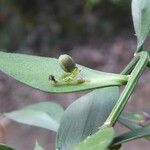
Source: leafsnapRuscus aculeatus, known as butcher's-broom, is a low evergreen dioecious Eurasian shrub, with flat shoots known as cladodes that give the appearance of stiff, spine-tipped leaves. Small greenish flowers appear in spring, and are borne singly in the centre of the cladodes. The female flowers are followed by a red berry, and the seeds are bird-distributed, but the plant also spreads vegetatively by means of rhizomes. It is native to Eurasia and some northern parts of Africa. Ruscus aculeatus occurs in woodlands and hedgerows, where it is tolerant of deep shade, and also on coastal cliffs. Likely due to its attractive winter/spring color, Ruscus aculeatus has become a fairly common landscape plant. It is also widely planted in gardens, and has spread as a garden escapee in many areas outside its native range. The plant grows well in zones 7 to 9 on the USDA hardiness zone map.The Latin specific epithet aculeatus means “prickly”.
🌳 Butcher's-broom has long been used as an ornamental plant, particularly at Christmas in some European regions. Its lush green foliage and bright red berries are linked to a festive appearance, making it a common choice for holiday arrangements and wreaths. Additionally, because it tolerates drought and can grow in shaded, nutrient-poor sites, butcher's-broom is increasingly recommended for xeriscaping and sustainable landscaping, supporting biodiversity and lowering the need for irrigation and upkeep.
Care Guide
💧 Water Every 1-2 weeks
Butcher's-broom thrives in areas with dappled light and prefers dry soil, making it highly drought-tolerant. Water it sparingly, approximately every 1-2 weeks, and allow the soil to dry out completely between waterings. As an evergreen perennial, it is well-suited for indoor environments with stable temperatures, which help accommodate its minimal watering needs.
How should I water my Butcher's-broom plant?
Your Butcher's-broom is not particular about how you water it, so you can use any common watering tool such as a watering can, hose, or even a cup. The most important thing is to water directly onto the soil and make sure that all areas of the soil are evenly moistened to provide water to all parts of the root system. Using filtered water is recommended as tap water may contain harmful particles. It is also best to use water that is at or slightly above room temperature, as extremely cold or hot water can be a bit shocking for the Butcher's-broom. However, generally speaking, the Butcher's-broom responds well to any type of water you give it.
What do I do if I give too much or too little water to my Butcher's-broom plant?
Outdoor plants, especially newly planted ones or seedlings, are prone to lack of watering. Make sure to water them enough for a few months while they are small or newly planted. Once the roots are established, Butcher's-broom can rely on rain most of the time. If you have Butcher's-broom planted in pots, overwatering is more likely to occur. If you accidentally overwater your Butcher's-broom, take immediate action to remedy the situation. Stop watering the plant right away to minimize the effects of overwatering. Then, remove the plant from its pot to check its roots. If there is no root rot, you can put the plant back in the pot. In the case of root rot, trim the affected roots and apply a fungicide. Repot the Butcher's-broom in well-draining soil. For underwatered Butcher's-broom, simply water the plant more frequently. It's easy to remedy underwatering as the leaves will droop, dry out, and fall off, but they will quickly return to fullness after sufficient watering. Make sure to adjust your watering frequency as soon as you notice underwatering.
How frequently do I need to water my Butcher's-broom?
Here are some tips for watering your outdoor plants: - Most outdoor plants can rely on rainfall for water. However, if your area lacks rainfall, you should water them every 2 weeks in the spring and fall, and more frequently in the summer. In the winter, when growth slows down and plants need less water, you can water them less often or not at all. - If you have a young or newly planted Butcher's-broom, it's important to water it more frequently to help it establish and grow into a drought-tolerant plant. - For potted plants, there are two main ways to determine how often to water your Butcher's-broom. One option is to set a predetermined watering schedule, such as once a week or every other week. However, this may not always be suitable for the unique conditions of your plant's environment. - Another option is to check the soil moisture before watering. Wait until the top two to four inches of soil have completely dried out before giving more water. This method ensures that you're only watering when it's truly necessary.
How much water does my Butcher's-broom plant need?
When watering your Butcher's-broom, remember that it doesn't always need a lot of water. If only a few inches of soil have dried since the last watering, giving it about five to ten ounces of water each time is enough for healthy growth. You can also gauge the water volume based on soil moisture. Take note of how many inches of soil have dried out between waterings. To ensure your Butcher's-broom gets the right amount of moisture, water enough to moisten all the dry soil layers since the last watering. If more than half of the soil is dry, consider giving more water than usual. In these cases, keep adding water until excess water drains from the pot's holes. If your Butcher's-broom is outdoors in a rainy area, it may not need extra watering. When it's young or establishing, make sure it receives 1-2 inches of rain per week. As it grows and becomes established, it can rely solely on rainwater. Only when the weather is hot and there's no rain for 2-3 weeks should you give it a thorough watering to avoid stressing the plant.
How can I know if I'm giving my Butcher's-broom plant enough water?
Butcher's-broom can be affected by both overwatering and underwatering, and there are clear signs to look out for in each case. When overwatered, the plant's leaves turn yellow and may fall off, while the overall structure may shrink and root rot can occur. on the other hand, an underwatered Butcher's-broom will start to wilt and its leaves may become brown and brittle. Regardless of the signs you notice, it's important to take action and revive your Butcher's-broom's health.
☀️ Light Partial sun
Butcher's-broom typically does best in bright but not overly strong sunlight, although it can tolerate both reduced and increased sun exposure. Its native environment generally offers only limited sunlight, which affects how well it withstands different lighting conditions. Too little or too much sun may interfere with its healthy growth.
What are the sunlight requirements for Butcher's-broom?
Butcher's-broom thrives in various sunlight conditions, from partial sun (about 3-6 hours of sunlight) to full shade or full sun (less than 3 hours of sunlight). Its ideal growth occurs in sunlit conditions that aren't too intense, owing to its origin in habitats with limited sun exposure. This resilience allows it to manage under different lighting, but extreme variations can disrupt its growth. It's suggested to observe the movement of sunlight in your garden to find spots that offer a balanced environment for the plants.
How can artificial lighting benefit indoor Butcher's-broom plants?
Indoor Butcher's-broom plants benefit significantly from adequate lighting, especially when natural sunlight is insufficient. During winter or in less sunny spaces, artificial lighting becomes crucial for their growth. A popular choice is LED lights, which can be adjusted to supply specific light wavelengths needed by the plants. For optimal growth, full sun plants need 30-50W/sq ft of artificial light, partial sun plants require 20-30W/sq ft, and full shade plants need 10-20W/sq ft. It's important to correctly determine the artificial light's distance (12-36 inches above the plant) and duration (8-12 hours per day) to mimic natural sunlight conditions effectively.
What symptoms indicate insufficient light for indoor Butcher's-broom?
Symptoms of insufficient light in Butcher's-broom include smaller new leaves, leggy or sparse growth, faster leaf drop, slower or halted new growth, lighter-colored leaves, chlorosis, sunscald, leaf curling, wilting, and leaf scorching. These symptoms range from changes in leaf size and color to physical damage like sunscald and leaf scorching due to excessive sunlight. Chlorosis, leaf curling, and wilting are also common issues when the plant is either under or overexposed to sunlight.
What solutions can offset the symptoms of insufficient light for Butcher's-broom?
To combat insufficient light, gradually move indoor Butcher's-broom plants to sunnier spots each week, ensuring they receive 3-6 hours of direct sunlight daily. If moving the plant isn't feasible, using artificial lights like desk or ceiling lamps for at least 8 hours a day can help, or investing in professional grow lights for sufficient exposure. Outdoors, the strategy involves a similar gradual relocation to sunnier spots to avoid sunburn. Addressing obstructions by pruning trees or relocating the plant can also ensure better access to sunlight. Note that parts of the plant damaged due to low light may not recover, however, new growth will be healthy post adjustment.
🌡️ Temperature 15–35°C
The butcher's-broom plant is indigenous to areas with temperate climates. It grows best at temperatures from 59 to 95 ℉ (15 to 35 ℃). In summer, it should be kept in a location shielded from direct sunlight and not exposed to temperatures above 95 ℉ (35 ℃). In winter, when temperatures fall below 59 ℉ (15 ℃), it should be protected from frost and cold winds.
What is the native climate for the Butcher's-broom plant?
The Butcher's-broom plant, known botanically as Ruscus aculeatus, is native to regions with temperate climates, thriving best within a temperature range of 59 to 95 ℉ (15 to 35 ℃).
How should Butcher's-broom be cared for in summer and winter?
During summer, Butcher's-broom should be placed in a shaded spot to protect it from direct sunlight and prevent exposure to temperatures over 95 ℉ (35 ℃). In winter, it should be shielded from frost and cold winds if temperatures drop below 59 ℉ (15 ℃), despite its strong cold resistance. If winter temperatures are expected to fall extremely low, wrapping the plant's trunk and branches with non-woven fabric or cloth is recommended. Also, watering the plant abundantly before the first freeze in autumn helps the soil stay moist and prevents drought stress.
What are the symptoms of incorrect temperature conditions for Butcher's-broom?
Butcher's-broom displays few noticeable changes in winter if temperatures fall below its tolerance, but the branches may turn brittle and dry by spring, with no new shoots emerging. In summer, exceeding the plant's optimal temperature range can cause the leaves to lighten, tips to dry and wither, and an increased risk of sunburn.
What are the recommended solutions for Butcher's-broom affected by temperature extremes?
For plants affected by low temperatures, removing dead branches in spring is advisable. For those affected by high temperatures, cutting away sunburned and dried parts, moving the plant to a shaded location, or using shade cloth can help. Additionally, watering in the morning and evening maintains soil moisture, offering relief from heat stress.
💨 Humidity dry (<40%)
This plant prefers dry conditions, so don't mist it. However, watering it less often can also thrive in higher humidity.
🪴 Soil 6-7
🌱 Fertilizer
Fertilize your Butcher's-broom in early spring to promote healthy growth. Regular fertilization improves the plant's overall health, producing vigorous growth, greater tolerance of difficult conditions, and enhanced resistance to pests and diseases. Maintain a consistent fertilization schedule for your Butcher's-broom to preserve vibrant, deeply colored foliage and a lush appearance.
Why should I add fertilizer to my Butcher's-broom plant?
No matter which variation of Butcher's-broom you have, regularly fertilizing it will help the plant achieve excellent overall health. Providing the proper nutrients encourages stronger growth and enhances the plant's ability to withstand difficult conditions, as well as ward off diseases and pests. Preserving the attractive foliage of your Butcher's-broom is important, therefore, it is recommended to establish and maintain a fertilization schedule tailored specifically for your plant. Following this schedule will result in healthier leaves with a vibrant color and lush appearance.
When should I fertilize my Butcher's-broom for the best results?
To properly fertilize your Butcher's-broom, the first recommended time is late winter or early spring. This provides the necessary nutrients for healthy growth once the weather warms up. Additionally, in warm climate regions, an extra fertilizer feeding in early fall is beneficial. This not only adds nutrients for the following growing season, but also helps the plant withstand winter without damage to its foliage. By fertilizing earlier, you give the new branches enough time to grow strong and endure the cold winter.
When is it not a good idea to add fertilizer to my Butcher's-broom plant?
To avoid over-fertilizing your Butcher's-broom, there are specific times of the year when it should not be fed. Firstly, do not fertilize it during the early and mid-winter months when the plant is dormant and does not require nutrients. Additionally, it is not advisable to fertilize during late spring and throughout summer due to the hot and potentially dry weather conditions. Fertilizing during these times may negatively impact the plant. To prevent any issues, it is recommended to stick to a fertilization schedule that involves feeding only during early spring and early fall.
What kind of fertilizer does my Butcher's-broom plant need?
In order for a Butcher's-broom to grow well, it requires a sufficient amount of nitrogen, but it also needs phosphorus and potassium. A balanced fertilizer, like a 10-10-10, can be effective because it provides all three nutrients. However, a more specific ratio of nutrients, with a higher nitrogen content, like a 10-6-4 ratio, often leads to the best growth. You can choose between using granular or liquid fertilizer when applying it.
How should I fertilize my Butcher's-broom plant?
To fertilize your Butcher's-broom, you have two options: a granular fertilizer or a liquid fertilizer. For granular fertilizer, simply sprinkle it on the soil at the right time. The slow-release properties of this type of fertilizer will gradually provide nutrients to the soil. It's ideal to lightly water your Butcher's-broom before applying the granular fertilizer. Alternatively, you can use a liquid fertilizer by mixing it with water. Then, pour the mixture around the base of your plant. However, this method is less commonly used. Before fertilizing, it can be helpful to conduct a soil test to determine if any pH adjustments are necessary.
🪴 Pot & Repot 2-3 years
When repotting Butcher's-broom, select a pot 1–2 inches (2.5–5.0 cm) larger that provides good drainage. Use a well-draining potting mix. Repot in spring or fall, making sure the root ball sits slightly below the rim of the flower pot. Water thoroughly after repotting and place the pot in a warm location with indirect sunlight.
✂️ Pruning
Butcher's-broom is an evergreen shrub with spiny leaves and small flowers. To maintain its shape, encourage growth, and remove damaged branches, it should be pruned from early to late winter. Making clean cuts is essential to prevent disease, ensure proper airflow, and maintain the plant's vigor, resulting in a healthy and attractive butcher's-broom.
🌿 Propagating
🐛 Diseases & pets
☠️ Toxicity
Characteristics
- Plant Type
- Shrub
- Life Cycle
- Perennial
- Genus
- Ruscus
- Family
- Asparagaceae
- Hardiness Zone
- 7-10
- Mature Height
- 61 cm to 91 cm
- Mature Spread
- 0.61 m to 1.22 m
- Leaf Color
- Green
- Leaf Type
- Evergreen
- Flower Color
- Green, White
- Flower Size
- 2.54 cm
- Bloom Time
- Early spring, Mid spring
- Planting Time
- Spring, Autumn
- Harvest Time
- Early spring, Mid summer, Late summer, Fall, Winter
- Native Area
- Turkey, Tunisia, Montenegro, Cyprus, Bulgaria, Greece, Croatia, Slovenia, Morocco, Lebanon, Russia, Serbia, Hungary, Syria, Italy, Spain, Switzerland, France, Iran, Albania, United Kingdom, Romania, Algeria, Portugal