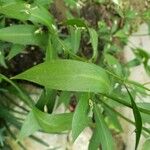
Ruscus hypoglossum
Spineless butcher's-broom · Double tongue · Horse tongue · Large butcher's broom · Tongue under tongue
Description
Source: leafsnapRuscus hypoglossum is a small evergreen shrub with a native range from Italy north to Austria and Slovakia and east to Turkey and Crimea. Common names include spineless butcher's-broom, mouse thorn and horse tongue lily. The species name comes from two Greek words ὑπό (hypo) and γλῶσσα (glōssa) meaning under and tongue.
Care Guide
💧 Water
Spineless butcher's broom is an excellent drought-tolerant plant that thrives in low-water regions. It needs watering every 2-3 weeks and maintains a good balance of humidity. Being an evergreen, this plant efficiently retains water all year round, making it ideal for both indoor and outdoor cultivation.
What do I do if I give my Spineless butcher's broom too much or too little water?
Outdoor plants, especially newly planted ones or seedlings, can easily suffer from lack of water. It's important to continue watering sufficiently for a few months until the tree is established. Once the roots are established, the Spineless butcher's broom plant can usually rely on rainwater. When the Spineless butcher's broom is planted in pots, overwatering becomes more likely. If you accidentally overwater your plant, you should take immediate action to fix the situation. First, stop watering your plant to minimize the overwatering's effects. Then, remove the plant from its pot and check the roots for any signs of root rot. If you don't find any root rot, you can return the plant to its pot. If there is root rot, trim the affected roots and consider applying a fungicide to prevent further damage. Lastly, repot the Spineless butcher's broom in well-draining soil. In the case of underwatering, simply water the plant more frequently. Underwatering can be easily corrected as the plant's leaves will droop and dry out, but they will restore to fullness after proper watering. So, it's crucial to adjust your watering frequency as soon as you notice underwatering.
How frequently should I give water to my Spineless butcher's broom?
Most outdoor plants can grow with rainfall, but if your area lacks rain, water them every 2 weeks in spring and fall. Water more often in summer and less in winter. You may not need to water at all in winter. If your Spineless butcher's broom is young or newly planted, water it more frequently to help it establish. For potted plants, you can either follow a set watering schedule (about once a week or every other week), but this may not work for your specific plant. Alternatively, you can water based on soil moisture by waiting until the top two to four inches of soil have dried out before watering again.
How much water does my Spineless butcher's broom plant need?
Watering the Spineless butcher's broom is not always a high volume task. If only a few inches of soil have dried since the last watering, giving it about five to ten ounces of water is enough. You can also determine the water volume by checking the soil moisture. If more than half of the soil has dried, provide extra water until excess water drains out. If the plant is in a rainy area, it may not need additional watering. When young or establishing, it needs 1-2 inches of rain per week. As it grows, it can survive on rainwater, but water it fully during hot, rainless periods of 2-3 weeks to prevent stress.
How can I know if I'm giving enough water to my Spineless butcher's broom?
The Spineless butcher's broom is often overwatered, which can cause yellowing and dropping of leaves, as well as shrinking of the plant and root rot. Similarly, underwatering can cause wilting and browning or brittle leaves. If you notice signs of either, take action to restore your Spineless butcher's broom's health.
How do I give my Spineless butcher's broom water as it grows at different stages?
When the Spineless butcher's broom is young, especially as a seedling, it needs more water compared to when it is mature. It is crucial to keep the soil consistently moist during the early stages to encourage root development. The same applies if you have transplanted a Spineless butcher's broom to a new location. Giving them proper care can result in showy flowers and fruits. If your Spineless butcher's broom is flowering or fruiting, it will likely require a bit more water to support these structures.
☀️ Light Partial sun
Spineless butcher's broom is native to habitats like forest understories and rocky areas, where it grows in natural shade. It prefers partial sun but can tolerate full sun or full shade, showing its hardy, adaptable nature.
What are the sunlight requirements for Spineless butcher's broom?
Spineless butcher's broom, or Ruscus hypoglossum, thrives in partial sun, needing about 3-6 hours of sunlight per day, but it can also grow in full shade, where it receives less than 3 hours of sunlight daily. Originating from environments like forest understories or rocky areas, this versatile perennial herbaceous plant adapts well to varying light conditions. To ensure plant happiness and growth, it's crucial to observe how sunlight moves through your garden and select locations that offer the right balance of light and shade.
How can artificial lighting support Spineless butcher's broom indoor growth?
When natural sunlight is insufficient, especially during winter or in less sunny spaces, artificial lighting can be a beneficial alternative for Spineless butcher's broom. LED lights are recommended for their ability to provide specific wavelengths needed by plants. For optimal growth, the amount of artificial light required varies by plant type: full sun plants need 30-50W/sq ft, partial sun plants need 20-30W/sq ft, and full shade plants need 10-20W/sq ft. The artificial light should be placed 12-36 inches above the plant to mimic natural sunlight, ensuring the plant receives 8-12 hours of light per day.
What are the signs of insufficient light in Spineless butcher's broom when grown indoors?
When Spineless butcher's broom doesn't receive enough light indoors, several symptoms may manifest, including smaller new leaves, leggy or sparse growth, faster leaf drop, halted or no new growth, paler new leaves, chlorosis (yellowing leaves), sunscald, leaf curling, wilting, and leaf scorching. These indicators suggest the plant is struggling with light deficiency, impacting its health and growth.
What solutions exist for Spineless butcher's broom facing insufficient sunlight?
To mitigate insufficient sunlight for Spineless butcher's broom, gradually adapt it to receive 3-6 hours of direct sunlight daily by shifting it to sunnier spots each week, both indoors and outdoors. For large or immovable plants, supplement with artificial light, such as a lamp or grow lights, for at least 8 hours a day. Outdoor plants should be moved gradually to prevent sunburn, and obstructions blocking sunlight may need to be reduced by pruning or transplanting. Note that parts of the plant damaged by low light might not recover, but subsequent growth after improving light conditions should be healthy.
🌡️ Temperature 10–35°C
Spineless butcher's broom is highly adaptable to a variety of climate conditions, whether in blazing summers or frosty winters. Still, it has an optimal temperature range for development. If temperatures rise too far, the plant becomes susceptible to heat and humidity stress, which can kill it. In locations where temperatures near the lower limit of its cold tolerance, it is important to provide insulation to protect the plant.
What is the common name of Ruscus hypoglossum?
The common name of Ruscus hypoglossum is Spineless butcher's broom. This plant is recognized by its distinctive name which hints at its historical or utilitarian connections, as well as its physical characteristics.
What are the key characteristics of Spineless butcher's broom?
The specific details about the key characteristics of Spineless butcher's broom, including its growth patterns, appearance, and preferred environment, are not provided in the information given. Typically, these details would cover the plant's physical appearance, how and where it grows best, and any unique features that distinguish it from similar plants.
💨 Humidity
🪴 Soil 6-7
🌱 Fertilizer
Timing is important when fertilizing Spineless butcher's broom. Apply fertilizer in early spring and continue monthly until early summer. Fertilizer encourages attractive blooms and supplies energy during both dormant periods and active growth.
Why do I have to put fertilizer on my Spineless butcher's broom plant?
No matter what kind of Spineless butcher's broom you have, regular fertilization is important for overall plant health. Providing the right nutrients promotes strong growth and helps the plant withstand tough conditions and diseases. The foliage of the Spineless butcher's broom is particularly attractive, so it's important to maintain it. This involves following a fertilization schedule tailored to your specific plant, which will result in deep-colored leaves and a lush appearance.
When should I fertilize my Spineless butcher's broom?
To properly fertilize your Spineless butcher's broom, there are two recommended times: late winter or early spring, and early fall if you live in a warm climate. Fertilizing in late winter or early spring provides the necessary nutrients for healthy growth once the weather warms up. In warm climates, an additional fertilizer feeding in early fall benefits the plant by adding nutrients for the following growing season and increasing its ability to withstand winter. It's important to fertilize early to allow new branches enough time to develop and withstand the cold.
When is it a bad idea to fertilize my Spineless butcher's broom?
There are specific times of the year when you should not fertilize your Spineless butcher's broom. The first is during the early and mid-winter months when the plant is dormant and does not require feeding. It is also not recommended to fertilize this plant during late spring and summer, as the weather is usually hotter and drier, which can negatively affect the plant's response to fertilization. To avoid any problems, stick to a fertilization schedule that involves feeding only during early spring and early fall.
What kind of plant food does my Spineless butcher's broom need?
The most important nutrient for a Spineless butcher's broom is usually nitrogen, but phosphorus and potassium are still important. Your plant needs a good amount of all three nutrients, so a balanced fertilizer like 10-10-10 is a good option. However, a more specific nutrient ratio can lead to even better growth. Fertilizers with slightly higher nitrogen content, such as 10-6-4, tend to work well. You can use either granular or liquid-based fertilizers when feeding your plant.
How should I fertilize my Spineless butcher's broom?
To fertilize your Spineless butcher's broom, you have two options: using a granular fertilizer or a liquid fertilizer. If you choose the granular fertilizer, simply sprinkle it on the soil at the right time. This type of fertilizer releases nutrients slowly over time. Before applying it, it's recommended to lightly water your Spineless butcher's broom. Alternatively, you can use a liquid fertilizer, although this is less common. To do this, mix the fertilizer with water and pour it onto the soil around the base of your plant. It can also be helpful to perform a soil test beforehand to determine if any pH adjustments are needed.
🪴 Pot & Repot Every 12 months
✂️ Pruning
Spineless butcher's broom is an evergreen perennial with branches that are free of spines. For best results, prune it between early and late winter. Focus on removing any dead or damaged branches and thinning out dense areas to promote healthy growth. Always use clean tools to prevent the spread of disease, and avoid heavy pruning because the plant grows slowly. Be sure to adapt your pruning practices to suit your local climate for optimal results.
🌿 Propagating
🐛 Diseases & pets
☠️ Toxicity
Characteristics
- Plant Type
- Shrub
- Life Cycle
- Perennial
- Genus
- Ruscus
- Family
- Asparagaceae
- Hardiness Zone
- 6-9
- Mature Height
- 49 cm
- Mature Spread
- 76 cm
- Leaf Color
- Green
- Leaf Type
- Evergreen
- Flower Color
- White, Purple
- Flower Size
- 0.25 cm to 0.51 cm
- Bloom Time
- Mid spring, Late spring
- Planting Time
- Spring, Summer, Autumn
- Harvest Time
- Late summer, Early fall, Mid fall
- Native Area
- Russia, Turkey, Austria, Italy, Greece, Slovakia, Romania, Montenegro, Bulgaria, Hungary, Croatia, Slovenia, Serbia