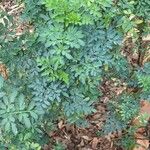
Ruta chalepensis
Fringed rue · Rue · African rue
Description
Source: leafsnapRuta chalepensis is a species of flowering plant in the Rutaceae family known by the common name fringed rue. It is native to Eurasia and North Africa. It has been found elsewhere as an introduced species. It is a perennial herb growing up to 80 centimeters tall. The leaves are compound, each divided into several segments which are subdivided into smaller leaflets. The inflorescence is a cluster of flowers, each with four or five bright yellow petals with rolled, fringed edges. The fruit is a textured capsule which is divided into pointed lobes. In traditional herbal medicine, the plant is used as for a number of ailments, such as fever and inflammation.Ruta chalepensis is the original source of the chemical compound chalepensin.
🌳 Rue contains a range of bioactive compounds that have been investigated for their biopesticidal properties. These compounds have demonstrated potential to control agricultural pests, acting as a natural alternative to chemical pesticides. Extracts of rue have been examined for their effectiveness in repelling insects and reducing crop damage.
🎭 Rue is widely recognized as a symbol of regret, and in literary works it has sometimes been referred to as the "herb-of-grace."
Care Guide
💧 Water
Fringed rue flourishes in Mediterranean climates, where it requires moderate moisture and can tolerate short periods of dryness. To keep the plant healthy without causing waterlogging, water it weekly. As an outdoor plant, fringed rue adjusts its water intake according to its growth cycles, which helps it remain resilient in various weather conditions.
How should I water my Fringed rue plant?
To properly water the Fringed rue plant, follow these steps for optimal conditions and proper growth: 1. Use filtered water that is at room temperature. This is because tap water may contain harmful particles for the plant's health. 2. The Fringed rue plant comes from a warm environment, so it is best to use water that is at room temperature or slightly warmer. Cold water can be a shock to its system. 3. Avoid overhead watering as it can lead to foliage issues. Instead, focus on applying the filtered room temperature water directly to the soil. 4. Make sure to water the plant until the soil is completely soaked. Soaking the soil is beneficial as it helps moisten the roots and enables them to spread and absorb the necessary nutrients.
What should I do if I give my Fringed rue too much water or too little water?
Overwatering is a common issue for Fringed rue and can cause wilting, yellowing leaves, and diseases like root rot, mold, and mildew. Underwatering is less likely, but can cause brittle, brown leaves. It's important to detect and address overwatering signs promptly, as some diseases may become irreversible if left untreated. To prevent overwatering, adjust watering schedule and consider using well-draining soil. If underwatering occurs, simply water the plant more regularly until symptoms improve.
How frequently do I need to water my Fringed rue?
If your Fringed rue plant is in a pot, the best way to check if it needs water is by sticking your finger into the soil. If the top two to three inches of soil feel dry, it's time to water it. The same method can be used if you have your Fringed rue plant growing outdoors in the ground. Once again, if the top few inches of soil have dried out, it's time to water. Typically, during spring and early fall, watering once a week will suffice. However, during extremely hot weather, you may need to water two or more times a week. It's worth noting that mature and well-established Fringed rue plants have a remarkable ability to withstand drought.
How much water does my Fringed rue plant need?
When watering your Fringed rue, don't hold back on the water. Make sure the top few inches of soil are dry before giving it a good, thorough watering. You want the water to completely soak the soil, causing any excess to flow out of the drainage holes at the bottom of the pot. If you don't see water draining out, you may be watering too little. However, be careful not to let the water sit and accumulate in the soil, as this can be harmful to the plant. On the other hand, if water doesn't drain through the pot, it's a sign of poorly draining soil, which isn't good for the plant. If your Fringed rue is outside, it should receive about 1 inch of rain per week, which is enough to keep it healthy.
How do I water my Fringed rue at different times when it's growing?
The water needs of the Fringed rue can vary depending on its growth stages. In the early years or when you transplant it, you should give more water than usual. This is because the plant is focused on developing new roots to support future growth, which requires more moisture. As the Fringed rue matures, it will require less water. Additionally, during the bloom period, the plant may need more water as the flowers use a significant amount of moisture.
☀️ Light Full sun
Rue prefers plentiful sunlight and does best when placed where the sky is open and unobstructed. It can tolerate moderate light but may show reduced growth. Its native habitat had strong sunlight, which is important for its optimal development and health. However, too much sun can scorch the foliage, while too little light can impede its growth.
What are the sunlight requirements for Fringed Rue?
Fringed Rue, or Ruta chalepensis, requires full sunlight for optimal growth, defined as more than 6 hours of sunlight daily. It can also tolerate partial sun, which is about 3-6 hours of sunlight. Monitoring how sunlight moves through your garden helps in choosing spots that ensure the plants receive the right balance of light and shade, which is crucial for their health and happiness.
What essentials should be considered for growing Fringed Rue?
Fringed Rue thrives best under abundant illumination, mirroring its native habitat's high levels of light for most of the day. While it can survive in less light, such conditions are not optimal and can affect the plant's health. Indoor plants might require artificial lighting, especially in winter or less sunny spaces. LED lights are recommended for their ability to provide specific wavelengths needed by plants. Full sun plants need 30-50W/sq ft, partial sun plants 20-30W/sq ft, and full shade plants 10-20W/sq ft of artificial light. The light source should be placed 12-36 inches above the plant, mimicking the natural daylight duration, which is about 8-12 hours per day for most plants.
What are the important symptoms of light deficiency or excess in Fringed Rue?
Fringed Rue shows several symptoms when exposed to inadequate lighting, including smaller new leaves, leggy or sparse growth, accelerated leaf drop, slower or halted new growth, and lighter-colored or yellow new leaves (chlorosis). Excessive sunlight can cause symptoms like sunscald, leaf curling, wilting, leaf scorching, and the breakdown of chlorophyll, affecting the plant’s ability to photosynthesize. These symptoms indicate that the plant's light conditions need to be adjusted for better health.
What solutions can be applied to correct light deficiencies or excess for Fringed Rue?
To correct light deficiencies or excess for Fringed Rue, indoor plants can be gradually moved to sunnier locations to receive at least 6 hours of direct sunlight daily or use artificial lighting, like plant grow lights, for at least 8 hours daily. Outdoor plants should be moved to optimal sunlight spots gradually to prevent sunburn. If sunlight is obstructed, consider pruning or transplanting to a location with ample sunlight and good drainage. However, parts of the plant already affected by insufficient sunlight may not recover, but new, healthy growth can be encouraged through these adjustments.
🌡️ Temperature 5–37.8°C
Originating in the Mediterranean, rue favors cooler growing conditions with temperatures between 5 and 25 ℃ (41 to 77 ℉). In winter, with appropriate protection it can withstand temperatures as low as -12 ℃ (10 ℉). In summer it prefers 21 to 27 ℃ (70 to 81 ℉) and may need some shading to prevent heat stress.
What are the ideal growing conditions for Fringed Rue?
Fringed rue, known botanically as Ruta chalepensis, thrives in temperatures ranging from 41 to 95°F (5 to 35°C). These conditions are considered ideal for its growth. The plant is adaptable and not overly sensitive to changes in temperature, making seasonal adjustments beneficial for its successful cultivation. It possesses strong cold resistance, meaning special frost protection measures are usually not necessary during the winter. However, if temperatures are expected to drop below -25°C, it is important to provide cold protection by covering the plant with soil or straw. To prevent drought and water scarcity during winter and early spring, it is recommended to water the plant abundantly before the first freeze in autumn, ensuring the soil remains moist.
What should I do if Fringed Rue is exposed to temperatures below -25°C?
Fringed rue is cold-tolerant and performs best when the temperature stays above 5°C. It can normally withstand winter conditions well if kept above -20°C. However, exposure to temperatures below -25°C can result in reduced sprouting or no sprouting at all in the following spring. In cases where the plant has been exposed to such low temperatures, it is advisable to remove any parts of the plant that have failed to sprout in the spring.
How do I care for Fringed Rue during high temperature conditions?
During the summer, it's important to ensure that Fringed rue is kept below 35°C, as temperatures exceeding 38°C can lead to symptoms of heat stress. These symptoms include leaves becoming lighter in color, prone to curling, susceptible to sunburn, and in severe cases, the entire plant may wilt and become dry. The recommended solutions for addressing such symptoms include trimming away the sunburned and dried-up parts of the plant, moving it to a shaded location away from the midday and afternoon sun, or using a shade cloth. Additionally, watering the plant in the morning and evening can help keep the soil moist and the plant hydrated.
💨 Humidity
🪴 Soil 6-7
🌱 Fertilizer
One fertilizer application in spring is typically enough for Rue, though several feedings can maximize growth. Apply fertilizer every month to month and a half. Fertilizing improves the leaves' appearance and function, helping maintain even color and a healthy texture. It also encourages root development and nutrient uptake, supporting the plant's long-term health.
🪴 Pot & Repot 2-3 years
When repotting rue, select a pot 1–2 inches (2.5–5.1 cm) larger with good drainage. Use a well-draining potting mix. Repot in spring or fall, making sure the root ball sits slightly below the rim of the flower pot. Water thoroughly after repotting and place in a warm location with indirect sunlight.
✂️ Pruning
Fringed rue has aromatic foliage and yellow-green flowers. To prune the plant, trim away dead stems between early and late spring, but limit removal to no more than one-third of the plant to prevent legginess. Pruning after the flowers bloom helps manage the plant's size, encourages dense foliage growth, and improves air circulation, which reduces the risk of disease.
🌿 Propagating
🐛 Diseases & pets
☠️ Toxicity
Characteristics
- Plant Type
- Herb
- Life Cycle
- Perennial
- Genus
- Ruta
- Family
- Rutaceae
- Hardiness Zone
- 4-11
- Mature Height
- 61 cm to 91 cm
- Mature Spread
- 61 cm to 91 cm
- Leaf Color
- Green, Blue, Gray
- Leaf Type
- Evergreen
- Flower Color
- Yellow
- Flower Size
- 2.03 cm
- Bloom Time
- Early summer, Mid summer
- Planting Time
- Spring
- Harvest Time
- Mid summer
- Native Area
- Russia, Germany, Serbia, China, Montenegro, Bulgaria, Albania, Greece, Croatia, Slovenia, France