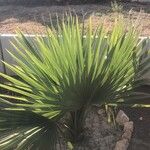
Sabal mexicana
Texas palmetto · Rio Grande palmetto · Victoria palmetto · Mexican palmetto · Palmetto
Description
Source: leafsnapSabal mexicana is a species of palm tree that is native to far southern North America. Common names include Rio Grande palmetto, Mexican palmetto, Texas palmetto, Texas sabal palm, palmetto cabbage and palma de mícharos. The specific epithet, "mexicana", is Latin for "of Mexico."
Care Guide
💧 Water
Native to arid regions, the Rio Grande palmetto is highly tolerant of drought conditions. It needs watering every 1-2 weeks and thrives in well-draining soil, which is crucial for preventing root rot. This outdoor plant flourishes in warm climates, demonstrating its resilience to water scarcity.
How should I water my Rio Grande palmetto tree?
When watering your Rio grande palmetto, you have flexibility in choosing your watering method. Common tools like watering cans, hoses, or even cups will work fine. It's important to water directly onto the soil, ensuring all areas are evenly moistened to provide water to the entire root system. Consider using filtered water to avoid harmful particles from tap water. Also, using water at or slightly above room temperature is ideal, as extreme temperatures may shock the plant. However, the Rio grande palmetto usually responds well to any type of water.
What can I do if I give too much or too little water to my Rio grande palmetto?
For outdoor plants, especially newly planted ones or seedlings, it's important to ensure they receive enough water. This is particularly crucial during the first few months when the tree is small or recently planted. Once the roots are established, Rio grande palmetto plants can rely mostly on rainfall. When Rio grande palmetto plants are in pots, they are more susceptible to overwatering. If you accidentally overwater your plant, take immediate action to remedy the situation. First, stop watering the plant to minimize the effects of overwatering. Then, check the roots by removing the plant from its pot. If you find no signs of root rot, you can return the plant to its container. However, if there are signs of root rot, trim any affected roots and consider applying a fungicide to prevent further damage. Finally, repot the Rio grande palmetto in well-draining soil. In the case of underwatering, simply water the Rio grande palmetto plant more frequently. Underwatering is an easy problem to fix. When a plant is underwatered, its leaves will droop, dry out, and fall off. However, with sufficient watering, the leaves will quickly regain their fullness. Adjust your watering frequency promptly if you notice underwatering.
How often do I need to water my Rio Grande palmetto plant?
If your plants are growing outdoors and there is enough rainfall, they can usually grow without any additional watering. However, if your area doesn't receive much rainfall, you should water your plants every 2 weeks in the spring and fall, and more frequently in the summer. In the winter, when growth is slower, you should water less often. Young or newly planted Rio grande palmettos will need more frequent watering to help them establish and become drought-tolerant. For potted plants, there are two main ways to determine how often to water your Rio grande palmetto. You can set a predetermined watering schedule, such as once a week or every other week. However, this may not always work as it doesn't consider the specific growing conditions of your plant. Another option is to water based on soil moisture. Wait until the top two to four inches of soil, about ⅓ to ½ depth of the pot, have completely dried out before watering again.
How often should I water my Rio grande palmetto?
When watering your Rio grande palmetto, you don't always need a lot of water. If only a few inches of soil have dried since the last watering, giving it about five to ten ounces of water will support healthy growth. You can determine the amount of water based on soil moisture. Keep track of how many inches of soil have dried out between waterings. To ensure your Rio grande palmetto gets enough moisture, water it enough to moisten all the dry soil layers since the last watering. If more than half of the soil is dry, consider giving it more water than usual. In these cases, keep adding water until you see excess water draining from the drainage holes. If your Rio grande palmetto is planted in an area with sufficient rain, it may not need additional watering. For young or newly established plants, they should receive 1-2 inches of rain per week. As the plant grows and establishes, it can rely solely on rainwater. Only in hot weather with no rainfall for 2-3 weeks, should you consider giving it a full watering to prevent stress.
How do I know if I'm giving my Rio Grande palmetto enough water?
Overwatering is a common issue for the Rio grande palmetto, and there are clear signs to watch out for. When overwatered, the leaves of the palmetto turn yellow and some may even fall off. Additionally, overwatering can cause the plant's structure to shrink and lead to root rot. On the other hand, if the palmetto is underwatered, it will start to wilt and have brown or brittle leaves. Regardless of whether you notice signs of overwatering or underwatering, it is important to take action and restore the health of your Rio grande palmetto.
☀️ Light Full sun
Rio grande palmetto comes from open habitats, such as sunlit meadows and forest margins, which provide plentiful light. It does best in Full Sun but will also tolerate Partial Sun, demonstrating good adaptability to different sunlight levels.
What are the sunlight requirements for Rio Grande Palmetto?
Rio Grande Palmetto thrives in environments that offer full sunlight but can also tolerate partial sun. This plant originates from open environments, such as sunny meadows and forest edges, which provide ample light. It requires above 6 hours of sunlight for full sun conditions and about 3-6 hours of sunlight for partial sun conditions. When planning your garden, it's essential to observe how sunlight moves through the area to ensure that you choose spots providing the right balance of light and shade, ensuring the plant's happiness and healthy growth.
How can artificial lighting benefit indoor Rio Grande Palmetto plants?
Indoor Rio Grande Palmetto plants benefit significantly from artificial lighting, especially when natural sunlight is insufficient. Artificial lights, particularly LED lights which can be customized for specific plant needs, offer a vital solution by promoting faster and healthier growth. Full sun plants need 30-50W/sq ft of artificial light, partial sun plants require 20-30W/sq ft, and full shade plants need 10-20W/sq ft. The light source should be placed 12-36 inches above the plant, mimicking natural sunlight, and should be on for 8-12 hours per day to match the natural daylight hours for most plant species.
What are some common symptoms of light deficiency in Rio Grande Palmetto?
Rio Grande Palmetto may exhibit several symptoms when exposed to suboptimal lighting conditions, including small leaves, leggy or sparse growth, faster leaf drop, slower or no new growth, and lighter-colored new leaves. Additionally, intense sunlight exposure can cause chlorosis (leaves turning yellow), sunscald, leaf curling, wilting, and leaf scorching. These symptoms reflect the plant's struggle to adapt to its lighting environment, impacting its overall health and growth.
What solutions are available for Rio Grande Palmetto experiencing insufficient sunlight?
To address insufficient sunlight for Rio Grande Palmetto, consider gradually moving the plant to a sunnier location each week until it receives at least 6 hours of direct sunlight daily. For indoor plants, this can involve using a south-facing window and leveraging artificial light, such as keeping a desk lamp on for at least 8 hours daily or investing in professional plant grow lights. Outdoor plants should also be moved gradually to prevent sunburn. If the plant is large or not easily movable, providing additional light with artificial sources can help. For plants in the ground, reducing obstructions, such as pruning trees, or transplanting the plant during its dormant period to a sunnier location with ample sunlight and good drainage, can improve sunlight exposure. Note that parts of the plant affected by insufficient sunlight may not recover, but new growth should be healthy with increased light exposure.
🌡️ Temperature 15–37.8°C
Rio grande palmetto demonstrates strong temperature adaptability, able to endure higher heat and wider temperature swings. In hot conditions, attention should be paid to watering and appropriate shading should be provided to prevent sunburn. On the other hand, rio grande palmetto is relatively intolerant of low temperatures; while it can handle some cold, very cold conditions can cause frost damage.
What temperature conditions can Rio Grande Palmetto tolerate?
Rio Grande Palmetto shows good adaptability to temperature variations, being able to handle higher temperatures well. It's important to ensure that the plant is sufficiently watered and shaded to prevent sunburn when the temperatures are high. Despite having some cold tolerance, it has relatively poor tolerance to low temperatures and excessive cold can lead to frost damage. It usually does not require any cold protection measures if the temperature is above -5°C; however, below this temperature, it is necessary to provide temporary protection by wrapping the plant with materials such as plastic film or fabric.
What should I do if my Rio Grande Palmetto is exposed to low temperatures?
Rio Grande Palmetto has moderate tolerance to low temperatures and thrives best above 15°C. It should be kept above -5°C during winter. Exposure to temperatures below -10°C may cause the leaves to droop, and in severe cases, leaves will wilt and fall off. To mitigate frost damage, you should trim off any frost-damaged parts and take preventive measures against future cold exposure. Wrapping the plant with non-woven fabric or cloth and constructing a wind barrier to protect it from cold winds can help.
How should I care for my Rio Grande Palmetto during high temperatures?
During summer, it's crucial to keep Rio Grande Palmetto below 38°C to prevent stress. Temperatures exceeding 43°C can cause the leaves to lighten in color, tips to dry and wither, leaves to curl, and increase the risk of sunburn. To care for the plant in high temperatures, trim away any sunburned or dried parts and move the plant to a shaded location, especially during midday and afternoon, or use shade cloth. Ensuring the soil remains moist by watering in the morning and evening is also beneficial.
💨 Humidity
🪴 Soil 6-8
🌱 Fertilizer
Timing is critical when fertilizing Rio grande palmetto. Start fertilizing in early spring and continue monthly until early summer. Fertilizer encourages attractive blooms and provides energy during both dormant and active growth phases.
🪴 Pot & Repot 1-2 years
Repot the Rio Grande palmetto every 1-2 years during the warmer months, using a large and sturdy container. After repotting, water the plant thoroughly and place it in a sunny location. To aid in recovery, use a slow-release fertilizer. This robust, low-maintenance plant will thrive with proper care.
✂️ Pruning
The Rio Grande palmetto is characterized by its sturdy fan-shaped leaves and tall trunk. To enhance its vitality, it's beneficial to perform selective pruning in early spring. This involves removing any damaged fronds and trimming the fruiting stalks. Using sterilized tools to make clean cuts promotes healthy growth and improves airflow, which helps reduce the risk of pests.
🌿 Propagating
🐛 Diseases & pets
☠️ Toxicity
Characteristics
- Plant Type
- Tree
- Life Cycle
- Perennial
- Genus
- Sabal
- Family
- Arecaceae
- Hardiness Zone
- 8-11
- Mature Height
- 17.98 m
- Mature Spread
- 3.96 m
- Leaf Color
- Green, Yellow
- Leaf Type
- Evergreen
- Flower Color
- White, Cream
- Flower Size
- 0.25 cm to 0.51 cm
- Bloom Time
- Summer
- Planting Time
- Spring, Summer
- Harvest Time
- Late summer, Fall
- Native Area
- Belize, Honduras, Mexico, Guatemala, El Salvador, Nicaragua