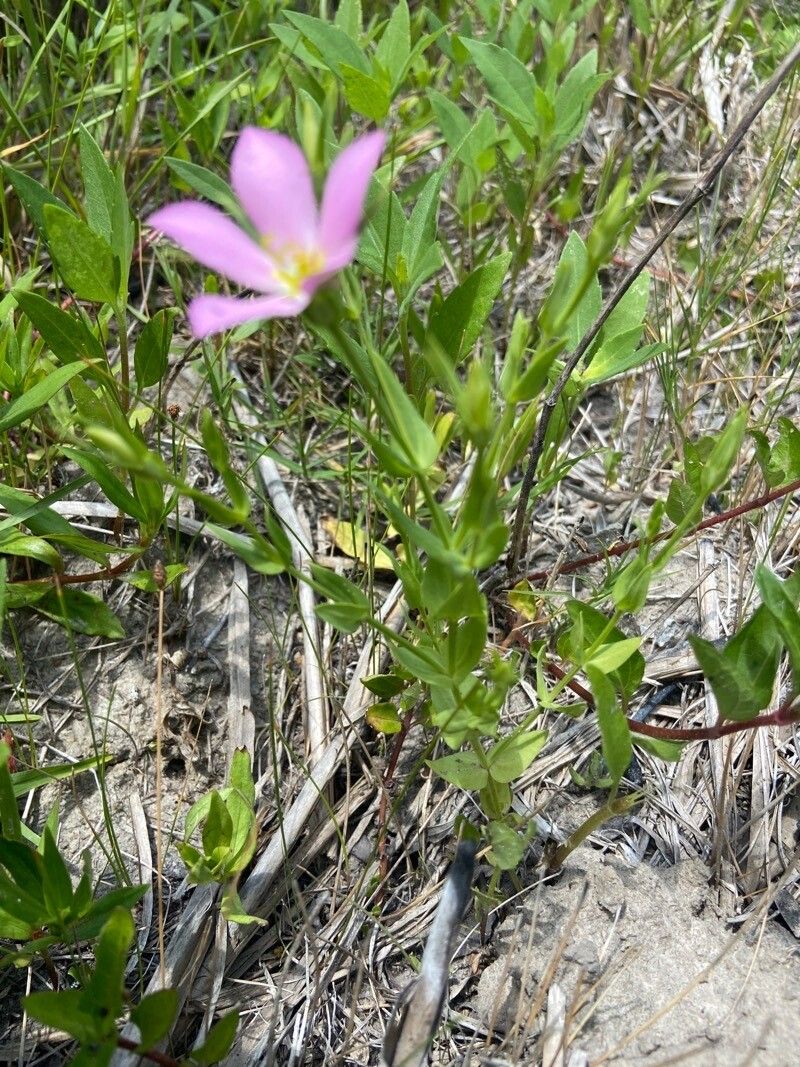
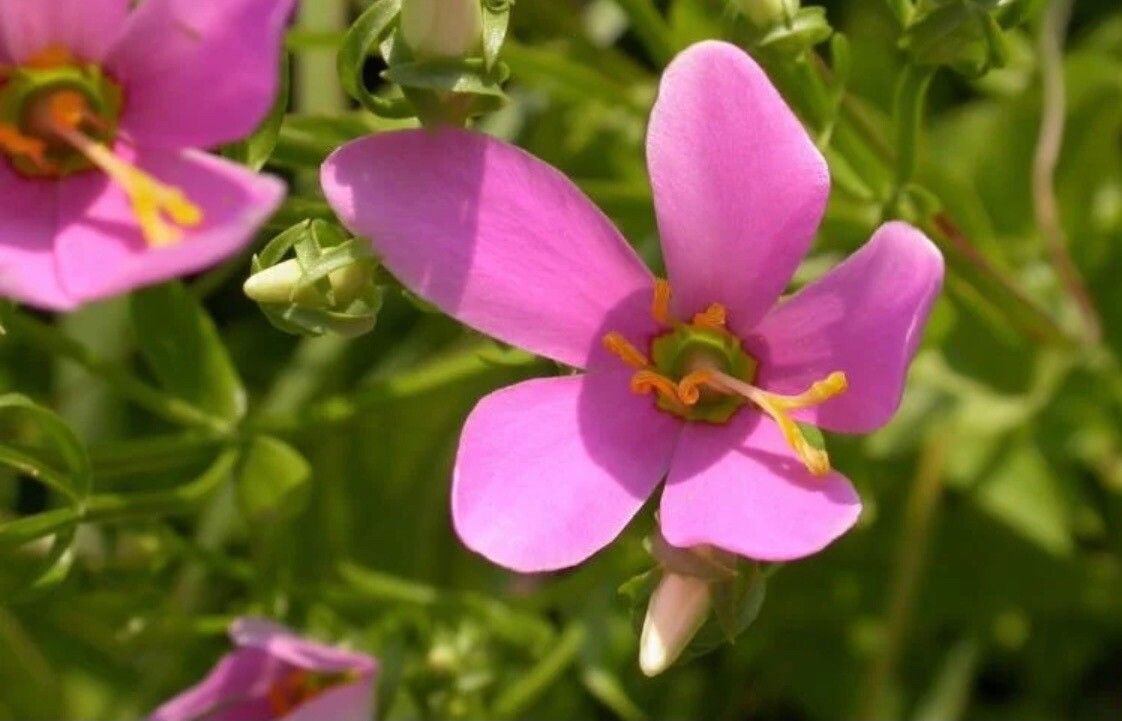
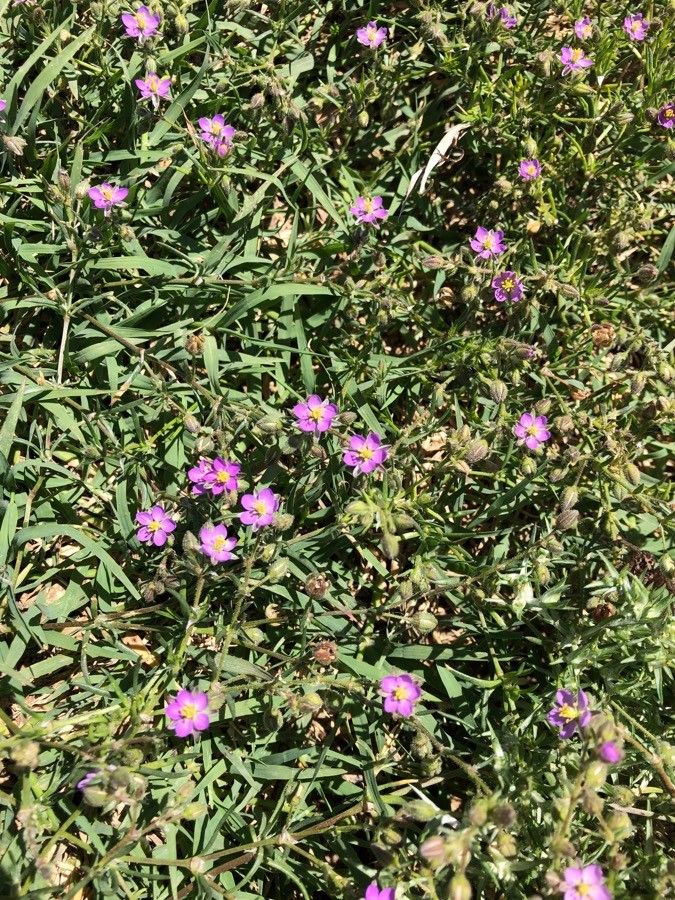
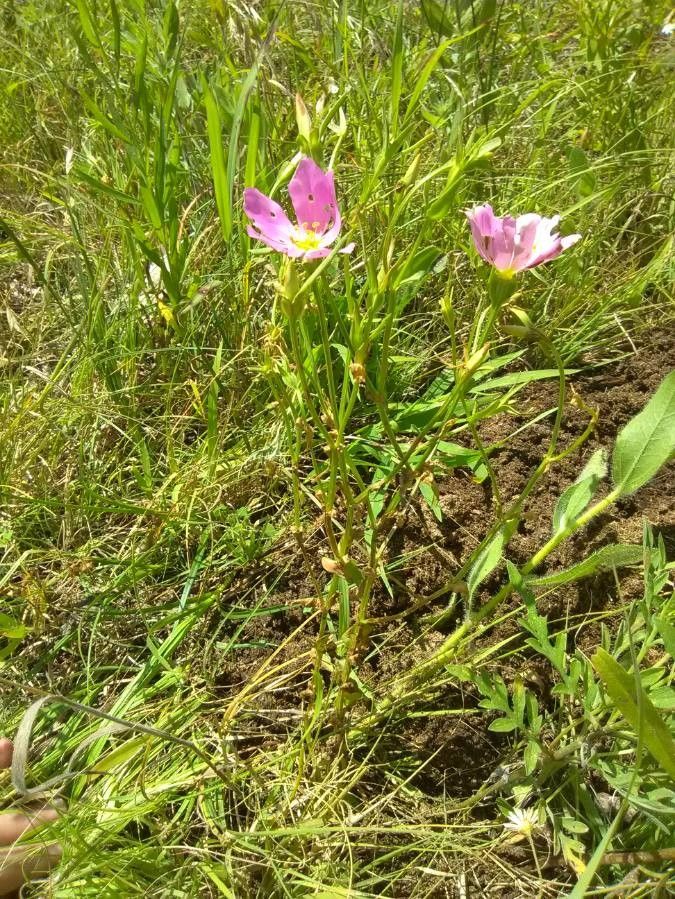
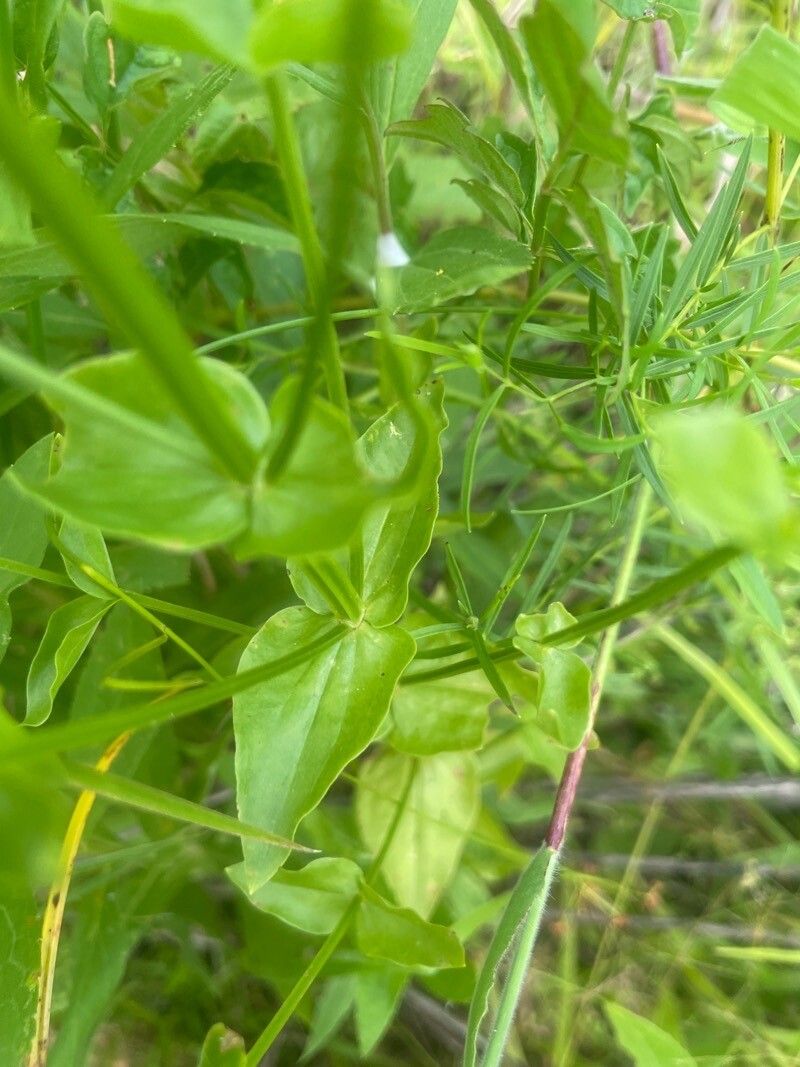
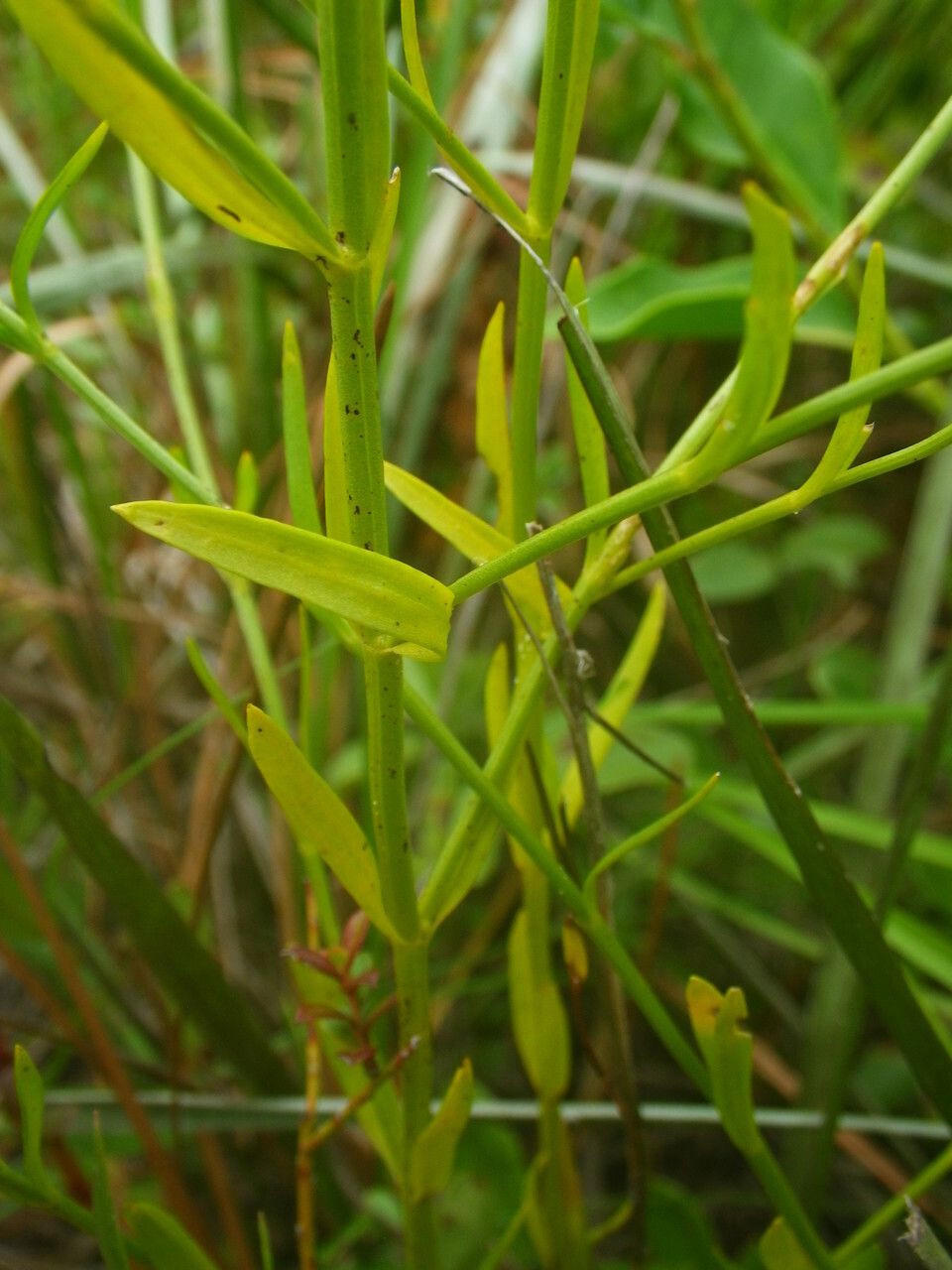
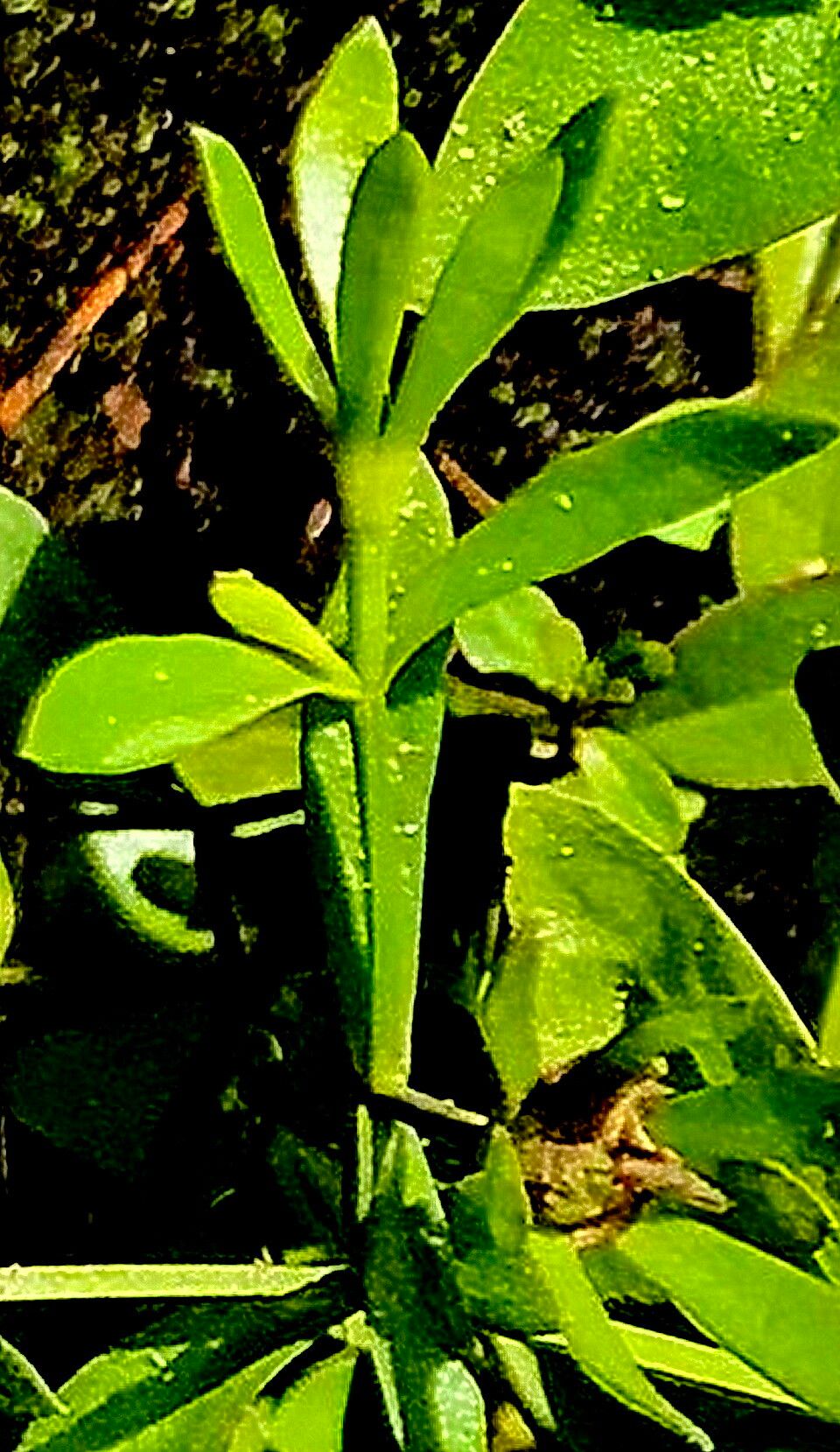
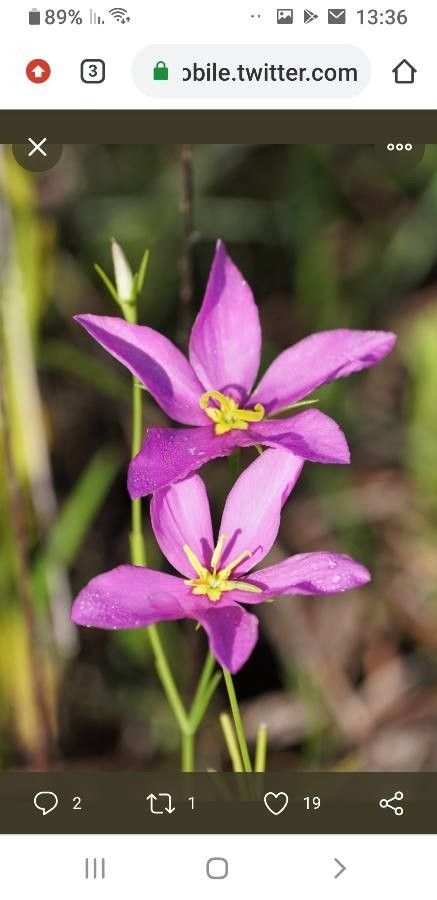
Sabatia campestris (Texas star; also prairie rose-gentian, prairie sabatia, meadow pink) is a species of Sabatia, native to the south-central United States, from Texas east to Mississippi and north to Iowa and Illinois. It is also locally naturalized in New England.Sabatia campestris is an annual plant growing to 15–25 cm (6–10 in) tall with pairs of opposite leaves 8–40 mm long and 5–20 mm wide. The flowers are produced in open, long-stalked cymes at the top of the stems; the flower corolla is about 40 mm diameter, with five pink (rarely white) lobes with bluntly acute apices, and a contrasting bright yellow central 'eye'; they are hermaphrodite (contain both male and female organs). The fruit is a capsule containing numerous small seeds.
Meadow Pink has good resistance to disease and generally does not suffer from illnesses. Nevertheless, it can be vulnerable to pests and diseases present in its environment. Such infections are typically mild. Regarding care, this plant needs a moderate level of maintenance. It should be pruned regularly to preserve an attractive appearance and encourage healthy growth. Applying fertilizer can also assist in boosting flowering. Meadow Pink is appropriate for anyone with outdoor space, like a garden or patio, and does not demand extensive care experience. It may need more attention when cultivated indoors.
How to keep Sabatia Campestris.
Light
Meadow Pink thrives in plentiful sunlight for most of the day, displaying vigorous growth. It can tolerate and survive with reduced sun exposure, but if it lacks adequate light its growth may be impeded. This stems from its native habitat in open skies, where it receives considerable light.
Water
Meadow Pink thrives with a balanced watering routine that mimics its natural habitat, which alternates between wet and dry periods. Watering once a week is ideal for this plant. As an herbaceous perennial, it effectively retains water and can handle variations in rainfall patterns. However, it is not drought-tolerant and does not depend heavily on humidity.
Temperature
Meadow Pink favors a moderate to warm climate, ideally between 68 and 95 °F (20 to 35 ℃). As a temperate plant, it does best within this temperature range and may need seasonal adjustments to maintain optimal health.
Fertilizer
Once Meadow Pink has opened most of its flowers at full size, you should resume fertilizing. Around the time the blooms are at peak production, begin fertilizing every three to four weeks, weather permitting. Then, when Meadow Pink starts producing fewer new blooms, stop fertilizing; there's no reason to feed it when the plant can no longer produce more blooms.
Pruning
The vibrant Meadow Pink flourishes in sunny locations, producing stunning pink blooms. To maintain its shape and encourage flowering, prune the plant from early to late spring. Use sharp, clean tools to remove weak stems, enhancing the plant's health and beauty while preventing overcrowding and promoting vigorous growth.
Botanical profile.
- Plant Type
- Herb
- Life Cycle
- Annual, Biennial
- Genus
- Sabatia
- Family
- Gentianaceae
- Hardiness Zone
- 9
- Mature Height
- 15 cm to 25 cm
- Mature Spread
- 13 cm to 40 cm
- Leaf Color
- Green, Blue
- Leaf Type
- Semi-evergreen
- Flower Color
- Pink
- Flower Size
- 2.54 cm to 5.08 cm
- Bloom Time
- Early summer, Mid summer
- Planting Time
- Spring, Summer, Autumn
- Harvest Time
- Late summer, Early fall
Other names.
Reader questions.
How should I water my Meadow Pink plant to make it thrive?
To water Meadow Pink, you have various options such as using a garden hose with a spray nozzle, a watering can, or any other common watering tool. Meadow Pink is not too demanding when it comes to water, as it can thrive on rainwater, tap water, or even filtered water. However, it is advisable to avoid watering this plant from overhead to prevent leaf and flower damage, as well as potential diseases. In such cases, a drip irrigation system works best as it provides even and direct water supply to the soil. For Meadow Pink grown in containers, you can adopt a similar approach but change the tools used. Using a cup, watering can, or tap, water should be applied directly to the soil.
What are the sunlight requirements for Meadow Pink?
Meadow Pink, known botanically as Sabatia campestris, thrives in full sun conditions, requiring above 6 hours of sunlight daily for optimal growth. It can also grow in partial sun, needing about 3-6 hours of sunlight. It's important to monitor the movement of sunlight in your garden to ensure your plants receive the right balance of light and shade, as this significantly impacts their health and growth.
What is the ideal climate for Meadow Pink?
Meadow Pink, or Sabatia campestris, prefers a moderate to warm climate, with ideal temperatures ranging between 68 to 95 °F (20 to 35 °C). This temperate plant thrives best within these temperature ranges and may need seasonal adjustments to maintain its optimal health. Although Meadow Pink has some tolerance to cold, no additional measures are necessary as long as the temperature stays above 0°C. However, if temperatures are expected to drop below freezing, it's important to temporarily protect the plant with materials like plastic film or fabric until warmer conditions return.
What should I do if I give my Meadow Pink plant too much or too little water?
To avoid underwatering your Meadow Pink, simply water it more regularly when you notice it lacking moisture. On the other hand, overwatering can be a serious problem if not detected early. Overwatering can cause diseases that lead to the decline and death of your Meadow Pink. To prevent this, choose a suitable location that gets enough sunlight to dry the soil and has proper drainage to prevent water from pooling. If your Meadow Pink is in a pot and you overwatered it, you may need to change it to a new pot. Make sure the new pot has good drainage and use loose soil while repotting.
How does Meadow Pink respond to different light conditions?
Meadow Pink exhibits robust growth under generous sunlight throughout the day. It can still grow with reduced sunlight exposure but may not thrive as well. Insufficient sunlight leads to hindered growth due to its natural habitat being in open, sunlit areas. For indoor plants lacking natural light, especially in winter or darker spaces, artificial lighting can compensate, promoting faster, healthier growth. LED lights are recommended, customized to the plant's light needs, with full sun plants requiring 30-50W/sq ft, partial sun plants 20-30W/sq ft, and full shade plants 10-20W/sq ft of artificial light. The lights should be placed 12-36 inches above the plant for 8-12 hours a day.
How does Meadow Pink react to low temperatures?
Meadow Pink has a moderate tolerance to low temperatures, optimally thriving above 20°C. In winter, it should be kept above 0°C to prevent damage. Should temperatures fall below -5°C, the plant's leaves may begin to droop. While they can recover in mild cases, severe cold will cause the leaves to wilt and eventually drop. To protect Meadow Pink from cold weather, trim off frost-damaged parts and wrap the plant with non-woven fabric or cloth, ensuring also to erect a wind barrier for additional protection against cold winds.
How often should I give water to my Meadow Pink?
To keep Meadow Pink healthy, it needs regular watering throughout the growing season. In spring, water it once a week. As the season gets warmer, increase watering to two to three times a week. However, be careful not to overwater, as it can harm the plant. Regardless of watering frequency, make sure the soil is consistently moist but not soggy. If Meadow Pink is in a pot, you'll need to water it more often compared to when it is planted in the ground. Potted plants tend to dry out faster, so water them a few times per week instead of just once.
What symptoms indicate inadequate light for Meadow Pink?
When Meadow Pink doesn't receive enough light, it may show several symptoms. These include smaller new leaves, leggy or sparse growth with longer spaces between leaves or stems, faster leaf drop as the plant tries to conserve resources, slower growth or no new growth as it enters survival mode, and lighter-colored new leaves. Chlorosis or yellowing of leaves, sunscald marked by pale or necrotic spots on leaves, leaf curling to minimize sunlight exposure, wilting due to water loss, and leaf scorching are signs of light stress, which can be caused by both insufficient and excessive light.
What should I do if Meadow Pink is exposed to high temperatures?
During the summer, it's crucial to keep Meadow Pink below 35°C to prevent stress and damage. Exposure to temperatures over 38°C can cause the leaves to lighten in color, dry out at the tips, curl, and make the plant more susceptible to sunburn. If such damage occurs, trim away the sunburned and dried parts. To prevent future damage, move the plant to a location that offers protection from the midday and afternoon sun, or utilize a shade cloth. Ensuring the soil stays moist by watering the plant in the morning and evening is also beneficial.
How much water does my Meadow Pink plant need?
Determining the right amount of water for your Meadow Pink plant can be done in a few ways. Some gardeners prefer to assess soil moisture by feeling it, suggesting watering until the top six inches are moist. Another approach is using a set measurement, like providing around two gallons per week depending on weather and soil dryness. However, strictly following these guidelines may result in overwatering if your plant requires less water. When growing Meadow Pink in a container, a different method is needed. Watering should moisten all dry soil layers, which can be checked by sticking a finger in the soil or observing excess water draining from the pot holes.
What are the solutions for light-related issues in Meadow Pink?
To address light deficiency in Meadow Pink, gradually increase sunlight exposure to at least 6 hours daily. For indoor plants, use a south-facing window or provide artificial lighting with grow lights for 8 hours daily. For outdoor plants, move them to sunnier spots gradually to prevent sunburn. If your plant is affected by obstruction, consider pruning to allow more light or transplant smaller plants to sunnier locations. While damaged parts may not recover, increased light exposure will promote healthy new growth.
How do I know if I'm giving enough water to my Meadow Pink plant?
Avoiding overwatering your Meadow Pink can be a bit tricky. These plants have deep roots that should be watered weekly to keep the soil moist. However, Meadow Pinks are highly prone to root rot. Overwatering can also cause browning of the plant. Underwatering is less of a concern since Meadow Pinks can survive without additional watering for a while. But if you go too long without watering, the plant may start to wilt and develop dry leaves.