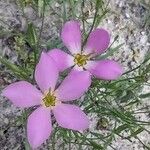
Sabatia stellaris
Rose Of Plymouth · Saltmarsh pink
Description
Source: leafsnapSabatia stellaris, with the common names rose of Plymouth, marsh pink, salt-marsh pink, and sea-pink; is a species of Sabatia. It has the synonym Sabatia maculata (Benth.) Benth. & Hook.f., Sabatia palmeri Gray, Sabatia purpusii Brandeg., Sabatia simulata Britt.).
Care Guide
💧 Water
The Rose of Plymouth thrives in moist environments and needs soil that is consistently hydrated but not waterlogged. For optimal growth, it should be watered weekly. This plant is adaptable to temperate regions and can handle varying rain patterns, making it ideal for gardens where rainfall is sufficient to meet its hydration requirements.
☀️ Light Full sun
The rose of Plymouth does best in locations with full, direct sunlight, though it can tolerate spots with slightly reduced light. Coming from habitats that prefer open sun, it needs a considerable amount of light to grow healthily. Too little sun can slow or stunt its growth, while too much can sometimes cause damage.
What are the sunlight requirements for Rose of Plymouth?
Rose of Plymouth thrives in full sun, requiring more than 6 hours of sunlight per day, but it can also tolerate partial sun, which means about 3-6 hours of sunlight daily. It's essential to observe how sunlight moves through your garden to find spots with the ideal balance of light and shade, ensuring your plants grow healthily.
What are the essentials for growing Rose of Plymouth effectively?
Originating from environments that enjoy unobscured sunlight, the Rose of Plymouth needs a substantial amount of light for healthy growth. Lack of sufficient sun might hinder its growth, while too much exposure can be harmful. For indoor plants, artificial lighting becomes crucial when natural sunlight is inadequate, especially during winter or in less sunny spaces. LED lights are a popular and effective choice for indoor plant lighting, ensuring that plants like Rose of Plymouth receive the specific wavelengths they need. Depending on the plant's sunlight needs, the amount of artificial light recommended varies: 30-50W/sq ft for full sun plants, 20-30W/sq ft for partial sun plants, and 10-20W/sq ft for full shade plants. It's also important to place the light source 12-36 inches above the plant and to mimic natural daylight hours, usually providing 8-12 hours of light per day.
What symptoms indicate inadequate light for Rose of Plymouth when grown indoors?
Symptoms of light deficiency in Rose of Plymouth include smaller new leaves, leggy or sparse growth, faster leaf drop, slower or no new growth, lighter-colored new leaves, and symptoms of excessive sunlight exposure like chlorosis, sunscald, leaf curling, wilting, and leaf scorching. These symptoms highlight the plant's struggle with inadequate light or overexposure, indicating the need to adjust its light environment.
How can you address inadequate sunlight for indoor and outdoor growing conditions of Rose of Plymouth?
To improve light conditions for Rose of Plymouth, gradually increase its exposure to sunlight by moving it to sunnier locations each week until it receives at least 6 hours of direct sunlight daily. For indoor plants, if moving the plant is not feasible, consider using artificial lighting, such as keeping a lamp on for at least 8 hours daily or investing in grow lights. For outdoor plants, it's crucial to adjust their location carefully to prevent sunburn. Additionally, reducing obstructions like pruning trees can allow more sunlight to reach your plants. If necessary, transplant smaller plants during their dormant period to a sunnier spot with good drainage. Remember, parts of the plant that have suffered might not recover, but new growth should be healthy with improved light exposure.
🌡️ Temperature 5–25°C
Rose of Plymouth is suited to thrive in temperatures from 68 to 95 °F (20 to 35 ℃). Native to warmer areas, it prospers in relatively warm climates. To reproduce its natural conditions for optimal growth, seasonal temperature adjustments may be necessary.
💨 Humidity
🪴 Soil 5-6
🌱 Fertilizer
When most of Rose of Plymouth's blooms have opened to full size, it's time to resume fertilizing. Around peak bloom, fertilize once every three to four weeks, as weather permits. Then, when Rose of Plymouth begins producing fewer new blooms, stop fertilizing; there's no need to fertilize when the plant can no longer produce more blooms.
🪴 Pot & Repot
✂️ Pruning
The Rose of Plymouth has star-shaped flowers and benefits from light pruning. The best time to prune is from early to late spring. Trim any dead stems to promote growth and improve the plant's shape, but avoid heavy pruning to minimize stress. Regular pruning helps improve air circulation, which reduces the risk of disease.
🌿 Propagating
🐛 Diseases & pets
☠️ Toxicity
Characteristics
- Plant Type
- Herb
- Life Cycle
- Annual, Biennial
- Genus
- Sabatia
- Family
- Gentianaceae
- Hardiness Zone
- 4
- Mature Height
- 15 cm to 52 cm
- Mature Spread
- 20 cm to 40 cm
- Leaf Color
- Green
- Leaf Type
- Semi-evergreen
- Flower Color
- Pink, White
- Flower Size
- 2.54 cm to 5.08 cm
- Bloom Time
- Summer
- Planting Time
- Spring, Summer
- Harvest Time
- Late summer, Early fall, Mid fall
- Native Area
- Bahamas, Mexico, Cuba